🛕About Temple
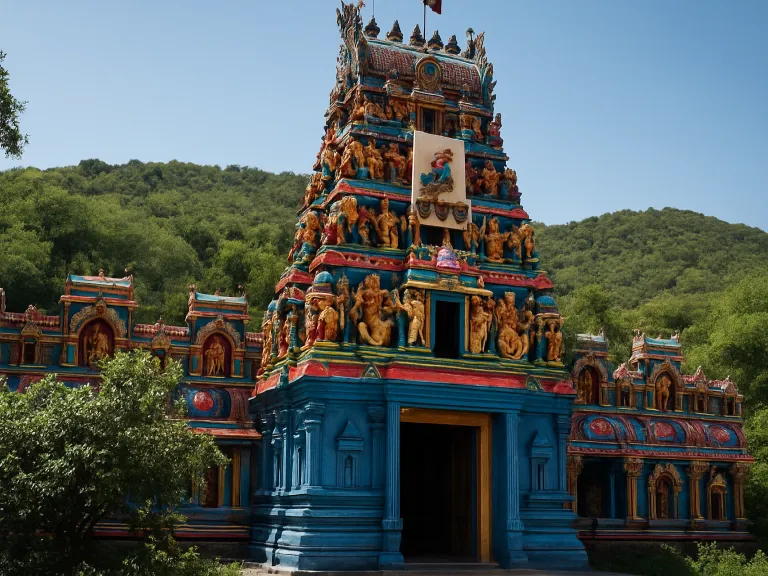
Solaimalai Murugan Temple, widely known as Pazhamuthirsolai or Pazhamudircholai, is a sacred hill shrine of Lord Murugan located on the forested Alagar Hills near Madurai in Tamil Nadu. It is revered as one of the six Arupadai Veedu, the six celebrated abodes of Murugan praised in Tamil devotional and literary tradition. The temple stands above the well-known Kallalagar Temple at Azhagar Kovil and is approached through a scenic hill road surrounded by groves and natural vegetation.
The presiding deity is Murugan, worshipped with his consorts Valli and Deivanai. This feature is especially significant because many Murugan shrines emphasize particular episodes of his life, while Pazhamuthirsolai presents him in a complete familial form. The shrine is closely associated with Tamil devotion, classical poetry, the Tiruppugazh hymns of Arunagirinathar, and the celebrated Avvaiyar legend connected with wisdom, humility, and divine grace.
Unlike some large temple complexes of the Tamil plains, Pazhamuthirsolai is valued as much for its sacred landscape as for its built form. The hill, the grove, the nearby Noopura Gangai spring, and its connection with the wider Tirumaliruncholai sacred region create a distinctive pilgrimage atmosphere. Devotees visit the temple for Murugan worship, vows, festivals, and as part of pilgrimages covering the six abodes of Murugan.
ℹ️Temple Information
🛕
Presiding Deity
Lord Murugan
👸
Goddess
Valli and Deivanai
⭐
Temple Type
Murugan Temple, Arupadai Veedu Temple, Hill Temple, Tamil Nadu Pilgrimage Temple
Need Help Planning your visit to
Arulmigu Solaimalai Murugan Temple?
Our travel experts can help you with transportation,
darshan timings, nearby sightseeing and complete temple tour planning.
⭐Temple Significance
Pazhamuthirsolai is one of the six Arupadai Veedu of Lord Murugan and is deeply revered in Tamil devotional tradition. It is especially significant for its association with Sangam literature, the Avvaiyar legend, Arunagirinathar’s hymns, and the worship of Murugan with both Valli and Deivanai on the sacred Alagar Hills near Madurai.
📜History
Pazhamuthirsolai occupies an important place in the history of Tamil religious literature. The shrine is named among the sacred abodes of Murugan in the ancient Tamil work Tirumurukarruppadai, which belongs to the Sangam literary tradition. This literary reference establishes the antiquity of Murugan worship at this hill site, even though the exact date of the present structural temple and its original builder are not clearly documented in widely accepted historical sources.
The Alagar Hills, also known in religious literature as Tirumaliruncholai, have long been a sacred landscape for both Murugan and Vishnu worship. The nearby Kallalagar Temple at Azhagar Kovil developed into a major Vaishnava shrine, while the higher hill region remained associated with Murugan as Pazhamuthirsolai. The coexistence of these sacred traditions gives the area a rare religious character in the Madurai region. Historical memory of the Murugan shrine is preserved more strongly through literature, pilgrimage practice, and devotional hymns than through dated inscriptions about its construction.
In the medieval period, the shrine gained further prominence through the hymns of Arunagirinathar, the great Tamil saint-poet who composed Tiruppugazh songs in praise of Murugan at many sacred sites. Pazhamuthirsolai continues to be recognized as one of the six canonical abodes of Murugan and remains an active pilgrimage temple. The available historical record does not securely identify a single royal patron, construction date, dynasty, or Agamic lineage for the present temple structure.
🕉️Mythology
The most celebrated mythology of Pazhamuthirsolai is the encounter between Lord Murugan and the Tamil poet-saint Avvaiyar. In the popular legend, Murugan appeared as a young cowherd boy while Avvaiyar rested near a fruit tree on the hill. He asked whether she wanted roasted fruit or unroasted fruit. Thinking the question was childish, she asked for unroasted fruit, shook the tree, and blew on the fallen fruits to remove dust. The boy then asked why she was blowing on unroasted fruit, revealing her assumption and pride.
Avvaiyar then understood that the child was not an ordinary boy but Murugan himself. The episode is cherished in Tamil culture as a lesson in humility, wisdom, and the limits of scholarship before divine knowledge. The legend also connects naturally with the name Pazhamuthirsolai, understood as a fertile grove where fruits ripen in abundance. Because of this story, the temple is especially associated with learning, mature wisdom, and the grace that dissolves ego.
The shrine also forms part of the larger mythology of Murugan’s six abodes. These sacred sites are connected with different aspects of Murugan’s divine life, including victory, knowledge, grace, and union with his consorts. At Pazhamuthirsolai, Murugan is worshipped with Valli and Deivanai, symbolizing completeness and compassion. The nearby Noopura Gangai spring also carries sacred associations within the Tirumaliruncholai hill tradition, adding to the mythic character of the pilgrimage landscape.
🏛Architecture
Pazhamuthirsolai is a compact hill temple that follows the broad vocabulary of Tamil Dravidian temple architecture without the monumental scale seen in many royal temple complexes of the plains. The shrine is situated in a natural setting on the Alagar Hills, and its built form is closely integrated with the hill approach, wooded surroundings, and pilgrimage path. The temple’s sacred identity is therefore experienced through both architecture and landscape.
The sanctum enshrines Lord Murugan with Valli and Deivanai, a distinctive and important iconographic feature of the temple. The shrine complex includes the usual devotional spaces required for worship, including the sanctum, frontal halls, subsidiary worship areas, and circumambulatory movement within a modest enclosure. Murugan’s vel, peacock association, and the presence of his consorts are central to the temple’s visual and ritual focus. The architectural emphasis is on darshan and devotional intimacy rather than large ceremonial corridors.
The present temple does not have a securely documented construction history that can be tied to a specific dynasty or original royal patron. Its antiquity is established primarily through literary recognition of the sacred site rather than through a dated surviving structure. The architecture visible today reflects a living pilgrimage shrine that has been maintained and renewed over time to serve continuing worship. Its hilltop setting, approach from Azhagar Kovil, and proximity to Noopura Gangai are essential parts of its sacred architectural experience.
🌳
Sacred Features
💧 Temple Tank
Noopura Gangai
Noopura Gangai is a sacred spring associated with the Tirumaliruncholai hill region near Pazhamuthirsolai. Pilgrims often connect it with the sacred landscape of the hill, although it is not a conventional temple tank within the main shrine enclosure.
✨
Temple Highlights
✨
One of the Six Abodes of Murugan
Pazhamuthirsolai is revered as one of the Arupadai Veedu, the six sacred abodes of Lord Murugan celebrated in Tamil religious tradition.
✨
Murugan with Valli and Deivanai
The presiding deity is worshipped with both consorts, Valli and Deivanai, making the shrine especially significant in Murugan devotion.
✨
Association with Avvaiyar
The temple is linked with the famous Avvaiyar legend in which Murugan teaches a lesson on humility and true wisdom.
✨
Sacred Hill Setting
The shrine stands on the wooded Alagar Hills above Azhagar Kovil, creating a pilgrimage experience shaped by both worship and landscape.
✨
Sangam Literary Importance
The site is associated with ancient Tamil devotional geography and is named in the Murugan tradition preserved through classical Tamil literature.
✨
Near Noopura Gangai
The sacred Noopura Gangai spring, an important tirtha of the Tirumaliruncholai hill region, is located near the temple.
🙏
Spiritual Benefits
Devotees pray for wisdom and clarity of thought.
Devotees seek Murugan’s grace for courage and inner strength.
Worshippers pray for removal of obstacles in life.
Families seek blessings for harmony and wellbeing.
Students and learners pray for knowledge, inspired by the Avvaiyar legend.
Devotees pray for fulfilment of vows made to Lord Murugan.
Couples seek blessings connected with marriage and family life.
Pilgrims seek spiritual merit by visiting one of the six abodes of Murugan.
🎉
Major Festivals
🎉
Vaikasi Visakam
Vaikasi Visakam, associated with the birth of Lord Murugan, is an important festival for Murugan devotees and is observed with special worship.
🎉
Skanda Sashti
Skanda Sashti commemorates Murugan’s victory over Surapadman and is one of the most important annual observances in Murugan temples.
🎉
Thai Poosam
Thai Poosam is a major Murugan festival marked by devotion, vows, offerings, and special worship by devotees.
🎉
Panguni Uthiram
Panguni Uthiram is associated with divine marriages and is significant in temples where Murugan is worshipped with Valli and Deivanai.
🎉
Karthigai
Karthigai is closely associated with Murugan worship and is observed with lamps, devotion, and special prayers in Tamil tradition.
🪔
Special Poojas
🪔
Abhishekam
Ritual bathing of Lord Murugan with sacred substances is an important form of worship offered by devotees.
🪔
Archana
Devotees offer archana by reciting the names of Lord Murugan and seeking his blessings.
🪔
Alankaram
The deity is adorned with garments, flowers, and ornaments as part of regular temple worship.
🪔
Kavadi Offering
Kavadi is a devotional vow-offering associated with Lord Murugan, especially during major Murugan festivals.
🪔
Paal Kudam Offering
Devotees carry milk as an offering to Lord Murugan, commonly connected with vows and festival worship.
🚗
How to Reach
🛣️
By Road
Pazhamuthirsolai is reached by road from Madurai through Azhagar Kovil. Buses and private vehicles travel to Azhagar Kovil, and the temple lies further up the hill route.
🚆
By Rail
Madurai Junction is the nearest major railway station. From Madurai, visitors can travel by road toward Azhagar Kovil and then proceed to Pazhamuthirsolai.
✈️
By Air
Madurai Airport is the nearest airport. From the airport, visitors can reach the temple by road through Madurai city and Azhagar Kovil.
💡
Visitor Tips
Confirm current temple timings locally before planning the uphill visit.
The temple is reached through the Azhagar Kovil hill route; plan transport for the return journey as well.
Festival days attract large crowds, so allow extra time for darshan.
Wear modest clothing suitable for a sacred temple environment.
Footwear must be removed before entering the worship area.
Carry drinking water, especially during warm months, while respecting temple cleanliness.
Visitors combining the trip with Kallalagar Temple and Noopura Gangai should plan enough time for the hill route.
Avoid littering in the hill and forest surroundings.

 WhatsApp Us