About Temple
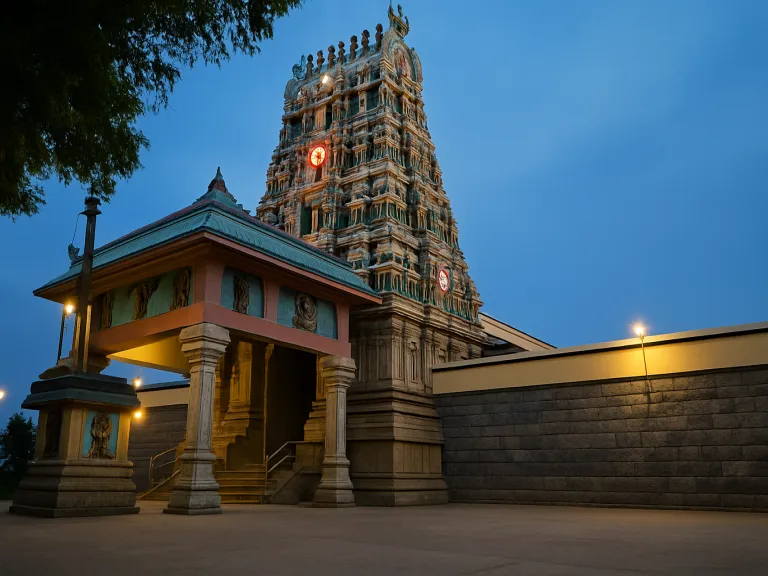
Subramaniyaswamy Temple at Sivanmalai is a well-known Murugan shrine near Kangeyam in Tiruppur district, Tamil Nadu. The temple stands on Sivanmalai hill, a prominent landmark of the Kongu region, and is dedicated to Lord Subramanya, worshipped here by devotees as Sivanmalai Andavar. The shrine is reached by a flight of hill steps and also by a road to the hilltop, making it accessible to pilgrims of different ages.
The presiding deity is Lord Subramanya with his consorts Valli and Deivanai. The temple is especially associated with Murugan devotion in western Tamil Nadu and is one of the shrines praised in the Tiruppugazh hymns of the saint-poet Arunagirinathar. Its hill setting, devotional atmosphere, and continuous local worship have made it an important pilgrimage point for devotees from Kangeyam, Tiruppur, Erode, Coimbatore, and surrounding Kongu Nadu villages.
A distinctive feature of the temple is the practice known as Aandavan Utharavu Petti, the “Lord’s command box,” in which an object is displayed after a devotee reports receiving divine instruction in a dream and the temple authorities accept it according to the temple’s custom. This living tradition has made Sivanmalai widely recognized beyond its immediate locality. The temple is primarily a place of Murugan worship, vows, kavadi offerings, festival worship, and hill pilgrimage.
Temple Significance
Sivanmalai Subramaniyaswamy Temple is significant as a major Murugan hill shrine of the Kongu region, as a Tiruppugazh-associated temple, and as the home of the distinctive Aandavan Utharavu Petti tradition. It is an active pilgrimage centre for devotees seeking the blessings of Lord Subramanya with Valli and Deivanai.
History
The documented antiquity of Sivanmalai Subramaniyaswamy Temple is supported by its presence in the devotional geography of Tamil Murugan worship and by its association with Arunagirinathar, the 15th-century saint-poet who composed Tiruppugazh hymns in praise of Murugan at many sacred sites. The mention of Sivanmalai in this devotional corpus establishes that the shrine was a recognized Murugan place of worship by the late medieval period.
The temple belongs to the Kongu region, an area that historically came under the influence of several South Indian powers, including the later Cholas, Pandyas, Vijayanagara rulers, Nayakas, and local chieftains at different periods. However, a specific builder, a clearly documented founding inscription, and a single ruling dynasty responsible for the original construction are not widely established in standard public temple accounts. For that reason, the temple’s precise foundation history is best treated with caution.
The present temple reflects the cumulative character of many Tamil hill shrines: an ancient place of worship expanded, maintained, and renewed over time by local devotees, temple administrators, and patrons. Its continuing importance is evident in regular worship, Murugan festivals, and the distinctive Aandavan Utharavu Petti tradition. Historically, the most secure statements are that the shrine is an old Kongu Nadu Murugan temple, that it was known by the time of Arunagirinathar, and that it remains an active pilgrimage centre near Kangeyam.
Mythology
The mythology of Sivanmalai is rooted in Murugan devotion and in the sacred character given to hills in Tamil religious tradition. Lord Murugan is deeply associated with hill shrines, and Sivanmalai is worshipped as one such sacred hill where devotees approach Subramanya for grace, courage, protection, and the fulfilment of vows. The name Sivanmalai connects the hill with Shiva in local religious memory, while the principal worship is offered to Shiva’s son, Murugan.
Local religious tradition gives special importance to Sivanmalai Andavar as a deity who communicates guidance to devotees. This is expressed through the Aandavan Utharavu Petti, the “Lord’s command box.” In this practice, a devotee who receives a dream instruction connected with an object reports it to the temple. When accepted according to the temple custom, that object is placed in a glass case for public view. Devotees regard the displayed object as carrying a symbolic message from the deity.
This tradition is part of the living mythology of the temple rather than a datable historical event. It shows how Sivanmalai is experienced by worshippers as an active sacred presence, not only as an architectural monument. Along with the worship of Subramanya, Valli, and Deivanai, the hill pilgrimage, vows, kavadi offerings, and festival observances form the devotional narrative of the temple. These beliefs are maintained through worship, oral tradition, and the continuing participation of devotees.
Architecture
Sivanmalai Subramaniyaswamy Temple is a Tamil hill temple built on the summit of Sivanmalai near Kangeyam. The shrine is approached by a long flight of stone steps, widely noted as numbering about 496, and also by a motorable hill road. This combination of stepped pilgrimage and road access is a defining feature of the temple experience. The ascent itself is treated by devotees as an act of worship, especially during vows and festival visits.
The temple follows the broad visual language of Dravidian temple architecture, with a hilltop sanctum, mandapas, subsidiary shrines, circumambulatory space, and festival-related spaces serving the needs of daily and seasonal worship. The main sanctum enshrines Lord Subramanya with Valli and Deivanai. The compact hilltop layout gives prominence to the deity and to the surrounding views of the Kangeyam region, linking the shrine to the landscape of Kongu Nadu.
Unlike large royal temple complexes known primarily for monumental inscriptions and vast prakaras, Sivanmalai’s architectural identity is that of a devotional hill shrine shaped by continuous worship. The steps, the hill setting, the sanctum of Murugan, the prakaram, and the Aandavan Utharavu Petti tradition together create its sacred character. Specific details about the original architect, exact construction phases, and formal Agamic layout are not widely documented in authoritative public sources, so they should not be asserted without inscriptional evidence.
Temple Highlights
Hilltop Murugan Shrine
The temple is situated on Sivanmalai hill near Kangeyam and is dedicated to Lord Subramanya, worshipped as Sivanmalai Andavar.
496 Hill Steps
Pilgrims commonly reach the temple by climbing the long flight of hill steps, a devotional practice associated with vows and Murugan worship.
Aandavan Utharavu Petti
The temple is known for the unique “Lord’s command box,” where an object is displayed according to the temple’s living devotional custom after a reported divine instruction.
Tiruppugazh Association
Sivanmalai is among the Murugan shrines praised by Arunagirinathar, giving it an important place in Tamil devotional literature.
Kongu Nadu Pilgrimage Centre
The shrine is an important place of worship for devotees from Kangeyam, Tiruppur, Erode, Coimbatore, and the surrounding Kongu region.
Spiritual Benefits
- Worship of Lord Subramanya for courage and clarity
- Prayers for removal of obstacles through Murugan’s grace
- Fulfilment of vows through hill climbing, kavadi, and offerings
- Devotional worship for family welfare and protection
- Seeking blessings of Subramanya with Valli and Deivanai
- Participation in Murugan festivals and collective worship
- Spiritual discipline through climbing the hill steps
Major Festivals
Thai Poosam
A major Murugan festival observed by devotees with special worship, vows, and offerings.
Panguni Uthiram
An important festival associated with Murugan and his divine consorts, Valli and Deivanai.
Vaikasi Visakam
A significant Murugan festival connected with the birth star of Lord Murugan and celebrated with devotional worship.
Skanda Sashti
A major Murugan observance commemorating the victory of Lord Murugan over Surapadman, marked by fasting and worship among devotees.
Karthigai Deepam and Karthigai-related Worship
Karthigai is closely associated with Murugan worship in Tamil tradition and is observed with lamps and devotional offerings.
Special Poojas
Abhishekam to Sri Subramaniyaswamy
Ritual bathing and worship of the presiding deity are central to Murugan temple worship.
Kavadi Offering
Devotees offer kavadi as an act of vow and devotion to Lord Murugan, especially during Murugan festival periods.
Milk-pot Offering
Milk offerings are made by devotees as part of Murugan worship and vow fulfilment.
How to Reach
By Road
Sivanmalai is near Kangeyam in Tiruppur district and is reachable by road from Kangeyam, Tiruppur, Erode, Dharapuram, and Coimbatore. Local buses, taxis, and private vehicles are commonly used.
By Rail
Tiruppur Railway Station is one of the nearest major railheads. From Tiruppur, visitors can travel by road toward Kangeyam and Sivanmalai.
By Air
Coimbatore International Airport is the nearest major airport. From the airport, visitors can continue by road via Tiruppur or nearby highway routes toward Kangeyam and Sivanmalai.
Nearby Temples
Chennimalai Subramanyaswamy Temple
About 30 km
A prominent Murugan hill temple in the Kongu region.
Avinashi Lingeswarar Temple
About 45 km
A well-known Shiva temple at Avinashi, associated with the Tevaram hymns.
Palani Dhandayuthapani Swamy Temple
About 70 km
One of the most important Murugan hill temples in Tamil Nadu.
Related Temples
Chennimalai Subramanyaswamy Temple
Another prominent Murugan hill temple in the Kongu region.
Palani Dhandayuthapani Swamy Temple
Major Tamil Nadu hill temple dedicated to Lord Murugan.
Marudamalai Subramanya Swamy Temple
Well-known Murugan hill temple in western Tamil Nadu.
Visitor Tips
-
Confirm current opening hours with the temple or local sources before travelling.
-
Use the hill steps only if physically comfortable; road access to the hilltop is also available.
-
Carry drinking water, especially during warm months, while respecting temple cleanliness.
-
Visit early in the morning or in the evening for a more comfortable hill climb.
-
Expect larger crowds during major Murugan festival days.
-
Wear modest clothing appropriate for a place of worship.
-
Follow the instructions of temple staff regarding queues, offerings, and shrine access.
-
Keep footwear only in designated areas before entering the temple premises.

 WhatsApp Us