🛕About Temple
Subramanya Swami Temple, Marudhamalai, is a revered hill temple of Lord Murugan located on the Marudhamalai hill in the Western Ghats near Coimbatore, Tamil Nadu. The shrine stands at the western edge of the city and is one of the best-known Murugan temples in the Kongu region. Its name is connected with the marudha trees and the hill landscape around the shrine.
The presiding deity is worshipped as Subramanya Swami, also associated with the form of Dhandayuthapani. Devotees visit the temple for Murugan worship, vows, kavadi offerings, abhishekam, and festival observances connected with Sashti, Karthigai, Thaipusam, and other Murugan-related days. The temple is also known for its association with Pambatti Siddhar, whose cave is an important sacred spot on the hill and forms part of the temple’s devotional identity.
Marudhamalai is valued both as a place of worship and as a hill shrine with a distinctive natural setting. Pilgrims reach the temple by steps or road, and the elevated location offers views of the surrounding hills and Coimbatore plains. The temple is administered as a public Hindu temple in Tamil Nadu, and it attracts devotees from Coimbatore, nearby districts, Kerala, and other parts of South India.
ℹ️Temple Information
🛕
Presiding Deity
Subramanya Swami
👸
Goddess
Valli and Deivanai
Need Help Planning your visit to
Arulmigu Subramanya Swami Temple?
Our travel experts can help you with transportation,
darshan timings, nearby sightseeing and complete temple tour planning.
⭐Temple Significance
Marudhamalai Subramanya Swami Temple is one of the most important Murugan shrines in the Coimbatore region. It is significant for its hill setting, its inclusion in the Tamil Murugan devotional tradition, its association with Arunagirinathar’s Thiruppugazh, and its close connection with Pambatti Siddhar. The temple is a major centre for Murugan festivals, vows, kavadi offerings, and regular worship by devotees from western Tamil Nadu and neighbouring Kerala.
📜History
The early foundation date of Subramanya Swami Temple at Marudhamalai is not established through widely published inscriptions or a secure founding record. The temple is nevertheless an old and important Murugan shrine of the Coimbatore region, with a continuous devotional presence supported by local worship, regional pilgrimage, and the hill’s sacred associations. Because a documented founder is not available, the temple is best understood through its devotional history rather than a single dated construction event.
A major historical marker for the temple is its association with the Tamil saint-poet Arunagirinathar, who composed hymns in praise of Murugan at many sacred sites. Marudhamalai is included among the Murugan shrines celebrated in the Thiruppugazh tradition, which gives the temple an important place in Tamil Murugan bhakti literature. This association places the shrine within the wider medieval and post-medieval devotional network of Murugan worship across Tamil Nadu.
In later centuries, the temple grew as a prominent pilgrimage centre for the Kongu region. Its hill setting, Pambatti Siddhar association, and accessibility from Coimbatore strengthened its public importance. Modern maintenance, pilgrim facilities, road access, festival arrangements, and renovation works have been managed under the public temple administration system of Tamil Nadu. The historical record does not support a firm attribution to a specific king, builder, dynasty, or architectural period, so those details are left unassigned.
🕉️Mythology
The mythology of Marudhamalai centres on Lord Murugan, the son of Shiva and Parvati, who is worshipped in Tamil tradition as the youthful warrior deity, teacher of wisdom, and protector of devotees. At this hill shrine, Murugan is revered as Subramanya Swami and is associated with the grace-giving form that receives vows, kavadi offerings, abhishekam, and prayers for courage, health, knowledge, and removal of obstacles.
Local sacred tradition strongly connects the hill with Pambatti Siddhar, one of the Tamil Siddhars. The cave associated with Pambatti Siddhar is visited by devotees as a place of meditation and spiritual power. In Siddhar lore, Pambatti Siddhar is linked with yogic knowledge, serpent symbolism, and mystical devotion to Murugan. The presence of the Siddhar cave gives Marudhamalai a distinctive spiritual character beyond the main shrine’s regular temple worship.
The name Marudhamalai is connected in local tradition with marudha trees and the natural features of the hill. The hill is also associated with medicinal herbs and a sacred mountain environment, themes common in Tamil Siddhar and Murugan traditions. These narratives belong to the temple’s living mythology and devotional memory. They are distinct from verifiable political history, but they remain central to how devotees understand the sanctity of the site.
🏛Architecture
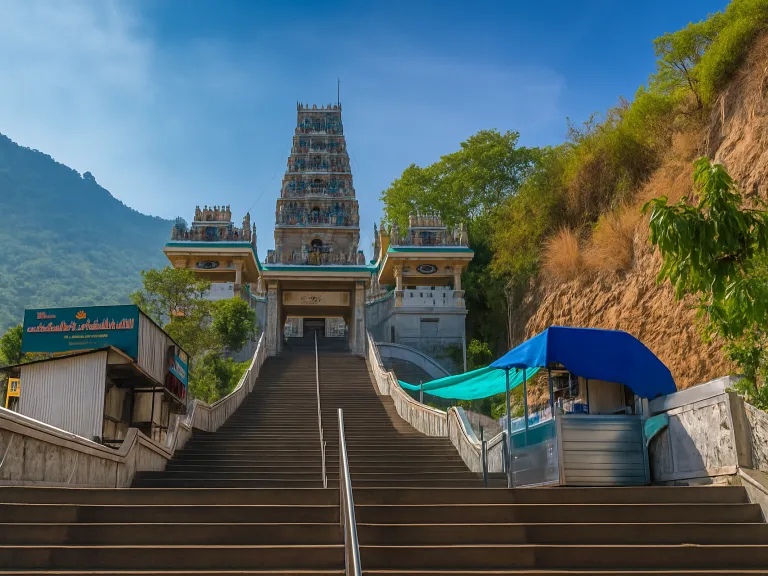
Subramanya Swami Temple at Marudhamalai follows the layout of a South Indian hill temple, where the natural elevation of the hill is an essential part of the sacred experience. The temple is reached by a motorable hill road and by steps used by many pilgrims. The approach, hill pathways, and elevated setting are integral to the pilgrimage, creating a gradual movement from the foothill environment to the sanctum area.
The main temple complex contains the sanctum of Subramanya Swami and associated shrines connected with Murugan worship. The temple also includes spaces for circumambulation, festival movement, offerings, and devotee congregation. Shrines and sacred spots connected with Pambatti Siddhar are part of the larger religious landscape of Marudhamalai. The architecture is functional and devotional, combining built temple elements with the natural contours of the hill.
The temple’s present appearance reflects periodic renovation, public administration, and continuing pilgrim use rather than a single preserved royal construction phase. Decorative features, mandapas, gateways, steps, and access facilities have been maintained and expanded to serve large numbers of visitors, especially during festival days. Since a firm dynastic building record is not widely established, the architectural value of the temple lies chiefly in its role as a living hill shrine of Murugan in the Western Ghats near Coimbatore.
✨
Temple Highlights
✨
Prominent Murugan hill temple near Coimbatore
The temple is located on Marudhamalai hill on the western side of Coimbatore and is among the most visited Murugan shrines in the Kongu region.
✨
Association with Arunagirinathar
Marudhamalai is connected with the Thiruppugazh tradition of Arunagirinathar, giving the shrine an important place in Tamil Murugan devotional literature.
✨
Pambatti Siddhar cave
The hill is closely associated with Pambatti Siddhar, and the cave connected with the Siddhar is an important devotional spot for pilgrims.
✨
Hill pilgrimage experience
Devotees can reach the temple by steps or hill road, and the ascent forms part of the spiritual experience of the shrine.
✨
Major Murugan festivals
Festivals such as Thaipusam, Skanda Sashti, Vaikasi Visakam, Panguni Uthiram, and Karthigai attract large numbers of devotees.
🙏
Spiritual Benefits
Seeking the grace of Lord Murugan for courage and clarity
Prayers for removal of obstacles and difficulties
Devotional worship for health and well-being
Vows and offerings for family welfare
Worship for success in education and disciplined effort
Spiritual strength through Sashti and Karthigai observances
Meditative inspiration through the Pambatti Siddhar association
🎉
Major Festivals
🎉
Thaipusam
A major Murugan festival observed in the Tamil month of Thai. Devotees offer prayers, fulfil vows, and participate in kavadi and other forms of Murugan worship.
🎉
Skanda Sashti
The six-day festival dedicated to Lord Murugan’s victory over Surapadman. It is an important period for fasting, prayer, and special worship.
🎉
Vaikasi Visakam
A festival associated with the birth star of Lord Murugan, celebrated with special worship and devotional offerings.
🎉
Panguni Uthiram
A Tamil festival connected with divine marriages and Murugan worship, observed with special poojas and devotee participation.
🎉
Karthigai
Karthigai days are sacred to Lord Murugan, and special worship is performed by devotees seeking his blessings.
🪔
Special Poojas
🪔
Abhishekam
Ritual bathing of Lord Subramanya with sacred substances such as milk, sandal, and other offerings according to temple practice.
🪔
Milk Abhishekam
A common Murugan offering performed by devotees as part of vows and prayers for grace and well-being.
🪔
Kavadi Offering
Devotees carry kavadi as an act of vow, penance, and gratitude to Lord Murugan, especially on festival days.
🪔
Sashti Worship
Special worship on Sashti days is observed by Murugan devotees for strength, protection, and removal of obstacles.
🪔
Karthigai Worship
Karthigai star days are considered important for Lord Murugan, and devotees visit for special darshan and prayers.
🚗
How to Reach
🛣️
By Road
Marudhamalai is on the western side of Coimbatore and is connected by city roads. Buses, taxis, and private vehicles are commonly used to reach the foothill and temple access road.
🚆
By Rail
Coimbatore Junction is the main railway station for visitors travelling by train. From the station, local transport can be used to reach Marudhamalai.
✈️
By Air
Coimbatore International Airport is the nearest airport. Taxis and city transport connect the airport area with Marudhamalai through Coimbatore city roads.
💡
Visitor Tips
Check the latest temple timings before travelling, especially on festival days.
Expect larger crowds during Thaipusam, Skanda Sashti, Karthigai, and weekends.
Use the hill road or steps according to health and comfort.
Carry drinking water, especially if climbing the steps in warm weather.
Wear modest clothing suitable for a temple visit.
Footwear must be removed before entering the worship areas.
Elderly visitors and families with children should plan extra time during crowded periods.
Respect restrictions and temple staff instructions inside the shrine.

 WhatsApp Us