🛕About Temple
Swetharanyeswarar Temple at Thiruvenkadu, in Mayiladuthurai district of Tamil Nadu, is an ancient Shaiva temple dedicated to Lord Shiva as Swetharanyeswarar. The name Thiruvenkadu means sacred white forest, and the Sanskrit form Swetaranyam carries the same meaning. The temple is one of the celebrated Paadal Petra Sthalams, revered in the Tevaram hymns of the Tamil Shaiva saints.
The presiding deity is worshipped as Swetharanyeswarar, and the goddess is Brahmavidyambal. The temple is especially known for its separate shrine to Budhan, the planet Mercury, making it the Budha Sthalam among the Navagraha temples of Tamil Nadu. Devotees visit for Shiva worship as well as for prayers connected with education, speech, intellect and relief from adverse Mercury-related planetary influences.
Thiruvenkadu is also associated with Nataraja worship and is often referred to in devotional usage as Adi Chidambaram because of its connection with Shiva’s cosmic dance. The temple complex includes important shrines for Aghora Murthi, Nataraja and other deities, along with sacred tanks and old ritual traditions. Its religious importance comes from a combination of Tevaram sanctity, Navagraha worship, Shaiva mythology and long-standing temple practice.
ℹ️Temple Information
🛕
Presiding Deity
Swetharanyeswarar
👸
Goddess
Brahmavidyambal
⭐
Temple Type
Shiva temple, Paadal Petra Sthalam, Navagraha temple, Budha Sthalam, Dravidian temple
📅
Built Period
At least 7th century CE as a Tevaram shrine; major stone structure and inscriptions are associated with the Chola period, especially from the 10th to 12th centuries CE.
🏛
Dynasty
Chola, with later patronage and additions under subsequent Tamil regional rulers.
Need Help Planning your visit to
Arulmigu Swetharanyeswarar Temple?
Our travel experts can help you with transportation,
darshan timings, nearby sightseeing and complete temple tour planning.
⭐Temple Significance
Swetharanyeswarar Temple is a Paadal Petra Sthalam, a major Shaiva shrine praised in the Tevaram, and the Budha Sthalam among the Navagraha temples of Tamil Nadu. It is significant for worship of Swetharanyeswarar, Brahmavidyambal, Aghora Murthi, Nataraja and Budhan.
📜History
Swetharanyeswarar Temple is historically important because Thiruvenkadu is praised in the Tevaram hymns of the 7th-century Shaiva Nayanmars. Tirugnanasambandar, Appar and Sundarar have sung about this shrine, confirming its status as an active and revered Shaiva centre by the early medieval period. Its inclusion among the Paadal Petra Sthalams places it within the core sacred geography of Tamil Shaivism.
The present temple complex contains architectural and inscriptional layers associated with the Chola period, when many Tevaram shrines in the Kaveri delta were rebuilt, endowed and expanded in stone. Inscriptions recorded at the temple refer to royal gifts, lamps, lands and ritual arrangements, showing continued patronage and organized worship. The Chola connection is especially significant because the region around Sirkazhi and Mayiladuthurai was a major centre of Chola religious activity.
Later rulers and local patrons continued to maintain and expand the temple, adding to its mandapas, shrines and ritual institutions. The temple’s identity as a Navagraha shrine for Budhan developed within the wider Tamil tradition of planetary worship connected to ancient Shiva temples. While the earliest builder of the shrine cannot be identified with certainty, the temple’s documented antiquity, Tevaram references and Chola-period records firmly establish it as one of the major historic Shiva temples of the Kaveri delta.
🕉️Mythology
In the mythology of Thiruvenkadu, Shiva is worshipped as the lord of the sacred white forest. The place is connected with the divine presence of Shiva, Parvati and the celestial beings who performed worship here. The name Swetharanyeswarar means the Lord of the White Forest, and the local sthala tradition connects the temple landscape with purity, learning and the removal of spiritual darkness.
A major legend of the temple concerns Shiva’s fierce form, Aghora Murthi. According to temple mythology, a demon named Maruthuvan obtained powers and troubled the gods and sages. Shiva manifested as Aghora Murthi and destroyed the demon, restoring order. This form of Shiva is worshipped with special reverence at Thiruvenkadu, and the shrine of Aghora Murthi is one of the temple’s distinctive features.
The temple is also linked to Budhan, the planetary deity Mercury. In Navagraha tradition, Budhan worship at Thiruvenkadu is associated with intelligence, speech, learning, discrimination and clarity of mind. The presence of the three sacred tanks, named Surya Theertham, Chandra Theertham and Agni Theertham, is also important in the temple’s sacred narrative. Devotees regard worship of Swetharanyeswarar, Brahmavidyambal and Budhan here as spiritually powerful within both Shaiva and Navagraha traditions.
🏛Architecture
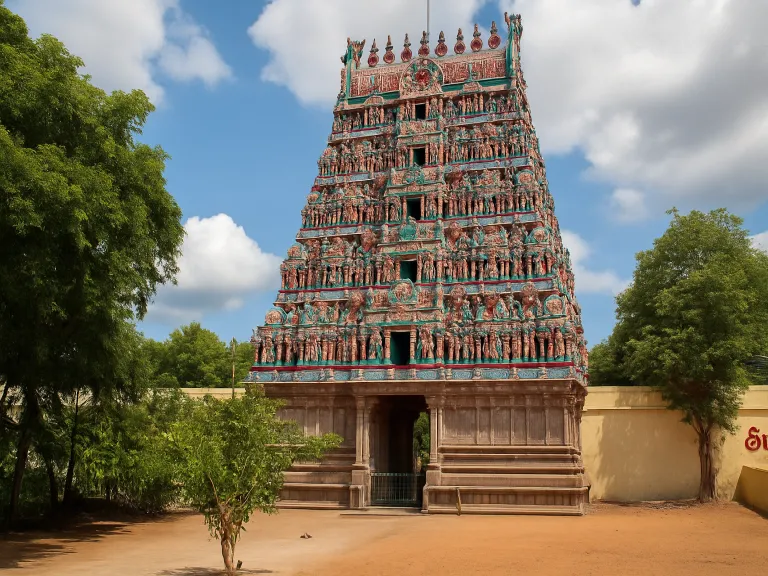
Swetharanyeswarar Temple is built in the Dravidian temple style characteristic of the Kaveri delta. The complex has gopurams, enclosed prakaras, mandapas, stone shrines and sacred water bodies arranged around the main sanctum. The presiding Shiva linga of Swetharanyeswarar is housed in the central shrine, while the goddess Brahmavidyambal has a separate shrine within the temple complex.
One of the most notable architectural and iconographic features is the shrine of Aghora Murthi, the fierce form of Shiva connected with the Maruthuvan legend. The temple also has an important Nataraja shrine, contributing to the devotional association of Thiruvenkadu with Chidambaram. Sculptural panels, subsidiary shrines and processional spaces reflect the layered growth of the temple through centuries of worship and patronage.
The temple is known for its triadic sacred elements: three principal forms of Shiva worship, three sacred tanks and sacred trees mentioned in sthala accounts. The large temple layout supports daily worship, festival processions and special planetary rituals for Budhan. Its architecture combines a historic Chola-period core with later additions, making it both a religious centre and an important example of medieval Tamil temple development in the Mayiladuthurai region.
🌳
Sacred Features
🌳 Temple Tree
Vilvam, Konrai and Vadaval
These are recorded in temple sthala accounts as the sacred trees associated with Thiruvenkadu, reflecting the shrine’s traditional identity as a sacred forest.
💧 Temple Tank
Surya Theertham, Chandra Theertham and Agni Theertham
The temple is associated with three sacred tanks named after the Sun, Moon and Fire. They form an important part of Thiruvenkadu’s sacred geography and ritual tradition.
✨
Temple Highlights
✨
Paadal Petra Sthalam
Thiruvenkadu is one of the Shiva temples praised in the Tevaram hymns of the Nayanmars, making it a highly revered Tamil Shaiva shrine.
✨
Budha Sthalam
The temple is the Navagraha shrine associated with Budhan, the planet Mercury, and has a separate shrine for Budhan.
✨
Aghora Murthi Shrine
A distinctive shrine is dedicated to Shiva as Aghora Murthi, connected with the temple legend of destroying the demon Maruthuvan.
✨
Brahmavidyambal Shrine
The goddess is worshipped as Brahmavidyambal, a form associated with divine knowledge and grace.
✨
Adi Chidambaram Association
The temple has an important Nataraja shrine and is devotionally associated with Shiva’s cosmic dance.
✨
Three Sacred Tanks
Surya Theertham, Chandra Theertham and Agni Theertham are the sacred water bodies associated with the temple.
🙏
Spiritual Benefits
Worship of Swetharanyeswarar for Shiva’s grace and spiritual purification
Prayers to Budhan for clarity of intellect and learning
Devotional worship for improvement in speech and communication
Seeking relief from adverse Mercury-related planetary influences
Worship of Brahmavidyambal for knowledge and wisdom
Prayers to Aghora Murthi for courage and protection from fear
Participation in Pradosham and Shiva worship for inner peace
🎉
Major Festivals
🎉
Maha Shivaratri
A major festival for Lord Shiva, observed with special worship, abhishekam and night-long devotion.
🎉
Arudra Darshan
A significant festival connected with Lord Nataraja and Shiva’s cosmic dance, observed during the Tamil month of Margazhi.
🎉
Pradosham
The twice-monthly Pradosham is important for Shiva worship and attracts devotees for special prayers.
🎉
Budha Peyarchi
The transit of Budhan is observed by devotees who visit the Budhan shrine for special worship connected with Mercury.
🎉
Navaratri
Navaratri is observed with worship of the goddess Brahmavidyambal.
🎉
Aippasi Annabhishekam
Annabhishekam for Lord Shiva is observed in the Tamil month of Aippasi, as in many major Shiva temples.
🪔
Special Poojas
🪔
Budhan Pooja
Special worship is offered to Budhan by devotees seeking blessings connected with learning, intellect, speech and Mercury-related planetary relief.
🪔
Pradosha Pooja
Pradosham worship is performed for Lord Shiva during the sacred twilight period on the 13th lunar day.
🪔
Abhishekam to Swetharanyeswarar
Ritual bathing and worship of the presiding Shiva linga form a central part of temple worship.
🪔
Aghora Murthi Worship
Devotees worship Shiva as Aghora Murthi, the fierce protective form associated with the temple’s mythology.
🪔
Brahmavidyambal Pooja
Special prayers are offered to the goddess Brahmavidyambal for wisdom, learning and divine grace.
🪔
Nataraja Worship
Worship of Lord Nataraja is significant at Thiruvenkadu, especially during festivals connected with Shiva’s dance.
🚗
How to Reach
🛣️
By Road
Thiruvenkadu is accessible by road from Sirkazhi, Mayiladuthurai, Poompuhar and nearby towns in the Kaveri delta. Local buses, taxis and private vehicles connect the temple with these centres.
🚆
By Rail
The nearest major rail access is through Sirkazhi railway station, with Mayiladuthurai Junction also serving travellers coming from other parts of Tamil Nadu.
✈️
By Air
The nearest major airport commonly used by pilgrims is Tiruchirappalli International Airport. Travellers may also use Chennai depending on route and onward transport.
💡
Visitor Tips
Confirm current temple timings before travelling, as timings may change on festival days and special ritual days.
Visit early in the morning or in the evening for a calmer darshan experience.
Maintain silence and follow the queue system inside the sanctum areas.
Wear modest clothing suitable for a traditional South Indian temple.
Check locally before taking photographs, especially inside the temple complex.
Plan extra time if visiting the Budhan shrine for special worship.
Combine the visit with nearby Kaveri delta temples if travelling from Sirkazhi or Mayiladuthurai.
Festival days can be crowded, so arrange transport and return travel in advance.

 WhatsApp Us