🛕About Temple
Thanthondreeswarar Temple at Akkur, also written as Aakkoor, is an ancient Shiva temple in the Mayiladuthurai region of Tamil Nadu. The presiding deity is Lord Thanthondreeswarar, a self-manifested form of Shiva, and the goddess is Val Nedunganni Amman. The name Thanthondreeswarar conveys the idea of a deity who manifested by himself, giving the temple a strong sacred identity in Tamil Saiva worship.
The temple is counted among the Paadal Petra Sthalams, the Shiva shrines praised in the Tevaram hymns of the Tamil Saiva saints. Akkur is especially associated with the Tevaram tradition and with the devotional geography of the Kaveri delta, where many early and medieval Saiva temples formed an interconnected pilgrimage circuit. The shrine is also known for its association with the Maadakkovil tradition, the elevated temple type linked with Kochengat Chola.
A distinctive feature of the temple is the revered form known as Ayirathil Oruvar, connected with a local sacred narrative about Lord Shiva appearing as one among a thousand devotees. This association has made the temple important not only as a Tevaram shrine but also as a place connected with annadanam, humility, and divine presence among devotees. Thanthondreeswarar Temple remains a significant Shiva temple for pilgrims visiting Akkur, Thirukkadaiyur, Mayiladuthurai, and other sacred places of the region.
ℹ️Temple Information
🛕
Presiding Deity
Thanthondreeswarar
👸
Goddess
Val Nedunganni Amman
⭐
Temple Type
Shiva temple, Paadal Petra Sthalam, Maadakkovil, Tevaram shrine
📅
Built Period
Before the 7th century CE; the temple is documented in the Tevaram period
Need Help Planning your visit to
Arulmigu Thanthondreeswarar Temple?
Our travel experts can help you with transportation,
darshan timings, nearby sightseeing and complete temple tour planning.
⭐Temple Significance
Thanthondreeswarar Temple is significant as a Tevaram Paadal Petra Sthalam, a self-manifested Shiva shrine, and a Maadakkovil associated with Kochengat Chola. Its Ayirathil Oruvar tradition gives it a distinctive place among the Shiva temples of the Mayiladuthurai region.
📜History
Thanthondreeswarar Temple is historically important because it belongs to the group of Paadal Petra Sthalams, the temples sanctified in the Tevaram corpus of Tamil Saivism. Its presence in the hymns of Tirugnanasambandar places the shrine firmly within the religious landscape of the 7th century CE. This confirms that Akkur was already an established Shaiva sacred centre during the early medieval period of Tamil history.
The temple is associated in Saiva tradition with Kochengat Chola, the Chola king remembered for building Maadakkovils, elevated Shiva temples. These temples were raised above the ground level and became an important architectural and devotional category in Tamil Nadu. Thanthondreeswarar Temple is identified in this tradition as one of the shrines connected with his pious construction activity. The exact historical date of Kochengat Chola is not fixed by a single inscriptional record, but the shrine’s antiquity is securely supported by its Tevaram status.
Akkur stood within the wider Chola cultural zone of the Kaveri delta, where temple worship, Tamil devotional literature, and royal patronage shaped public religious life. Like many ancient temples in the region, the present structure reflects layers of worship, maintenance, and renovation over time rather than a single-phase construction history. The temple’s enduring identity rests on three historically important elements: its Tevaram connection, its place in the Maadakkovil tradition, and its continuing worship of Lord Thanthondreeswarar as the self-manifested Shiva of Akkur.
🕉️Mythology
The central sacred idea of Thanthondreeswarar Temple is expressed in the very name of the deity. Thanthondreeswarar means the Lord who manifested by himself. In temple mythology, the Shiva linga at Akkur is revered as a self-manifested form, not one installed by human agency. This belief gives the shrine its special sanctity and links it with the wider Tamil Saiva understanding of places where Shiva revealed himself for the benefit of devotees.
Akkur is also closely connected with the sacred account of Ayirathil Oruvar, meaning One among a Thousand. According to the local temple tradition, a king arranged feeding for a thousand devotees of Shiva. When the count fell short, Lord Shiva appeared in the form of a devotee and completed the number. The episode emphasizes that Shiva is present among his devotees and that service to devotees is service to the Lord himself. The shrine of Ayirathil Oruvar preserves this devotional memory within the temple’s sacred identity.
The temple’s association with Kochengat Chola also carries a mythological dimension through the wider Maadakkovil tradition. Kochengat Chola is remembered in Saiva lore as a king deeply devoted to Shiva, connected with stories explaining why he built elevated temples. These narratives belong to the devotional memory of Tamil Saivism and distinguish Maadakkovils from ordinary ground-level temples. At Akkur, these strands of mythology reinforce the themes of self-manifestation, service, humility, and divine grace.
🏛Architecture
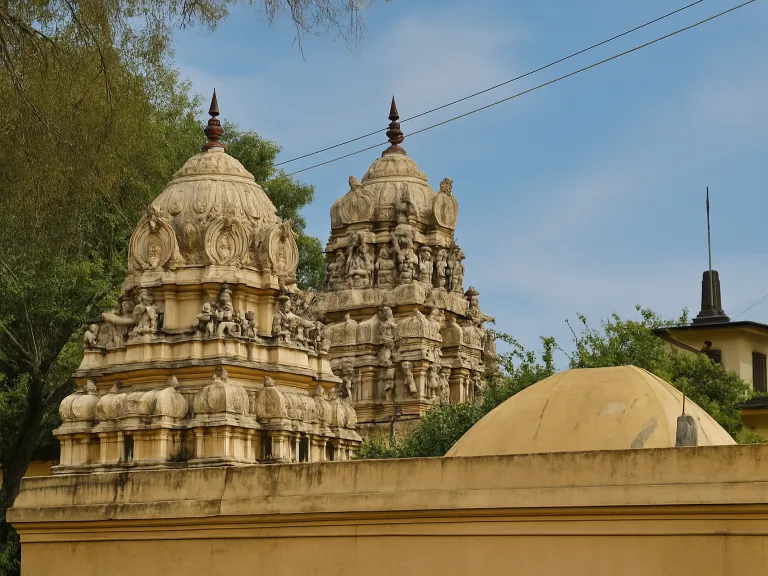
Thanthondreeswarar Temple is associated with the Maadakkovil type of Tamil temple architecture. A Maadakkovil is an elevated shrine form, traditionally linked with Kochengat Chola. In this type, the principal sanctum is raised above the surrounding ground level, creating a visibly elevated sacred space for the main deity. This feature is central to the architectural identity of the Akkur temple and distinguishes it from many ordinary village temples of the region.
The temple follows the broad Dravidian pattern of a Shiva temple, with the sanctum of Lord Thanthondreeswarar as the ritual centre. The presiding deity is worshipped in linga form, and the goddess Val Nedunganni Amman has her own place of worship within the temple complex. The temple also preserves the sacred identity of Ayirathil Oruvar, a feature that connects architecture with mythology and ritual memory. The arrangement reflects the typical Tamil Saiva emphasis on the main shrine, goddess shrine, processional spaces, and subsidiary worship areas.
As with many ancient Kaveri delta temples, the present temple represents accumulated periods of worship, repair, and renovation. Its value lies not only in ornament or scale but in its survival as a Tevaram shrine and as a Maadakkovil. The built form supports the temple’s sacred narrative: the elevated shrine expresses the historical Maadakkovil identity, while the sanctum of the self-manifested Lord preserves the devotional core. Together, these features make the temple an important example of early Tamil Saiva sacred architecture.
✨
Temple Highlights
✨
Paadal Petra Sthalam
The temple is one of the Shiva shrines praised in the Tevaram hymns, giving it an important place in Tamil Saiva devotional history.
✨
Self-manifested Shiva
Lord Thanthondreeswarar is revered as a self-manifested form of Shiva, reflected in the meaning of the deity’s name.
✨
Maadakkovil association
The temple is connected with the Maadakkovil tradition attributed to Kochengat Chola, known for elevated Shiva temples.
✨
Ayirathil Oruvar tradition
Akkur is known for the sacred narrative of Shiva appearing as one among a thousand devotees, emphasizing devotion and service.
✨
Kaveri delta temple heritage
The shrine forms part of the dense network of ancient Saiva temples in the Mayiladuthurai and Thirukkadaiyur region.
🙏
Spiritual Benefits
Worship of Lord Thanthondreeswarar is associated with seeking the grace of self-manifested Shiva.
Devotees remember the Ayirathil Oruvar tradition as a reminder of humility and service.
The temple is visited for blessings connected with devotion to Shiva and Saiva worship.
Pilgrims include the shrine in Tevaram temple circuits for spiritual merit.
The temple’s association with annadanam inspires prayers for generosity, welfare, and divine support.
🎉
Major Festivals
🎉
Maha Shivaratri
Maha Shivaratri is the principal annual festival dedicated to Lord Shiva and is observed in Shiva temples with night worship and special prayers.
🎉
Pradosham
Pradosham is an important recurring worship occasion for Lord Shiva, observed on the thirteenth lunar day of each fortnight.
🎉
Aippasi Annabhishekam
Annabhishekam during the Tamil month of Aippasi is an important observance in Shiva temples, involving ceremonial offering of cooked rice to the Shiva linga.
🎉
Margazhi Tiruvathirai
Tiruvathirai in the Tamil month of Margazhi is associated with Shiva worship, especially the cosmic dance of Lord Shiva.
🪔
Special Poojas
🪔
Pradosha Pooja
Special worship of Lord Shiva during Pradosham is an important observance for devotees.
🪔
Abhishekam to Lord Thanthondreeswarar
Ritual bathing of the Shiva linga is a central form of worship in the temple.
🪔
Annadanam-related worship remembrance
The Ayirathil Oruvar tradition gives special devotional importance to feeding devotees and remembering Shiva’s presence among them.
🚗
How to Reach
🛣️
By Road
Akkur is accessible by road from Mayiladuthurai and from the Thirukkadaiyur region. Local buses, taxis, and private vehicles are commonly used for temple visits in this area.
🚆
By Rail
Mayiladuthurai Junction is the major railway station serving the region for pilgrims travelling to Akkur.
✈️
By Air
The nearest major airport generally used by visitors to this region is Tiruchirappalli International Airport.
💡
Visitor Tips
Verify current opening hours locally before travelling, as temple timings may change.
Plan the visit together with nearby Mayiladuthurai and Thirukkadaiyur temples if undertaking a regional pilgrimage.
Wear modest clothing appropriate for a traditional Tamil Nadu temple.
Carry drinking water during hot months, especially when visiting multiple temples in the area.
Avoid disturbing rituals, pujas, or devotees inside the temple.
Ask temple authorities before taking photographs, especially inside the temple complex.

 WhatsApp Us