🛕About Temple
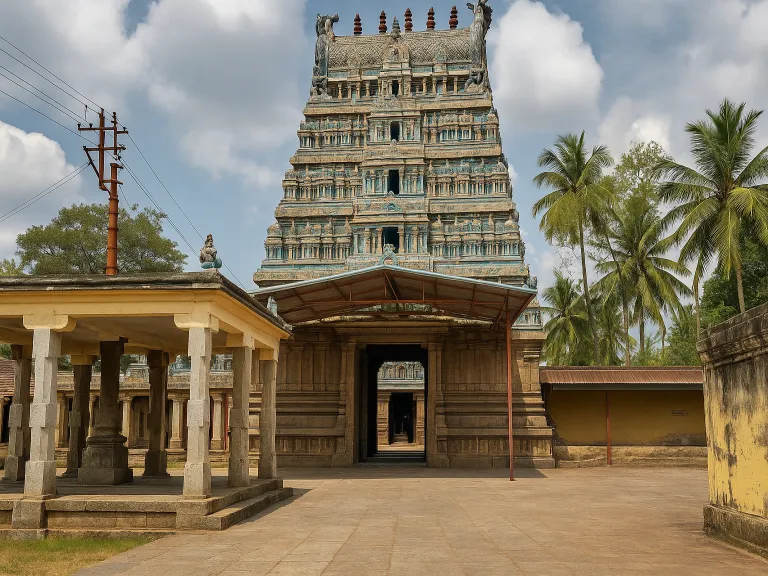
Thirukkoteeswarar Temple, also known as Koteeswarar Temple, is a Shiva temple at Thirukodikaval in the Kaveri delta of Tamil Nadu. The presiding deity is Lord Shiva worshipped as Thirukkoteeswarar or Koteeswarar, enshrined in the form of a lingam. The goddess is worshipped as Vadivambigai. The temple belongs to the celebrated group of Tevaram Paadal Petra Sthalams, the Shiva shrines praised in the canonical Tamil hymns of the Nayanmars.
Thirukodikaval is located in the temple-rich region around Kumbakonam, Aduthurai, and Mayiladuthurai. The shrine is important to the Tamil Saiva tradition because it was sung by the early medieval saints Tirugnanasambandar and Tirunavukkarasar, whose hymns form part of the Tevaram. This literary association establishes the antiquity of the shrine and places it within the sacred geography of the Chola country on the Kaveri river system.
The temple is also valued for its Chola-period historical record. The existing stone structure is associated with the temple-building activity of the Chola age, especially the period when brick shrines were converted into durable stone temples. For pilgrims, Thirukkoteeswarar Temple combines Tevaram sanctity, Chola heritage, and local sthala-purana connected with Yama, dharma, and Shiva’s grace. It remains a quieter sacred site compared with larger Kumbakonam temples, but it holds a respected place among documented Tamil Shaiva temples.
ℹ️Temple Information
🛕
Presiding Deity
Thirukkoteeswarar
⭐
Temple Type
Shiva temple, Tevaram Paadal Petra Sthalam, Chola-period temple, Dravidian temple
📅
Built Period
Shrine in existence by the 7th century CE; stone reconstruction associated with the 10th century CE.
🙏
Sampradaya
Tamil Saiva tradition
Need Help Planning your visit to
Arulmigu Thirukkoteeswarar Temple?
Our travel experts can help you with transportation,
darshan timings, nearby sightseeing and complete temple tour planning.
⭐Temple Significance
Thirukkoteeswarar Temple is significant as a Tevaram Paadal Petra Sthalam praised by Tirugnanasambandar and Tirunavukkarasar, as a Chola-period stone temple in the Kaveri delta, and as a shrine associated in local mythology with Yama’s worship of Shiva.
📜History
The antiquity of Thirukkoteeswarar Temple is firmly established through the Tevaram hymns of Tirugnanasambandar and Tirunavukkarasar. These hymns show that the shrine was an active Shiva temple by the 7th century CE, before the major phase of imperial Chola stone temple construction. The temple’s inclusion among the Paadal Petra Sthalams makes it part of the earliest historically attested sacred network of Tamil Shaivism.
The present stone temple is associated with the Chola period. Chola inscriptions and art-historical study connect the shrine with the well-known 10th-century movement of rebuilding earlier brick temples in stone. Sembiyan Mahadevi, the Chola queen renowned for patronage of Saiva temples, is linked with the stone reconstruction of several shrines in the Kaveri region, and Thirukodikaval is counted among temples associated with this phase. The site therefore represents continuity from the hymn-sung early medieval shrine to the more permanent Chola stone temple.
Later Chola and subsequent regional patrons continued the culture of worship, gifts, and maintenance typical of important Kaveri delta temples. The temple’s inscriptions are valuable for understanding donations, ritual arrangements, and the administrative world of Chola-period temples. While later renovations have contributed to the present appearance, the historical core of Thirukkoteeswarar Temple remains rooted in the Tevaram age and the Chola stone-temple tradition. Its history is therefore both literary and epigraphic: preserved in devotional hymns and in the material fabric of the shrine.
🕉️Mythology
The sthala-purana of Thirukodikaval connects the temple with Yama, the god of death and upholder of dharma. In the local Shaiva tradition, Yama worshipped Lord Shiva at this sacred place and received grace. This association gives the temple a special devotional meaning for worshippers who pray for protection, longevity, righteous living, and freedom from fear connected with untimely death.
The name Koteeswarar is understood in devotional usage as a form of Shiva whose greatness is beyond measure and who grants blessings to countless beings. Local tradition also links the place-name Thirukodikaval with a protected sacred space under the guardianship of Shiva. As with many Tevaram temples, the mythology is not presented as political history but as sacred memory preserved through worship, temple narratives, and the religious imagination of Tamil Saivism.
The Yama-related tradition places Thirukodikaval within a wider Tamil Shaiva theme in which Shiva transcends death and grants refuge to devotees. The temple’s spiritual atmosphere is shaped by this idea: the devotee approaches Thirukkoteeswarar not merely for worldly benefits but for inner steadiness, acceptance of dharma, and trust in divine grace. The goddess Vadivambigai is worshipped as the compassionate divine mother who accompanies Shiva’s grace. These mythological associations continue to guide the prayers and devotional identity of the shrine.
🏛Architecture
Thirukkoteeswarar Temple follows the South Indian Dravidian temple pattern developed in the Kaveri delta. The sanctum houses Lord Shiva as a lingam, with the principal worship centred on the garbhagriha and the adjoining mandapas. The arrangement of Nandi, balipeetam, and the axial approach to the sanctum reflects the standard Saiva temple plan. The goddess Vadivambigai has a separate shrine, as is customary in major Tamil Shiva temples.
The architectural significance of the temple lies especially in its Chola-period stone fabric. The Kaveri region saw many earlier brick shrines rebuilt in stone during the 10th century, creating durable structures with carefully proportioned sanctums, mandapas, devakoshta niches, and sculptural programs. Thirukodikaval belongs to this historical architectural environment. The temple’s walls and structural surfaces preserve evidence of Chola patronage and inscriptions, which are important for the study of medieval temple administration and religious endowments.
Like many temples with long ritual continuity, the present complex includes features from more than one period. Later additions and repairs coexist with the older Chola core. The temple is therefore best understood as a layered monument: a Tevaram shrine in origin, a Chola stone temple in historical form, and a living place of worship in the present. Its architecture is not only ornamental but functional, supporting daily puja, circumambulation, festival movement, and the devotional relationship between the devotee, Shiva, and the goddess.
🌳
Sacred Features
💧 Temple Tank
Yama Theertham
The temple’s sacred water source is associated with the local sthala-purana connected with Yama’s worship of Lord Shiva.
✨
Temple Highlights
✨
Tevaram Paadal Petra Sthalam
The temple is one of the Shiva shrines praised in the Tevaram hymns of the Nayanmars, especially Tirugnanasambandar and Tirunavukkarasar.
✨
Chola-period heritage
The existing stone temple is connected with Chola temple-building activity in the Kaveri region and preserves the historical character of an early medieval Saiva shrine.
✨
Association with Sembiyan Mahadevi
The temple is linked with the 10th-century Chola phase in which important Saiva shrines were rebuilt or strengthened in stone under royal patronage.
✨
Yama sthala-purana
Local temple tradition connects the shrine with Yama’s worship of Shiva, giving it devotional importance for prayers related to longevity, dharma, and protection.
✨
Kaveri delta sacred geography
Thirukodikaval lies in the temple-rich Kumbakonam-Aduthurai region, close to several important Saiva and Navagraha temples.
🙏
Spiritual Benefits
Worship of Lord Thirukkoteeswarar for Shiva’s grace
Prayer for protection and removal of fear, connected with the Yama sthala-purana
Prayer for longevity and well-being in the devotional tradition of the temple
Worship of Vadivambigai for compassion, family welfare, and inner strength
Participation in the sacred memory of the Tevaram hymns
Opportunity for quiet circumambulation and meditation in a historic Saiva shrine
🎉
Major Festivals
🎉
Maha Shivaratri
A major annual Shaiva observance dedicated to Lord Shiva, marked by special worship in Shiva temples.
🎉
Pradosham
A regular Shaiva observance connected with worship of Lord Shiva and Nandi, observed on the thirteenth lunar day.
🎉
Arudra Darshan
A significant Shaiva festival associated with Lord Shiva’s cosmic dance, observed in the Tamil month of Margazhi.
🪔
Special Poojas
🪔
Abhishekam to Thirukkoteeswarar
Ritual bathing and worship of the Shiva lingam form the central worship of the temple.
🪔
Pradosha Pooja
Special worship of Lord Shiva and Nandi performed during Pradosham observance.
🪔
Maha Shivaratri Worship
Night worship and special prayers to Lord Shiva are associated with the annual Maha Shivaratri observance.
🪔
Vadivambigai Amman Worship
Devotees worship the goddess Vadivambigai for grace, compassion, and family well-being.
🚗
How to Reach
🛣️
By Road
Thirukodikaval can be reached by road from Kumbakonam, Aduthurai, and Mayiladuthurai through local buses, taxis, and private vehicles.
🚆
By Rail
Aduthurai railway station is one of the convenient nearby railheads for reaching Thirukodikaval. Kumbakonam and Mayiladuthurai are larger railway stations in the region.
✈️
By Air
The nearest major airport is Tiruchirappalli International Airport, from where the temple can be reached by road via Kumbakonam or Mayiladuthurai.
💡
Visitor Tips
Confirm current opening hours locally before travelling, as timings in smaller temples may change.
Plan the visit together with nearby Kumbakonam, Aduthurai, and Suryanar Koil area temples.
Carry water during summer months, as the Kaveri delta can be hot and humid.
Wear modest clothing appropriate for a functioning place of worship.
Avoid photographing inner shrines unless permission is clearly given by temple authorities.
Maintain silence inside the sanctum areas and follow the guidance of temple staff.
If travelling by public transport, check local bus availability from Kumbakonam, Aduthurai, or Mayiladuthurai in advance.

 WhatsApp Us