🛕About Temple
Udhvaganathar Temple at Thirumanancheri is a well-known Shiva temple in Mayiladuthurai district of Tamil Nadu, near Kuthalam in the fertile Kaveri delta. The presiding deity is Lord Shiva worshipped as Udhvaganathar, also known as Kalyanasundareswarar, and the goddess is Kokilambal. The temple is especially revered for the divine wedding aspect of Shiva and Parvati, and the name Thirumanancheri is closely associated with marriage in Tamil religious memory.
The temple belongs to the sacred Saiva landscape of the Chola country and is counted among the Tevaram Paadal Petra Sthalams, the Shiva shrines praised in the canonical hymns of the Nayanmars. Its importance is not limited to local worship; devotees from many parts of Tamil Nadu visit the shrine seeking the blessings of Udhvaganathar and Kokilambal for marriage, reunion, harmony, and family well-being.
The temple is visited throughout the year, with a constant flow of devotees for regular darshan and marriage-related prayers. The worship focuses on Shiva as the auspicious bridegroom and the goddess as the divine bride. The shrine’s identity is deeply tied to Tamil Saiva devotion, Kaveri-region temple culture, and the living practice of parihara worship connected with marriage obstacles and marital harmony.
ℹ️Temple Information
🛕
Presiding Deity
Udhvaganathar
⭐
Temple Type
Shiva temple, Tevaram Paadal Petra Sthalam, Marriage-parihara temple, Dravidian temple
📅
Built Period
Known as a Tevaram shrine by the 7th-8th centuries CE; the existing structural temple is associated with the medieval Chola-period temple tradition of the Kaveri delta.
Need Help Planning your visit to
Udhvaganathar Temple?
Our travel experts can help you with transportation,
darshan timings, nearby sightseeing and complete temple tour planning.
⭐Temple Significance
Udhvaganathar Temple is significant as a Tevaram Paadal Petra Sthalam and as one of Tamil Nadu’s most visited Shiva temples for marriage-related prayers. The temple is revered for Lord Shiva as Kalyanasundareswarar, the divine bridegroom, and Goddess Kokilambal as the auspicious consort. Devotees seek blessings here for timely marriage, removal of obstacles, reunion, marital harmony, and family welfare.
📜History
Udhvaganathar Temple is historically significant because it is a Tevaram Paadal Petra Sthalam, showing that the shrine was already an established place of Shiva worship by the early medieval period. The Tevaram hymns, composed by the Saiva Nayanmars between the 7th and 8th centuries CE, are among the most important textual sources for the sacred geography of Tamil Shaivism. Thirumanancheri’s inclusion in this canon confirms its antiquity and devotional status.
The temple stands in the old Chola country of the Kaveri delta, a region where many Saiva temples received royal, institutional, and community support during the Chola period. The present structural temple reflects the Dravidian temple idiom of the region, with stone sanctums, mandapas, subsidiary shrines, and enclosure spaces used for ritual movement. The exact original founder of the shrine is not securely established in widely available historical records.
Over the centuries, Thirumanancheri became especially prominent as a temple for prayers connected with marriage. While its canonical status belongs to the early Saiva bhakti period, its public identity today is strongly shaped by the worship of Shiva and Parvati in their wedding form. The continuity of worship, the association with the Tevaram tradition, and its location among other ancient Kaveri delta temples together make it an important historical and religious site.
🕉️Mythology
The temple’s mythology centers on the divine wedding of Lord Shiva and Goddess Parvati. In the local sacred tradition, Parvati performs penance and is united with Shiva at Thirumanancheri, where the Lord is adored as the auspicious bridegroom. This wedding association gives the temple its religious identity and is reflected in the name Thirumanancheri, which is connected with the idea of a sacred marriage place.
A related tradition narrates that Parvati, after a divine episode involving Shiva, underwent separation and penance before reuniting with him. The culmination of this reunion is celebrated at Thirumanancheri, where Shiva grants darshan as Kalyanasundara, the beautiful bridegroom. The goddess is worshipped as Kokilambal, and the union of Shiva and Shakti is regarded as a source of auspiciousness, prosperity, and domestic harmony.
Because of this mythology, devotees visit the temple to pray for suitable marriage alliances, removal of obstacles in marriage, reunion of separated couples, and peace in family life. These beliefs belong to the temple’s living devotional tradition. The mythology is distinct from the historical record, but it strongly shapes worship, ritual practice, and the emotional connection devotees have with Udhvaganathar and Kokilambal.
🏛Architecture
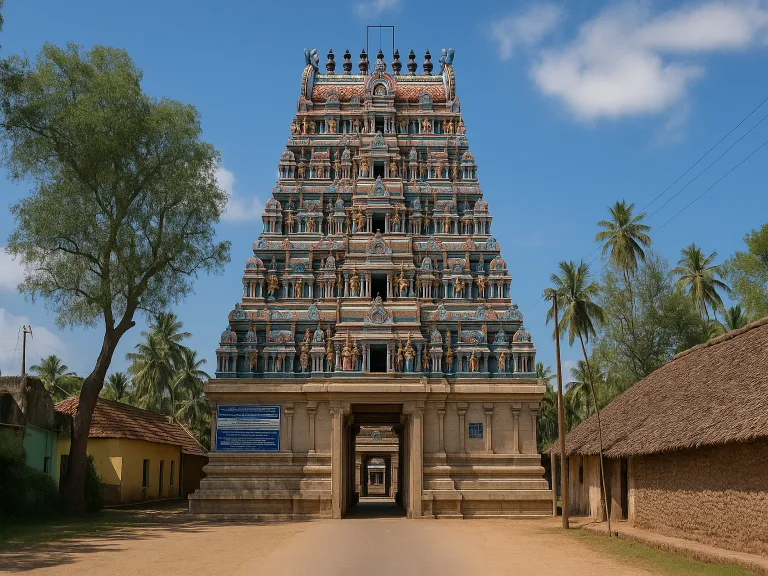
Udhvaganathar Temple follows the Dravidian temple form characteristic of the Kaveri delta. The complex includes a gopuram, enclosed prakara spaces, a sanctum for Lord Udhvaganathar, a shrine for Goddess Kokilambal, mandapas for worship, and subsidiary shrines typical of a Saiva temple. The layout supports both daily worship and the movement of devotees performing circumambulation and vows.
The presiding deity is worshipped in the sanctum as a Shiva lingam, while the temple’s celebrated Kalyanasundara association is expressed through the wedding aspect of Shiva and Parvati. The goddess shrine is an important focus of worship, especially for devotees seeking blessings connected with marriage and family life. The temple also contains shrines and images associated with the broader Saiva pantheon, as is common in ancient Tamil Shiva temples.
The architecture is valued less for large-scale monumentality than for its sacred function and continuity of ritual. The temple’s mandapas provide space for devotees participating in parihara worship and special prayers, while the prakara arrangement preserves the traditional experience of circumambulation around the sanctum. Its setting in the temple-rich Kaveri region connects it stylistically and ritually with the medieval Saiva temple culture of Tamil Nadu.
🌳
Sacred Features
🌳 Temple Tree
Vanni
The Vanni tree is recorded in temple tradition as the sthala vriksha, the sacred tree associated with the shrine.
💧 Temple Tank
Saptha Sagaram
Saptha Sagaram is associated with the temple as its sacred theertham, used in the temple’s sacred geography and ritual memory.
✨
Temple Highlights
✨
Tevaram Paadal Petra Sthalam
The temple is one of the Shiva shrines praised in the Tevaram canon, giving it a recognized place in Tamil Saiva sacred geography.
✨
Marriage Blessing Temple
Thirumanancheri is widely visited by devotees praying for removal of marriage obstacles and blessings for marital harmony.
✨
Kalyanasundara Association
Lord Shiva is worshipped here in the auspicious aspect connected with his divine wedding with Goddess Parvati.
✨
Goddess Kokilambal Shrine
The goddess Kokilambal is central to the temple’s worship, especially for devotees seeking family well-being and auspiciousness.
✨
Kaveri Delta Heritage
The temple forms part of the ancient Saiva temple network of the Chola country in the Kaveri river region.
🙏
Spiritual Benefits
Blessings for timely marriage
Removal of obstacles in marriage alliances
Harmony between husband and wife
Reunion and understanding in family life
Grace of Lord Shiva and Goddess Parvati as the divine couple
Auspiciousness for household life
Peace of mind through prayer and vow worship
🎉
Major Festivals
🎉
Maha Shivaratri
Maha Shivaratri is observed with special worship to Lord Shiva and draws devotees for night-long devotion and darshan.
🎉
Pradosham
Pradosham, observed twice every lunar month, is an important occasion for Shiva worship at the temple.
🎉
Panguni Uthiram
Panguni Uthiram is associated in Tamil temple tradition with divine unions and is significant for worship of Shiva and Parvati in the Kalyanasundara aspect.
🎉
Aippasi Annabishekam
Annabishekam, the ritual offering of cooked rice to the Shiva lingam during the Tamil month of Aippasi, is an important observance in many Shiva temples.
🪔
Special Poojas
🪔
Marriage Parihara Pooja
Devotees visit the temple to perform prayers seeking removal of obstacles to marriage and blessings from Udhvaganathar and Kokilambal.
🪔
Kalyana Archana
Special archana is offered to Lord Udhvaganathar and Goddess Kokilambal for auspicious marriage and family welfare.
🪔
Pradosha Pooja
Special worship to Lord Shiva is performed during Pradosham, an important time for Saiva devotees.
🪔
Abhishekam to Udhvaganathar
Ritual bathing and worship of the presiding Shiva lingam form part of the temple’s regular and special worship practices.
🚗
How to Reach
🛣️
By Road
Thirumanancheri is accessible by road from Mayiladuthurai, Kuthalam, and Kumbakonam. Local buses, taxis, and private vehicles connect the village with nearby towns in the Kaveri delta.
🚆
By Rail
Kuthalam railway station is the nearest local station. Mayiladuthurai Junction is a larger railhead with better connectivity to Chennai, Tiruchirappalli, Thanjavur, and other towns.
✈️
By Air
The nearest major airport is Tiruchirappalli International Airport. From the airport, travellers can continue by road or rail through Thanjavur, Kumbakonam, or Mayiladuthurai.
💡
Visitor Tips
Verify current temple timings before travelling, especially on festival days and public holidays.
Plan extra time if visiting for marriage-related parihara worship, as the temple can be crowded.
Carry offerings only according to the current instructions of the temple authorities.
Maintain silence and decorum inside the sanctum and mandapa areas.
Dress modestly and respectfully for temple worship.
If combining visits, plan nearby Kaveri delta temples in the same route from Mayiladuthurai or Kumbakonam.
Confirm photography rules at the temple before taking pictures.

 WhatsApp Us