🛕About Temple
Uma Maheswarar Temple at Konerirajapuram is an ancient Shiva temple in the Kaveri delta of Tamil Nadu. The sacred place is identified with the Tevaram site Tirunallam, one of the Paadal Petra Sthalams praised in the canonical Tamil Saiva hymns. The presiding deity is Shiva as Uma Maheswarar, worshipped with the goddess Angavala Nayaki, also known in some temple usage as Deha Sundari.
The temple is especially known for its association with Chola-period art and devotion. Konerirajapuram is widely celebrated for its large bronze image of Nataraja with Sivakami, an icon that is closely connected with the artistic and religious patronage of the Chola age. The temple’s sacred identity is therefore twofold: it is both a living Saiva shrine and an important monument in the history of South Indian bronze casting.
Historically, the temple stands out because of the role of Sembiyan Mahadevi, the Chola queen and major patron of Saiva temples. The site existed before her time, as shown by the Tevaram connection, but the stone temple and its endowments are strongly associated with her 10th-century patronage. For devotees, the temple is a place of worship of Shiva with Uma, and for students of Tamil temple history it is an important example of early medieval Chola religious culture.
ℹ️Temple Information
🛕
Presiding Deity
Uma Maheswarar
👸
Goddess
Angavala Nayaki
⭐
Temple Type
Shiva temple, Paadal Petra Sthalam, Chola-period temple, Tevaram shrine
📅
Built Period
10th century CE Chola structural phase; the shrine is attested earlier through 7th-century Tevaram hymns.
Need Help Planning your visit to
Arulmigu Uma Maheswarar Temple?
Our travel experts can help you with transportation,
darshan timings, nearby sightseeing and complete temple tour planning.
⭐Temple Significance
Uma Maheswarar Temple is significant as the Tevaram Paadal Petra Sthalam of Tirunallam, as a Chola-period temple associated with Sembiyan Mahadevi, and as the home of the celebrated Konerirajapuram Nataraja bronze. It combines literary sanctity, inscriptional history, royal patronage and living Saiva worship.
📜History
The sacred site of Konerirajapuram was known in the early Tamil Saiva tradition as Tirunallam. Its importance predates the later Chola structural temple because it is included among the Paadal Petra Sthalams, the Shiva temples praised in the Tevaram hymns of the Nayanmar saints. This establishes the site as an active Saiva centre by the 7th century CE, even though the surviving architectural phase belongs mainly to the Chola period.
The historically documented development of the temple is closely associated with Sembiyan Mahadevi, the queen of Gandaraditya Chola and mother of Uttama Chola. She was one of the most important royal patrons of Saivism in the 10th century CE and is known for renovating older brick shrines into stone temples and for commissioning bronze images and temple gifts. Konerirajapuram is among the temples connected with her patronage, and inscriptions at the site record Chola-period donations, religious services and institutional arrangements.
The temple’s history is also important for the study of Chola bronzes. The famous Nataraja and Sivakami images of Konerirajapuram are connected with the same religious-artistic world in which royal devotion, temple ritual and metal icon production flourished. The temple therefore preserves evidence of a long continuity: an early hymn-revered shrine, a 10th-century Chola stone temple, and a living place of worship where the artistic legacy of the Cholas remains central to its identity.
🕉️Mythology
The mythology of Uma Maheswarar Temple is connected with its ancient name Tirunallam and with the devotional landscape of the Tevaram hymns. In Saiva sacred understanding, the place is honoured as a kshetra where Shiva grants grace along with Uma. The name Uma Maheswarar itself emphasizes Shiva in union with the goddess, and devotees approach the temple as a shrine representing auspicious divine companionship, protection and household harmony.
A well-known local tradition surrounds the great bronze Nataraja of Konerirajapuram. The story describes a sculptor who was required to create an image of Nataraja of exceptional beauty and size. After repeated difficulty in achieving the desired form, Shiva and Parvati appeared to him in human guise. When the frustrated sculptor pointed toward molten metal, the divine couple entered it and manifested as the bronze forms of Nataraja and Sivakami. This legend is part of the temple’s devotional memory and explains why the image is regarded with deep reverence.
Another element of local belief focuses on the living quality of the Nataraja image. Devotees point to human-like details in the bronze and connect them with the story of divine manifestation. Such narratives belong to the temple’s mythological and devotional tradition rather than to political history. They express the idea that the deity is not merely an artistic object but a living presence who revealed himself for worship at Konerirajapuram.
🏛Architecture
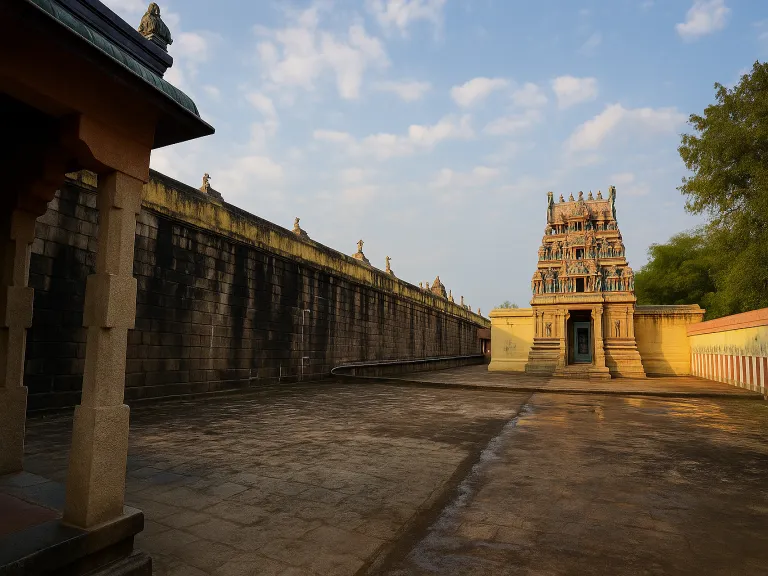
Uma Maheswarar Temple represents the sacred and artistic character of Chola-period temple architecture in the Kaveri region. The main shrine is dedicated to Shiva as Uma Maheswarar, with the linga enshrined in the sanctum. The temple plan follows the broad South Indian Saiva layout with a garbhagriha, associated mandapas, subsidiary shrines and spaces for processional and festival worship. The goddess Angavala Nayaki has her own shrine within the temple complex.
The temple’s architectural importance is strengthened by its inscriptional record and its association with Sembiyan Mahadevi’s phase of Chola patronage. Temples of this period show a movement from earlier brick sacred structures to more durable stone constructions. The sculptural and architectural vocabulary reflects early medieval Tamil Saiva temple practice, with an emphasis on the central sanctum, circumambulatory worship and the integration of bronze processional icons into ritual life.
The most celebrated artistic feature of the temple is the monumental Chola bronze Nataraja with Sivakami. Konerirajapuram is frequently discussed in relation to the history of South Indian bronze casting because of this extraordinary icon. The bronze is not simply displayed as art; it belongs to the ritual world of the temple. The combination of a Chola stone shrine, inscriptions, goddess worship and the great Nataraja icon makes the temple a significant monument of religion, art and royal patronage.
✨
Temple Highlights
✨
Paadal Petra Sthalam
The temple is identified with Tirunallam, a Shiva shrine praised in the Tevaram hymns and included among the 275 Paadal Petra Sthalams.
✨
Chola royal patronage
The temple’s stone phase and endowments are closely associated with Sembiyan Mahadevi, one of the foremost Chola patrons of Saiva temples.
✨
Konerirajapuram Nataraja
The temple is renowned for its monumental Chola bronze image of Nataraja with Sivakami, an important icon in South Indian bronze art.
✨
Uma Maheswarar worship
The presiding deity is Shiva as Uma Maheswarar, emphasizing the sacred presence of Shiva with Uma.
✨
Goddess Angavala Nayaki
The goddess of the temple is worshipped as Angavala Nayaki, also known in temple usage as Deha Sundari.
✨
Inscriptions and Chola heritage
Chola-period inscriptions at the temple preserve information on donations, worship arrangements and the temple’s medieval religious life.
🙏
Spiritual Benefits
Worship of Shiva as Uma Maheswarar for divine grace
Prayers for harmony in family life through the Shiva-Uma aspect
Devotion to Nataraja for inner clarity and spiritual rhythm
Seeking blessings for health and well-being
Offering prayers for removal of obstacles in righteous life
Participation in Pradosham worship for Saiva devotion
Meditation on the Chola Nataraja form as a symbol of cosmic dance
🎉
Major Festivals
🎉
Maha Shivaratri
A major annual festival for Shiva worship, observed with special devotion in Saiva temples.
🎉
Arudra Darshan
An important festival for Nataraja worship in the Tamil month of Margazhi, especially meaningful at a temple renowned for its Nataraja icon.
🎉
Aippasi Annabhishekam
A significant Shiva temple observance in the Tamil month of Aippasi, centred on offering cooked rice to the Shiva linga.
🎉
Pradosham
A regular Saiva observance dedicated to Shiva, performed on the trayodashi tithi of the lunar fortnight.
🪔
Special Poojas
🪔
Pradosha Puja
Worship of Shiva during Pradosham, a sacred time in Saiva practice.
🪔
Nataraja Worship
Special worship connected with Nataraja is especially significant because of the temple’s celebrated Chola bronze icon.
🪔
Maha Shivaratri Abhishekam
Abhishekam and night worship for Shiva are central to Maha Shivaratri observance.
🪔
Annabhishekam
The offering of cooked rice to the Shiva linga during Aippasi Annabhishekam is a major Saiva temple ritual.
🚗
How to Reach
🛣️
By Road
Konerirajapuram is reachable by local roads from the Kumbakonam-Mayiladuthurai region. Local taxis, buses or private vehicles are commonly used for the final approach to the village.
🚆
By Rail
Use railway stations on the Kumbakonam-Mayiladuthurai line and continue by local road transport to Konerirajapuram.
✈️
By Air
The nearest major airport commonly used for the Kaveri delta temple region is Tiruchirappalli International Airport; onward travel is by road or rail toward Kumbakonam and Mayiladuthurai.
💡
Visitor Tips
Respect the temple as an active place of worship, not only as a heritage monument.
Check current opening hours locally before travelling, as verified public timings are not provided here.
Dress modestly and follow instructions from temple staff regarding access to shrines.
Do not photograph bronze icons or inner shrines unless temple authorities clearly permit it.
Visit during cooler parts of the day, especially in summer months.
Allow time to view the Nataraja shrine respectfully without disturbing worshippers.
Combine the visit with other historic Shiva temples in the Kumbakonam-Mayiladuthurai region only after confirming routes locally.

 WhatsApp Us