🛕About Temple
Vaidyanathaswamy Temple, widely known as Vaitheeswaran Koil, is a major Shiva temple at Vaitheeswaran Koil near Sirkazhi in Mayiladuthurai district, Tamil Nadu. The presiding deity is Lord Shiva as Vaidyanathaswamy, the divine physician, and the goddess is Thaiyalnayaki. The temple is one of the celebrated Paadal Petra Sthalams praised in the Tevaram hymns of the Tamil Shaiva saints.
The shrine is especially associated with healing, medicine, and prayer for relief from disease. Devotees worship Shiva here as the lord who cures suffering, while Thaiyalnayaki is revered as the compassionate mother who carries medicinal grace. The temple also has an important shrine for Angaraka, the planetary deity associated with Mars, making it one of the well-known Navagraha temples of Tamil Nadu.
Vaitheeswaran Koil is both a pilgrimage centre and a living temple with daily worship, festival processions, and continuous devotional traditions. Its sacred tank, Siddhamirtham, the neem temple tree, the shrines of Murugan and Angaraka, and the hymnal importance of the place give it a distinct identity among the Shiva temples of the Cauvery region. The temple attracts devotees seeking spiritual healing, Navagraha worship, and darshan at an ancient Shaiva site connected with Tamil devotional literature.
ℹ️Temple Information
🛕
Presiding Deity
Vaidyanathaswamy
⭐
Temple Type
Shiva temple, Paadal Petra Sthalam, Navagraha temple, Angaraka sthalam, Dravidian temple
📅
Built Period
Documented as a sacred shrine in 7th-century CE Tevaram hymns; the existing stone complex developed during the medieval Chola period with later additions.
Need Help Planning your visit to
Arulmigu Vaidyanathaswamy Temple?
Our travel experts can help you with transportation,
darshan timings, nearby sightseeing and complete temple tour planning.
⭐Temple Significance
Vaidyanathaswamy Temple is significant as a Paadal Petra Sthalam praised in the Tevaram, a major Shiva temple associated with divine healing, and the Angaraka Navagraha sthalam of Tamil Nadu.
📜History
The historical importance of Vaidyanathaswamy Temple is firmly established by its place in the Tevaram canon. The temple was sung by the 7th-century Shaiva saints Tirugnanasambandar and Tirunavukkarasar, also known as Appar. This confirms that Vaitheeswaran Koil was an active and revered Shiva shrine during the early medieval period of Tamil religious history.
The present temple complex developed over several centuries in the Chola country. Stone inscriptions and the architectural character of the temple connect its growth with medieval Tamil dynasties, particularly the Cholas, who were major patrons of Shaiva temples in the Cauvery delta. Later periods also added to the temple’s ritual, structural, and administrative life, as happened in many large temples of the region.
The temple’s name, Vaitheeswaran Koil, reflects the Sanskrit-Tamil idea of Shiva as Vaidyanatha, the lord of healing. Its historical identity is inseparable from Tamil Shaiva bhakti, temple-based worship, and the sacred geography of the Cauvery region. While the exact original founder is not securely documented, the temple’s antiquity, hymnal status, inscriptions, and continuing worship make it one of the most important Shiva temples near Sirkazhi and Mayiladuthurai.
🕉️Mythology
The mythology of Vaitheeswaran Koil centres on Shiva as Vaidyanatha, the divine physician who removes disease and suffering. In temple tradition, the lord grants healing grace to devotees who approach him with faith. The goddess Thaiyalnayaki is closely connected with this healing aspect and is worshipped as the mother who supports the curative power of the deity.
A major local tradition connects the temple with Lord Murugan. Murugan, worshipped here as Selva Muthukumara Swamy, is associated with the destruction of demonic forces and the restoration of divine order. The presence of Murugan, Shiva, Thaiyalnayaki, and Angaraka within the temple’s sacred environment strengthens the temple’s identity as a place where courage, health, and divine protection are sought.
The temple is also linked with Angaraka, the planetary deity of Mars. Devotees perform worship here for relief from difficulties attributed in astrology to Mars, especially issues connected with courage, conflict, marriage obstacles, blood-related ailments, and land matters. The sacred tank Siddhamirtham is associated in tradition with curative merit. These beliefs belong to the temple’s sacred mythology and devotional practice, distinct from the historical evidence for the temple’s age and patronage.
🏛Architecture
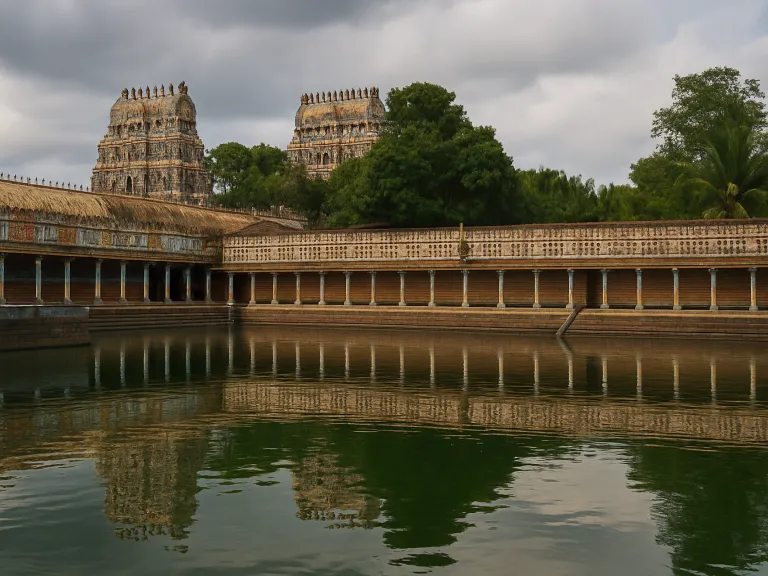
Vaidyanathaswamy Temple is built in the Dravidian temple style typical of the historic Chola region. The complex has gopurams, enclosed prakaram passages, mandapams, subsidiary shrines, and a sacred tank, forming a complete South Indian temple layout. The main sanctum houses Lord Shiva as Vaidyanathaswamy in the form of a linga, while the goddess Thaiyalnayaki has a separate shrine within the temple.
The temple plan gives importance to multiple devotional circuits. Shrines for Selva Muthukumara Swamy, Angaraka, Vinayaka, and other deities are arranged within the precincts, allowing devotees to worship Shiva, Shakti, Murugan, and the Navagraha-associated deity in one sacred complex. The temple tank Siddhamirtham and the neem tree are integral parts of the ritual landscape rather than decorative additions.
The architectural character reflects gradual development rather than a single construction phase. Like many major temples of the Cauvery delta, the complex preserves layers of patronage through its masonry, mandapams, sculptural features, and ritual spaces. Its gopurams and courtyards create a processional environment for festivals, while the sanctum and inner shrines maintain the concentrated devotional focus of a Shaiva temple. The structure is valued not only for its form but also for its continuity of worship.
🌳
Sacred Features
🌳 Temple Tree
Neem
The neem tree is associated with the temple’s healing symbolism and the worship of Vaidyanathaswamy as the divine physician.
💧 Temple Tank
Siddhamirtham
Siddhamirtham is the sacred temple tank associated with the temple’s healing traditions and ritual importance.
✨
Temple Highlights
✨
Paadal Petra Sthalam
The temple is one of the Shiva shrines praised in the Tevaram hymns by the Tamil Shaiva saints Tirugnanasambandar and Appar.
✨
Vaidyanathaswamy, the Divine Physician
Lord Shiva is worshipped here as Vaidyanathaswamy, the healer who grants relief from illness and suffering in devotional belief.
✨
Thaiyalnayaki Shrine
The goddess Thaiyalnayaki is revered as the compassionate mother associated with healing grace and protection.
✨
Angaraka Navagraha Sthalam
The temple is the Mars or Angaraka sthalam among the well-known Navagraha temples of Tamil Nadu.
✨
Siddhamirtham Temple Tank
The sacred tank is associated with the healing traditions of the temple and is an important part of the temple’s ritual landscape.
✨
Selva Muthukumara Swamy Shrine
Lord Murugan is worshipped here as Selva Muthukumara Swamy, adding to the temple’s strong Shaiva and Murugan devotional character.
🙏
Spiritual Benefits
Prayer for relief from illness and suffering
Worship for health, healing, and recovery
Angaraka worship for Mars-related astrological afflictions
Prayer for courage and strength
Worship for relief from marriage obstacles attributed to Mars dosha
Prayer for protection from conflict and distress
Devotional merit from worship at a Tevaram Paadal Petra Sthalam
🎉
Major Festivals
🎉
Maha Shivaratri
A major Shaiva festival observed with special worship to Lord Vaidyanathaswamy.
🎉
Panguni Utsavam
An important annual festival period of the temple, marked by special rituals and processional worship.
🎉
Karthigai Deepam
A festival associated with lights and worship of Shiva and Murugan, observed in many Tamil Shaiva temples including Vaitheeswaran Koil.
🎉
Skanda Sashti
A festival connected with Lord Murugan, who is worshipped here as Selva Muthukumara Swamy.
🎉
Thai Poosam
A significant Murugan festival observed with devotion to Selva Muthukumara Swamy.
🪔
Special Poojas
🪔
Angaraka Pooja
Special worship offered to Angaraka, the Mars deity, for relief from Mars-related astrological afflictions.
🪔
Vaidyanathaswamy Abhishekam
Ritual bathing and worship of Lord Vaidyanathaswamy, performed as part of Shaiva temple worship.
🪔
Thaiyalnayaki Amman Pooja
Worship offered to Goddess Thaiyalnayaki for grace, protection, and healing blessings.
🪔
Selva Muthukumara Swamy Pooja
Special worship to Lord Murugan in his form as Selva Muthukumara Swamy.
🚗
How to Reach
🛣️
By Road
Vaitheeswaran Koil is on the Mayiladuthurai-Sirkazhi route and is accessible by road from Sirkazhi, Mayiladuthurai, Chidambaram, and other towns of the Cauvery delta.
🚆
By Rail
Vaitheeswaran Koil has a railway station on the Mayiladuthurai-Sirkazhi line. Sirkazhi and Mayiladuthurai are also convenient railheads.
✈️
By Air
The nearest major airport is Tiruchirappalli International Airport. Chennai International Airport is another option for long-distance travellers.
💡
Visitor Tips
Verify current temple timings before travel, especially on festival days.
Tuesdays are important for Angaraka worship and may be more crowded.
Wear modest clothing appropriate for a traditional Hindu temple.
Keep extra time for darshan of Vaidyanathaswamy, Thaiyalnayaki, Selva Muthukumara Swamy, and Angaraka.
Use the official temple counters or authorized arrangements for pooja-related offerings.
Respect restrictions inside sanctum areas and follow instructions from temple staff.
The temple is close to Sirkazhi and can be combined with visits to other historic Shiva temples in the region.

 WhatsApp Us