🛕About Temple
Vallimalai Subramanya Swamy Temple is a hill shrine dedicated to Lord Murugan at Vallimalai, near Katpadi and Thiruvalam in the present Ranipet district of Tamil Nadu. The temple is closely associated with Valli, the beloved consort of Murugan, and the very name Vallimalai means the hill of Valli. The shrine is reached by climbing the rocky hill, making the visit both a pilgrimage and a physical ascent through a landscape strongly linked with Murugan devotion.
The presiding deity is Subramanya Swamy, worshipped as Murugan, with Valli occupying a central place in the sacred identity of the temple. The hill contains shrines, caves, rock-cut features and sacred spots connected with the Valli-Murugan narrative. Devotees visit Vallimalai to worship Murugan as the divine bridegroom of Valli and to experience a site where Tamil devotional memory, hill worship and mythology meet.
Vallimalai is also respected for its association with the Tiruppugazh tradition. The 20th-century saint Vallimalai Sachidananda Swamigal lived and taught in this region and helped spread the singing of Arunagirinathar’s Tiruppugazh hymns in Murugan temples. Because of this, Vallimalai is valued not only as a temple of worship but also as a living center of Tamil Murugan bhakti, music, pilgrimage and sacred geography.
ℹ️Temple Information
🛕
Presiding Deity
Subramanya Swamy
⭐
Temple Type
Murugan temple, Hill temple, Rock-cut temple, Pilgrimage temple
📅
Built Period
Early medieval period; the rock-cut core is generally assigned to the Pallava period, around the 8th century CE.
Need Help Planning your visit to
Arulmigu Vallimalai Subramanya Swamy Temple?
Our travel experts can help you with transportation,
darshan timings, nearby sightseeing and complete temple tour planning.
⭐Temple Significance
Vallimalai is significant as a Murugan hill shrine intimately associated with Valli, the divine consort of Subramanya Swamy. It is valued for its rock-cut shrine, sacred hill landscape, Valli-Murugan mythology and its modern connection with the Tiruppugazh movement of Vallimalai Sachidananda Swamigal.
📜History
The historical importance of Vallimalai rests on its early hill-shrine character, its rock-cut elements and its location in the old northern Tamil country. The Subramanya shrine on the hill is generally assigned to the Pallava period by studies of Tamil Nadu rock-cut temples, placing its core sacred architecture in the early medieval period. Later structural additions and active worship helped the shrine continue as a regional Murugan pilgrimage center.
Vallimalai hill also preserves evidence of older religious activity in the form of caves, rock surfaces and remains associated with ascetic occupation. The wider hill landscape is known for Jain-related vestiges, showing that the area was part of a broader sacred and monastic geography before and alongside later Hindu temple worship. This layered history is characteristic of many rocky hills in northern Tamil Nadu, where Jain, Shaiva and Murugan traditions developed in close regional proximity.
In the modern period, Vallimalai gained renewed prominence through Vallimalai Sachidananda Swamigal, a saint and devotee of Murugan who made the propagation of Tiruppugazh his life’s mission. His presence strengthened the temple’s identity as a center of Murugan devotion and devotional singing. While the name of the original builder is not securely established, the temple’s rock-cut core, continuing worship and later devotional history make Vallimalai an important Murugan shrine of northern Tamil Nadu.
🕉️Mythology
The mythology of Vallimalai centers on Valli, the tribal princess and consort of Lord Murugan. In the Tamil sacred imagination, Valli is raised among the hill and forest people and is associated with millet fields, mountain paths and the natural world. Vallimalai is revered as the place connected with her life, and the hill’s caves and sacred spots are understood by devotees through this Valli-centered narrative.
Murugan’s courtship of Valli is one of the most loved stories in Tamil Murugan tradition. The god approaches Valli in different forms, including as a hunter and as an aged ascetic, while Ganesha appears as an elephant to help bring about the union. This playful and intimate mythology presents Murugan not only as a warrior deity but also as a compassionate lord who comes close to the devotee in familiar human forms.
At Vallimalai, this story is localized in the landscape. The hill is not merely a setting but a sacred participant in the memory of Valli and Murugan. Devotees climb the hill with the feeling that they are moving through the world of the myth itself. The worship of Subramanya Swamy here therefore emphasizes divine love, grace, union and the closeness of Murugan to ordinary devotees, especially those who approach him with devotion and simplicity.
🏛Architecture
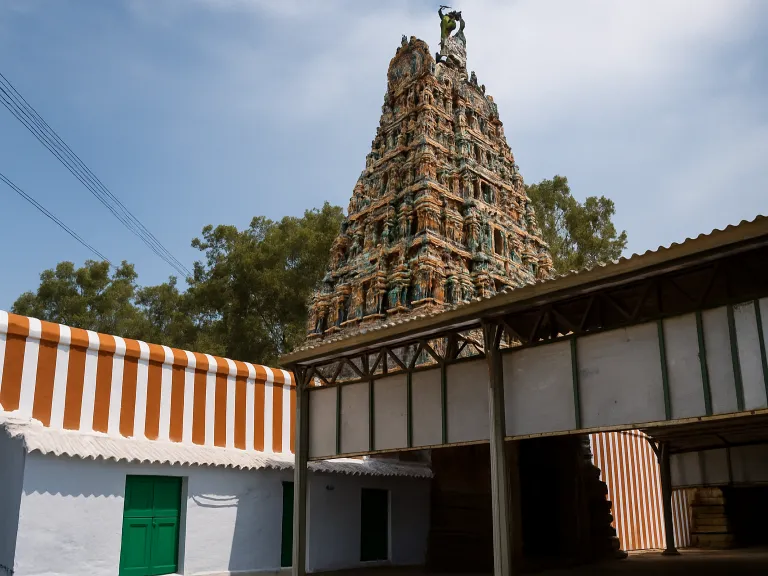
Vallimalai Subramanya Swamy Temple is best understood as a hill temple with a rock-cut sacred core. The shrine is set into the granite landscape of Vallimalai, and devotees ascend the hill by steps to reach the main worship area. The natural rock, cave-like spaces and later-built mandapas together create an architectural experience different from large plains temples with expansive courtyards and towering gateways.
The most important architectural feature is the rock-cut character of the sanctum area, which connects the temple with the early medieval cave-temple tradition of Tamil Nadu. The shrine uses the hill itself as sacred architecture, with the stone mass forming the spiritual enclosure. Later masonry additions provide practical spaces for worship, gathering and festival movement, but the identity of the temple remains strongly tied to the living rock of the hill.
The temple landscape includes caves and sacred points associated with Valli and Murugan, giving the architecture a narrative quality. Pilgrims experience the temple through movement: climbing, pausing at shrines, entering rock-cut spaces and viewing the surrounding countryside from the hill. Its architectural significance lies not in monumental scale but in the integration of natural hill, carved shrine, devotional memory and active worship. Vallimalai therefore represents a distinctive form of Murugan hill worship in northern Tamil Nadu.
✨
Temple Highlights
✨
Hill shrine of Valli and Murugan
The temple is located on Vallimalai, the hill sacred to Valli, and is one of the best-known places connected with the Valli-Murugan narrative in northern Tamil Nadu.
✨
Rock-cut sacred core
The main shrine is associated with the rock-cut temple tradition and is set within the natural granite hill landscape.
✨
Tiruppugazh association
Vallimalai is linked with Vallimalai Sachidananda Swamigal, who popularized the singing of Arunagirinathar’s Tiruppugazh hymns.
✨
Pilgrimage climb
Devotees reach the shrine by ascending the hill, making the visit a devotional climb as well as temple worship.
✨
Sacred caves and hill landscape
The hill contains caves and sacred locations connected with the mythology of Valli and Murugan.
🙏
Spiritual Benefits
Devotees pray for the grace of Lord Murugan.
Devotees seek blessings for marriage and harmony in family life through the Valli-Murugan association.
Devotees pray for courage, clarity and removal of obstacles.
Devotees undertake the hill climb as an act of devotion and discipline.
Devotees seek spiritual uplift through Tiruppugazh singing and Murugan worship.
Devotees pray for protection and guidance from Subramanya Swamy.
🎉
Major Festivals
🎉
Skanda Sashti
A major Murugan festival commemorating the victory of Skanda over Surapadman, observed with special devotion in Murugan temples.
🎉
Thai Poosam
An important festival for Lord Murugan, marked by vows, offerings and devotional worship.
🎉
Vaikasi Visakam
Celebrated as the birth star festival of Lord Murugan and observed by Murugan devotees.
🎉
Panguni Uthiram
A festival associated with divine marriages, including the union of Murugan with his consorts.
🎉
Karthigai days
Monthly Karthigai star days are important for Murugan worship and draw devotees for special prayers.
🪔
Special Poojas
🪔
Abhishekam to Subramanya Swamy
Ritual bathing of the deity with sacred substances is an important form of Murugan worship.
🪔
Archana
Devotees offer names and prayers to Subramanya Swamy and Valli through archana.
🪔
Kavadi offering
Kavadi is a devotional vow associated with Murugan worship, especially during major Murugan festivals.
🪔
Milk offering
Milk offerings are commonly made by Murugan devotees as an expression of devotion and fulfilment of vows.
🚗
How to Reach
🛣️
By Road
Vallimalai is accessible by road from Katpadi, Thiruvalam, Vellore and Ranipet. Local buses, taxis and private vehicles are commonly used to reach the base of the hill.
🚆
By Rail
Katpadi Junction is the nearest major railway station, with rail connectivity to Chennai, Bengaluru and other cities. From Katpadi, Vallimalai can be reached by road.
✈️
By Air
The nearest airports used by visitors are Tirupati Airport and Chennai International Airport. Road travel is required from the airport to Vallimalai.
💡
Visitor Tips
Confirm current opening hours locally before planning the climb.
Carry drinking water, especially during hot months.
Wear comfortable footwear for the approach and hill steps; footwear must be removed before entering worship areas.
Start the climb early in the morning or later in the afternoon during warm weather.
Maintain silence and respect inside shrines and cave areas.
Avoid littering on the hill path and temple premises.
Elderly visitors and those with mobility concerns should assess the climb before starting.

 WhatsApp Us