🛕About Temple
Varadaraja Perumal Temple in Kanchipuram, Tamil Nadu, is one of the most revered Vishnu temples of South India and a major centre of Sri Vaishnava worship. The temple stands in the Vishnu Kanchi part of the historic city and is dedicated to Lord Vishnu as Varadaraja Perumal, the king who grants boons. It is counted among the 108 Divya Desams, the sacred Vishnu shrines celebrated in the hymns of the Alvars.
The presiding deity is enshrined on Hastigiri, the sacred hill within the temple complex. The temple is also closely associated with Perundevi Thayar, the divine consort of Varadaraja Perumal, who has an important shrine in the complex. For Sri Vaishnavas, the temple is often referred to simply as Perumal Koil, a title that reflects its exceptional status in the religious geography of Tamil Vaishnavism.
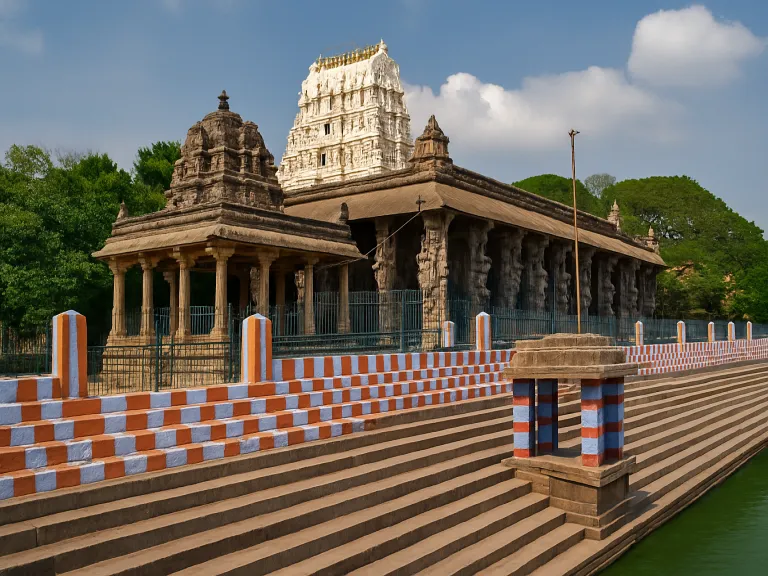
The temple is known for its large walled precincts, monumental gopurams, mandapas, sacred tank and richly carved Vijayanagara-period halls. It is also famous for the Athi Varadar tradition, in which a wooden image of Varadaraja Perumal kept in the Ananta Saras tank is brought out for public worship once in forty years. The temple remains an active place of daily worship, pilgrimage, festival processions and theological memory connected with Alvars, Sri Ramanuja, Kanchi Purna and Vedanta Desika.
ℹ️Temple Information
🛕
Presiding Deity
Varadaraja Perumal
👸
Goddess
Perundevi Thayar
⭐
Temple Type
Divya Desam, Vishnu temple, Sri Vaishnava temple, Dravidian temple
📅
Built Period
Sacred site known by the early medieval period; major surviving stone phases from the 11th century CE onward, with significant additions during the 14th to 16th centuries CE.
🏛
Dynasty
Chola and Vijayanagara, with evidence of later patronage from other South Indian powers.
🙏
Sampradaya
Sri Vaishnava Sampradaya
📖
Agama
Pancharatra Agama
Need Help Planning your visit to
Sri Varadaraja Perumal Temple?
Our travel experts can help you with transportation,
darshan timings, nearby sightseeing and complete temple tour planning.
⭐Temple Significance
Varadaraja Perumal Temple is one of the 108 Divya Desams and one of the foremost Sri Vaishnava temples of Tamil Nadu. It is celebrated as Perumal Koil in the Sri Vaishnava tradition and is associated with Alvar hymns, Sri Ramanuja, Vedanta Desika and the rare Athi Varadar darshan held once in forty years.
📜History
The sacred site of Varadaraja Perumal Temple is older than the surviving stone structures. Kanchipuram was an important religious and political centre under the Pallavas, and the temple’s sanctity is reflected in its inclusion among the Divya Desams sung by the Alvars. This confirms the shrine’s prominence in the Tamil Vaishnava sacred landscape well before the later medieval architectural expansions that define the present complex.
The extant temple contains important inscriptions and architectural layers from the Chola period. Chola rulers and officials made endowments for worship, lamps, offerings and temple maintenance, showing that the shrine was an established institution by the medieval period. Later contributions came under subsequent South Indian powers, including the Pandyas and the Vijayanagara rulers, who strengthened the temple’s ritual and architectural profile.
The Vijayanagara period was especially significant for the expansion of the temple’s mandapas, sculptural halls and festival infrastructure. The celebrated hundred-pillared hall and several elaborate carvings belong to this broad phase of patronage. The temple continued to flourish as a Sri Vaishnava centre connected with teachers and scholars, including Sri Ramanuja and Vedanta Desika. Its ritual traditions, annual festivals and the rare Athi Varadar event have preserved both the historical continuity and the living devotional identity of the shrine.
🕉️Mythology
In temple mythology, the sacred hill of Hastigiri is linked with Brahma’s worship of Vishnu. Brahma is described as performing a great sacrifice at Kanchipuram to receive the grace of Lord Vishnu. Vishnu manifested as Varadaraja, the boon-giving Lord, and accepted worship at the spot. The name Hastigiri means elephant hill, and the hill within the temple is treated as a divine manifestation associated with this sacred episode.
The temple’s mythology also gives importance to the presence of Perundevi Thayar, the goddess who embodies compassion and divine grace. Devotees approach Varadaraja Perumal through the blessings of Thayar, following the Sri Vaishnava understanding of the divine couple as inseparable. The temple’s sacred geography, including the hill, tank and processional routes, is interpreted through these devotional narratives and ritual memories.
Another important temple tradition concerns Athi Varadar, the wooden image of the Lord made from the athi tree. The image is kept immersed in the Ananta Saras tank and brought out for worship once in forty years for a limited period. This event draws large numbers of devotees and is treated as a rare opportunity for darshan. The temple is also known for the golden and silver lizard representations, which devotees connect with a local puranic story about release from the effects of past actions.
🏛Architecture
Varadaraja Perumal Temple is a large Dravidian temple complex with multiple prakaras, tall gopurams, mandapas, shrines and sacred water structures. The sanctum of Varadaraja Perumal is located on Hastigiri, the raised sacred hill within the temple. This arrangement gives the main shrine a distinctive elevated setting, and pilgrims ascend to worship the standing form of the deity.
The complex reflects several centuries of architectural development. Chola-period foundations and inscriptions are present, while many of the most visible sculptural additions belong to later medieval and Vijayanagara phases. The temple is particularly admired for its mandapas, including the famous hundred-pillared hall, which contains detailed carvings of warriors, horses, deities, dancers and ornamental motifs. Stone chains and intricate sculptural details demonstrate the technical skill of the artisans.
The temple layout includes the shrine of Perundevi Thayar, the Ananta Saras tank, processional corridors and spaces designed for large festivals. The gopurams and enclosing walls create a monumental sacred enclosure typical of major Tamil temple architecture. The combination of ritual functionality and sculptural richness makes the temple one of the most important architectural monuments of Kanchipuram. Its architecture preserves the contributions of different dynasties while remaining centred on the liturgical needs of an active Sri Vaishnava temple.
🌳
Sacred Features
💧 Temple Tank
Ananta Saras
The sacred tank is closely associated with the Athi Varadar tradition, in which the wooden image of Varadaraja Perumal is kept immersed and brought out for worship once in forty years.
✨
Temple Highlights
✨
Divya Desam status
The temple is one of the 108 Divya Desams praised in the hymns of the Alvars, making it a major sacred site in Tamil Vaishnavism.
✨
Hastigiri sanctum
The presiding deity Varadaraja Perumal is enshrined on Hastigiri, the sacred hill within the temple complex.
✨
Athi Varadar tradition
A wooden image of Varadaraja Perumal kept in the Ananta Saras tank is brought out for public worship once in forty years.
✨
Hundred-pillared hall
The temple’s celebrated mandapa is known for Vijayanagara-period sculptural work, including horses, warriors and detailed ornamental carvings.
✨
Golden and silver lizards
The temple contains famous lizard representations associated with a local sacred narrative and devotional practice.
🙏
Spiritual Benefits
Devotees seek the grace of Varadaraja Perumal for protection and well-being.
Devotees pray for removal of obstacles in family and personal life.
Worship at the temple is considered spiritually meritorious because of its Divya Desam status.
Devotees seek prosperity, clarity and righteous living through the Lord’s blessings.
Darshan of Perundevi Thayar is sought for compassion, peace and divine grace.
The Athi Varadar darshan is regarded by devotees as a rare spiritual blessing.
Pilgrims visit the temple as part of a wider Kanchipuram Divya Desam pilgrimage.
🎉
Major Festivals
🎉
Vaikasi Brahmotsavam
The annual Brahmotsavam in the Tamil month of Vaikasi is one of the temple’s major festivals and includes grand processions of Varadaraja Perumal.
🎉
Garuda Sevai
The Garuda Vahana procession during the Brahmotsavam is a major devotional highlight that attracts large numbers of devotees.
🎉
Vaikuntha Ekadasi
Vaikuntha Ekadasi is observed as an important Vishnu festival with special worship and heavy devotee participation.
🎉
Athi Varadar Darshan
Held once in forty years, this rare event brings the Athi Varadar image from the Ananta Saras tank for public worship for a limited period.
🪔
Special Poojas
🪔
Nitya Aradhanai
Daily worship is performed to Varadaraja Perumal according to the temple’s Vaishnava ritual tradition.
🪔
Archana
Devotees offer archana in the name of the deity as part of regular worship practices, subject to temple procedures.
🪔
Thirumanjanam
Ceremonial sacred bathing is performed on prescribed occasions for processional or shrine deities according to temple tradition.
🚗
How to Reach
🛣️
By Road
Kanchipuram is well connected by road with Chennai, Chengalpattu, Vellore and other towns in Tamil Nadu. Local buses, taxis and auto-rickshaws connect the city to the temple.
🚆
By Rail
Kanchipuram has a railway station with train services connecting it to Chennai and nearby junctions. From the station, local transport is available to the temple.
✈️
By Air
The nearest major airport is Chennai International Airport. From Chennai, Kanchipuram can be reached by road or rail.
💡
Visitor Tips
Verify current darshan timings with the temple administration before travelling.
Expect large crowds during Vaikasi Brahmotsavam, Vaikuntha Ekadasi and Athi Varadar events.
Wear modest clothing suitable for entry into an active Hindu temple.
Keep footwear only in designated areas outside the temple precincts.
Allow enough time to visit the main sanctum, Thayar shrine, Ananta Saras tank and sculptural halls.
Follow queue arrangements and instructions from temple staff during festivals.
Kanchipuram has several major temples nearby, so plan local travel time accordingly.
Senior citizens and families should plan visits outside peak festival rush when possible.

 WhatsApp Us