🛕About Temple
Vedagiriswarar Temple at Tirukazhukundram in Chengalpattu district, Tamil Nadu, is a major Shiva temple situated on a rocky hill above the historic town. The presiding deity is Lord Shiva as Vedagiriswarar, worshipped in the hill shrine, while the associated goddess Tripurasundari Amman is worshipped in the temple complex at the foot of the hill. Tirukazhukundram is also known as Pakshi Theertham, a name connected with the sacred-eagle tradition of the place.
The temple is one of the revered Paadal Petra Sthalams of the Tondai Nadu region, celebrated in the Tevaram hymns of the Tamil Shaiva saints. Its sacred identity combines hill worship, Shaiva liturgy, temple tanks, inscriptions, and long-standing pilgrimage practices. The name Vedagiri means “hill of the Vedas”, reflecting the temple’s association with Vedic sanctity in local religious tradition.
The pilgrimage experience includes climbing the hill to worship Vedagiriswarar and visiting the large foothill temple associated with Bhaktavatsaleswarar and Tripurasundari Amman. The site is historically important as a living temple, a literary sacred place, and a landmark of Tamil Shaiva devotion near the ancient coastal and temple centers of Mahabalipuram, Chengalpattu, and Kanchipuram.
ℹ️Temple Information
🛕
Presiding Deity
Vedagiriswarar
👸
Goddess
Tripurasundari Amman
⭐
Temple Type
Shiva temple, Paadal Petra Sthalam, Hill temple, Dravidian temple
📅
Built Period
Sacred site documented by Tevaram hymns of the 7th–8th centuries CE; existing structures developed through later medieval and post-medieval periods.
🏛
Dynasty
Pallava, Chola, Pandya and Vijayanagara patronage are associated with the temple’s historical development.
Need Help Planning your visit to
Arulmigu Vedagiriswarar Temple?
Our travel experts can help you with transportation,
darshan timings, nearby sightseeing and complete temple tour planning.
⭐Temple Significance
Vedagiriswarar Temple is significant as a Paadal Petra Sthalam praised in the Tevaram hymns, as a historic hill temple of Shiva, and as the sacred center of Tirukazhukundram, also known as Pakshi Theertham. It is valued for its association with Tamil Shaiva saints, its eagle legend, its Sangu Theertham tradition, and its layered architecture formed through centuries of worship and patronage.
📜History
Tirukazhukundram is an ancient Shaiva sacred site whose antiquity is firmly supported by early Tamil devotional literature. The temple is praised in the Tevaram hymns of Tirugnanasambandar, Appar, and Sundarar, placing it among the canonical Paadal Petra Sthalams. This establishes the site’s religious importance by the 7th to 8th centuries CE, even though the present stone structures represent several phases of construction and renovation.
The temple complex contains inscriptions and architectural elements connected with the medieval dynasties of Tamil Nadu. Pallava, Chola, Pandya, Vijayanagara, and later-period patronage are associated with the development of the sacred complex at Tirukazhukundram. The hill shrine and the large foothill temple together show the pattern of continuous worship and expansion seen in major Tamil Shaiva temples: early sacred status, medieval stone rebuilding, royal endowments, and later additions such as mandapas and gopurams.
The place remained important through the Chola and later Vijayanagara periods as a temple town supported by land grants, ritual endowments, and pilgrim activity. Its historical identity is not tied to a single founder. Instead, Vedagiriswarar Temple is best understood as a layered sacred complex that grew over many centuries through the devotion of Shaiva communities, temple servants, local elites, and ruling houses.
🕉️Mythology
The mythology of Tirukazhukundram centers on the sacred hill, the Vedas, and the eagle tradition. In local religious tradition, the hill is called Vedagiri because the Vedas are associated with the form or sanctity of the hill. Lord Shiva as Vedagiriswarar is worshipped as the divine presence on this Vedic hill, making the ascent to the shrine an act of pilgrimage and reverence.
The temple is widely known as Pakshi Theertham because of the famous legend of two sacred eagles. Local tradition describes the birds as sages who received a curse and came daily to the hill to worship Shiva and receive food from the temple priest. For generations, the appearance of these eagles formed an important part of the temple’s public memory and religious identity, and the name Tirukazhukundram is connected with kazhugu, the Tamil word for eagle or vulture.
Another important tradition is linked with Sangu Theertham, the sacred tank at the foot of the hill. The tank is associated with the appearance of a conch, or sangu, at sacred intervals and with ritual bathing by devotees. These mythological themes are part of the living religious culture of Tirukazhukundram and are distinct from the temple’s documented historical development.
🏛Architecture
Vedagiriswarar Temple is a hill temple reached by a long flight of stone steps cut and laid along the rocky slope of Vedagiri. The hill shrine follows the compact form typical of many ancient Tamil hill shrines, with the sanctum of Shiva occupying the sacred summit. The pilgrimage route itself is an architectural and ritual feature, guiding devotees from the town below to the elevated sanctum of Vedagiriswarar.
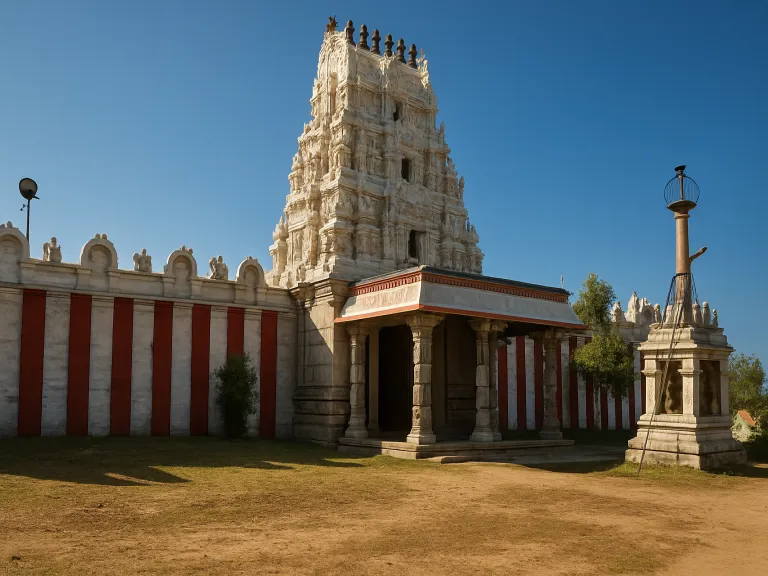
At the base of the hill stands the large temple complex associated with Bhaktavatsaleswarar and Tripurasundari Amman. This foothill complex displays Dravidian temple architecture with gopurams, prakaras, mandapas, sculptural pillars, shrines, and temple-tank surroundings. The distinction between the hill shrine and the foothill complex gives Tirukazhukundram a distinctive sacred layout, combining vertical hill worship with the expansive plan of a medieval Tamil temple.
The architecture reflects several historical phases rather than a single construction period. Stone masonry, inscriptions, mandapas, and later structural additions indicate continued patronage and renovation from the early medieval period through later dynasties. The temple’s setting, with the rocky hill rising above the town and sacred water bodies below, is central to its architectural and devotional character.
🌳
Sacred Features
💧 Temple Tank
Sangu Theertham
A sacred tank at Tirukazhukundram associated with ritual bathing and the local tradition of the conch, or sangu.
✨
Temple Highlights
✨
Paadal Petra Sthalam
The temple is one of the canonical Shiva temples praised in the Tevaram hymns of Tirugnanasambandar, Appar, and Sundarar.
✨
Hill Shrine of Vedagiriswarar
The main Shiva shrine stands on Vedagiri hill, reached by stone steps and revered as a sacred hill associated with the Vedas.
✨
Pakshi Theertham Tradition
Tirukazhukundram is famous for the sacred-eagle tradition that gave the place the name Pakshi Theertham.
✨
Sangu Theertham
The sacred tank at the foot of the hill is associated with the conch tradition and ritual bathing.
✨
Foothill Temple Complex
The large base temple associated with Bhaktavatsaleswarar and Tripurasundari Amman contains Dravidian architectural features such as gopurams, mandapas, and prakaras.
✨
Historic Temple Town
The site preserves literary, inscriptional, architectural, and living ritual traditions connected with Tamil Shaivism.
🙏
Spiritual Benefits
Worship of Lord Shiva at a Tevaram Paadal Petra Sthalam
Devotional merit associated with climbing and worshipping at the sacred hill shrine
Prayers for spiritual clarity and surrender to Shiva
Participation in Shaiva worship such as abhishekam, archana and pradosham observance
Devotional bathing or worship connected with Sangu Theertham where permitted by temple practice
Seeking the grace of Tripurasundari Amman for family welfare and protection
Pilgrimage experience combining sacred hill, temple tank and ancient Shaiva hymnal tradition
🎉
Major Festivals
🎉
Maha Shivaratri
A major Shiva festival observed with special worship to Lord Vedagiriswarar.
🎉
Pradosham
The twice-monthly Shaiva observance dedicated to Lord Shiva is an important worship occasion.
🎉
Chithirai Brahmotsavam
A major annual festival of the temple celebrated in the Tamil month of Chithirai.
🎉
Karthigai Deepam
A festival of lamps associated with Shiva worship and hill shrines in Tamil Nadu.
🪔
Special Poojas
🪔
Abhishekam
Ritual bathing of the Shiva lingam performed as part of temple worship.
🪔
Archana
Offering of prayers with the recitation of the deity’s names.
🪔
Pradosha Pooja
Special Shiva worship performed during pradosham, the sacred twilight period associated with Nandi and Lord Shiva.
🪔
Maha Shivaratri Pooja
Special worship performed on Maha Shivaratri, the great night dedicated to Lord Shiva.
🚗
How to Reach
🛣️
By Road
Tirukazhukundram is accessible by road from Chengalpattu, Chennai, Mahabalipuram and nearby towns. Buses and road transport connect the town with Chengalpattu and the coastal region.
🚆
By Rail
The nearest major railway station is Chengalpattu Junction, from where road transport is available to Tirukazhukundram.
✈️
By Air
The nearest major airport is Chennai International Airport, with road connectivity onward to Tirukazhukundram.
💡
Visitor Tips
Start the hill climb early in the morning or later in the afternoon to avoid strong heat.
Carry drinking water for the climb, especially during summer months.
Wear footwear that can be easily removed before entering shrine areas.
Elderly visitors and those with mobility issues should assess the hill steps before attempting the climb.
Visit both the hill shrine and the foothill temple complex to understand the complete sacred site.
Check current temple timings locally before planning worship, as timings can change on festival days.
Maintain silence and decorum within shrine areas and during rituals.
Avoid littering on the hill path and around the temple tank.

 WhatsApp Us