🛕About Temple
Vedaranyeswarar Temple at Vedaranyam in Nagapattinam district, Tamil Nadu, is an ancient Shaiva temple dedicated to Lord Shiva as Vedaranyeswarar. The town is historically known as Thirumaraikadu, meaning the sacred forest of the Vedas. The temple stands close to the Coromandel coast and is one of the important Shiva shrines of the southern Kaveri region.
The temple is celebrated in the Tevaram hymns and is classified as a Paadal Petra Sthalam, one of the shrines praised by the Tamil Shaiva Nayanmar saints. It is also counted among the Sapta Vidanga Sthalams, the seven sacred temples associated with the Thyagaraja form of Shiva. The presiding deity is worshipped in the form of a Shiva linga, and the goddess is worshipped as Vedaranyeswari.
Vedaranyeswarar Temple is especially associated with the devotional history of Appar and Thirugnana Sambandar. The temple is known for the sacred tradition connected with its main doors and the hymns sung by the saints. Its religious identity combines Vedic symbolism, Tamil Shaiva bhakti, Chola-period temple culture, and continuing worship practices. The temple remains a major pilgrimage destination for devotees visiting the Paadal Petra Sthalams and the coastal Shiva temples of Nagapattinam district.
ℹ️Temple Information
🛕
Presiding Deity
Vedaranyeswarar
⭐
Temple Type
Shiva temple, Paadal Petra Sthalam, Sapta Vidanga Sthalam, Dravidian temple
📅
Built Period
At least 7th century CE as a Tevaram shrine; major structural development is associated with the Chola period.
Need Help Planning your visit to
Arulmigu Vedaranyeswarar Temple?
Our travel experts can help you with transportation,
darshan timings, nearby sightseeing and complete temple tour planning.
⭐Temple Significance
Vedaranyeswarar Temple is significant as a Paadal Petra Sthalam praised in the Tevaram hymns, a Sapta Vidanga Sthalam associated with the Thyagaraja tradition, and a major Shiva temple of the historic Chola region. It is also renowned for the sacred legend of Appar and Thirugnana Sambandar singing before the temple doors.
📜History
Vedaranyeswarar Temple is historically important because it was already a prominent Shaiva shrine by the 7th century CE, when the Nayanmar saints Appar and Thirugnana Sambandar sang hymns on the deity of Thirumaraikadu. The Tevaram hymns establish the antiquity of worship at the site and its place in the sacred geography of Tamil Shaivism. Sundarar is also associated with the devotional corpus of the Paadal Petra Sthalams.
The existing temple complex reflects the development of Tamil temple architecture under the Cholas and later regional patrons. Inscriptions from the Chola period and subsequent eras record gifts, endowments, lamps, lands, and arrangements for worship. Such inscriptions show that the shrine was part of the institutional religious life of the Kaveri delta, where temples functioned as centers of ritual, economy, music, and community activity.
Vedaranyam’s older name, Thirumaraikadu, is preserved in devotional literature and temple tradition. The temple’s inclusion among the Sapta Vidanga Sthalams links it with the wider Chola sacred network centered on Thyagaraja worship. While no single founder can be historically identified, the shrine’s continuous importance from the Tevaram period through the Chola age and later centuries is well established. Its history is therefore best understood as the layered growth of an ancient sacred site rather than the work of one ruler or one building phase.
🕉️Mythology
The central mythology of Vedaranyeswarar Temple is connected with the Vedas. In local sacred tradition, the Vedas themselves worshipped Shiva at this place, and the region came to be called Vedaranyam or Thirumaraikadu, the forest of the Vedas. The name expresses the belief that Vedic knowledge became sanctified here through devotion to Shiva.
A well-known legend links the temple’s main doors with the Nayanmar saints Appar and Thirugnana Sambandar. The sacred doors of the temple were considered closed after the worship of the Vedas, and devotees entered through another entrance. When the saints reached the temple, Sambandar requested Appar to sing. Appar sang hymns in praise of Vedaranyeswarar, and the doors opened. Sambandar later sang and the doors closed again. This episode is remembered as an important moment in Tamil Shaiva devotional tradition.
The temple is also associated with the Sapta Vidanga mythology of Shiva as Thyagaraja. In this tradition, seven temples preserve distinct manifestations of the divine dance of Shiva. Vedaranyam is one of these seven sacred sites, connecting it with Thiruvarur and other Chola-region shrines. These mythological associations do not replace the historical record but form the religious memory through which devotees understand the sanctity of the temple.
🏛Architecture
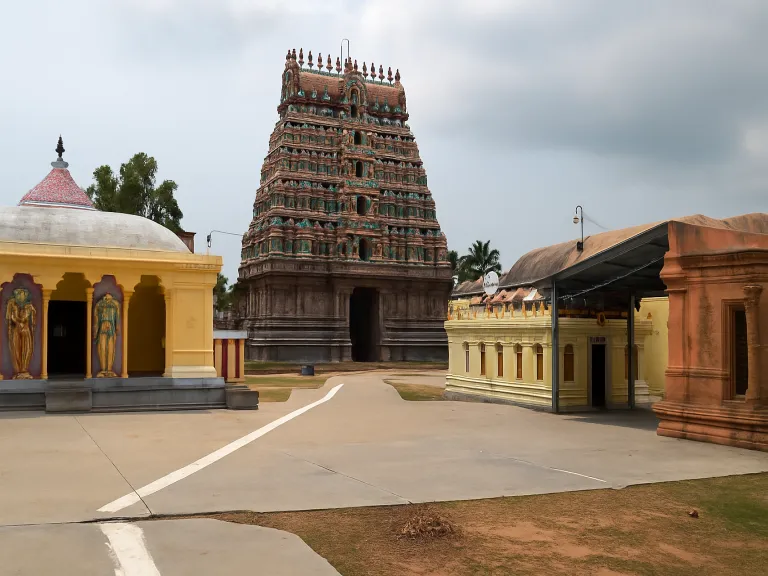
Vedaranyeswarar Temple follows the Dravidian temple architectural tradition of Tamil Nadu. The complex is organized within walled enclosures with gateways, prakara passages, shrines, mandapas, and an axial approach to the main sanctum. The presiding deity, Vedaranyeswarar, is enshrined as a Shiva linga, and the goddess Vedaranyeswari has a separate shrine within the temple complex.
The temple’s architecture reflects multiple phases of construction and renovation, with the core sacred space surrounded by later structural additions typical of major Shaiva temples of the Kaveri delta. Stone inscriptions on the temple walls are important historical records. The mandapas and subsidiary shrines support the daily ritual cycle, festival movement of processional deities, and devotional circumambulation by pilgrims.
As a Sapta Vidanga Sthalam, the temple also preserves the ritual importance of the Thyagaraja form of Shiva. The architectural setting accommodates both the fixed worship of the main linga and the processional traditions connected with festival images. The temple’s layout, sculptural details, gateways, and ritual spaces together represent the mature Tamil Shaiva temple environment shaped by Chola-period patronage and later continuity. Its coastal location and its association with Vedic and Tevaram traditions give the complex a distinctive sacred identity among the temples of Nagapattinam district.
🌳
Sacred Features
🌳 Temple Tree
Vanni
The Vanni tree is associated with the temple’s sthala-vriksha tradition in temple accounts and is connected with the sacred identity of Thirumaraikadu.
💧 Temple Tank
Manikarnika Theertham
Manikarnika Theertham is identified in temple tradition as the sacred water source associated with Vedaranyeswarar Temple.
✨
Temple Highlights
✨
Paadal Petra Sthalam
The temple is one of the Shiva shrines praised in the Tevaram hymns of the Tamil Shaiva saints and is part of the sacred canon of Tamil Shaivism.
✨
Sapta Vidanga Sthalam
Vedaranyam is counted among the seven sacred temples associated with the Thyagaraja form of Shiva and the Sapta Vidanga tradition.
✨
Thirumaraikadu Tradition
The older name Thirumaraikadu means the sacred forest of the Vedas and reflects the temple’s central Vedic mythology.
✨
Appar and Sambandar Legend
The temple is famous for the devotional episode in which Appar and Thirugnana Sambandar sang hymns connected with the opening and closing of the temple doors.
✨
Chola-period Sacred Site
Inscriptions and architectural features show the temple’s importance in the Chola-period religious landscape of the Kaveri delta.
🙏
Spiritual Benefits
Worship of Lord Shiva as Vedaranyeswarar for divine grace and inner clarity
Devotional connection with the Tevaram hymns of the Nayanmar saints
Seeking blessings of Vedaranyeswari for wisdom and protection
Participation in the sacred tradition of the Sapta Vidanga Sthalams
Spiritual merit through circumambulation and worship at a Paadal Petra Sthalam
Contemplation of the Vedas and Tamil Shaiva bhakti through the temple’s sacred legends
Offering prayers during Pradosham and Maha Shivaratri for Shiva’s blessings
🎉
Major Festivals
🎉
Maha Shivaratri
Maha Shivaratri is an important Shaiva festival observed with worship of Lord Shiva, special rituals, and devotional participation by devotees.
🎉
Arudra Darshan
Arudra Darshan, associated with Shiva’s cosmic dance, is an important festival in Shaiva temples and is connected with the worship of Nataraja and Thyagaraja traditions.
🎉
Pradosham
Pradosham is observed twice a lunar month and is an important time for worship of Lord Shiva and Nandi.
🪔
Special Poojas
🪔
Pradosha Pooja
Special worship to Lord Shiva is performed during Pradosham, a sacred period for Shaiva devotees.
🪔
Abhishekam to Vedaranyeswarar
Ritual bathing of the Shiva linga is a central form of worship offered to Vedaranyeswarar.
🪔
Maha Shivaratri Pooja
Special night worship is associated with Maha Shivaratri, the major annual festival dedicated to Lord Shiva.
🪔
Deeparadhana
Lamp offering forms part of the regular worship sequence and is an important moment for darshan.
🚗
How to Reach
🛣️
By Road
Vedaranyam is connected by road with Nagapattinam, Thiruvarur, Thiruthuraipoondi, and other towns of the Cauvery delta region. Buses and taxis are available from nearby towns.
🚆
By Rail
The nearest railway access is at Vedaranyam or nearby stations on the regional railway network. Major rail connections are available through Nagapattinam, Thiruvarur, and Thiruthuraipoondi.
✈️
By Air
The nearest major airport commonly used for travel to Vedaranyam is Tiruchirappalli International Airport, with onward travel by road or rail.
💡
Visitor Tips
Confirm current opening hours locally before travelling, as temple timings may change on festival and ritual days.
Wear modest clothing suitable for a traditional Hindu place of worship.
Allow enough time for darshan, circumambulation, and visiting the goddess and subsidiary shrines.
Festival days can be crowded, so plan travel and accommodation in advance.
Vedaranyam is a coastal town; carry drinking water and sun protection during hot months.
Respect temple customs, queue systems, and areas where photography or mobile phone use may be restricted.
Combine the visit with other Paadal Petra Sthalams and Sapta Vidanga temples in the Nagapattinam and Thiruvarur region if time permits.

 WhatsApp Us