🛕About Temple
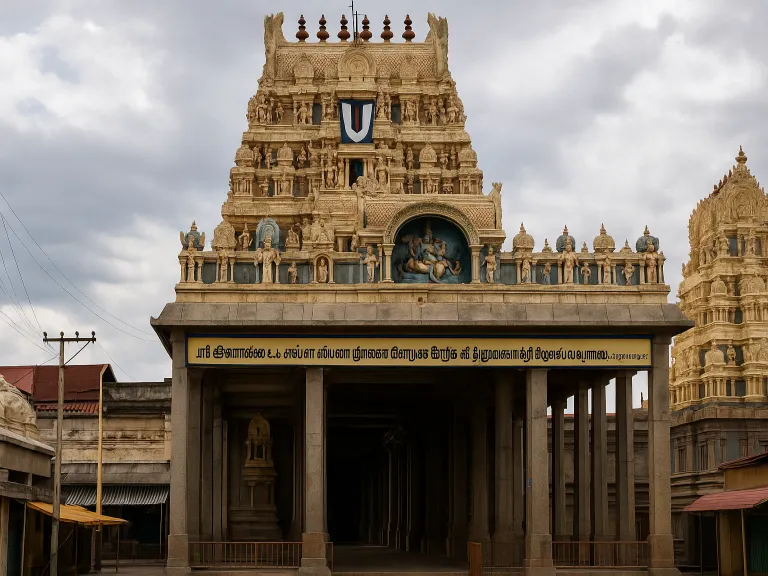
Arulmigu Veeraraghava Perumal Temple is a revered Sri Vaishnava temple at Tiruvallur in Tamil Nadu, dedicated to Lord Vishnu as Veeraraghava Perumal. The sacred place is known in the Divya Desam tradition as Thiruevvul or Thiru Evvul. It is one of the 108 Divya Desams, the Vishnu temples praised in the hymns of the Azhwars, and it remains an important pilgrimage centre for devotees from Chennai, Tiruvallur district and other parts of Tamil Nadu.
The presiding deity is worshipped in a reclining posture on Adisesha and is also popularly called Vaidya Veeraraghava Perumal because devotees approach the shrine with prayers for relief from illness and suffering. The divine consort is Kanakavalli Thayar. The temple is closely associated with the legend of Sage Salihotra and the sacred Hrittapanashini Pushkarini, which gives the temple a distinct place among Vaishnava shrines connected with healing and purification.
Located within Tiruvallur town, the temple combines religious antiquity, Divya Prabandham sanctity and continuing worship traditions. Pilgrims visit for darshan of the reclining Lord, worship at the Thayar shrine, and prayerful observances connected with the temple tank. Its proximity to Chennai makes it one of the most accessible Divya Desams in northern Tamil Nadu, while its spiritual identity remains rooted in the mythology, hymns and ritual life of Sri Vaishnavism.
ℹ️Temple Information
🛕
Presiding Deity
Veeraraghava Perumal
👸
Goddess
Kanakavalli Thayar
⭐
Temple Type
Divya Desam, Vishnu temple, Sri Vaishnava temple, Dravidian temple
📅
Built Period
Early medieval period; the shrine was already celebrated in the Nalayira Divya Prabandham, generally placed between the 6th and 9th centuries CE, with later additions and renovations.
🏛
Dynasty
Pallava, Chola, Vijayanagara and Nayak patronage is associated with the temple’s historical development.
🙏
Sampradaya
Sri Vaishnavism
Need Help Planning your visit to
Arulmigu Veeraraghava Perumal Temple?
Our travel experts can help you with transportation,
darshan timings, nearby sightseeing and complete temple tour planning.
⭐Temple Significance
Arulmigu Veeraraghava Perumal Temple is significant as the Divya Desam of Thiruevvul, praised in the Nalayira Divya Prabandham. It is especially revered for the reclining form of Veeraraghava Perumal, the Salihotra Maharishi legend, the sacred Hrittapanashini Pushkarini and the devotional worship of the Lord as Vaidya Veeraraghava Perumal, a compassionate healer.
📜History
The historical importance of Arulmigu Veeraraghava Perumal Temple is anchored in its status as a Divya Desam. The shrine is praised in the Nalayira Divya Prabandham, the Tamil devotional canon of the Azhwars, placing its religious prominence within the early medieval Vaishnava tradition of Tamil Nadu. In the Divya Desam corpus, the site is identified as Thiruevvul, a name connected with the temple’s foundational legend and with the present town name Tiruvallur.
The precise founder of the temple is not established in a single, universally accepted historical record. Like many ancient temples of Tamil Nadu, the present temple complex reflects development over multiple periods rather than a single act of construction. Historical accounts and temple records associate the shrine’s growth with successive South Indian periods, including Pallava, Chola, Vijayanagara and Nayak phases of patronage, renovation and ritual support. These layers help explain the combination of old sanctity and later architectural expansion visible in the temple today.
The temple’s continuing significance also comes from its uninterrupted position in Sri Vaishnava pilgrimage practice. The hymnic recognition by the Azhwars made it part of the sacred geography followed by Vaishnava acharyas and devotees. Over time, the shrine became especially known for the worship of Veeraraghava Perumal as a compassionate healer, adding a strong devotional identity to its historical profile. Its location near Chennai has further sustained regular pilgrimage, festival participation and public worship.
🕉️Mythology
The principal mythology of Arulmigu Veeraraghava Perumal Temple centres on Sage Salihotra. According to the temple tradition, the sage performed intense penance at this sacred place and prepared food as an offering after completing his austerities. Lord Vishnu arrived in the form of an aged guest and asked for food. The sage received the guest with reverence and offered him the prepared food, demonstrating the ideal of hospitality and surrender.
After eating, the divine guest asked the sage, “Ev-vul?” meaning “Which place shall I lie down in?” The sage offered his own hermitage for the Lord to rest. Vishnu then revealed himself and reclined there as Veeraraghava Perumal. This question is connected with the sacred name Thiru Evvul, which later became associated with Tiruvallur. The legend explains both the reclining form of the deity and the temple’s identity as a place where the Lord personally accepted a devotee’s service.
Another important devotional tradition presents the deity as Vaidya Veeraraghava Perumal, the divine physician. Devotees pray here for relief from bodily ailments, mental distress and karmic suffering. The Hrittapanashini Pushkarini, the temple tank, is also associated with purification and removal of inner afflictions in the temple’s sacred lore. The mythology is distinct from historical evidence, but it deeply shapes the temple’s worship, offerings, festivals and the emotional devotion of pilgrims.
🏛Architecture
Arulmigu Veeraraghava Perumal Temple follows the broad Dravidian temple pattern seen in many major Vishnu temples of Tamil Nadu. The complex is organized around a main sanctum, subsidiary shrines, pillared spaces, enclosed circumambulatory paths and a prominent entrance gopuram. The temple tank, Hrittapanashini Pushkarini, forms an important part of the sacred layout and is closely connected with the pilgrimage experience of the shrine.
The most distinctive architectural and iconographic feature is the sanctum of Veeraraghava Perumal. The Lord is enshrined in a reclining posture on Adisesha, a form that emphasizes divine repose and grace. The image is worshipped as the central manifestation of the Divya Desam, and the presence of the Salihotra legend gives the sanctum a strong narrative meaning. The shrine of Kanakavalli Thayar is also an essential part of the temple plan, reflecting the Sri Vaishnava emphasis on the inseparable worship of Vishnu and Lakshmi.
The temple’s structural form reflects additions and renovations over time rather than a single architectural campaign. Mandapas, prakara arrangements and festival spaces support daily worship as well as processional celebrations. Sculptural and ritual elements are primarily Vaishnava in character, centred on the reclining Perumal, Thayar and associated icons. While the temple does not depend on monumental scale alone, its architecture preserves the functional grammar of a living Divya Desam: darshan, circumambulation, festival movement, sacred water and continuous worship.
🌳
Sacred Features
💧 Temple Tank
Hrittapanashini Pushkarini
The sacred temple tank is closely associated with the temple’s mythology and devotional practice. Its name is understood in the temple tradition as connected with the removal of inner afflictions and sins.
✨
Temple Highlights
✨
One of the 108 Divya Desams
The temple is the Divya Desam known as Thiruevvul, praised in the Nalayira Divya Prabandham and revered in Sri Vaishnava pilgrimage tradition.
✨
Reclining Veeraraghava Perumal
The presiding deity is worshipped in a reclining posture on Adisesha, closely connected with the legend of Sage Salihotra.
✨
Vaidya Veeraraghava Perumal
Devotees worship the Lord here as a divine healer and seek relief from illness, distress and suffering.
✨
Hrittapanashini Pushkarini
The temple tank is a major sacred feature of the shrine and is associated in temple tradition with purification and removal of inner afflictions.
✨
Kanakavalli Thayar Shrine
The goddess Kanakavalli Thayar is worshipped as the divine consort of Veeraraghava Perumal and forms an important focus of devotion.
🙏
Spiritual Benefits
Devotees seek the grace of Veeraraghava Perumal for relief from illness and suffering.
Worship at the shrine is associated with prayers for mental peace and emotional strength.
Pilgrims seek purification through devotion connected with Hrittapanashini Pushkarini.
Darshan of the reclining Lord is valued as part of the sacred Divya Desam pilgrimage.
Devotees pray for family welfare, protection and divine guidance.
Worship of Kanakavalli Thayar is sought for compassion, prosperity and auspiciousness.
The Salihotra legend inspires devotion, hospitality and surrender to Lord Vishnu.
🎉
Major Festivals
🎉
Chittirai Brahmotsavam
The annual festival in the Tamil month of Chittirai is one of the important celebrations of the temple and includes processional worship of the Lord.
🎉
Vaikunta Ekadasi
Vaikunta Ekadasi is a major Vaishnava observance celebrated with special devotion and large participation by pilgrims.
🪔
Special Poojas
🪔
Prayer offerings to Vaidya Veeraraghava Perumal
Devotees offer prayers to the Lord as Vaidya Veeraraghava Perumal, seeking relief from ailments and suffering.
🪔
Salt and pepper offering
The temple is associated with the devotional practice of offering salt and pepper as part of prayers for relief from illness.
🚗
How to Reach
🛣️
By Road
Tiruvallur is well connected by road from Chennai, Avadi, Poonamallee and other towns in Tiruvallur district. Buses and private vehicles can reach the temple within Tiruvallur town.
🚆
By Rail
Tiruvallur Railway Station is on the Chennai suburban and main railway route, making rail access convenient from Chennai and nearby towns.
✈️
By Air
The nearest major airport is Chennai International Airport. From the airport, visitors can travel to Tiruvallur by road or by connecting rail services through Chennai.
💡
Visitor Tips
Confirm current temple timings with the temple administration before travelling, especially on festival days.
Expect larger crowds on Vaikunta Ekadasi, Saturdays, Amavasya days and major festival occasions.
Dress modestly and follow the temple’s worship etiquette while entering the sanctum areas.
Keep footwear only in designated places outside the temple premises.
The temple is close to Tiruvallur Railway Station, making rail travel convenient from Chennai.
Use only the official counters or authorized arrangements for offerings and sevas.
Avoid carrying large bags into the temple unless necessary.
Maintain silence and queue discipline during darshan, especially near the main sanctum.

 WhatsApp Us