🛕About Temple
Veeratteswarar Temple at Keelaparasalur, historically known as Tirupariyalur, is a revered Shiva temple in Mayiladuthurai district of Tamil Nadu. The presiding deity is Lord Veeratteswarar, worshipped in the form of a Shiva lingam, and the goddess is Ilamkombanayal. The temple stands in the fertile Cauvery delta region, a landscape closely associated with the devotional hymns and temple culture of Tamil Shaivism.
The temple is one of the celebrated Ashta Veerattanam shrines, the eight sacred places where Shiva is associated with heroic acts of destruction performed to restore cosmic order. Keelaparasalur is connected with the destruction of Daksha’s sacrifice, one of the best-known Shaiva mythological episodes. Because of this association, the temple occupies an important place in the sacred geography of Tamil Nadu’s Shiva temples.
Veeratteswarar Temple is also counted among the Paadal Petra Sthalams, the Shiva temples praised in the Tevaram hymns of the Nayanmars. Its historical name, Tirupariyalur, appears in Shaiva devotional tradition, linking the shrine with the early medieval Bhakti movement. The temple is visited by devotees who seek darshan of Veeratteswarar and who follow the Ashta Veerattanam circuit, along with pilgrims exploring the Mayiladuthurai and Tharangambadi region.
ℹ️Temple Information
🛕
Presiding Deity
Veeratteswarar
⭐
Temple Type
Shiva temple, Paadal Petra Sthalam, Ashta Veerattanam temple, Dravidian temple
📅
Built Period
7th century CE or earlier, as established by its presence in the Tevaram tradition; later structural phases are not fully documented in widely available historical records.
Need Help Planning your visit to
Arulmigu Veeratteswarar Temple?
Our travel experts can help you with transportation,
darshan timings, nearby sightseeing and complete temple tour planning.
⭐Temple Significance
Veeratteswarar Temple is significant as one of the Ashta Veerattanam temples and as a Paadal Petra Sthalam praised in the Tevaram tradition. It is the Veerattanam shrine associated with Shiva’s destruction of Daksha’s yajna, symbolising the defeat of pride and the restoration of dharma.
📜History
The early historical importance of Veeratteswarar Temple is established by its inclusion among the Paadal Petra Sthalams, the temples praised in the Tevaram hymns. The Tevaram corpus belongs to the 7th century CE and preserves the sacred names, devotional significance, and living worship traditions of many Tamil Shiva temples. The shrine was known in the hymnic tradition as Tirupariyalur, while the present village is called Keelaparasalur.
The temple belongs to the historic Chola country, the Cauvery delta region where Shaiva temple worship, bronze traditions, inscriptions, and Bhakti literature flourished. The existence of the shrine by the Tevaram period shows that it was already an established sacred site before the large-scale stone temple developments of the later Chola age. The temple’s continuing identity as an Ashta Veerattanam shrine further strengthened its position in Tamil Shaiva pilgrimage.
No specific historically verified royal founder is widely established for the temple in commonly available temple records. The safest historical description is that the shrine is an ancient Shaiva temple documented by early medieval devotional literature and later maintained as part of the continuous temple culture of the Cauvery delta. Its association with Tirupariyalur, the Nayanmar hymns, and the Daksha-yagna myth has preserved the temple’s importance across centuries.
🕉️Mythology
The mythology of Veeratteswarar Temple at Keelaparasalur is centred on the destruction of Daksha’s sacrifice. In Shaiva tradition, Daksha, the father of Sati, conducted a grand yajna but deliberately excluded Shiva and dishonoured him. Sati, unable to bear the insult to her lord, entered the sacrificial fire. The event became a turning point in the mythic relationship between Shiva, Sati, Daksha, and the gods.
In response to the insult and the grief caused by Sati’s self-immolation, Shiva manifested a fierce power, commonly described in Purana-based tradition as Virabhadra. The sacrificial arena was destroyed, Daksha was punished, and the pride of the gods and ritual authorities was humbled. Keelaparasalur is revered as the place connected with this act of divine wrath and restoration, which is why the deity is worshipped as Veeratteswarar.
The myth is not treated as ordinary violence in Shaiva understanding; it represents Shiva’s correction of arrogance, ritual pride, and devotion without humility. The story also shows that sacrifice without reverence for the supreme reality is spiritually incomplete. Among the Ashta Veerattanam temples, Keelaparasalur specifically embodies the Daksha-yagna episode, making it a sacred site for reflecting on surrender, humility, and the supremacy of Shiva.
🏛Architecture
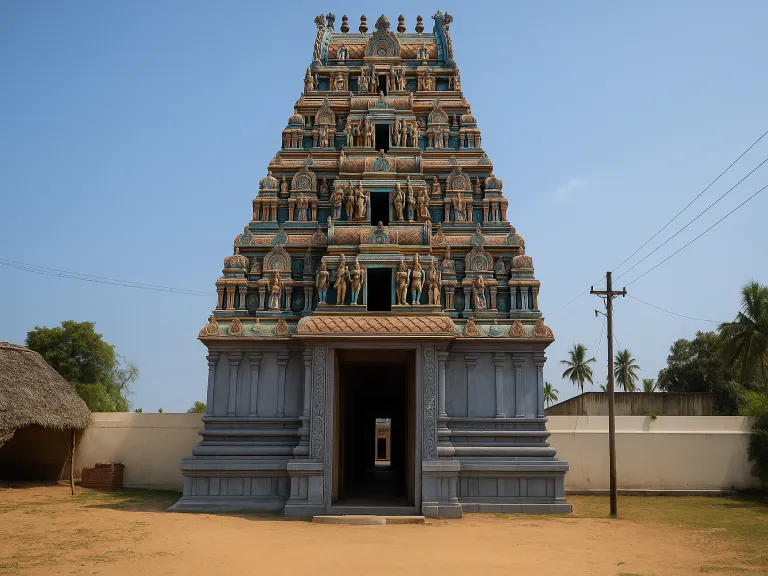
Veeratteswarar Temple follows the Dravidian temple layout typical of the Cauvery delta’s Shiva shrines. The temple is entered through a rajagopuram, and the sacred complex is organised around the central sanctum of Lord Veeratteswarar. The main deity is worshipped as a Shiva lingam, placed in the garbhagriha, with the usual axial arrangement of ardha-mandapa and mandapa spaces used for worship and circumambulation.
The temple has separate sacred spaces for the goddess Ilamkombanayal and associated deities normally found in a Shaiva temple complex. The iconographic focus of the shrine is its Veerattanam identity, linking the temple to Shiva’s heroic destruction of Daksha’s sacrifice. Devotees circumambulate the prakara and worship the principal deity, the goddess, and the subsidiary shrines as part of the temple’s regular ritual pattern.
The architecture is best understood as a living sacred structure rather than as a single-period monument with a fully documented builder. Its present form reflects the continuity of temple worship in the Chola-region landscape, where older shrines were preserved, repaired, and ritually renewed over time. The temple’s architectural significance lies in the combination of Dravidian spatial planning, Shaiva iconography, and its rare status as one of the eight Veerattanam shrines.
✨
Temple Highlights
✨
Ashta Veerattanam shrine
Keelaparasalur is one of the eight Veerattanam temples associated with Shiva’s heroic acts, specifically the destruction of Daksha’s sacrifice.
✨
Paadal Petra Sthalam
The temple is counted among the Shiva shrines praised in the Tevaram hymns, giving it a firm place in Tamil Shaiva devotional history.
✨
Ancient name Tirupariyalur
The sacred name Tirupariyalur is preserved in Shaiva tradition and identifies the temple’s early religious importance.
✨
Veeratteswarar as presiding deity
Lord Shiva is worshipped here as Veeratteswarar, the form connected with divine courage and the correction of arrogance.
✨
Cauvery delta pilgrimage setting
The temple is located in the Mayiladuthurai region, close to several major Shaiva and Vaishnava pilgrimage sites.
🙏
Spiritual Benefits
Worship of Lord Shiva as Veeratteswarar with devotion and humility
Reflection on overcoming pride and ego through the Daksha-yagna episode
Participation in the sacred tradition of the Ashta Veerattanam pilgrimage
Connection with the Tevaram hymnic heritage of Tamil Shaivism
Seeking inner discipline through darshan, pradakshina, and prayer
Devotional focus on surrender to Shiva as the supreme reality
Spiritual remembrance of dharma being restored through divine grace
🎉
Major Festivals
🎉
Maha Shivaratri
A major annual festival dedicated to Lord Shiva, observed with special worship in Shiva temples.
🎉
Pradosham
A recurring Shaiva observance dedicated to worship of Shiva during the pradosha period.
🎉
Aippasi Annabhishekam
A Shaiva observance in the Tamil month of Aippasi in which the Shiva lingam is worshipped with cooked rice offerings.
🎉
Tiruvathirai
A major Shaiva festival associated with Lord Shiva, especially revered in Tamil temple tradition.
🪔
Special Poojas
🪔
Abhishekam to Veeratteswarar
Ritual bathing and worship of the presiding Shiva lingam with traditional offerings.
🪔
Pradosha Pooja
Special worship offered to Lord Shiva during the pradosha period, an important Shaiva observance.
🪔
Archana to Ilamkombanayal
Devotional offering of names and flowers to the goddess Ilamkombanayal.
🚗
How to Reach
🛣️
By Road
Keelaparasalur is accessible by road from Mayiladuthurai on the route towards the Tharangambadi side. Local buses, taxis, and autos from Mayiladuthurai can be used depending on availability.
🚆
By Rail
The nearest major railway station is Mayiladuthurai Junction, which has rail connections to important towns and cities in Tamil Nadu.
✈️
By Air
The nearest major airport commonly used for this region is Tiruchirappalli International Airport. Road or rail connections from Tiruchirappalli can be used to reach Mayiladuthurai and then Keelaparasalur.
💡
Visitor Tips
Confirm the current opening hours locally before planning a visit.
Use Mayiladuthurai as the main transport base for reaching Keelaparasalur.
Wear modest clothing suitable for a traditional Tamil Nadu temple.
Carry cash for local transport and small offerings, as digital facilities may vary.
Avoid photographing the sanctum or rituals unless temple authorities clearly permit it.
Plan extra time if combining the visit with other temples in the Mayiladuthurai region.
Visit during cooler months or early in the day for a more comfortable pilgrimage.

 WhatsApp Us