🛕About Temple
Veeratteswarar Temple at Thirukoilur, also written Tirukkoyilur or Tirukoilur, is an ancient Shiva temple in present-day Kallakurichi district of Tamil Nadu. The presiding deity is Lord Shiva worshipped as Veeratteswarar, a name connected with the heroic manifestation of Shiva. The goddess is worshipped as Periyanayagi Amman. The temple is one of the celebrated Shiva shrines of the Nadu Nadu region.
The temple is especially known as one of the Ashta Veerattanam temples, the eight sacred places associated with Shiva’s acts of cosmic victory. Thirukoilur is connected with the Andhakasura Samhara episode, in which Shiva destroys the demon Andhaka. This association gives the temple its distinctive theological identity within Tamil Shaiva worship.
Veeratteswarar Temple is also counted among the Paadal Petra Sthalams, the Shiva temples praised in the Tevaram hymns of the Tamil Shaiva saints. Its significance rests on three layers: ancient Tamil devotional literature, the Ashta Veerattanam tradition, and continuing worship of Shiva and the goddess. The temple remains an important pilgrimage point for devotees visiting Thirukoilur, a town that also preserves major Shaiva and Vaishnava sacred traditions.
ℹ️Temple Information
🛕
Presiding Deity
Veeratteswarar
👸
Goddess
Periyanayagi Amman
⭐
Temple Type
Shiva temple, Paadal Petra Sthalam, Ashta Veerattanam temple, Dravidian temple
📅
Built Period
Chola period, approximately 10th-11th centuries CE for the documented medieval stone-temple phase
Need Help Planning your visit to
Arulmigu Veeratteswarar Temple?
Our travel experts can help you with transportation,
darshan timings, nearby sightseeing and complete temple tour planning.
⭐Temple Significance
Veeratteswarar Temple is significant as one of the Ashta Veerattanam temples associated with Shiva’s destruction of Andhakasura and as a Paadal Petra Sthalam praised in Tamil Shaiva devotional tradition.
📜History
The historical importance of Veeratteswarar Temple is anchored in its recognition as a Paadal Petra Sthalam, a temple praised in the canonical Tevaram hymns of the Tamil Shaiva tradition. These hymns place the shrine within the early medieval sacred geography of Tamil Nadu, when temple worship, sacred poetry, and regional pilgrimage networks became closely linked.
The existing temple is associated with the Chola period, and its stone architecture reflects the development of formal Dravidian temple construction in medieval Tamil Nadu. As with many ancient temples of the region, the shrine received attention over time through endowments, ritual maintenance, and structural additions. The name and sacred status of the temple were preserved through Shaiva liturgy and local worship rather than through a single known founding record.
Thirukoilur itself was an important settlement in the historical Nadu Nadu region, lying between major cultural zones of northern and central Tamil Nadu. The temple’s continued prominence comes from its position as an Ashta Veerattanam shrine and a Tevaram temple. While the broad Chola-period association is well established, the specific individual builder of the present temple complex is not securely documented in widely available historical accounts.
🕉️Mythology
In Shaiva mythology, Veeratteswarar Temple at Thirukoilur is connected with the destruction of Andhakasura. Andhaka is described in puranic and temple traditions as a powerful asura whose arrogance and ignorance brought him into conflict with Shiva. The name Veeratteswarar emphasizes Shiva as the heroic lord who performs a decisive act of protection and restoration of cosmic order.
According to the mythology associated with the Ashta Veerattanam tradition, Shiva manifested in a fierce and victorious form to subdue Andhaka. The episode is understood symbolically as the destruction of blindness, ego, and uncontrolled desire. The word Andhaka itself is associated with darkness or blindness, making the story an important devotional allegory in Shaiva interpretation.
The Thirukoilur shrine preserves this mythic memory through its identity as one of the eight Veerattanam temples. Devotees worship Veeratteswarar for courage, inner clarity, and the removal of destructive tendencies. The mythology is distinct from the historical record of the temple; it belongs to the sacred narrative tradition that gives the temple its spiritual character and ritual meaning.
🏛Architecture
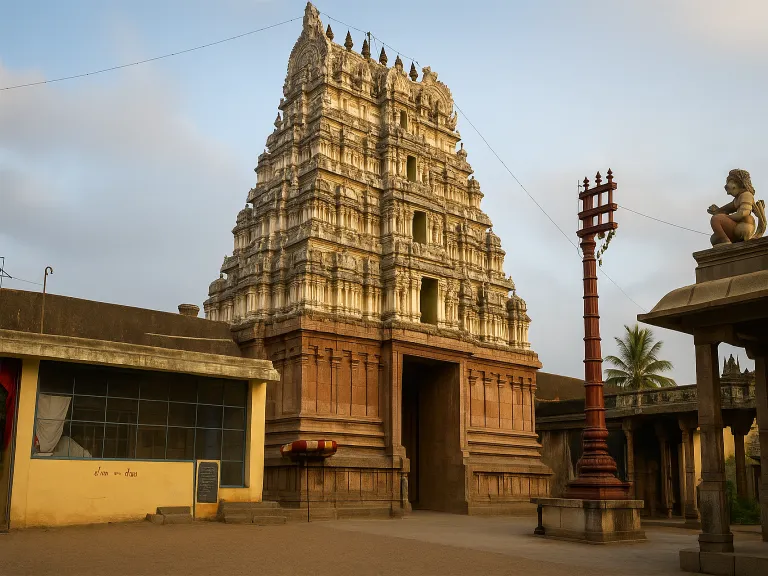
Veeratteswarar Temple follows the Dravidian architectural idiom of Tamil Nadu, with a sacred enclosure, entrance tower, central sanctum, subsidiary shrines, and mandapas used for worship and festival movement. The presiding deity is enshrined in linga form, as is typical of ancient Shaiva temples. The goddess shrine forms an important part of the temple’s ritual layout.
The temple’s architectural character reflects the accumulated development of a medieval Tamil Shiva temple rather than a single-phase monument. The core shrine, circumambulatory space, mandapas, and sculptural program support daily worship, festival processions, and devotional circumambulation. The temple’s identity as a Veerattanam shrine is expressed through the sacred association with Shiva’s victorious form.
As a Paadal Petra Sthalam, the temple is valued not only for its built form but also for its liturgical and cultural setting. Its architecture serves the functions of Agamic-style worship, though the specific Agama followed is not reliably documented in widely available sources. The temple stands within Thirukoilur’s wider sacred landscape, where ancient Tamil devotional traditions remain visible through temples, hymns, and pilgrimage practice.
✨
Temple Highlights
✨
Ashta Veerattanam Shrine
The temple is one of the eight sacred Veerattanam temples associated with Shiva’s heroic acts, specifically the destruction of Andhakasura.
✨
Paadal Petra Sthalam
Veeratteswarar Temple is counted among the Shiva temples praised in the Tevaram hymns of the Tamil Shaiva saints.
✨
Ancient Shaiva Centre of Thirukoilur
The temple forms part of Thirukoilur’s long-standing sacred landscape, which includes major Shaiva and Vaishnava pilgrimage traditions.
✨
Veeratteswarar Deity
Lord Shiva is worshipped here as Veeratteswarar, the heroic lord connected with the Andhakasura Samhara tradition.
✨
Periyanayagi Amman Shrine
The goddess is worshipped as Periyanayagi Amman, forming the divine consort shrine of the temple.
🙏
Spiritual Benefits
Worship for courage and inner strength
Seeking removal of ego and spiritual darkness
Prayers for protection from negative tendencies
Devotion to Shiva as the destroyer of evil
Seeking clarity, discipline, and self-control
Worship for family welfare and peace
Participation in Shaiva pilgrimage connected with Tevaram hymns
🎉
Major Festivals
🎉
Maha Shivaratri
A major annual festival for Lord Shiva, observed with special worship and extended devotion in Shiva temples.
🎉
Pradosham
A regular Shaiva observance dedicated to Lord Shiva, especially significant for worship of Shiva and Nandi.
🎉
Karthigai Deepam
A widely observed Tamil Shaiva festival associated with lights and worship of Lord Shiva.
🪔
Special Poojas
🪔
Pradosha Pooja
Special worship of Lord Shiva performed during Pradosham, an important observance in Shaiva temples.
🪔
Maha Shivaratri Abhishekam
Special abhishekam and worship offered to Lord Shiva during Maha Shivaratri.
🪔
Abhishekam to Veeratteswarar
Ritual bathing of the Shiva linga with sacred substances as part of temple worship.
🪔
Amman Pooja
Worship offered to Periyanayagi Amman, the goddess of the temple.
🚗
How to Reach
🛣️
By Road
Thirukoilur is connected by road with Villupuram, Tiruvannamalai, and nearby towns in northern Tamil Nadu. Buses and private vehicles can be used to reach the temple town.
🚆
By Rail
The nearest railway access is Tirukoilur Railway Station, from where local transport can be used to reach the temple.
✈️
By Air
Air travellers can use Puducherry or Chennai airports and continue to Thirukoilur by road or rail.
💡
Visitor Tips
Verify current temple timings locally before planning the visit.
Wear modest clothing suitable for a traditional South Indian temple.
Allow time for circumambulation and quiet worship inside the temple complex.
Combine the visit with other sacred sites in Thirukoilur if time permits.
Avoid photography inside sanctum areas unless temple authorities clearly permit it.
Visit during cooler parts of the day for a more comfortable experience.
Festival and Pradosham days may attract more devotees, so plan extra time.

 WhatsApp Us