🛕About Temple
Veeratteswarar Temple at Thiruvathigai, near Panruti in Cuddalore district of Tamil Nadu, is one of the most revered Shiva temples of the Tamil Saiva tradition. The presiding deity is Lord Shiva as Veeratteswarar or Veerattaneswarar, enshrined in linga form. The temple is closely associated with the sacred place-name Thiruvathigai and is counted among the celebrated Paadal Petra Sthalams praised in the Tevaram hymns.
The temple is also one of the Ashta Veerattanam temples, the eight shrines connected with the heroic acts of Shiva. Thiruvathigai represents the destruction of the three demon cities, Tripura Samhara, and therefore occupies a special place in Shaiva mythology and worship. The goddess is worshipped as Periyanayagi, also associated with the name Tripurasundari, linking the shrine to the Tripura tradition.
Thiruvathigai is especially important in the life of Saint Tirunavukkarasar, also known as Appar. Saiva tradition connects this temple with Appar’s return to Shiva worship and with his early Tevaram hymn beginning with the words “Kootrayinavaru.” The temple continues to be a major devotional centre for worshippers seeking darshan of Shiva as the destroyer of arrogance, evil and accumulated karmic burden. Its combination of Tevaram sanctity, Ashta Veerattanam status, Appar association and long history makes it one of the important Shiva temples of northern Tamil Nadu.
ℹ️Temple Information
🛕
Presiding Deity
Veeratteswarar
⭐
Temple Type
Shiva temple, Paadal Petra Sthalam, Ashta Veerattanam temple
📅
Built Period
Existing by the 7th century CE; later additions and renovations belong to the medieval and post-medieval periods.
🏛
Dynasty
Pallava period; later Chola and subsequent regional patronage
Need Help Planning your visit to
Arulmigu Veeratteswarar Temple?
Our travel experts can help you with transportation,
darshan timings, nearby sightseeing and complete temple tour planning.
⭐Temple Significance
Veeratteswarar Temple is significant as a Paadal Petra Sthalam praised in the Tevaram, as one of the Ashta Veerattanam temples, and as the shrine associated with Shiva’s Tripura Samhara. It is also deeply connected with Saint Tirunavukkarasar, known as Appar, whose devotional life and hymns are central to Tamil Saiva history.
📜History
Veeratteswarar Temple is historically attested by the Tevaram hymns of the 7th century CE. The shrine was sung by the great Saiva saints Tirunavukkarasar, Tirugnanasambandar and Sundarar, placing it firmly within the early medieval sacred geography of Tamil Shaivism. Its mention in the canonical hymns establishes that Thiruvathigai was already a prominent Shiva shrine during the Pallava period.
The temple’s history is closely connected with the Saiva revival represented in Tamil tradition by Appar. Hagiographical accounts describe Appar’s association with Thiruvathigai after his period of affiliation with Jainism, and his hymn to Veeratteswarar is remembered as a turning point in his devotional life. These accounts belong to the religious history of Tamil Shaivism and explain why the temple is so deeply linked with Appar’s name.
The present temple complex reflects additions and renovations across later centuries. Like many major Paadal Petra Sthalams of the region, it received patronage during the medieval period, including phases associated with Chola influence and subsequent rulers. The standing architecture, enclosed precincts, mandapas, gopuram elements and sculptural programme show that the temple developed over time rather than as a single-period monument. Its uninterrupted place in worship, hymn, pilgrimage and regional memory has preserved Thiruvathigai as both a historical temple and a living Saiva shrine.
🕉️Mythology
The central mythology of Thiruvathigai is Tripura Samhara, the destruction of the three cities of the asuras. According to Shaiva mythology, the three cities, called Tripura, were created as powerful moving fortresses. The asuras who occupied them became arrogant and oppressive, and the gods sought Shiva’s protection. Shiva took the cosmic form of the divine archer and destroyed the three cities with a single arrow.
In this sacred narrative, the earth became the chariot, the sun and moon became its wheels, the Vedas became the horses, Brahma served as the charioteer, Mount Meru became the bow, and Vishnu became the arrow. Shiva’s act was not merely a physical destruction but a cosmic restoration of order. At Thiruvathigai he is worshipped as the heroic Lord who destroyed Tripura, which is why the temple belongs to the Ashta Veerattanam group.
The Tripura myth is interpreted spiritually as the destruction of the three impurities that bind the soul: ego, karma and illusion. Devotees worship Veeratteswarar here for inner purification, courage and release from destructive tendencies. The goddess Tripurasundari represents divine grace associated with this victory. The temple’s mythology therefore combines a grand puranic episode with a deeply symbolic teaching about overcoming pride, ignorance and bondage through Shiva’s grace.
🏛Architecture
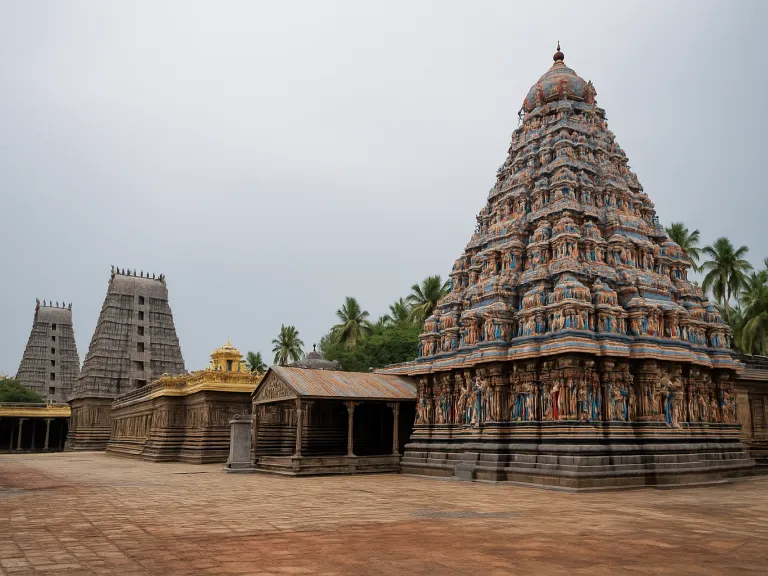
Veeratteswarar Temple is a large Dravidian Shiva temple complex with a traditional arrangement of gopuram, enclosed prakaras, mandapas and central sanctum. The sanctum houses the Shiva linga of Veeratteswarar, while the goddess Periyanayagi has her own shrine within the temple precinct. The layout supports circumambulation and ritual movement, characteristic of major Tamil Saiva temples.
The temple’s architecture reflects successive phases of construction and renovation. Its masonry structures, pillared halls, sculptural details and enclosure walls indicate a long period of patronage rather than a single building campaign. The iconographic focus on Shiva’s heroic manifestation connects the architecture with the Tripura Samhara theme. Sculptures and shrine arrangements within the complex present the broader Shaiva pantheon, including forms of Shiva, the goddess, Ganesha, Murugan, Chandikeswarar and other deities generally associated with a full Saiva temple.
As a Paadal Petra Sthalam, the temple is not only an architectural monument but also a liturgical space shaped by hymn, procession and daily worship. Its scale and sacred geography reflect the importance of Thiruvathigai in the religious landscape around Panruti and Cuddalore. The combination of a historic sanctum, mandapas for worship, subsidiary shrines and processional spaces makes it representative of the evolving Dravidian temple tradition in northern Tamil Nadu.
🌳
Sacred Features
🌳 Temple Tree
Sarakondrai
The Sarakondrai tree is associated with the sthala tradition of Thiruvathigai.
💧 Temple Tank
Soola Theertham
Soola Theertham is associated with the sacred water tradition of the temple; the Kedilam river is also connected with the sacred geography of Thiruvathigai.
✨
Temple Highlights
✨
Ashta Veerattanam Shrine
Thiruvathigai is one of the eight sacred temples associated with the heroic acts of Lord Shiva, specifically the destruction of Tripura.
✨
Paadal Petra Sthalam
The temple is praised in the Tevaram hymns of Tirunavukkarasar, Tirugnanasambandar and Sundarar.
✨
Association with Appar
Saiva tradition strongly connects the temple with Saint Tirunavukkarasar, also known as Appar, and his return to intense Shiva devotion.
✨
Tripura Samhara Significance
Veeratteswarar is worshipped here as the Lord who destroyed the three cities of the asuras and removed arrogance and adharma.
✨
Historic Temple near Panruti
Located at Thiruvathigai near Panruti, the temple is one of the important ancient Shiva shrines of Cuddalore district.
🙏
Spiritual Benefits
Worship for removal of ego, pride and negative tendencies
Prayer for courage to face adversity
Seeking Shiva’s grace for relief from karmic burdens
Devotion for inner purification and spiritual clarity
Prayer for protection from destructive influences
Worship for progress in Shaiva devotion
Seeking blessings for family welfare and peace
🎉
Major Festivals
🎉
Maha Shivaratri
A major Shaiva festival dedicated to Lord Shiva, observed with special worship and night-long devotion in Shiva temples.
🎉
Pradosham
The twice-monthly Pradosham worship is important for devotees of Shiva and is associated with prayers for forgiveness and spiritual welfare.
🎉
Arudra Darshan
A significant Shaiva observance connected with Shiva’s cosmic dance and celebrated in many ancient Tamil Shiva temples.
🎉
Aipasi Annabhishekam
A sacred abhishekam offering of cooked rice to Shiva, widely observed in Tamil Saiva temples during the Tamil month of Aipasi.
🪔
Special Poojas
🪔
Abhishekam to Veeratteswarar
Ritual bathing of the Shiva linga with sacred substances is central to worship of Veeratteswarar.
🪔
Archana to Veeratteswarar and Periyanayagi
Devotees offer name-based worship and prayers to the presiding Shiva and the goddess.
🪔
Pradosha Puja
Special worship to Shiva during Pradosham is significant for devotees seeking grace, purification and relief from difficulties.
🪔
Maha Shivaratri Worship
Special worship to Lord Shiva is performed on Maha Shivaratri, one of the most important nights of Shaiva devotion.
🚗
How to Reach
🛣️
By Road
Thiruvathigai is near Panruti in Cuddalore district and can be reached by road from Panruti, Cuddalore, Villupuram and Puducherry.
🚆
By Rail
Panruti railway station is the nearest convenient rail point for reaching Thiruvathigai.
✈️
By Air
The nearest airport commonly used for this region is Puducherry Airport; Chennai International Airport is a major alternative for wider connectivity.
💡
Visitor Tips
Plan the visit with enough time for darshan and circumambulation of the temple precincts.
Check current temple opening hours locally before travelling, as timings may change on festival days.
Wear modest clothing suitable for worship in a traditional South Indian temple.
Maintain silence and respect during puja, abhishekam and arati.
Do not photograph inside the shrine areas unless temple authorities clearly permit it.
Panruti is the nearest major town and is useful for transport connections.
Combine the visit with other historic Shiva temples in the Cuddalore and Panruti region if time permits.

 WhatsApp Us