🛕About Temple
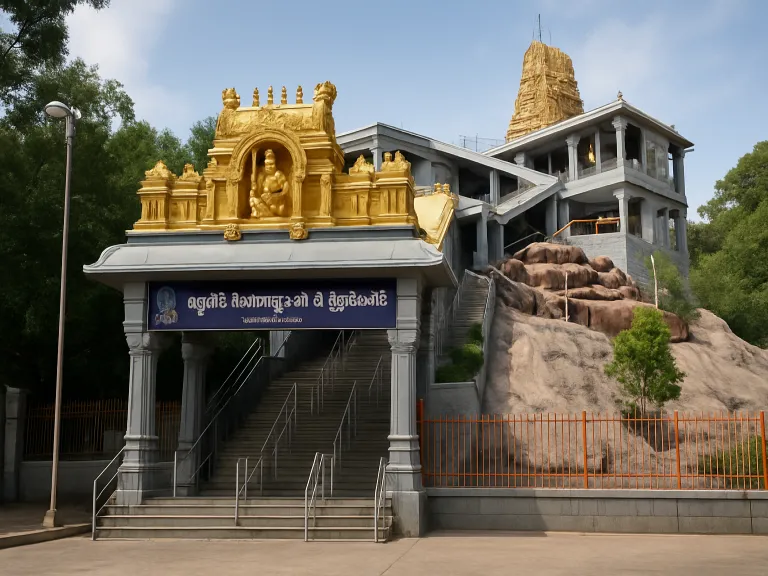
Velayuthaswamy Thirukovil, commonly known as Thindal Murugan Temple, is a prominent Hindu temple dedicated to Lord Murugan at Thindal in Erode, Tamil Nadu. The shrine stands on Thindal Malai, a small hill on the Erode–Perundurai side of the city, and is one of the most visited Murugan temples in the Erode region. The presiding deity is worshipped as Velayuthaswamy, the Lord who bears the Vel, the divine spear associated with wisdom, courage, and protection.
The temple is closely associated with the devotional life of Kongu Nadu, where Murugan worship has a deep and continuous presence. Its hill setting gives the shrine a distinct identity: devotees climb to the sanctum for darshan, while the elevated location offers wide views of Erode and the surrounding landscape. The temple is visited by residents of Erode as well as pilgrims travelling through western Tamil Nadu.
Velayuthaswamy Thirukovil is administered as a public Hindu temple and functions as an active place of daily worship, festival observance, vows, and family prayers. While many devotees approach the temple for personal blessings, its broader importance lies in its role as a well-known Murugan shrine of Erode city. The temple’s public identity is based on its location, presiding deity, hill-temple character, and continuing worship tradition rather than on a securely documented royal foundation history.
ℹ️Temple Information
🛕
Presiding Deity
Velayuthaswamy
👸
Goddess
Valli and Deivanai
⭐
Temple Type
Hindu temple, Murugan temple, Hill temple
Need Help Planning your visit to
Arulmigu Velayuthaswamy Thirukovil?
Our travel experts can help you with transportation,
darshan timings, nearby sightseeing and complete temple tour planning.
⭐Temple Significance
Velayuthaswamy Thirukovil is significant as the best-known Murugan hill temple in Thindal and an important devotional landmark of Erode. The temple is associated with worship of Lord Murugan as Velayuthaswamy, the wielder of the divine Vel, and attracts devotees for prayers, vows, festival worship, and family visits.
📜History
The secure historical record of Velayuthaswamy Thirukovil at Thindal is limited in publicly available, well-established historical sources. No widely accepted inscriptional record identifying the original builder, exact construction year, ruling dynasty, or consecration period is commonly cited for the temple. For this reason, the temple’s built period, dynasty, and founder are best left unspecified unless verified through official temple records, inscriptions, or government publications.
Thindal is now part of the urban religious landscape of Erode, a major centre of the Kongu region of Tamil Nadu. The temple’s importance is connected with the long-standing popularity of Murugan worship in western Tamil Nadu, especially at hill shrines. Murugan temples on hills and hillocks have been central to Tamil devotional practice for centuries, but a general pattern of hill worship cannot by itself establish a date for this particular shrine. The temple should therefore be described historically as an active and well-known Murugan shrine of Erode rather than assigned to an undocumented ancient dynasty.
In the modern period, Velayuthaswamy Thirukovil has become an important local pilgrimage destination and a recognizable landmark of Thindal. Its present significance is supported by regular worship, festival participation, and the steady flow of devotees from Erode and nearby towns. The temple’s history that can be safely stated is its continued public worship of Lord Murugan as Velayuthaswamy on Thindal Malai, its role in the devotional life of Erode, and its status as a maintained temple under contemporary temple administration.
🕉️Mythology
The mythology connected with Velayuthaswamy Thirukovil centres on Lord Murugan, one of the most beloved deities of Tamil Hindu tradition. Murugan is revered as the son of Shiva and Parvati, the youthful commander of the celestial forces, and the embodiment of beauty, valour, knowledge, and divine grace. In Tamil devotional literature and worship, he is addressed by many names, including Murugan, Subrahmanya, Skanda, Karthikeya, Shanmukha, and Kumara.
The name Velayuthaswamy refers to Murugan as the Lord of the Vel, the sacred spear given to him by Goddess Parvati. In Murugan mythology, the Vel represents the power that destroys ignorance, fear, arrogance, and hostile forces. The victory of Murugan over Surapadman is remembered in the observance of Skanda Sashti, one of the most important festival cycles in Murugan worship. Devotees who worship Velayuthaswamy approach the deity as a protector and guide whose grace removes inner and outer obstacles.
No unique, widely documented sthala-purana with a historically verifiable origin story for the Thindal shrine is commonly available in standard public accounts. Therefore, the mythological identity of this temple is best understood through the broader sacred tradition of Murugan and the Vel. The hill setting of Thindal Malai also resonates with the Tamil devotional association of Murugan with hills, ascetic discipline, pilgrimage, and personal vows. These elements shape the temple’s living religious meaning without requiring undocumented claims about its origin.
🏛Architecture
Velayuthaswamy Thirukovil is architecturally notable primarily as a hill temple. The shrine is reached by ascending Thindal Malai, placing the sanctum above the surrounding settlement and giving the temple a natural elevation that is central to the devotional experience. This hill setting is an important part of the temple’s identity, as Murugan is strongly associated in Tamil worship with hills and elevated sacred spaces.
The temple follows the broad layout familiar in Tamil Hindu shrines, with access through temple entrances, mandapa spaces for worshippers, and a sanctum dedicated to Lord Velayuthaswamy. The complex is an active place of worship rather than a monument known for a single dated architectural inscription. Its devotional architecture serves pilgrimage, circumambulation, festival worship, and darshan. The climb to the shrine, the view from the hill, and the visual focus on Murugan as the bearer of the Vel are among the most recognizable features of the temple experience.
No securely documented architectural attribution to a particular dynasty or construction century is widely available for this temple. As a result, it should not be described as Chola, Pandya, Vijayanagara, or Nayak in origin unless confirmed by inscriptions or official records. The safest architectural description is that it is a Tamil Murugan hill shrine at Thindal, maintained for continuous worship, with built elements that support modern temple ritual practice. Its significance lies in its sacred location, accessibility to devotees, and continued function as a major Murugan shrine of Erode.
✨
Temple Highlights
✨
Hilltop Murugan Shrine
The temple is located on Thindal Malai, giving devotees a hill-temple pilgrimage experience within Erode city limits.
✨
Presiding Deity Velayuthaswamy
Lord Murugan is worshipped here as Velayuthaswamy, the divine bearer of the Vel.
✨
Erode Landmark
The temple is a well-known religious landmark for residents of Erode and pilgrims travelling through western Tamil Nadu.
✨
Kongu Nadu Murugan Worship
The shrine reflects the strong and continuing devotion to Lord Murugan in the Kongu region of Tamil Nadu.
✨
Festival Devotion
Major Murugan festivals draw devotees for special worship, vows, and darshan.
🙏
Spiritual Benefits
Devotees worship Lord Velayuthaswamy for courage and confidence.
Devotees pray for removal of obstacles and fear through the grace of the Vel.
Families seek protection, harmony, and well-being.
Students and young people pray for clarity, discipline, and success in their efforts.
Devotees undertake vows and offerings as acts of gratitude and surrender.
Worship during Murugan festivals is valued for spiritual renewal and devotion.
🎉
Major Festivals
🎉
Thai Poosam
A major Murugan festival in the Tamil month of Thai, associated with devotion to the Vel and vows offered by devotees.
🎉
Vaikasi Visakam
A festival connected with the birth star of Lord Murugan and observed with special worship in Murugan temples.
🎉
Skanda Sashti
The festival commemorates Lord Murugan’s victory over Surapadman and is one of the most important observances in Murugan worship.
🎉
Panguni Uthiram
A significant Tamil festival associated with divine marriages and Murugan worship with Valli and Deivanai.
🎉
Karthigai
Karthigai days are sacred to Lord Murugan, and devotees visit Murugan temples for special worship and lamps.
🪔
Special Poojas
🪔
Abhishekam to Lord Velayuthaswamy
Ritual bathing of the deity is an important form of Murugan worship. Current schedules and booking procedures should be confirmed with the temple.
🪔
Shashti Worship
Shashti is sacred to Lord Murugan, and devotees observe prayers and vows on these days.
🪔
Karthigai Worship
Karthigai star days are associated with Murugan devotion and are observed with special prayers by devotees.
🪔
Kavadi and Vow Offerings
Devotees of Lord Murugan commonly offer vows such as kavadi or milk offerings as acts of devotion and gratitude, subject to temple procedures.
🚗
How to Reach
🛣️
By Road
Thindal is accessible from Erode by road, especially via the Erode–Perundurai route. Local buses, taxis, and private vehicles connect Erode city with the temple area.
🚆
By Rail
Erode Junction is the nearest major railway station. From the station, visitors can reach Thindal by local transport or taxi.
✈️
By Air
The nearest major airport is Coimbatore International Airport. From Coimbatore, visitors can travel to Erode by road or rail and then proceed to Thindal.
💡
Visitor Tips
Confirm current opening hours with the temple before planning a visit.
Visit during early morning or evening for a more comfortable climb and darshan.
Wear modest clothing suitable for a Hindu place of worship.
Use designated places for footwear and keep the temple premises clean.
Follow instructions issued by temple staff during festival crowds.
Carry drinking water if visiting during hot weather, especially when climbing the hill.
Elderly visitors and those with health concerns should plan the hill ascent carefully.
Check local traffic conditions during major Murugan festival days.

 WhatsApp Us