🛕About Temple
Vilvavaneswarar Temple at Thiruvaikavur is a revered Shiva temple in Thanjavur district, Tamil Nadu, near the Kumbakonam-Papanasam temple belt of the Kaveri delta. The presiding deity is Lord Vilvavaneswarar, worshipped in the form of a Shiva lingam, and the goddess is Valaikainayaki. The name of the temple is connected with vilva, the sacred bilva tree that is especially dear to Shiva worship.
The temple is counted among the Tevaram Paadal Petra Sthalams, the Shiva shrines praised in the canonical hymns of the Tamil Shaiva Nayanmars. This gives Thiruvaikavur an important place in Tamil Shaiva devotional geography. The shrine is especially associated with Maha Shivaratri, bilva worship, and the theme of Shiva granting protection from fear, sin, and untimely death.
Located in a quiet village setting, the temple reflects the sacred landscape of the Cauvery region, where ancient Shaiva temples are closely linked with hymns, local mythology, temple tanks, and sacred trees. Vilvavaneswarar Temple is visited by devotees seeking the grace of Shiva and the compassionate blessings of the goddess. Its importance rests not only in architecture and antiquity, but also in its living worship tradition and its connection with the wider network of medieval Tamil Shaiva sacred sites.
ℹ️Temple Information
🛕
Presiding Deity
Vilvavaneswarar
⭐
Temple Type
Shiva temple, Tevaram Paadal Petra Sthalam, Dravidian temple, Shaiva pilgrimage temple
📅
Built Period
Shrine known by the 7th century CE through the Tevaram tradition; present structural form associated with the medieval Chola period.
Need Help Planning your visit to
Arulmigu Vilvavaneswarar Temple?
Our travel experts can help you with transportation,
darshan timings, nearby sightseeing and complete temple tour planning.
⭐Temple Significance
Vilvavaneswarar Temple is significant as a Tevaram Paadal Petra Sthalam, a Shiva temple sanctified by Tamil Shaiva hymns. It is especially associated with vilva worship, Maha Shivaratri, and the mythology of Shiva granting protection from Yama and fear of death.
📜History
Thiruvaikavur is historically significant because it is identified with a Tevaram Paadal Petra Sthalam, one of the sacred Shiva temples celebrated in the Tamil Shaiva canon. The Tevaram hymns belong to the early medieval devotional movement of the Nayanmars, placing the shrine within the religious landscape known by the 7th century CE. This establishes the antiquity of Shiva worship at the site well before many later structural additions.
The temple stands in the Chola heartland of the Kaveri delta, an area where numerous brick shrines were rebuilt, enlarged, or endowed as stone temples during the Chola period. The present temple fabric belongs to the medieval Tamil Dravidian temple tradition, with later renovations and additions made as worship continued through successive periods. A single individual founder is not clearly documented in widely available historical accounts, so the temple is best understood as an ancient shrine developed over time rather than as the work of one patron.
Its historical importance is inseparable from the Tamil Shaiva bhakti tradition. The Nayanmar hymns transformed temples such as Thiruvaikavur into pilgrimage centers, preserving their names, deities, and sacred associations in liturgical memory. The continued worship of Vilvavaneswarar, the observance of Shiva festivals, and the retention of local sthala-purana traditions show how the temple has remained part of both regional religious life and the larger heritage of Tamil Shaivism.
🕉️Mythology
The mythology of Vilvavaneswarar Temple centers on the sanctity of the vilva tree and Shiva’s grace to those who worship him with sincerity, even unknowingly. Temple tradition describes Thiruvaikavur as a vilva forest, where the Lord manifested as a lingam and received worship with bilva leaves. Because bilva leaves are sacred in Shaiva worship, the temple’s name and identity are deeply connected with this tree.
A well-known local tradition links the temple with Maha Shivaratri. The narrative describes a hunter who, while trying to escape danger during the night, remained awake in or near a vilva tree. Without full awareness, he dropped vilva leaves on a Shiva lingam below and kept vigil through the night. This act became worship, and Shiva granted him protection and liberation. The story expresses the Shaiva teaching that devotion, vigilance, and even unintentional worship on Shivaratri can bring divine grace.
Another important strand of the temple mythology connects the shrine with Yama, the god of death. Shiva is described as protecting the devotee from Yama’s claim, making the temple a place associated with freedom from fear of death and the Lord’s power to grant refuge. These accounts belong to the temple’s sacred tradition rather than political history, but they continue to shape devotional practice, especially during Maha Shivaratri, Pradosham, and personal prayers for protection and spiritual release.
🏛Architecture
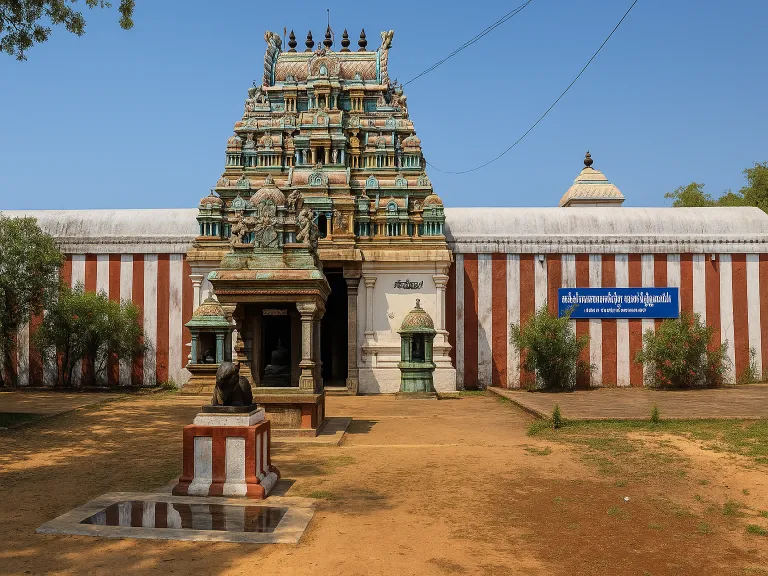
Vilvavaneswarar Temple follows the essential plan of a traditional Tamil Shaiva temple, with the sanctum of Lord Vilvavaneswarar at its ritual center. The presiding deity is worshipped as a Shiva lingam, and the shrine is approached through mandapas used for worship, circumambulation, and festival observances. The goddess shrine for Valaikainayaki forms an important part of the temple complex, reflecting the standard Shaiva arrangement in which Shiva and Shakti are worshipped together.
The temple belongs to the Dravidian architectural idiom of the Cauvery delta, where stone sanctums, mandapas, prakara passages, and subsidiary shrines create a layered sacred space. The visual focus is the garbhagriha and the axis of worship leading toward the main deity. Sculptural and ritual elements typical of Shaiva temples, including Nandi, guardian forms, and shrines connected with the Shiva temple circuit, support daily puja and circumambulatory worship.
The temple’s architectural significance is not based on monumental scale alone, but on its integration of sacred geography, mythology, and ritual use. The presence of the vilva sthala-vriksha association, the temple tank tradition, and the emphasis on Maha Shivaratri all contribute to the way the space is experienced by devotees. As with many ancient temples in the Kaveri region, the structure has been maintained and renewed over time, preserving medieval sacred planning while continuing to serve as an active place of worship.
🌳
Sacred Features
🌳 Temple Tree
Vilvam
The vilva tree is central to the temple’s name and mythology. Bilva leaves are sacred to Lord Shiva and are especially associated with worship of Vilvavaneswarar.
💧 Temple Tank
Yama Theertham
The temple tank is associated in local sacred tradition with Yama and the mythology of Shiva granting protection from the fear of death.
✨
Temple Highlights
✨
Tevaram Paadal Petra Sthalam
The temple is one of the Shiva shrines celebrated in the Tamil Shaiva Tevaram tradition, giving it high devotional importance.
✨
Association with Maha Shivaratri
The temple is strongly connected with the sacred night of Maha Shivaratri through local mythology centered on vigil, bilva worship, and Shiva’s grace.
✨
Vilva Sacred Identity
The name Vilvavaneswarar is linked with the sacred vilva tree, whose leaves are central to Shiva worship.
✨
Yama-Related Mythology
Temple tradition connects the shrine with Shiva protecting a devotee from Yama, making it a place of prayer for refuge and fearlessness.
✨
Cauvery Delta Shaiva Heritage
The temple forms part of the dense sacred geography of ancient Shiva temples in the Kumbakonam and Thanjavur region.
🙏
Spiritual Benefits
Worship of Lord Shiva with bilva leaves is considered spiritually meritorious in Shaiva tradition.
Devotees pray for protection from fear and danger, in line with the temple’s Yama-related mythology.
Maha Shivaratri worship here is associated with vigilance, repentance, and Shiva’s grace.
Prayers are offered for spiritual purification and release from past sins.
Devotees seek the blessings of Vilvavaneswarar and Valaikainayaki for family welfare and inner strength.
The temple is regarded as a sacred place for contemplating impermanence and divine refuge.
Circumambulation and worship at this Paadal Petra Sthalam are valued by followers of Tamil Shaiva tradition.
🎉
Major Festivals
🎉
Maha Shivaratri
The most important festival associated with Vilvavaneswarar Temple. The temple mythology of night vigil, bilva worship, and Shiva’s protection is closely linked with this observance.
🎉
Pradosham
Pradosham worship is an important recurring Shaiva observance dedicated to Lord Shiva and Nandi.
🎉
Thiruvathirai
Thiruvathirai is a major Shaiva festival connected with Lord Shiva and is observed in Tamil Shaiva temples.
🎉
Aippasi Annabhishekam
Annabhishekam, the ritual offering of cooked rice to the Shiva lingam, is a significant observance in many Shiva temples during the Tamil month of Aippasi.
🪔
Special Poojas
🪔
Bilva Archana
Worship of Lord Vilvavaneswarar with bilva leaves, reflecting the sacred identity of the temple and the importance of vilva in Shiva worship.
🪔
Maha Shivaratri Puja
Special worship associated with the night of Maha Shivaratri, including Shiva worship and devotional vigil.
🪔
Pradosha Puja
Worship performed during Pradosham, a sacred time for offering prayers to Lord Shiva and seeking divine grace.
🪔
Abhishekam to Vilvavaneswarar
Ritual bathing of the Shiva lingam with sacred substances as part of regular and special Shaiva worship.
🚗
How to Reach
🛣️
By Road
Thiruvaikavur can be reached by road from Kumbakonam, Papanasam, and Swamimalai using local buses, taxis, or private vehicles.
🚆
By Rail
The nearest convenient railway access is through Papanasam and Kumbakonam railway stations, which connect the area with major towns in Tamil Nadu.
✈️
By Air
The nearest major airport is Tiruchirappalli International Airport, from where the temple region can be reached by road.
💡
Visitor Tips
Check the current opening hours locally before travelling, as village temple timings can vary.
Plan the visit along with nearby Kumbakonam, Papanasam, and Swamimalai temples if travelling by road.
Carry water during summer months, as the Cauvery delta region can be hot and humid.
Wear modest clothing suitable for worship in a traditional Tamil Nadu temple.
Avoid disturbing ongoing puja, chanting, or circumambulation inside the temple.
Confirm photography rules with temple authorities before taking pictures.
Maha Shivaratri can attract more devotees, so allow extra time during festival visits.
Use local transport or a hired vehicle for easier access between nearby village temples.

 WhatsApp Us