🛕About Temple
Vriddhagiriswarar Temple at Vriddhachalam in Cuddalore district, Tamil Nadu, is an ancient Shiva temple dedicated to Lord Vriddhagiriswarar, also called Pazhamalai Nathar. The name Vriddhachalam combines the Sanskrit words for ancient and hill, while the Tamil name Pazhamalai carries the same meaning. The temple stands in the heart of Vriddhachalam town and is one of the important Shaiva shrines of northern Tamil Nadu.
The temple is a Tevaram Paadal Petra Sthalam, meaning it is one of the Shiva temples praised in the canonical hymns of the Nayanmar saints. Hymns associated with the shrine establish its importance in the early medieval Tamil Shaiva tradition. The presiding deity is worshipped as a self-manifest or ancient form of Shiva in the symbolism of a sacred hill, and the goddess is worshipped as Periyanayaki Amman.
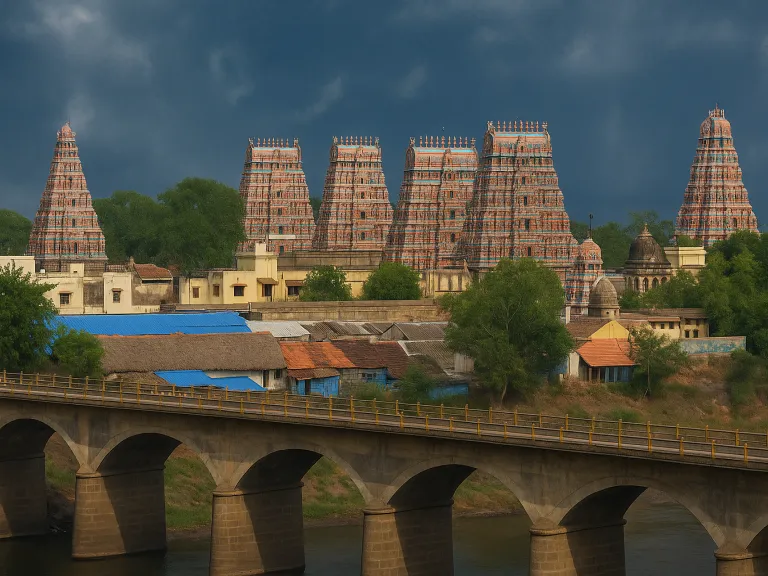
Vriddhagiriswarar Temple is noted for its large walled complex, multiple gateways, extensive prakarams and numerous sub-shrines. It is connected with the Manimuktha River and with the hagiographical traditions of Saint Sundarar. The temple remains an active place of worship where daily Shaiva rituals, Pradosham worship, Maha Shivaratri observances and annual festivals are performed. Its combination of Tevaram sanctity, Chola-period historical layers and monumental Tamil temple architecture makes it a major pilgrimage centre in the region.
ℹ️Temple Information
🛕
Presiding Deity
Vriddhagiriswarar
👸
Goddess
Periyanayaki Amman
⭐
Temple Type
Shiva temple, Tevaram Paadal Petra Sthalam, Dravidian temple, Active Hindu temple
📅
Built Period
The shrine existed by the 7th century CE; the present structural temple developed mainly during the medieval Chola and later periods.
🏛
Dynasty
Chola, with later additions and endowments under subsequent South Indian rulers.
Need Help Planning your visit to
Arulmigu Vriddhagiriswarar Temple?
Our travel experts can help you with transportation,
darshan timings, nearby sightseeing and complete temple tour planning.
⭐Temple Significance
Vriddhagiriswarar Temple is significant as a Tevaram Paadal Petra Sthalam dedicated to Shiva, praised in the Tamil Shaiva canon and associated with Saint Sundarar. It is one of the major ancient Shiva temples of Cuddalore district and a prominent pilgrimage centre in the Vriddhachalam region.
📜History
Vriddhagiriswarar Temple is historically important because its existence is attested by the Tevaram hymns of the 7th-century Tamil Shaiva saints. The shrine was praised by the Nayanmars, placing it among the Paadal Petra Sthalams and confirming that Vriddhachalam was already a recognized Shiva centre in the early medieval period. The sacred name Pazhamalai, meaning ancient hill, occurs in the Tamil religious tradition associated with the site.
The surviving stone temple shows the layered development typical of major Tamil shrines. The core shrine belongs to an old Shaiva sacred site, while the present structural complex contains features associated with Chola-period temple building and later expansions. Inscriptions recorded in the temple belong to the Chola period and later periods, documenting endowments, gifts and arrangements for worship. The temple also received additions and repairs under later South Indian rulers and local patrons.
No single founder is historically established for the entire temple complex. The most reliable historical statement is that the shrine existed by the 7th century CE and that the present masonry complex grew through the Chola and post-Chola centuries. The temple’s continuing importance came from its place in the Shaiva canon, its royal and local endowments, and its role as the central sacred landmark of Vriddhachalam. Its history therefore combines early Tamil devotional evidence, medieval inscriptional patronage and continuous ritual use.
🕉️Mythology
The mythology of Vriddhagiriswarar Temple centres on the meaning of the name Vriddhachalam or Pazhamalai, the ancient hill. Local Shaiva tradition describes Shiva here as the Lord who manifested in the form and sanctity of an ancient hill. The linga is therefore worshipped not only as an image of Shiva but also as the divine presence of the timeless mountain, giving the deity the names Vriddhagiriswarar and Pazhamalai Nathar.
The goddess of the temple is worshipped as Periyanayaki Amman, the great mother. In temple tradition she is also connected with the name Balambikai, expressing the contrast between Shiva as the ancient lord and the goddess as the ever-auspicious mother. These names are part of the devotional identity of the shrine and are used by worshippers in prayers for protection, family welfare and spiritual strength.
A well-known Shaiva hagiographical association links the temple with Saint Sundarar. In the devotional accounts of Sundarar’s life, Shiva at Vriddhachalam granted him gold, and Sundarar placed it in the Manimuktha River with the divine assurance that he would receive it again at Tiruvarur. This episode connects Vriddhachalam with the wider sacred geography of Tamil Shaivism and presents the deity as one who responds directly to the devotion of the Nayanmar saint. These stories belong to the temple’s sacred mythology and devotional memory rather than political history.
🏛Architecture
Vriddhagiriswarar Temple is a large Dravidian temple complex enclosed by massive walls and entered through monumental gopurams. The layout follows the pattern of a major Tamil Shaiva temple, with the sanctum of Lord Vriddhagiriswarar at the ritual centre, the goddess shrine within the complex, circumambulatory passages, mandapas, subsidiary shrines and festival spaces. The scale of the enclosure reflects the temple’s importance as a medieval religious institution.
The temple is especially known for the prominence of the number five in its layout and ritual identity. Temple descriptions associate the complex with five prakarams, five gopurams, five Nandis, five flagstaffs and other sets of five features. This pattern is part of the temple’s recognized architectural and sacred character. The gopurams, pillared halls and sculptural elements show the cumulative work of different periods, with Chola foundations and later additions visible in the overall form.
The sanctum houses the Shiva linga of Vriddhagiriswarar, while Periyanayaki Amman has a separate shrine. The mandapas contain sculpted pillars, icons of Shaiva deities and images connected with temple worship. As in many large Tamil temples, architecture here serves both ritual and festival functions: processional routes, vehicle mandapas, flagstaff areas and open courts support daily puja and annual celebrations. The temple’s architectural value lies in its spacious plan, canonical Shaiva identity and layered medieval building history.
✨
Temple Highlights
✨
Tevaram Paadal Petra Sthalam
The temple is one of the sacred Shiva shrines praised in the Tevaram hymns of the Nayanmar saints, giving it a central place in Tamil Shaiva devotion.
✨
Lord Vriddhagiriswarar
The presiding deity is worshipped as Vriddhagiriswarar or Pazhamalai Nathar, the Lord of the ancient hill, reflecting the sacred meaning of Vriddhachalam.
✨
Association with Saint Sundarar
Shaiva hagiography connects the temple with Sundarar and the episode of gold placed in the Manimuktha River and received again at Tiruvarur.
✨
Large Dravidian Temple Complex
The temple has massive enclosures, gopurams, prakarams, mandapas and separate shrines for Shiva, the goddess and associated deities.
✨
Sacred Pattern of Five
The temple is noted for architectural and ritual features associated with the number five, including prakarams, gopurams and Nandis in temple tradition.
🙏
Spiritual Benefits
Worship of Lord Shiva for spiritual clarity and devotion
Prayers for family welfare and protection through Periyanayaki Amman
Participation in Pradosham worship for Shaiva observance
Offering prayers connected with the sacred memory of the Nayanmar saints
Seeking blessings for removal of obstacles and inner strength
Meditative circumambulation of an ancient Paadal Petra Sthalam
Observance of Maha Shivaratri for deepened Shiva devotion
🎉
Major Festivals
🎉
Maha Shivaratri
A major Shiva festival observed with special worship, night prayers and devotion to Lord Vriddhagiriswarar.
🎉
Pradosham
The twice-monthly Pradosham is an important Shaiva observance when devotees worship Lord Shiva and Nandi.
🎉
Arudra Darisanam
A significant Shaiva festival connected with Shiva’s cosmic dance, observed in Tamil temples during the Tamil month of Margazhi.
🎉
Karthigai Deepam
A festival of lamps celebrated in Tamil Shaiva temples with worship and illumination.
🎉
Annual Brahmotsavam
The temple observes an annual festival with special rituals and processional worship; dates should be confirmed with the temple for the current year.
🪔
Special Poojas
🪔
Pradosha Pooja
Special worship performed during Pradosham for Lord Shiva and Nandi.
🪔
Maha Shivaratri Pooja
Special rituals and night worship performed for Lord Vriddhagiriswarar on Maha Shivaratri.
🪔
Abhishekam to Lord Vriddhagiriswarar
Ritual bathing of the Shiva linga with sacred substances as part of temple worship.
🪔
Amman Pooja
Worship offered to Periyanayaki Amman for the blessings of the divine mother.
🚗
How to Reach
🛣️
By Road
Vriddhachalam is connected by road with Cuddalore, Chidambaram, Neyveli, Villupuram and other towns of northern Tamil Nadu. Buses and taxis are available to the temple area from the town bus stand.
🚆
By Rail
Vriddhachalam Junction is the main railway station serving the town and is on important rail routes connecting Chennai, Tiruchirappalli, Madurai and other destinations.
✈️
By Air
The nearest major airports used by travellers are Tiruchirappalli International Airport and Chennai International Airport, depending on route convenience.
💡
Visitor Tips
Verify the current opening hours with the temple before travelling, as timings can change on festival days.
Wear modest clothing suitable for worship in an active Hindu temple.
Allow enough time to walk through the large prakarams and visit the main goddess shrine.
Festival days and Pradosham can draw larger crowds, so plan accordingly.
Vriddhachalam Junction is the most convenient railway access point for pilgrims arriving by train.
Keep footwear only in the designated area before entering the temple.
Respect restrictions inside the sanctum and follow the instructions of temple staff.
Carry drinking water during hot months, especially if visiting at midday.

 WhatsApp Us