🛕About Temple
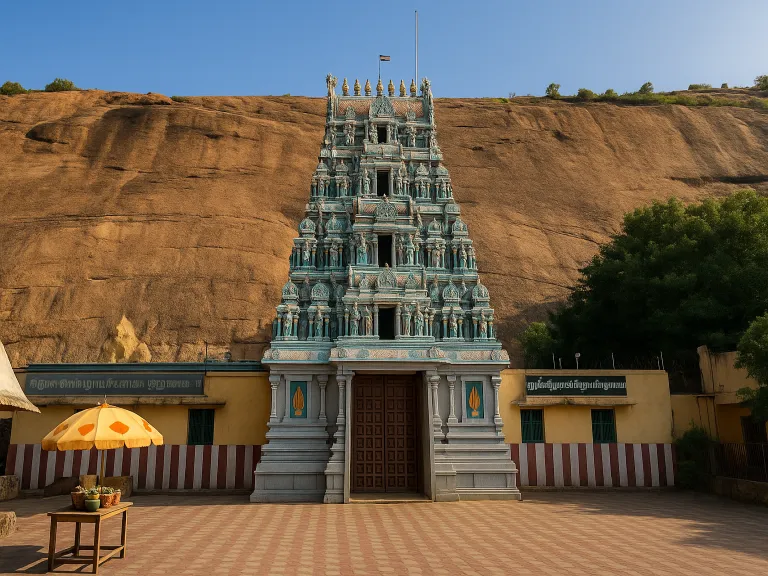
Yoga Narasinga Perumal Thiru Kovil at Narasingam is an ancient Vaishnava temple located near the Yanaimalai hill, close to Othakadai and Madurai in Tamil Nadu. The presiding deity is Yoga Narasinga Perumal, a form of Lord Vishnu as Narasimha seated in a yogic posture. The temple is especially known for its rock-cut sanctum and its association with the early medieval Pandya period.
The temple stands in the historic settlement of Narasingam, a place whose name is connected with Narasimha worship. Unlike large urban temple complexes, this shrine is valued for its compact sacred setting, its hill-side location, and its direct link with Pandya rock-cut temple architecture. The nearby Yanaimalai landscape also contains early religious monuments, making the area important for the study of Tamil Nadu’s religious and artistic history.
The shrine continues to be visited by devotees seeking the blessings of Yoga Narasimha, especially for courage, protection, steadiness of mind, and relief from fear. Narasingavalli Thayar is worshipped as the divine consort. The temple is significant not only as a place of worship but also as an inscriptionally documented monument that preserves evidence of Pandya patronage, early Vaishnava devotion, and the continuation of sacred worship in the Madurai region.
ℹ️Temple Information
🛕
Presiding Deity
Yoga Narasinga Perumal
👸
Goddess
Narasingavalli Thayar
⭐
Temple Type
Vaishnavite temple, Rock-cut temple, Pandya-period temple, Narasimha temple
📅
Built Period
770 CE, 8th century CE
Need Help Planning your visit to
Arulmigu Yoga Narasinga Perumal Thiru Kovil?
Our travel experts can help you with transportation,
darshan timings, nearby sightseeing and complete temple tour planning.
⭐Temple Significance
The temple is significant as an inscriptionally documented 8th-century Pandya rock-cut Vaishnava shrine dedicated to Yoga Narasinga Perumal. It is an important monument for the history of Narasimha worship, early medieval Pandya patronage, and the sacred landscape around Yanaimalai near Madurai.
📜History
Yoga Narasinga Perumal Temple at Narasingam is one of the important early medieval Vaishnava monuments in the Madurai region. The temple is historically associated with the Pandya period and is known through inscriptions found at the site. Its location at the foot of Yanaimalai connects it with a wider sacred and historical landscape that includes rock-cut monuments and early religious activity around Madurai.
An inscription dated to 770 CE, during the reign of the Pandya ruler Jatila Parantaka Nedunjadaiyan, records the excavation of the temple by Maran Kari, also known as Madurakavi, a minister of the Pandya king. The inscription further records that after Maran Kari’s death, his younger brother Maran Eyinan completed the front mandapa and performed the consecration. This makes the temple historically important because its origin is supported by epigraphic evidence rather than only by oral tradition.
The monument represents the phase when the Pandyas actively patronized rock-cut shrines in the Tamil region. The temple also demonstrates the presence of established Vishnu worship around Madurai in the 8th century CE. Later worship and additions helped the shrine remain a living temple. Its historical value rests on the combination of inscriptional records, Pandya architectural character, and its continuing religious identity as a Narasimha temple.
🕉️Mythology
The mythology of the temple is connected with Lord Narasimha, the man-lion incarnation of Vishnu. In the Puranic narrative, Vishnu appeared as Narasimha to protect the child devotee Prahlada and to destroy the demon king Hiranyakashipu, who could not be killed by man or beast, indoors or outdoors, by day or night, or by ordinary weapons. Narasimha’s manifestation represents divine protection of devotion and the defeat of arrogance.
Local tradition connects the Narasingam shrine with the calmer and contemplative form of Narasimha after the fierce act of destroying Hiranyakashipu. Here the deity is worshipped as Yoga Narasinga Perumal, seated in yogic composure. This form emphasizes restraint, inner power, and spiritual steadiness rather than only the terrifying aspect of Narasimha. The name of the village, Narasingam, is also understood in relation to the deity worshipped here.
Devotees approach Yoga Narasinga Perumal for protection from fear, strength in difficult circumstances, and clarity of mind. Narasingavalli Thayar, the goddess of the temple, represents the compassionate and auspicious aspect of divine grace. The mythology surrounding the shrine therefore brings together the protective power of Narasimha, the calming discipline of yoga, and the mercy of the divine mother. These beliefs belong to the living devotional tradition of the temple.
🏛Architecture
Yoga Narasinga Perumal Temple is a rock-cut shrine associated with the Yanaimalai hill near Madurai. The sanctum is excavated into the rock and enshrines Yoga Narasinga Perumal in a seated yogic form. This type of cave-temple architecture is characteristic of the early medieval Pandya period, when shrines were created by cutting into living rock and then expanded with built mandapas and structural additions.
The historically recorded front mandapa is important because inscriptions state that it was completed by Maran Eyinan after the death of Maran Kari. The arrangement of the shrine reflects a transition between excavated rock-cut worship spaces and later structural temple forms. The focus remains on the deity in the cave sanctum, while the mandapa provides the ritual and congregational space needed for worship.
The temple’s architecture is valued for its simplicity, antiquity, and inscriptional context rather than for massive towers or elaborate later-period ornamentation. The setting at the base of Yanaimalai gives the shrine a strong relationship with the natural rock formation. The temple is part of the broader Pandya rock-cut tradition around Madurai and remains an important monument for understanding the development of Vaishnava sacred architecture in southern Tamil Nadu.
✨
Temple Highlights
✨
8th-century Pandya shrine
The temple is historically dated to 770 CE through inscriptions and is associated with the reign of the Pandya ruler Jatila Parantaka Nedunjadaiyan.
✨
Rock-cut sanctum
The sanctum is excavated into the rock at the Yanaimalai hill, reflecting early medieval Pandya cave-temple architecture.
✨
Yoga Narasinga Perumal
The presiding deity is Narasimha in a yogic seated posture, emphasizing divine protection, restraint, and inner strength.
✨
Epigraphic importance
Inscriptions at the site record the role of Maran Kari and Maran Eyinan, making the temple historically well documented.
✨
Narasingavalli Thayar shrine
The goddess is worshipped as Narasingavalli Thayar, the consort of Yoga Narasinga Perumal.
✨
Yanaimalai sacred landscape
The temple is part of the historically rich Yanaimalai region near Madurai, known for ancient religious monuments.
🙏
Spiritual Benefits
Blessings for courage and fearlessness
Protection from negative influences
Mental steadiness and inner discipline
Relief from anxiety through devotional prayer
Strength to face difficult situations
Grace for family welfare and auspiciousness
Devotion to Lord Vishnu in the Narasimha form
🎉
Major Festivals
🎉
Narasimha Jayanti
Narasimha Jayanti is the sacred observance connected with the appearance of Lord Narasimha and is especially significant for devotees of Yoga Narasinga Perumal.
🎉
Vaikunta Ekadashi
Vaikunta Ekadashi is an important Vaishnava observance dedicated to Lord Vishnu and is a major day of worship for Vishnu devotees.
🚗
How to Reach
🛣️
By Road
Narasingam is accessible by road from Madurai via Othakadai. Local buses, taxis, and auto-rickshaws from Madurai and Othakadai can be used to reach the temple area near Yanaimalai.
🚆
By Rail
Madurai Junction is the main railway station for visitors coming by train. From the station, road transport is available toward Othakadai and Narasingam.
✈️
By Air
Madurai Airport is the nearest airport. From the airport, visitors can travel by road through Madurai city toward Othakadai and Narasingam.
💡
Visitor Tips
Confirm the current temple timings locally before visiting.
Use Madurai or Othakadai as the main access point for local transport.
Carry drinking water, especially during the hotter months.
Remove footwear before entering the temple premises.
Maintain silence and respect during worship in the sanctum area.
Check locally before taking photographs inside or near the shrine.
Combine the visit with nearby historic temples around Yanaimalai if time permits.
Visit during the cooler part of the day for a more comfortable experience.

 WhatsApp Us