
Karthi Travels®
ISO 9001:2015 Certified
Throughout Tamil Nadu
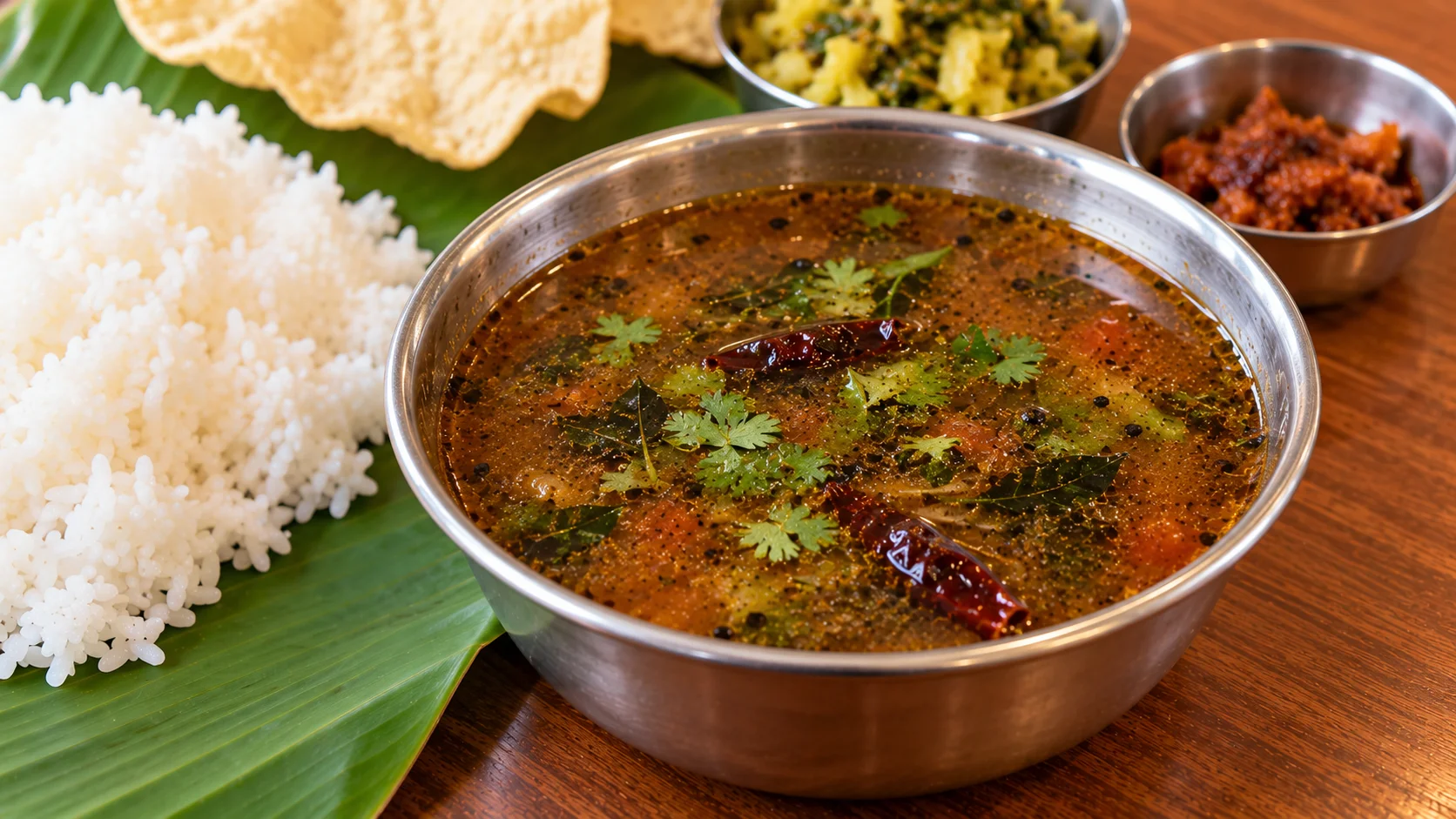
This image has been generated using AI for visual representation purposes only.
A tangy, peppery rasam prepared using horse gram and traditional South Indian spices.
Kollu Rasam is a traditional Tamil Nadu dish made using kollu, also known as horse gram, along with tamarind, tomatoes, garlic, black pepper, cumin and other spices. It is a thin, tangy and peppery broth commonly prepared in Kongu Nadu, the western region of Tamil Nadu. Horse gram is an important ingredient in traditional rural cooking, where it is valued for its nutritional content and distinctive earthy flavour. The rasam can be served with steamed rice or enjoyed on its own as a warm soup. Its combination of horse gram, aromatic spices and tamarind creates a flavourful dish that complements everyday home-cooked meals. Recipes vary between households: some use the strained cooking liquid from boiled horse gram, while others add ground horse gram or a portion of the cooked legumes to create a fuller texture. Kollu Rasam reflects the practical, ingredient-conscious cooking traditions associated with Kongu Nadu and remains a familiar preparation in households that use horse gram regularly.
Horse gram is washed and cooked in water until soft. The cooking liquid is reserved for the rasam, and some recipes also use a small portion of the cooked horse gram. Tamarind is soaked in water and its extract is prepared, often with chopped tomato, turmeric and salt. Black pepper, cumin and garlic are crushed or ground to release their aroma. The tamarind mixture is simmered with the horse gram liquid and the spice mixture until the flavours combine. A tempering is prepared by heating oil and adding mustard seeds, dried red chilli, curry leaves and asafoetida. This tempering is poured into the rasam, which is heated gently and removed from the stove once aromatic. Fresh coriander may be added before serving. Household methods and ingredient proportions vary, and the rasam is generally not boiled vigorously for a long time after the spices have been added.
Kollu Rasam is a tangy, peppery South Indian broth prepared with horse gram, tamarind, tomatoes and spices. It is associated with traditional home cooking in Kongu Nadu and other parts of Tamil Nadu.
Kollu Rasam is associated with Kongu Nadu, the western Tamil Nadu region where horse gram is used in several traditional dishes.
Kollu is commonly known in English as horse gram, a pulse used in South Indian cooking.
Yes. Traditional Kollu Rasam is vegetarian and is prepared using horse gram, tamarind, spices and seasonings. Restaurant recipes should be checked if strict dietary requirements apply.
It is commonly served hot with steamed rice as part of a Tamil meal. It can also be enjoyed by itself as a light, spiced broth.
No. Its heat depends on the amount of black pepper and chilli used. Some versions are gently spiced, while others have a stronger peppery flavour.
Kollu Rasam is generally a thinner, broth-like preparation, often made using horse gram cooking liquid. Kollu Kuzhambu is usually thicker and is served as a curry to accompany rice. Recipes vary by household.
This image has been generated using AI for visual representation purposes only.
Let Karthi Travels help you plan a comfortable and memorable journey across Tamil Nadu.
Experience, Trust & Memories Built Over the Years





Your journey is in experienced hands, from planning to the final drop.

No hidden charges. Clear and upfront pricing.

Clean, inspected and well-serviced vehicles for a comfortable journey.

Professional drivers focused on safe and pleasant travel.

Dependable pickups and reliable travel service.
Travel Made Simple, Experiences Made Grand

Explore the best of each destination with our curated sightseeing tours.

Perfect for families and groups, planned with comfort, safety and flexibility in mind.

Peaceful and spiritually enriching journeys with carefully planned routes.

Personalised honeymoon tours and romantic destinations for your special journey.

Compliant and well-documented tour plans to make the most of your travel concession.
 WhatsApp Us