About Temple
Kallalagar Temple, also known as Alagar Kovil, is a major Vishnu temple at the foot of the Alagar Hills near Madurai in Tamil Nadu. The presiding deity is Sundararaja Perumal, worshipped in the standing posture, and the processional deity is popularly known as Kallalagar or Azhagar. The temple is celebrated as Thirumaliruncholai, one of the 108 Divya Desams praised in the Nalayira Divya Prabandham by the Alvar saints.
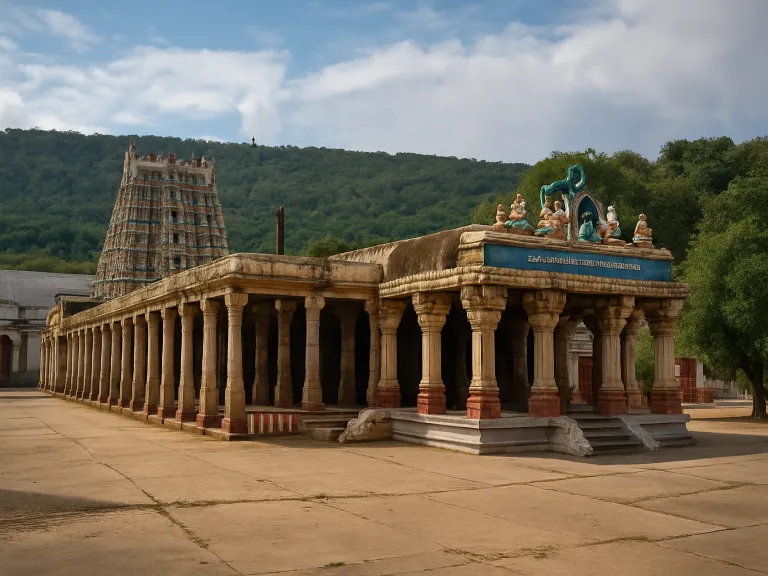
The temple occupies a distinctive natural setting, with the forested Alagar Hills forming a sacred backdrop. Its association with the hill, the Silambaru or Nupura Gangai sacred spring, and the ancient devotional hymns gives it importance both as a pilgrimage centre and as a historic religious landscape. The shrine is among the most prominent Vaishnava temples of the Madurai region and is closely linked to the religious life of the city.
Kallalagar Temple is especially known for its role in the Chithirai festival of Madurai, when the deity Kallalagar is taken in procession from Alagar Kovil toward the Vaigai River. This event draws large numbers of devotees and forms one of the most recognizable public religious observances in Tamil Nadu. The temple is also valued for its stone mandapas, sculptural work, guardian-deity traditions, and enduring Sri Vaishnava worship.
Temple Information
| Presiding Deity |
Sundararaja Perumal |
| Goddess |
Sundaravalli Thayar |
| Temple Type |
Vishnu temple, Divya Desam, Sri Vaishnava temple, Hill-foot temple, Dravidian temple |
| District |
Madurai
|
| Built Period |
Early medieval core documented through Pandya-period associations; major architectural additions and expansions from the 15th to 17th centuries. |
| Dynasty |
Pandya; later Vijayanagara Empire and Madurai Nayak patrons |
| Sampradaya |
Sri Vaishnavism |
Temple Significance
Kallalagar Temple is one of the 108 Divya Desams, revered as Thirumaliruncholai in the hymns of the Alvars. It is a major Vaishnava shrine of the Madurai region and is central to the Chithirai festival, especially the celebrated entry of Kallalagar into the Vaigai River.
History
The early history of Kallalagar Temple is connected with the sacred site known in Vaishnava literature as Thirumaliruncholai. The Divya Prabandham hymns of the Alvars establish the antiquity of the shrine as a revered Vishnu temple in the Tamil devotional tradition. The site developed in the Pandya country, and its position near Madurai made it part of an important religious and political landscape from the early medieval period onward.
Historically documented patronage is associated with the Pandya rulers, who supported many temples in and around Madurai. Later inscriptions and architectural additions reflect the continued importance of the shrine under the Vijayanagara Empire and the Madurai Nayaks. These periods contributed to the enlargement of temple complexes across Tamil Nadu, including the addition of mandapas, processional arrangements, and sculptural embellishments that remain visible at Alagar Kovil.
The temple’s public prominence increased through its deep association with Madurai’s Chithirai festival. The journey of Kallalagar from Alagar Kovil to the Vaigai River became a major ritual event connected with the wider sacred calendar of Madurai. While the original builder of the temple is not securely documented, the shrine’s layered history is evident in its literature, inscriptions, architecture, and continuous worship as one of the most important Divya Desams of the Pandya region.
Mythology
In temple mythology, the hill of Thirumaliruncholai is a sacred abode of Vishnu, where the Lord manifests as Sundararaja Perumal, the beautiful king. The name Azhagar means the beautiful one in Tamil, and the deity is adored for divine grace, majesty, and compassion. The surrounding hill, forest, and sacred waters are understood within the temple tradition as part of the deity’s divine presence.
The most famous local tradition connects Kallalagar with the Chithirai festival of Madurai. In the festival narrative, Kallalagar travels from Alagar Kovil toward Madurai to attend the celestial wedding of Goddess Meenakshi and Lord Sundareswarar. When he reaches the Vaigai River, he learns that the wedding has already taken place. His entry into the Vaigai is commemorated annually with immense devotion and is one of the defining ritual moments of the festival.
Another sacred association is Nupura Gangai, also called Silambaru, a holy spring in the Alagar Hills. Temple mythology connects the water with the anklet of the divine, and devotees regard it as purifying. The guardian deity Pathinettam Padi Karuppasamy, associated with the eighteen steps at the temple entrance, is also an important part of the local sacred tradition surrounding the temple and its protection.
Architecture
Kallalagar Temple represents the Dravidian temple tradition of Tamil Nadu, adapted to a hill-foot setting. The complex is enclosed within walls and entered through gopurams and gateways that lead into successive sacred spaces. Its plan includes the sanctum of Sundararaja Perumal, shrines for the goddess and attendant deities, pillared halls, processional corridors, and spaces used during festivals and ritual gatherings.
The temple displays features associated with Pandya, Vijayanagara, and Nayak-period temple building. The stone mandapas contain carved pillars and sculptural panels typical of late medieval Tamil temple architecture. The Kalyana Mandapa is especially noted for its elaborate stone carving and iconographic richness. These architectural additions reflect the importance of public worship, festival processions, and royal or elite patronage in the temple’s historical development.
A distinctive feature of the temple’s built environment is its integration with the Alagar Hills. The sacred geography extends beyond the main complex to the hill paths, Nupura Gangai, and nearby shrines such as Pazhamudircholai. The temple also preserves the well-known Pathinettam Padi Karuppasamy association at the entrance, showing how formal Vaishnava worship and regional guardian-deity traditions coexist within the same sacred landscape.
Sacred Features
Temple Tank
Nupura Gangai / Silambaru
A sacred spring in the Alagar Hills associated with the temple’s mythology and worship. Devotees regard its water as holy.
Temple Highlights
Divya Desam status
The temple is revered as Thirumaliruncholai, one of the 108 Divya Desams praised in the Nalayira Divya Prabandham.
Kallalagar’s Chithirai procession
The deity’s journey from Alagar Kovil to the Vaigai River is one of the most famous events of Madurai’s Chithirai festival.
Alagar Hills setting
The temple stands at the foot of the scenic Alagar Hills, giving the shrine a distinctive sacred landscape.
Nupura Gangai
The sacred spring in the hills, also called Silambaru, is an important tirtha associated with the temple.
Pathinettam Padi Karuppasamy
The guardian-deity tradition connected with the eighteen steps at the temple entrance is a well-known feature of Alagar Kovil.
Kalyana Mandapa sculptures
The temple’s stone halls and carved pillars reflect the artistic contributions of later medieval Tamil temple architecture.
Spiritual Benefits
- Devotees seek the blessings of Vishnu as Sundararaja Perumal for protection and well-being.
- Worship at this Divya Desam is considered spiritually meritorious within the Sri Vaishnava tradition.
- Devotees pray to Kallalagar for prosperity, family harmony, and divine grace.
- Participation in the Chithirai festival is regarded as a powerful devotional experience.
- Bathing in or worship connected with Nupura Gangai is regarded by devotees as purifying.
- Prayer to Sundaravalli Thayar is sought for compassion, marital harmony, and household welfare.
- Darshan at Thirumaliruncholai is valued as part of pilgrimage to the Divya Desams.
Major Festivals
Chithirai Festival
The most famous festival connected with Kallalagar Temple. The processional deity Kallalagar travels from Alagar Kovil toward Madurai and enters the Vaigai River, drawing large crowds of devotees.
Aadi Brahmotsavam
A major annual festival observed at the temple with processions and ritual worship for Sundararaja Perumal.
Vaikunta Ekadashi
An important Vaishnava festival observed with special worship to Vishnu and increased devotee participation.
Panguni Uthiram
A festival associated with divine union and auspicious worship, observed in many major Vishnu temples including Kallalagar Temple.
Special Poojas
Archana
Devotees offer archana to Sundararaja Perumal and Sundaravalli Thayar with prayers for personal and family welfare.
Thirumanjanam
Ceremonial ablution performed for the deity on prescribed occasions according to temple practice.
Kalyana Utsavam
A ceremonial worship associated with the divine couple, offered for blessings connected with harmony and auspiciousness.
Sahasranama Archana
Worship using the thousand names of Vishnu, performed as a devotional offering.
How to Reach
By Road
Kallalagar Temple is accessible by road from Madurai through the Alagar Kovil route. Buses, taxis, and private vehicles operate from the city.
By Rail
The nearest major railway station is Madurai Junction, from where road transport is available to Alagar Kovil.
By Air
The nearest airport is Madurai Airport, with onward access by road through Madurai city.
Nearby Temples
Pazhamudircholai Murugan Temple
3 km
A revered Murugan temple on the Alagar Hills and one of the six abodes of Murugan.
Rakkayi Amman Temple and Nupura Gangai
4 km
A hill shrine and sacred spring associated with the Alagar Hills pilgrimage route.
Meenakshi Amman Temple
21 km
The celebrated Shiva-Shakti temple in Madurai, closely connected with the Chithirai festival of the city.
Koodal Azhagar Temple
22 km
An ancient Vishnu temple in Madurai and one of the 108 Divya Desams.
Thirumogur Kalamegaperumal Temple
25 km
A Divya Desam near Madurai dedicated to Vishnu as Kalamegaperumal.
Related Temples
Koodal Azhagar Temple
Another Divya Desam in Madurai and an important Vishnu temple of the region.
Thirumogur Kalamegaperumal Temple
Nearby Divya Desam in the Madurai region.
Meenakshi Amman Temple
Connected through the Chithirai festival narrative in which Kallalagar travels toward Madurai.
Pazhamudircholai Murugan Temple
Nearby hill shrine on Alagar Hills, visited by many pilgrims along with Kallalagar Temple.
Visitor Tips
-
Confirm current darshan timings with the temple administration before travelling, as schedules can change during festivals.
-
Expect very large crowds during the Chithirai festival, especially on the day associated with Kallalagar’s entry into the Vaigai River.
-
Wear modest clothing suitable for a traditional South Indian temple.
-
Use public transport, taxis, or private vehicles from Madurai; the temple is a well-known route from the city.
-
Carry drinking water if visiting the hill areas and nearby sacred spots.
-
Respect restricted areas and avoid photography unless it is clearly permitted by temple authorities.
-
Combine the visit with Pazhamudircholai and Nupura Gangai if time and health permit.
-
Start early during weekends and festival days to avoid peak crowding.

 WhatsApp Us