About Temple
Kannudaya Nayaki Amman Temple is a well-known Amman shrine at Nattarasan Kottai in Sivaganga district, Tamil Nadu. The presiding goddess is Kannudaya Nayaki Amman, also affectionately called Kannathal by devotees. The name is closely associated with the Tamil word “kannu”, meaning eye, and the temple has a strong devotional identity connected with sight, protection and motherly grace. Nattarasan Kottai lies in the Chettinad cultural region and is accessible from Sivaganga and Karaikudi.
The temple is primarily a Shakti shrine, with the goddess worshipped as a compassionate village and regional guardian. Devotees from Sivaganga district, Chettinad towns and surrounding villages visit the shrine for regular worship, vows and thanksgiving. The temple is part of the living Amman worship tradition of southern Tamil Nadu, where the goddess is approached both as a family protector and as a powerful divine mother who removes fear and distress.
Unlike many large royal temples whose origins are fixed by dated inscriptions, the early construction history of this shrine is not securely established in widely available historical records. Its importance is best understood through continuous worship, local reverence and its role in the religious life of Nattarasan Kottai. The temple remains one of the most identifiable sacred landmarks of the town and is often mentioned along with the broader heritage of the Sivaganga-Chettinad region.
Temple Significance
Kannudaya Nayaki Amman Temple is significant as the principal Amman shrine of Nattarasan Kottai and as a revered Shakti temple in the Sivaganga-Chettinad region. The goddess is especially associated in local devotion with protective grace, motherly care and prayers connected with eyesight.
History
The documented historical details of Kannudaya Nayaki Amman Temple are limited when compared with major inscription-rich temples of Tamil Nadu. No widely established inscriptional record is available in general historical sources to identify a specific founder, ruling dynasty or exact year of construction. For that reason, the temple’s early history is best treated with caution, separating verifiable information from local sacred memory.
Nattarasan Kottai is an old settlement in Sivaganga district, a region shaped by temple-centered village life, Chettinad mercantile culture and later Sivaganga political history. The temple’s prominence developed within this social and religious setting. The shrine has long served the local community as a place of Amman worship, with devotees approaching the goddess for protection, welfare, health and fulfillment of vows. Its continued use and local patronage form the strongest historical evidence of its importance.
The temple is also historically significant as part of the sacred geography of Chettinad and Sivaganga, where village goddess shrines stand alongside large Shaiva, Vaishnava and Murugan temples. Kannudaya Nayaki Amman Temple is not generally identified in established sources as a state-sponsored dynastic monument, and no reliable public record fixes its construction to a particular dynasty. Its history therefore rests on living tradition, community worship and regional continuity rather than on a confirmed royal foundation narrative.
Mythology
The mythology of Kannudaya Nayaki Amman Temple belongs to the local Amman worship tradition of Nattarasan Kottai. Devotees understand the goddess as a powerful mother who watches over her people with protective eyes. The name Kannudaya Nayaki is explained in devotional language as “the goddess who has eyes” or “the lady associated with sight”. Her popular name Kannathal also conveys the intimacy of a motherly deity who sees, protects and responds to the prayers of her devotees.
Local devotional tradition connects the goddess with blessings for eyesight and clear vision. Devotees pray to her when they seek relief from eye-related suffering, protection from misfortune and removal of fear. Such beliefs belong to the sacred memory of the temple community and are part of the way the goddess is experienced in worship. They should not be read as medical or historical claims, but as expressions of faith that give the shrine its distinctive identity.
As in many Tamil Amman temples, the goddess is approached as both fierce and compassionate. She is regarded as a guardian of the settlement, a giver of courage and a mother who accepts vows, offerings and thanksgiving from families. The mythology of the temple does not depend on a single widely documented Puranic episode; instead, it is preserved through local worship, names, prayers and the continuing belief that Kannudaya Nayaki Amman protects Nattarasan Kottai and its devotees.
Architecture
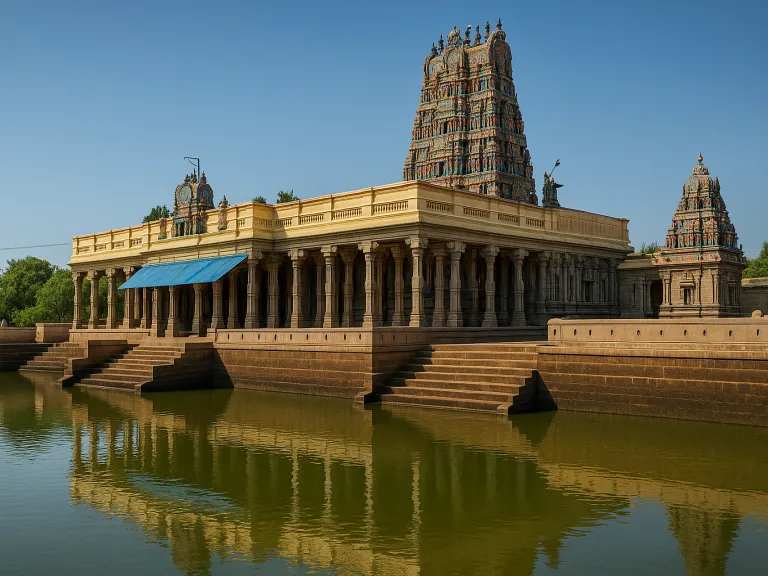
Kannudaya Nayaki Amman Temple follows the South Indian temple idiom commonly seen in Amman shrines of Tamil Nadu. The sacred focus of the complex is the sanctum of the presiding goddess, approached through the temple’s ritual spaces. The arrangement gives priority to darshan of the goddess, circumambulation and the performance of regular worship, vows and festival observances. The temple functions as a living shrine rather than as a monument known primarily for dated royal inscriptions.
The architecture reflects the practical and devotional character of regional Shakti worship. Mandapas and open areas support congregational worship, festival gatherings and offerings made by devotees. The temple layout allows worshippers to move from the entrance toward the sanctum in the customary Tamil temple sequence. Decorative elements in such Amman temples often emphasize the power and presence of the goddess, though specific sculptural details of this temple should be verified at the site rather than assumed from general descriptions.
The shrine is best understood within the architectural landscape of Sivaganga and Chettinad, where temple spaces combine ritual use, community participation and regional building traditions. It is not widely documented as a large imperial Chola, Pandya or Nayak monument with a securely recorded construction program. Its architectural value lies in its continuity as a functioning Amman temple, its importance to Nattarasan Kottai and the way its sacred spaces support daily worship and seasonal devotion.
Temple Highlights
Revered Amman shrine of Nattarasan Kottai
The temple is one of the best-known sacred landmarks of Nattarasan Kottai in Sivaganga district.
Presiding goddess Kannudaya Nayaki Amman
The goddess is worshipped as a compassionate and protective mother, also known locally as Kannathal.
Devotional association with eyesight
The name and local worship tradition connect the goddess with prayers for sight, clarity and protection.
Chettinad-Sivaganga sacred setting
The temple belongs to the religious landscape of the Chettinad region, known for active community temple traditions.
Living Shakti worship tradition
The temple continues to serve devotees through regular Amman worship, vows and thanksgiving offerings.
Spiritual Benefits
- Devotees pray for the protective grace of the goddess.
- Devotees pray for welfare and peace in the family.
- Devotees offer worship seeking relief from fear and distress.
- Devotees pray for blessings connected with eyesight and clear vision as part of local faith.
- Devotees make vows and thanksgiving offerings after fulfillment of prayers.
- Devotees seek courage, stability and motherly guidance from the goddess.
Major Festivals
Navaratri
Navaratri is an important season for worship of the Divine Mother, and devotees visit Amman shrines such as Kannudaya Nayaki Amman Temple for special prayers during this period.
Aadi worship
The Tamil month of Aadi is closely associated with Amman worship across Tamil Nadu, and devotees visit goddess temples for prayers, vows and offerings during this month.
How to Reach
By Road
Nattarasan Kottai is accessible by road from Sivaganga and Karaikudi. Local buses, taxis and private vehicles connect the town with nearby places in Sivaganga district.
By Rail
Nattrasankottai Railway Station serves the locality. Sivaganga and Karaikudi railway stations are also useful railheads for visitors depending on train availability.
By Air
Madurai Airport is the nearest major airport for visitors travelling by air. From the airport, the temple can be reached by road through Sivaganga district.
Nearby Temples
Kalaiyar Kovil
about 12 km
A major historic temple complex in Sivaganga district, associated with Shaiva worship and regional history.
Pillayarpatti Karpaga Vinayagar Temple
about 28 km
A famous rock-cut Vinayagar temple in the Chettinad region, widely visited by pilgrims.
Kundrakudi Shanmuganathar Temple
about 25 km
A well-known hill temple dedicated to Lord Murugan near Karaikudi.
Ariyakudi Thiruvengadamudaiyan Temple
about 22 km
A respected Vishnu temple near Karaikudi, associated with the worship of Thiruvengadamudaiyan.
Related Temples
Kalaiyar Kovil
Major historic temple in Sivaganga district and part of the same regional sacred landscape.
Pillayarpatti Karpaga Vinayagar Temple
Prominent Chettinad-region temple visited by pilgrims travelling through Sivaganga district.
Kundrakudi Shanmuganathar Temple
Important Murugan temple near Karaikudi and a major pilgrimage site in the wider Chettinad region.
Visitor Tips
-
Confirm the current opening hours with the temple or local residents before travelling.
-
Wear modest clothing suitable for a Hindu place of worship.
-
Carry cash for offerings, archana or local expenses, as digital payment availability may vary.
-
Avoid photography inside the shrine unless permission is clearly given by temple authorities.
-
Visit during non-peak hours if you prefer quieter darshan.
-
If visiting during festival seasons, expect larger crowds and plan travel accordingly.
-
Respect local worship practices and follow the instructions of temple staff.

 WhatsApp Us