About Temple
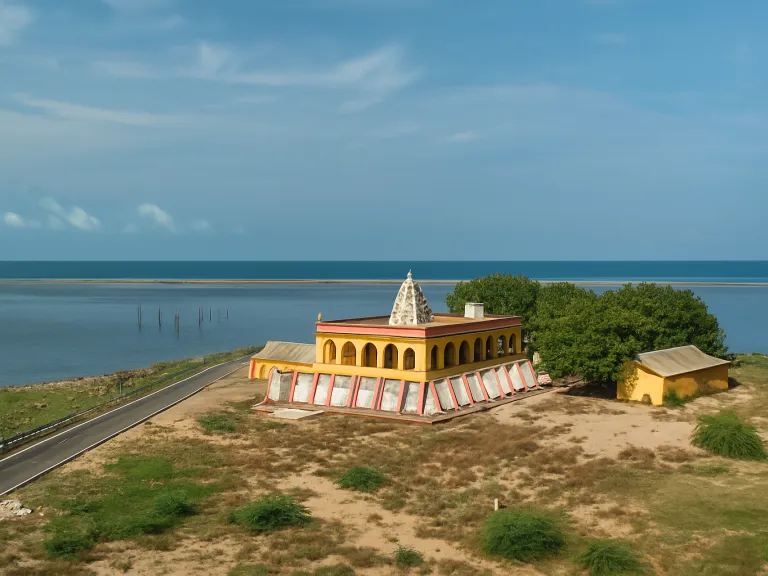
Kothanda Ramar Temple is a coastal Hindu shrine near Dhanushkodi on Rameswaram Island in Ramanathapuram district, Tamil Nadu. The temple is dedicated to Sri Rama, worshipped here as Kothanda Ramar, the bow-bearing form of Rama. The shrine stands on the road between Rameswaram town and Dhanushkodi, in a striking landscape of sand, salt water, shallow lagoons and the Bay of Bengal. Its setting makes it one of the most distinctive Rama temples in the Rameswaram pilgrimage region.
The temple is closely associated with the Ramayana-linked sacred geography of Rameswaram. The presiding image of Rama is worshipped along with Sita, Lakshmana, Hanuman and Vibhishana, making the shrine especially connected with the episode of Vibhishana seeking refuge with Rama. Devotees visiting Ramanathaswamy Temple and Dhanushkodi often include Kothanda Ramar Temple in the same pilgrimage circuit because it represents the Vaishnavite and Ramayana dimension of the island’s sacred landscape.
Kothanda Ramar Temple is also remembered for its survival during the devastating Dhanushkodi cyclone of December 1964, which destroyed much of the old town of Dhanushkodi. The temple’s survival has become an important part of its modern identity. Although the shrine is not a large architectural complex, its location, iconography and association with Rama, Vibhishana and Dhanushkodi give it considerable devotional importance. It remains a quiet pilgrimage stop where visitors experience both sacred narrative and the fragile coastal environment of the Pamban-Rameswaram region.
Temple Significance
Kothanda Ramar Temple is significant as the Rameswaram-area shrine most closely associated with Vibhishana’s surrender to Rama. It is also important as a surviving sacred structure near Dhanushkodi after the 1964 cyclone and as a key Ramayana pilgrimage stop on Rameswaram Island.
History
The documented history of Kothanda Ramar Temple is closely tied to the sacred landscape of Rameswaram and Dhanushkodi rather than to a clearly recorded royal foundation. Unlike the great Ramanathaswamy Temple in Rameswaram town, Kothanda Ramar Temple does not have a widely accepted inscriptional record that identifies a specific builder, dynasty or construction date. Publicly available temple accounts and regional pilgrimage descriptions emphasize its Ramayana association and its location near Dhanushkodi more than dynastic patronage.
The temple gained wider modern attention because of the 1964 Dhanushkodi cyclone. On the night of 22 December 1964, a severe cyclone struck the Pamban and Dhanushkodi region, destroying the railway line, settlements and much of the old port town of Dhanushkodi. Kothanda Ramar Temple, located in the same coastal zone, survived the disaster and continued to function as a shrine. This survival is widely remembered in local and pilgrimage narratives and distinguishes the temple from the ruined structures associated with old Dhanushkodi.
Historically, the temple’s importance is best understood as part of the Rameswaram pilgrimage route. Pilgrims who come to worship at Ramanathaswamy Temple, visit Dhanushkodi and see the coastal region connected with Rama’s journey to Lanka often stop at Kothanda Ramar Temple. The shrine’s continuing worship, its icons of Rama with Sita, Lakshmana, Hanuman and Vibhishana, and its presence on the Dhanushkodi road have preserved its role as a living temple. Verified historical details about its founder, original construction phase, early endowments and associated dynasty are not firmly established in widely documented sources.
Mythology
Kothanda Ramar Temple is associated with a major Ramayana episode connected to Vibhishana, the younger brother of Ravana. In the Ramayana tradition, Vibhishana disagreed with Ravana’s refusal to return Sita and left Lanka to seek refuge with Rama. The local sacred tradition of Rameswaram identifies the area around this temple with the place where Vibhishana surrendered to Rama. Rama accepted him as an ally, affirming the ideal that sincere surrender and righteous conduct are to be protected.
The iconography of the temple reflects this episode. Rama, worshipped as Kothanda Ramar, is enshrined with Sita, Lakshmana, Hanuman and Vibhishana. The presence of Vibhishana in the shrine is the feature that gives the temple a distinctive devotional identity among Rama temples in Tamil Nadu. In Ramayana-based worship, Vibhishana represents the choice of dharma over family loyalty when family action becomes unjust. Hanuman represents service and devotion, while Lakshmana represents loyalty and duty.
The temple’s association with Dhanushkodi also connects it with the larger Ramayana geography of Rameswaram. Dhanushkodi is linked in sacred tradition with Rama’s bow and the route toward Lanka. The nearby seascape, sandbanks and coastal waters are understood by devotees through the narrative of Rama’s journey, the building of the bridge to Lanka and the victory of dharma over adharma. These associations belong to mythology and devotional tradition rather than verifiable political history, but they remain central to how pilgrims experience the temple today.
Architecture
Kothanda Ramar Temple is modest in scale when compared with the large temple complexes of Rameswaram, but its architecture is shaped by its coastal setting and devotional purpose. The shrine follows the basic South Indian temple arrangement with an entrance, enclosed worship space, mandapa areas and a sanctum housing the principal deities. Its most memorable architectural feature is not monumental size but its placement amid the open coastal landscape near Dhanushkodi, where sea, sand and sky form the immediate surroundings of the temple.
The sanctum emphasizes the Ramayana theme of the shrine. Sri Kothanda Ramar is worshipped with Sita, Lakshmana, Hanuman and Vibhishana, a grouping that visually communicates the temple’s association with Vibhishana’s surrender. Painted devotional scenes connected with the Ramayana are associated with the temple’s interior and contribute to its narrative character. The temple’s layout supports direct darshan and devotional circumambulation rather than the elaborate processional architecture seen in major medieval temple towns.
The structure’s survival in the severe coastal environment is part of its architectural significance. The Dhanushkodi region is exposed to salt-laden winds, seasonal storms and cyclonic weather, and the temple’s continued presence after the 1964 cyclone forms an important part of its identity. Its architectural value therefore lies in a combination of sacred iconography, simple Dravidian temple vocabulary, living worship and environmental resilience. There is no well-established public record that securely assigns its present structure to a specific dynasty, master builder or dated construction inscription.
Temple Highlights
Ramayana association with Vibhishana
The temple is closely connected in local sacred tradition with Vibhishana seeking refuge with Rama before the war in Lanka.
Unique deity grouping
Sri Kothanda Ramar is worshipped with Sita, Lakshmana, Hanuman and Vibhishana, reflecting the shrine’s central Ramayana theme.
Coastal location near Dhanushkodi
The temple stands on the road toward Dhanushkodi, surrounded by the dramatic seascape and sandy terrain of Rameswaram Island.
Survival of the 1964 cyclone
The temple is widely remembered for surviving the destructive Dhanushkodi cyclone that devastated the old town and railway line.
Part of the Rameswaram pilgrimage circuit
Pilgrims visiting Ramanathaswamy Temple and Dhanushkodi commonly include this shrine because of its strong Rama-related significance.
Spiritual Benefits
- Devotees seek the grace of Sri Rama for righteous conduct and moral clarity.
- Worshippers pray for the strength to choose dharma in difficult circumstances, inspired by Vibhishana’s surrender.
- Devotees seek protection and refuge under Rama’s compassionate aspect.
- Families pray for harmony through the combined worship of Rama, Sita and Lakshmana.
- Hanuman’s presence inspires prayers for devotion, service and courage.
- Pilgrims seek inner peace while visiting the temple as part of the Rameswaram sacred circuit.
- The shrine encourages reflection on surrender, loyalty and ethical responsibility.
Major Festivals
Sri Rama Navami
Sri Rama Navami, the festival celebrating the birth of Sri Rama, is the principal festival naturally associated with Rama temples. Visitors should confirm the temple’s current programme locally before planning festival worship.
How to Reach
By Road
The temple is reached by road from Rameswaram town on the route toward Dhanushkodi. Local taxis, autos and buses operate in the Rameswaram-Dhanushkodi region depending on current local schedules.
By Rail
Rameswaram Railway Station is the nearest major railhead. From the station, visitors can travel by road toward Dhanushkodi and stop at Kothanda Ramar Temple.
By Air
The nearest commonly used airport for Rameswaram is Madurai Airport. From Madurai, visitors reach Rameswaram by road or rail and then continue by local road transport to the temple.
Nearby Temples
Ramanathaswamy Temple, Rameswaram
about 13 km
One of India’s most important Shiva temples and the principal pilgrimage shrine of Rameswaram.
Panchamukhi Hanuman Temple, Rameswaram
about 12 km
A Hanuman shrine in Rameswaram commonly visited by pilgrims on the island pilgrimage circuit.
Nambu Nayagiamman Temple, Rameswaram
A local goddess temple in the Rameswaram region, visited by devotees along with other island shrines.
Related Temples
Ramanathaswamy Temple, Rameswaram
Major Rameswaram pilgrimage temple connected with Rama’s worship of Shiva after the Lanka war in sacred tradition.
Panchamukhi Hanuman Temple, Rameswaram
Rameswaram shrine associated with Hanuman devotion and commonly visited by pilgrims on the island.
Dhanushkodi
Sacred coastal site near the temple associated with Rama’s journey toward Lanka in local Ramayana tradition.
Visitor Tips
-
Verify current opening hours locally before travelling from Rameswaram town.
-
Visit during daylight because the Dhanushkodi road is an exposed coastal route.
-
Carry drinking water, sun protection and necessary medicines, especially in hot months.
-
Use authorised local transport from Rameswaram if you are not familiar with the coastal route.
-
Respect safety instructions near the sea and avoid entering unsafe or restricted waters.
-
Dress modestly and maintain silence inside the shrine area.
-
Avoid littering, as the temple stands in a fragile coastal environment.
-
Check local weather alerts during the monsoon and cyclone-prone periods.

 WhatsApp Us