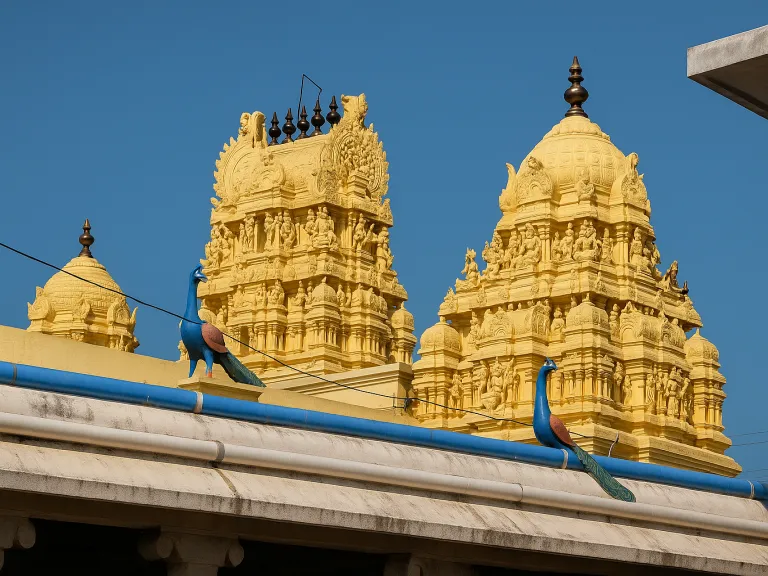
Kumara Kottam Arulmigu Sri Subramaniya Swami Temple

Kanchipuram, Tamil Nadu

Kumara Kottam Arulmigu Sri Subramaniya Swami Temple

About Temple

Kumara Kottam Arulmigu Sri Subramaniya Swami Temple is a celebrated Murugan temple in Kanchipuram, Tamil Nadu, one of the ancient sacred cities of South India. The temple stands in the historic temple zone of Kanchipuram and is closely associated with the religious landscape formed by the Ekambareswarar Temple and the Kamakshi Amman Temple. Its name combines Kumara, a name of Murugan, with Kottam, meaning a sacred precinct or shrine.

The presiding deity is Sri Subramaniya Swami, worshipped as Murugan, Skanda, Kumara and Kandaswamy. The temple is especially known for the Brahma Sastha aspect of Murugan, connected with the mythology in which Murugan assumes the function of creation after questioning Brahma. Devotees visit the shrine for worship connected with wisdom, courage, discipline, children’s welfare, education and relief from obstacles.

Kumara Kottam is also important in Tamil literary and devotional history because it is connected with Kachiappa Sivachariar, the author of the Tamil Kanda Puranam. The temple is remembered as the place where this major Tamil retelling of the Skanda tradition was composed and presented. For pilgrims, the shrine is not only a Murugan temple but also a cultural landmark linking Kanchipuram’s Shaiva, Shakta and Murugan traditions.

Temple Information

Presiding Deity Arulmigu Sri Subramaniya Swami
Goddess Valli and Deivanai
Temple Type Murugan temple, Shaiva-associated temple, Kanchipuram pilgrimage temple, Tamil literary heritage temple
District Kanchipuram
Built Period Current structure rebuilt in 1915; earlier shrine associated with the medieval Kanda Puranam tradition.
Dynasty
Sampradaya

Temple Significance

Kumara Kottam is significant as a major Murugan shrine in Kanchipuram, as the temple associated with Kachiappa Sivachariar and the Tamil Kanda Puranam, and as the Murugan shrine positioned between the Ekambareswarar and Kamakshi Amman temples in the sacred geography of the city.

History

The early origin and original builder of Kumara Kottam Subramaniya Swami Temple are not securely documented in widely available historical records. Kanchipuram was a major religious and political centre under several dynasties, especially the Pallavas, Cholas and later Vijayanagara rulers, but a specific dynastic foundation for this temple cannot be stated with certainty. The present temple is widely recorded as having been rebuilt in 1915, while the sacred association of the site is older.

The temple’s strongest historical importance comes from its connection with Kachiappa Sivachariar, a learned Saiva priest and Tamil scholar of Kanchipuram. He is associated with Kumara Kottam as the composer of the Kanda Puranam, the influential Tamil work narrating the glory of Murugan based on the Sanskrit Skanda Purana tradition. The public presentation of the work at Kumara Kottam made the temple a landmark in Tamil religious literature.

The Kanda Puranam shaped the devotional understanding of Murugan worship in Tamil-speaking regions and continues to be recited and referenced in temples, religious discourses and festivals. Because of this association, Kumara Kottam is remembered as Kanda Puranam Arangetra Sthalam, the place connected with the formal presentation of the text. The historically verifiable details of rebuilding belong to the modern period, while the temple’s cultural memory preserves its medieval literary significance.

Mythology

The mythology of Kumara Kottam centres on Murugan as the divine child of Shiva and Parvati and as the embodiment of knowledge. In the Skanda tradition, Brahma, the creator, is questioned by Murugan about the meaning of the sacred syllable Om. When Brahma is unable to explain it properly, Murugan confines him and assumes the responsibility of creation. This episode explains the worship of Murugan here in the Brahma Sastha aspect.

In this form, Murugan is revered not only as the youthful warrior who destroys evil but also as the lord of wisdom, mantra and cosmic order. The association with Brahma gives the shrine a special emphasis on learning, clarity of thought and spiritual understanding. Devotees connect the temple with prayers for education, removal of ignorance, success in disciplined effort and blessings for children.

Kumara Kottam is also understood within Kanchipuram’s sacred geography. The shrine is located between the great Shiva shrine of Ekambareswarar and the Kamakshi Amman Temple dedicated to the Goddess. Local religious interpretation sees this arrangement as reflecting the Somaskanda concept, with Shiva, Uma and Skanda forming a sacred family presence in Kanchipuram. This theological symbolism gives Kumara Kottam a distinct place among the city’s temples and reinforces its role as a bridge between Shaiva, Shakta and Murugan worship.

Architecture

Kumara Kottam Subramaniya Swami Temple follows the broad pattern of Tamil Dravidian temple architecture. The complex includes a sanctum for the presiding deity, associated shrines, mandapas for worship and ritual movement, and a temple entrance marked by a gopuram. The temple’s present form reflects the rebuilding and restorations associated with the early twentieth century while retaining the spatial grammar of a traditional South Indian temple.

The sanctum enshrines Sri Subramaniya Swami in the revered Brahma Sastha aspect. The layout supports circumambulation and ritual worship, with the devotee moving from the entrance through the mandapa spaces toward the sanctum. The temple is also associated with the literary memory of the Kanda Puranam, and its mandapa tradition is connected with the presentation and recitation of sacred Tamil texts.

The architectural importance of the temple lies less in large-scale imperial monumentality and more in its ritual, literary and urban context. It forms part of Kanchipuram’s dense sacred landscape, where temples are closely placed and connected through pilgrimage routes. Its position between Ekambareswarar and Kamakshi Amman temples strengthens the Somaskanda symbolism of the city. The temple’s built form serves daily worship, festival processions, recitation, and the continuing devotional life of Murugan worship in Kanchipuram.

Sacred Features

Temple Tree

Temple Tank

Temple Highlights

Kanda Puranam Association

The temple is closely connected with Kachiappa Sivachariar, who composed the Tamil Kanda Puranam and presented it in the sacred setting of Kumara Kottam.

Brahma Sastha Form of Murugan

Sri Subramaniya Swami is revered here in the Brahma Sastha aspect, linked to the mythology of Murugan questioning Brahma and assuming the role of creation.

Somaskanda Sacred Geography

The temple stands between Kanchipuram’s Ekambareswarar and Kamakshi Amman temples, giving it theological importance in the Shiva-Uma-Skanda arrangement of the city.

Historic Kanchipuram Location

Kumara Kottam is part of Kanchipuram’s central temple circuit and is visited along with other major Shaiva, Shakta and Vaishnava shrines.

Tamil Devotional Heritage

The shrine is valued not only for worship but also for its role in Tamil religious literature and Murugan devotion.

Spiritual Benefits

  • Devotees pray for wisdom and clarity of understanding.
  • Devotees seek blessings for education and learning.
  • Devotees pray for courage, confidence and disciplined effort.
  • Devotees seek relief from obstacles in righteous undertakings.
  • Devotees pray for the welfare and protection of children.
  • Devotees worship for harmony in family life through the grace of Murugan with Valli and Deivanai.
  • Devotees seek spiritual strength through Murugan worship and Kanda Sashti devotion.

Major Festivals

Skanda Sashti

A major Murugan festival commemorating the victory of Lord Murugan over Surapadman, observed with special devotion and worship.

Vaikasi Visakam

A principal festival of Lord Murugan associated with his divine manifestation, celebrated in the Tamil month of Vaikasi.

Thai Poosam

A Murugan festival observed in the Tamil month of Thai, connected with devotion, vows and special worship.

Krittika Observances

Krittika days are sacred to Murugan and are observed by devotees with prayers and temple worship.

Panguni Uthiram

A Tamil festival associated with divine marriages and Murugan worship with Valli and Deivanai.

Special Poojas

Abhishekam

Ritual bathing of Sri Subramaniya Swami with sacred substances as part of Murugan worship.

Archana

Name-recitation worship offered to the deity for the devotee’s prayer and sankalpa.

Shashti Worship

Special worship on Shashti days, which are sacred to Lord Murugan.

Krittika Worship

Worship on Krittika nakshatra days, traditionally important for Murugan devotees.

How to Reach

By Road

Kanchipuram is well connected by road with Chennai, Chengalpattu, Sriperumbudur and Vellore. Local buses, taxis and autos are available within Kanchipuram to reach Kumara Kottam.

By Rail

Kanchipuram Railway Station serves the city and connects with Chennai suburban and regional rail routes. The temple can be reached from the station by auto or taxi.

By Air

The nearest major airport is Chennai International Airport. From Chennai, Kanchipuram can be reached by road or rail.

Nearby Temples

Kamakshi Amman Temple
Approximately 0.5 km

A major Shakta temple of Kanchipuram dedicated to Goddess Kamakshi and closely linked with the city’s sacred geography.

Ekambareswarar Temple
Approximately 1 km

One of Kanchipuram’s great Shiva temples and a Pancha Bhoota Sthala associated with the earth element.

Ulagalanda Perumal Temple
Approximately 1 km

A prominent Vishnu temple in Kanchipuram dedicated to the Trivikrama form of Lord Vishnu.

Kailasanathar Temple
Approximately 2 km

A historic Pallava-period Shiva temple renowned for early Dravidian stone architecture.

Varadaraja Perumal Temple
Approximately 4 km

One of the most important Vishnu temples in Kanchipuram, dedicated to Lord Varadaraja Perumal.

Related Temples

Ekambareswarar Temple, Kanchipuram

Part of the Kanchipuram sacred geography; Kumara Kottam is located between Ekambareswarar and Kamakshi Amman temples in the Somaskanda interpretation.

Kamakshi Amman Temple, Kanchipuram

Part of the same sacred Kanchipuram circuit and linked through the Shiva-Uma-Skanda theological arrangement.

Arulmigu Subramaniya Swamy Temple, Tiruchendur

A major Murugan temple in Tamil Nadu, related through Murugan worship and Skanda Sashti devotion.

Arulmigu Dhandayuthapani Swamy Temple, Palani

A major Murugan temple in Tamil Nadu, related through the wider Murugan devotional tradition.

Visitor Tips

  • Check the current temple timings before travel, as hours can change on festival days.
  • Plan the visit with nearby Ekambareswarar and Kamakshi Amman temples, which are part of the same sacred Kanchipuram circuit.
  • Visit early in the morning or during the evening for a calmer darshan experience on ordinary days.
  • Expect larger crowds during Skanda Sashti, Vaikasi Visakam, Krittika and other Murugan festival days.
  • Wear modest clothing suitable for worship in a traditional Hindu temple.
  • Keep footwear only in designated areas outside the shrine.
  • Carry drinking water if walking between temples in Kanchipuram, especially during summer.
  • Respect restrictions inside the sanctum and follow instructions from temple staff.
Kumara Kottam Arulmigu Sri Subramaniya Swami Temple

Visit Information

Morning 06:00 AM to 12:00 PM
Evening 04:00 PM to 08:00 PM
Best Time The cooler months from November to February are comfortable for visiting Kanchipuram. Festival periods such as Skanda Sashti and Vaikasi Visakam attract more devotees.
Railway Kanchipuram Railway Station
Approximately 2 km
Airport Chennai International Airport
Approximately 60 km
Location 📍 View on Google Maps

Need Help Planning?

Our travel experts can help you with transportation, darshan timings, nearby sightseeing and complete temple tour planning.

PLAN YOUR TEMPLE VISIT

Planning a visit to Kumara Kottam Arulmigu Sri Subramaniya Swami Temple?

Our travel experts can help you plan your temple visit with transportation, nearby sightseeing, accommodation, darshan timings and customized tour packages.

Disclaimer

We strive to provide accurate and authentic information based on well-established historical, cultural, religious, and publicly available sources. However, temple timings, entry fees, rituals, festivals, special poojas, facilities, and other visitor information may change without prior notice.

While every effort is made to keep this information current and accurate, visitors are advised to verify the latest details directly with the official temple authorities before planning their visit.

Image Disclaimer: The images displayed on this website are digitally generated or AI-enhanced representations created for illustrative purposes. They are intended to reflect the appearance and atmosphere of the destination but may not exactly represent the current real-world condition, colours, surroundings, or architectural details of the temple or location.