About Temple
Lakshmi Narayani Golden Temple, commonly called Sripuram Golden Temple, is a modern Hindu shrine at Sripuram in Thirumalaikodi, near Vellore in Tamil Nadu. The temple is dedicated to Sri Lakshmi Narayani, a form of Mahalakshmi worshipped as the divine mother associated with prosperity, grace, and spiritual well-being. It is administered by Sri Narayani Peedam, a spiritual and charitable institution founded under the guidance of Sri Sakthi Amma.
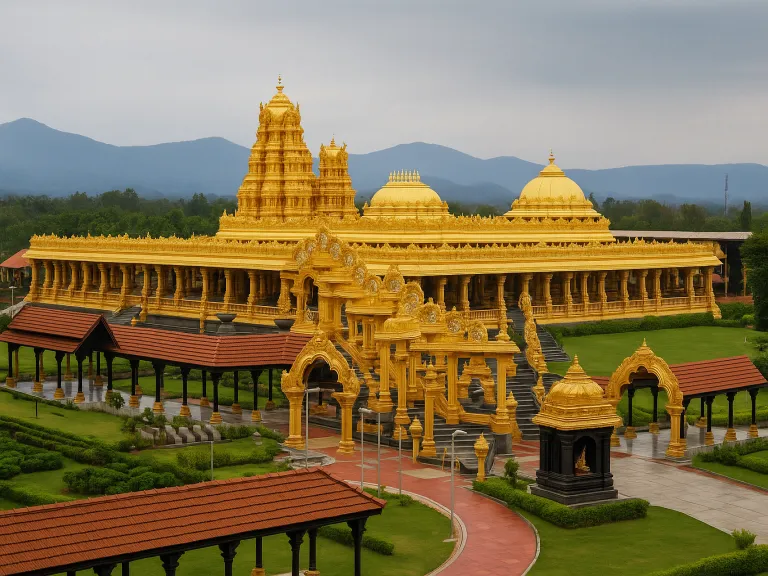
The temple is widely known for its gold-covered sanctum and richly ornamented central shrine. Set within a large landscaped spiritual park, the complex was conceived as a place where devotional worship, disciplined walking, and contemplation are brought together. Visitors reach the shrine through a long star-shaped pathway laid out within the temple grounds, a feature intended to encourage reflection before darshan.
Unlike many ancient temples of Tamil Nadu, the Golden Temple is not connected with a documented Chola, Pallava, Pandya, or Vijayanagara royal foundation. Its importance belongs to the contemporary period, especially for devotees of Mahalakshmi and Narayani. The temple has become one of the best-known pilgrimage and tourist destinations in the Vellore region because of its distinctive gold-clad architecture, orderly campus, and association with Sri Narayani Peedam’s religious and service activities.
Temple Significance
Lakshmi Narayani Golden Temple is significant as a major contemporary shrine dedicated to Sri Lakshmi Narayani and as one of the most recognised modern pilgrimage landmarks in Tamil Nadu. It is known for its gold-covered sanctum, star-shaped devotional pathway, and association with Sri Narayani Peedam at Sripuram near Vellore.
History
Lakshmi Narayani Golden Temple was established in the early twenty-first century by Sri Narayani Peedam at Sripuram, Thirumalaikodi, near Vellore. The project was initiated under the guidance of Sri Sakthi Amma, the spiritual head of Sri Narayani Peedam. The temple was completed and consecrated in 2007, marking it as a contemporary Hindu shrine rather than an ancient dynastic monument.
The temple’s development formed part of the creation of Sripuram, a spiritual campus planned around the worship of Sri Lakshmi Narayani. The central shrine became widely known because of the extensive use of gold in its visible superstructure and ornamental surfaces. Gold sheets and traditional craft methods were used to create the temple’s distinctive appearance, and specialist artisans contributed to the decorative work. The complex also incorporated landscaped gardens, water features, and a long devotional walkway.
Historically, the temple is significant as a modern example of large-scale temple building in Tamil Nadu. It reflects the continuing vitality of Hindu temple patronage outside royal or medieval institutional frameworks. Since its consecration, the Golden Temple has drawn large numbers of pilgrims from Tamil Nadu, neighbouring states, and other parts of India. Its history is therefore best understood through Sri Narayani Peedam’s contemporary spiritual movement and the temple’s role in making Vellore a prominent destination for Lakshmi Narayani worship.
Mythology
Lakshmi Narayani Golden Temple does not have an ancient, documented sthala purana comparable to many medieval temples of Tamil Nadu. Its religious meaning is centred on the pan-Hindu mythology of Mahalakshmi and Narayani. In Hindu sacred literature and devotional practice, Lakshmi is revered as the goddess of prosperity, auspiciousness, abundance, beauty, and divine grace. The name Narayani connects her with Narayana, one of the principal names of Vishnu, and also expresses the protecting power of the divine mother.
In Vaishnava and Shakta devotional contexts, Lakshmi is worshipped not merely as material wealth but as spiritual prosperity, compassion, purity, and auspicious living. The form Sri Lakshmi Narayani brings together these themes and presents the goddess as a benevolent mother who blesses devotees with inner and outer well-being. The temple’s golden appearance is often understood devotionally as a visual expression of divine radiance and the auspicious splendour associated with Mahalakshmi.
The star-shaped path leading to the sanctum is a central devotional experience at Sripuram. While it is part of the temple’s modern design rather than an ancient mythological episode, devotees use the walk as a meditative journey before receiving darshan. The mythology relevant to the temple is therefore not a local legend about the site’s origin, but the broader sacred symbolism of Lakshmi Narayani: prosperity joined with dharma, grace joined with discipline, and divine motherhood experienced through worship.
Architecture
The architecture of Lakshmi Narayani Golden Temple is its most widely recognised feature. The shrine stands within the Sripuram spiritual campus at Thirumalaikodi and is approached through a long star-shaped pathway. This layout creates a gradual ceremonial movement from the entrance toward the sanctum, allowing devotees to walk through landscaped surroundings before reaching the golden shrine. The campus design combines devotional circulation, gardens, and water features rather than following the compact urban plan of many old Tamil temples.
The central temple is constructed in a South Indian temple idiom, with a sanctum and richly ornamented superstructure. Its prominent distinction is the extensive covering of the visible shrine surfaces with gold. The gold work is associated with sheets and panels applied over a structural base, with traditional decorative motifs and sculptural detailing. The golden exterior gives the temple its popular name and has made it one of the most visually distinctive modern temples in India.
Although the shrine uses motifs familiar from Dravidian temple architecture, it is not a medieval granite temple built by a historical dynasty. Its architecture belongs to contemporary devotional patronage, using modern construction organisation along with traditional craft language. The temple’s visual programme emphasises auspiciousness, brightness, and sacred grandeur appropriate to the worship of Sri Lakshmi Narayani. The combination of gold-clad surfaces, formal symmetry, the star-shaped approach, and the large landscaped campus defines the architectural identity of Sripuram Golden Temple.
Temple Highlights
Gold-covered shrine
The temple is renowned for its gold-clad central shrine dedicated to Sri Lakshmi Narayani, giving it the popular name Golden Temple.
Star-shaped pathway
Devotees approach the sanctum through a long star-shaped pathway laid out within the Sripuram campus, creating a meditative walk before darshan.
Sripuram spiritual campus
The temple is part of the Sripuram campus at Thirumalaikodi, near Vellore, developed by Sri Narayani Peedam.
Contemporary temple landmark
Consecrated in 2007, it is a prominent example of modern Hindu temple patronage rather than a dynastic monument.
Spiritual Benefits
- Devotees seek blessings for prosperity and auspiciousness.
- Devotees pray for peace of mind and emotional strength.
- The meditative walk to the shrine supports reflection and devotional focus.
- Worship of Sri Lakshmi Narayani is associated with gratitude and disciplined living.
- Families pray for harmony, well-being, and divine protection.
- Devotees seek spiritual upliftment through darshan and prayer.
- The temple environment encourages quiet contemplation before worship.
Major Festivals
Navaratri
Navaratri is an important Hindu festival for goddess worship, and devotees of Sri Lakshmi Narayani observe it with special devotion.
Varalakshmi Vratham
Varalakshmi Vratham is associated with the worship of Mahalakshmi for auspiciousness, prosperity, and family well-being.
Special Poojas
Sri Lakshmi Narayani worship
Regular worship is offered to Sri Lakshmi Narayani, the presiding deity of the temple.
Abhishekam
Abhishekam is a form of ritual bathing offered to the deity in Hindu temple worship; current participation details should be checked directly with the temple.
Aarti
Aarti is performed as part of Hindu worship, offering light before the deity as an act of devotion.
How to Reach
By Road
Sripuram is near Vellore and can be reached by road from Vellore city, Katpadi, Chennai, Bengaluru, Tirupati, and other regional centres using buses, taxis, or private vehicles.
By Rail
The major railhead for visitors is Katpadi Junction, which is well connected to Chennai, Bengaluru, Coimbatore, Tirupati, and other cities. Local transport is available from Katpadi to Sripuram.
By Air
The nearest major air connections are Chennai International Airport and Tirupati Airport. Travellers continue to Vellore by road or rail and then proceed to Sripuram.
Nearby Temples
Jalakandeswarar Temple, Vellore Fort
about 10 km
A historic Shiva temple located inside Vellore Fort, known for its Vijayanagara-period architecture and sculptural work.
Ratnagiri Balamurugan Temple
about 20 km
A well-known Murugan temple situated on a hill near Vellore, visited by devotees of Lord Murugan.
Margabandeswarar Temple, Virinjipuram
about 18 km
An ancient Shiva temple at Virinjipuram near Vellore, noted for its sacred associations and temple architecture.
Vallimalai Subramanya Swamy Temple
about 30 km
A hill temple associated with Lord Murugan and Valli, located near Vellore district.
Visitor Tips
-
Plan extra time for the walk through the star-shaped pathway before reaching the sanctum.
-
Carry only essential belongings, as security procedures may apply at major pilgrimage sites.
-
Wear modest clothing appropriate for temple worship.
-
Check the current temple timings and darshan arrangements before travelling, as schedules can change.
-
Weekends, public holidays, and festival periods can attract larger crowds.
-
Vellore can be hot for much of the year, so carry drinking water where permitted and plan accordingly.
-
Use local transport from Vellore or Katpadi for the final approach to Sripuram.

 WhatsApp Us