About Temple
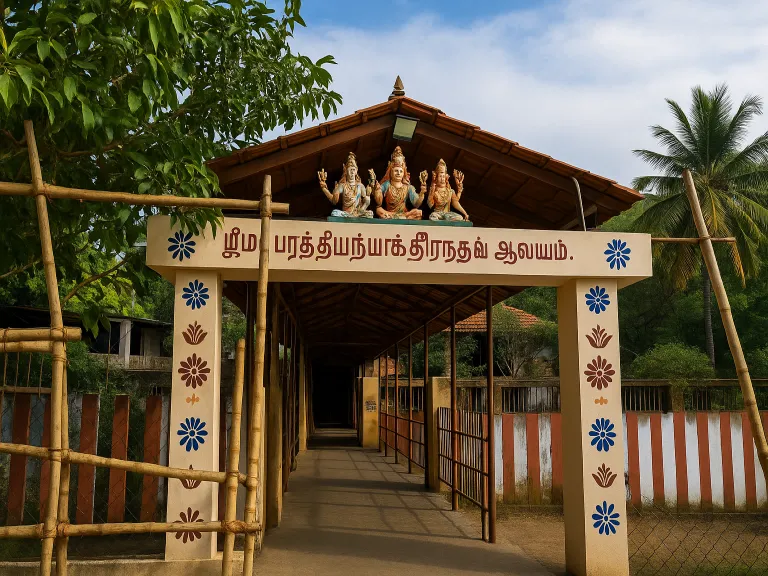
Maha Prathyankaradevi Temple at Ayyavadi is a Shakti shrine dedicated to Sri Maha Pratyangira Devi, a fierce protective form of the Divine Mother. The temple is located in Ayyavadi village near Kumbakonam in Tamil Nadu’s Thanjavur region, close to the well-known temple belt around Thirunageswaram and Oppiliappan Koil. It is especially known among devotees who worship Pratyangira as a guardian deity associated with courage, protection, and removal of hostile influences.
The presiding goddess is worshipped in a powerful iconographic form connected with lion-faced Pratyangira, a deity revered in Shakta and Shaiva devotional practice. The temple’s public religious identity is centred on special homa worship, particularly the Nikumbala Yagam performed on Amavasya days. This ritual has made Ayyavadi one of the best-known Pratyangira Devi shrines in Tamil Nadu.
Ayyavadi is not primarily known through large-scale inscriptional records like many Chola temples in the Kumbakonam region. Its importance comes from living worship, local temple tradition, and the continuing devotion of pilgrims. Devotees visit the shrine to pray for mental strength, relief from fear, protection from enmity, and the grace of the goddess. The temple is frequently included in pilgrim circuits around Kumbakonam along with nearby Saiva, Vaishnava, and Navagraha-related shrines.
Temple Significance
Maha Prathyankaradevi Temple, Ayyavadi, is significant as one of the best-known shrines for Sri Maha Pratyangira Devi worship near Kumbakonam. The temple is especially associated with Amavasya Nikumbala Yagam, a fire ritual dedicated to the fierce protective form of the goddess. Devotees visit the shrine for prayers connected with protection, courage, removal of fear, and relief from hostile influences. Its location within the Kumbakonam temple region adds to its importance as part of a wider sacred pilgrimage circuit.
History
The verifiable historical record of Maha Prathyankaradevi Temple, Ayyavadi, is limited when compared with the major inscription-bearing temples of Kumbakonam and Thanjavur. No widely accepted published inscriptional evidence clearly identifies a founder, construction date, ruling dynasty, or an original endowment history for this temple. For that reason, the temple’s built period, builder, dynasty, and formal Agamic affiliation are not stated here as historical facts.
The temple’s prominence in the modern religious landscape is closely connected with the worship of Sri Maha Pratyangira Devi and the regular performance of Nikumbala Yagam. Ayyavadi has become a recognised destination for devotees seeking Pratyangira worship in Tamil Nadu, especially on Amavasya days. The shrine is often referred to in contemporary pilgrimage accounts as an important Pratyangira Devi temple near Kumbakonam, situated within a region dense with ancient temples and active ritual traditions.
Historically, the Kumbakonam region has been a major sacred geography for Saiva, Vaishnava, Shakta, and Navagraha-related worship. Ayyavadi’s temple should be understood within this living ritual environment rather than as a monument with a fully documented royal construction history. Its authenticity rests in continuous worship, established local tradition, and its current role as a major centre for Pratyangira Devi devotion. Where reliable historical data is unavailable, the details are intentionally left unspecified.
Mythology
In the local mythology associated with Ayyavadi, Sri Maha Pratyangira Devi is revered as a fierce manifestation of the Divine Mother connected with protection and the pacification of destructive forces. In broader Shaiva-Shakta tradition, Pratyangira is linked with the episode of Narasimha’s intense ferocity after the destruction of Hiranyakashipu. The goddess is described in devotional tradition as a powerful energy connected with the subduing of uncontrolled wrath and the restoration of cosmic balance.
Ayyavadi is also associated in local temple tradition with the Ramayana narrative of Indrajit, the son of Ravana. The Nikumbala Yaga is connected with the belief that Indrajit performed a powerful ritual to secure invincibility in battle. Devotional accounts connected with the temple relate this tradition to the present-day Nikumbala Yagam performed for Pratyangira Devi, especially on Amavasya days. This mythology forms an important part of the temple’s ritual identity.
Another local explanation links the village name Ayyavadi with the phrase associated with the five Pandavas, often rendered in devotional retelling as a place connected with the ‘Aivar’. Such narratives belong to local sacred memory rather than inscriptional history. They are important because they explain how devotees understand the sanctity of the place. The temple’s mythology therefore combines Pratyangira worship, epic associations, and protective Shakti devotion in a distinctly local form.
Architecture
Maha Prathyankaradevi Temple at Ayyavadi follows the functional layout of an active South Indian village temple rather than the scale of the great monumental Chola temples of the Kumbakonam region. The shrine is centred on the sanctum of Sri Maha Pratyangira Devi, with worship spaces arranged for daily puja and for the large ritual gatherings that take place during special homa observances. Its architecture serves the needs of a living ritual centre.
The most important architectural and iconographic focus is the presence of the goddess in her fierce protective form. Pratyangira Devi is worshipped as a powerful Shakti with lion-faced imagery in devotional understanding, and the temple’s ritual space is designed around darshan of this form. The shrine accommodates homa worship, an essential feature of the temple’s identity, particularly the Nikumbala Yagam that draws devotees on Amavasya days.
Unlike temples whose historical value is established through dated inscriptions, sculptural programmes, or royal foundations, Ayyavadi’s architectural significance lies in its ritual use and devotional focus. The temple is maintained as an accessible place of worship for pilgrims visiting the Kumbakonam sacred circuit. Its built environment supports processions, offerings, homa participation, and congregational devotion. Specific architectural measurements, dated construction phases, and named builders are not widely documented in reliable public sources.
Temple Highlights
Sri Maha Pratyangira Devi Shrine
The temple is dedicated to Sri Maha Pratyangira Devi, a fierce protective form of Shakti worshipped for courage, strength, and divine protection.
Amavasya Nikumbala Yagam
The temple is widely known for the Nikumbala Yagam performed on new moon days, a major devotional observance associated with Pratyangira worship.
Location near Kumbakonam
Ayyavadi is situated near Kumbakonam, placing the temple within one of Tamil Nadu’s most active sacred temple regions.
Protective Shakti Worship
Devotees approach the goddess with prayers for relief from fear, negativity, enmity, and mental distress.
Epic-linked Local Tradition
The temple’s mythology includes local associations with Indrajit’s Nikumbala Yaga and other epic-linked devotional narratives.
Spiritual Benefits
- Devotees pray for protection from hostile influences.
- Devotees pray for courage and mental strength.
- Devotees pray for relief from fear and anxiety.
- Devotees pray for removal of obstacles caused by enmity.
- Devotees pray for peace in family and personal life.
- Devotees pray for success in difficult situations.
- Devotees pray for spiritual confidence and inner resilience.
Major Festivals
Amavasya Nikumbala Yagam
Amavasya is the most prominent recurring observance at the temple. Devotees gather for Nikumbala Yagam and special worship dedicated to Sri Maha Prathyankaradevi.
Navaratri
Navaratri is a major period of Devi worship across Shakti temples, and devotees visit Pratyangira Devi shrines during this period for special prayers to the goddess.
Special Poojas
Nikumbala Yagam
A special homa associated with Sri Maha Prathyankaradevi worship at Ayyavadi. It is especially connected with Amavasya observance and prayers for protection and removal of negative influences.
How to Reach
By Road
Ayyavadi is accessible by road from Kumbakonam and nearby temple towns such as Thirunageswaram. Local buses, taxis, and auto-rickshaws are commonly used for travel within the area.
By Rail
The nearest major railway access is Kumbakonam Railway Station, from where visitors can travel by road to Ayyavadi.
By Air
The nearest major airport is Tiruchirappalli International Airport, from where visitors can reach Kumbakonam and Ayyavadi by road or rail connections.
Nearby Temples
Thirunageswaram Naganathaswamy Temple
A major Saiva temple near Kumbakonam, widely known as the Rahu sthalam among the Navagraha-related temples.
Oppiliappan Temple
A celebrated Vishnu temple and Divya Desam near Thirunageswaram, often visited by pilgrims travelling around Ayyavadi.
Kumbakonam Adi Kumbeswarar Temple
A major Saiva temple in Kumbakonam dedicated to Lord Shiva as Adi Kumbeswarar.
Sarangapani Temple
A prominent Divya Desam temple in Kumbakonam dedicated to Lord Vishnu as Sarangapani.
Related Temples
Thirunageswaram Naganathaswamy Temple
Nearby Kumbakonam-region temple and Rahu sthalam often visited by pilgrims in the same area.
Oppiliappan Temple
Nearby Divya Desam temple close to the Ayyavadi and Thirunageswaram area.
Visitor Tips
-
Verify the current temple timings before travelling, especially on festival and Amavasya days.
-
Expect larger crowds on Amavasya because of Nikumbala Yagam.
-
Wear modest clothing suitable for a South Indian temple visit.
-
Carry drinking water if visiting multiple temples around Kumbakonam in a single day.
-
Follow the instructions of temple staff during homa and special worship.
-
Avoid photographing the sanctum or rituals unless the temple authorities clearly permit it.
-
Plan nearby temple visits in the Kumbakonam and Thirunageswaram area together to save travel time.

 WhatsApp Us