About Temple
Padaikatti Maha Mariamman Temple is a Hindu Amman shrine at Valangaiman, a town near Kumbakonam in the Cauvery delta region of Tamil Nadu. The presiding goddess is worshipped as Maha Mariamman, with the distinctive local epithet Padaikatti or Paadai Katti. The temple belongs to the living village-goddess and Shakti worship stream of Tamil Nadu, where the mother goddess is approached as a protector of the settlement, a healer, and a guardian of family welfare.
The temple is best known for its association with the Paadai Kavadi or Paadai Kattuthal vow observed by devotees, especially during the Panguni festival season. In this local devotional practice, the image of a funeral bier becomes a ritual symbol of danger overcome and life restored. Devotees who have prayed for recovery from severe illness or life-threatening distress offer their vow to the goddess in gratitude. This practice gives the temple its widely used name, Padaikatti Maha Mariamman.
Valangaiman lies within the Kumbakonam temple region, an area dense with major Shaiva, Vaishnava, and Shakti shrines. Unlike the large Chola-era stone temples of Kumbakonam, the public identity of this shrine rests mainly on continuous local worship, the Mariamman cult, and its festival tradition. Verified details on its date of construction, founder, inscriptions, original endowments, temple tree, temple tank, and formal Agamic affiliation are not widely established in standard historical records.
Temple Significance
The temple is significant as a Valangaiman Shakti shrine dedicated to Maha Mariamman and for its distinctive Padaikatti or Paadai Katti vow tradition, especially associated with prayers for recovery, protection, and thanksgiving during the Panguni festival season.
History
The secure historical information available for Padaikatti Maha Mariamman Temple is limited when compared with the epigraphically documented temples of Kumbakonam and the wider Cauvery delta. The shrine is historically identifiable as a Valangaiman Mariamman temple whose public recognition is tied to the name Padaikatti or Paadai Katti Maha Mariamman. Its importance comes from sustained community worship and from the devotional vow practice associated with recovery, protection, and thanksgiving.
No well-established inscriptional record, dated foundation grant, royal copper-plate reference, or published dynastic attribution is widely available for this temple. For that reason, the names of a specific builder, exact construction date, ruling dynasty, and original architectural phase cannot be stated with historical certainty. The absence of such evidence is important because the Kumbakonam region contains many temples with strong Chola, Nayak, and Maratha records; this shrine is not commonly documented in the same way in widely accessible historical temple sources.
The temple’s later and continuing history is therefore best understood through living worship rather than dynastic patronage. It functions as a regional Amman shrine for Valangaiman and surrounding areas, drawing devotees who seek the goddess’s protection and fulfil vows during festival periods. The Panguni festival and the Paadai Kavadi tradition have made the temple known beyond its immediate locality. These practices form the most consistently recognised historical identity of the shrine in the modern period.
Mythology
The mythology of Padaikatti Maha Mariamman Temple belongs to the wider Tamil Mariamman tradition, in which the goddess is revered as a motherly yet powerful form of Shakti. In local devotional understanding, Mariamman protects people from fever, pox-like diseases, epidemics, heat-related suffering, and sudden misfortune. She is approached as the village guardian who can cool affliction, remove fear, and restore balance to households and the community.
The distinctive Padaikatti identity is connected with the local vow of Paadai Kattuthal or Paadai Kavadi. In this tradition, a devotee who has faced a grave illness or life-threatening condition makes a vow to the goddess. After recovery, the vow is fulfilled through a ritual connected with a paadai, the bier used in funeral symbolism. The rite does not treat death as an end; instead, it expresses that the devotee has been brought back from the threshold of death through the grace of Amman.
This mythology should be understood as sacred local tradition rather than dated political history. It explains why devotees address the goddess with intense prayers for health, survival, and protection. The symbolism of the bier, the body, and the vow turns personal suffering into a public act of gratitude. The goddess is therefore not only worshipped as Maha Mariamman in the general Shakti tradition, but also as Padaikatti Amman, the mother who receives a serious vow after danger has been crossed.
Architecture
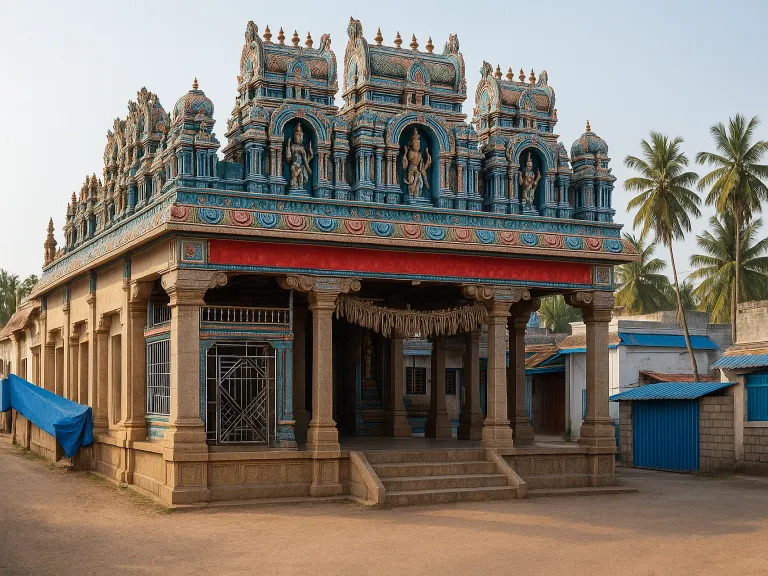
Detailed architectural documentation for Padaikatti Maha Mariamman Temple is not widely available in well-established historical sources. No verified measurements, dated construction phases, inscriptional references to mandapas, or formal stylistic attribution to a specific dynasty can be stated with certainty. Because of this, the temple cannot be responsibly described as Chola, Nayak, Maratha, or any other dynastic monument without stronger evidence.
The shrine is best understood as a functioning Tamil Amman temple, where the sanctum of the goddess and the spaces used for vow fulfilment and festival movement are central to worship. In such shrines, architectural importance is often secondary to ritual presence, local guardianship, and seasonal festivals. The identity of this temple is especially shaped by the Paadai Kavadi tradition, so the practical ritual environment surrounding the deity is as significant as the built form.
Unlike the large stone temples of nearby Kumbakonam, which are documented through inscriptions, sculptural programs, and major temple tanks, the verified public information for this temple focuses on its goddess, its Valangaiman location, and its festival worship. Any specific claims about tower height, number of prakaras, sculptural panels, temple tank, sacred tree, or original architectural patron would require direct temple records or reliable field documentation. In the absence of such evidence, those details are left unstated.
Temple Highlights
Padaikatti Maha Mariamman
The presiding goddess is worshipped as Maha Mariamman with the distinctive Valangaiman epithet Padaikatti or Paadai Katti.
Paadai Kavadi vow tradition
The temple is especially known for a vow connected with a funeral-bier symbol, offered by devotees in gratitude after recovery from severe distress or illness.
Panguni festival association
The Panguni festival season is the most widely recognised time for the temple’s public vow-related worship.
Valangaiman location
The temple is located at Valangaiman near Kumbakonam in Tamil Nadu’s Cauvery delta temple region.
Living Amman worship
The shrine represents the living Tamil Mariamman tradition, where the goddess is revered as a protector, healer, and guardian mother.
Spiritual Benefits
- Devotees seek protection from illness and distress.
- Devotees pray for recovery from severe health difficulties.
- Devotees offer thanks after fulfilment of vows.
- Families seek the goddess’s protection and welfare.
- Devotees pray for relief from fear and misfortune.
- Worshippers seek strength during difficult life situations.
- The goddess is approached for community well-being and household peace.
Major Festivals
Panguni festival
The Panguni festival season is the most noted festival period of the temple and is associated with the Paadai Kavadi or Paadai Kattuthal vow tradition of devotees.
Special Poojas
Paadai Kattuthal vow offering
A distinctive vow-related ritual associated with the temple, offered by devotees in gratitude after recovery from severe illness or life-threatening distress. The procedure should be confirmed directly with the temple authorities.
How to Reach
By Road
Valangaiman is reachable by road from Kumbakonam and nearby towns in the Cauvery delta region. Local buses, taxis, and private vehicles are commonly used.
By Rail
Kumbakonam Railway Station is the nearest major railway station commonly used for reaching Valangaiman.
By Air
Tiruchirappalli International Airport is the nearest major airport for travellers visiting Valangaiman and Kumbakonam.
Nearby Temples
Adi Kumbeswarar Temple, Kumbakonam
about 12 km
A major Shaiva temple of Kumbakonam dedicated to Lord Shiva as Adi Kumbeswarar.
Sarangapani Temple, Kumbakonam
about 12 km
A prominent Divya Desam temple dedicated to Lord Vishnu as Sarangapani.
Nageswaran Temple, Kumbakonam
about 12 km
An important Shiva temple in Kumbakonam known for its early medieval temple architecture.
Chakrapani Temple, Kumbakonam
about 12 km
A well-known Vishnu temple in Kumbakonam dedicated to Chakrapani.
Visitor Tips
-
Confirm current temple opening hours before travelling, as verified public timing information is not available here.
-
Festival days, especially during Panguni, can attract large crowds; plan travel accordingly.
-
Dress modestly and follow local temple customs inside the shrine.
-
Check photography rules at the temple before taking photos.
-
Carry drinking water during hot months in the Cauvery delta region.
-
If planning to fulfil a vow, contact the temple authorities or local priests in advance for the correct procedure.
-
Use Kumbakonam as the main travel base if arriving by rail or staying overnight.

 WhatsApp Us