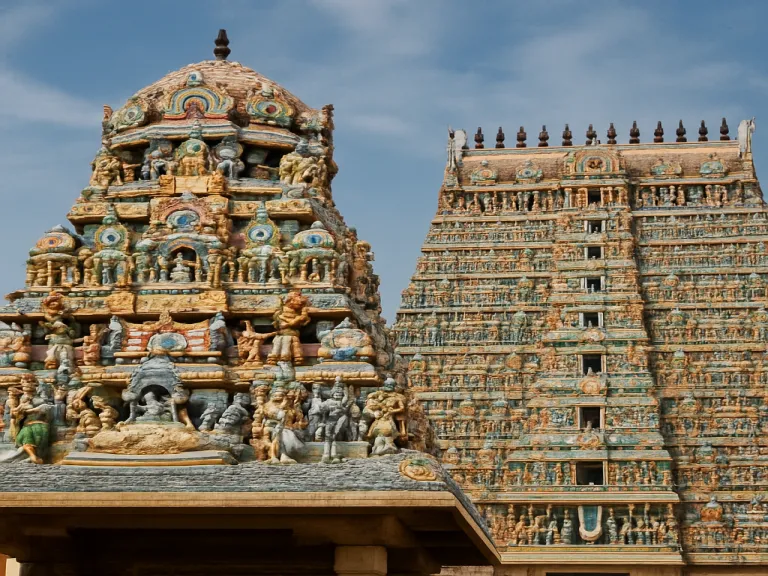
Sri Sarangapani Swami Temple

Kumbakkonam, Thanjavur, Tamil Nadu

Sri Sarangapani Swami Temple

About Temple

Sarangapani Swami Temple is a major Vishnu temple in Kumbakonam, Tamil Nadu, and one of the 108 Divya Desams revered in the Nalayira Divya Prabandham. The presiding deity is Sarangapani, a form of Vishnu holding the Saranga bow, enshrined in a distinctive reclining posture known as Uttana Sayanam. The temple stands in the historic temple quarter of Kumbakonam and is among the town’s most prominent sacred landmarks.

The temple is closely associated with Sri Vaishnava worship and with the hymns of the Alvars, especially the devotional verses addressing the deity as Aara Amudhan, the inexhaustible nectar. It is also linked with the Sri Vaishnava memory of Nathamuni, whose quest for the complete Divya Prabandham is connected with the hymn beginning Aara Amudhe. The shrine of Komalavalli Thayar, the goddess, forms an essential part of the temple’s sacred identity.

Sarangapani Temple is renowned for its towering rajagopuram, chariot-shaped sanctum, large temple tank and festival traditions. Its architecture preserves Chola, Vijayanagara and Nayak-period features, making it both a living place of worship and an important monument of Tamil temple culture. Devotees visit for darshan of Sarangapani, for worship connected with prosperity and grace, and for participation in major Vaishnava observances such as Vaikunta Ekadasi and Brahmotsavam.

Temple Information

Presiding Deity Sarangapani Swami
Goddess Komalavalli Thayar
Temple Type Divya Desam, Vishnu temple, Sri Vaishnava temple, Dravidian temple
District Thanjavur
Built Period Core sacred site documented in early medieval Vaishnava literature; major surviving structural phases are associated with the medieval Chola period, with later additions from the Vijayanagara and Nayak periods.
Dynasty Chola; later Vijayanagara and Nayak patronage
Sampradaya Sri Vaishnavism
Agama Pancharatra Agama

Temple Significance

Sarangapani Swami Temple is one of the 108 Divya Desams and one of the foremost Vishnu temples of Kumbakonam. It is revered in the hymns of the Alvars, associated with Nathamuni and the recovery of the Divya Prabandham, and celebrated for the deity Aara Amudhan in Uttana Sayanam. The temple is also important for its chariot-shaped sanctum, tall rajagopuram, Hema Pushkarini tank and worship of Komalavalli Thayar.

History

The sacred status of Sarangapani Swami Temple is documented through the hymns of the Alvars in the Nalayira Divya Prabandham. This places the shrine within the early medieval devotional geography of Tamil Vaishnavism. The deity is praised as Aara Amudhan, and the temple became one of the celebrated Divya Desams of the Chola country. Its religious importance predates many of the surviving architectural phases seen today.

The existing masonry temple bears the marks of medieval South Indian temple building, with strong associations to the Chola period and later additions under Vijayanagara and Nayak patronage. Kumbakonam flourished as an important religious and urban centre under the Cholas, and the region continued to receive support from later rulers and local donors. Inscriptions and architectural features across Kumbakonam’s temples show a long pattern of endowments, repairs, festivals and ritual maintenance.

Sarangapani Temple also occupies an important place in Sri Vaishnava history because of its connection with Nathamuni. The devotional verse Aara Amudhe, sung in praise of the deity, is central to the narrative that led Nathamuni to seek and recover the full corpus of the Divya Prabandham. Over the centuries, the temple has remained an active Vaishnava shrine, preserving daily worship, festival processions, ritual recitation and a sacred identity shaped by both royal patronage and devotional literature.

Mythology

The temple’s sthala purana narrates that Sage Hema Rishi performed penance at Kumbakonam seeking the grace of Mahalakshmi. The goddess appeared as a child in a golden lotus in the temple tank, which is known as Hema Pushkarini. The sage brought her up as Komalavalli, and Vishnu came to Kumbakonam to marry her. This divine marriage is central to the temple’s mythology and explains the importance of Komalavalli Thayar in the shrine.

Sarangapani is described as arriving in a celestial chariot to wed Komalavalli. The sanctum’s chariot-like form, with sculptural wheels and horses, reflects this mythic theme in stone. The deity is worshipped in Uttana Sayanam, a posture in which Vishnu appears as if rising from a reclining position. In devotional understanding, the Lord rises in response to the call of his devotee, emphasizing compassion, accessibility and divine grace.

The name Sarangapani means the one who holds the Saranga bow, identifying the deity with Vishnu as the protector of dharma. The name Aara Amudhan, celebrated by the Alvars, presents the Lord as nectar that can never be fully exhausted by devotion. These mythological associations are not historical claims; they form the sacred narrative through which devotees understand the temple, its tank, its goddess, its architecture and its ritual life.

Architecture

Sarangapani Swami Temple is one of the most architecturally distinguished temples in Kumbakonam. Its rajagopuram rises to about 173 feet and is among the tallest temple towers in the town. The gopuram displays the layered form typical of South Indian temple gateways, with multiple tiers of stucco figures, guardians and divine forms. The temple complex follows the axial arrangement of a major Dravidian shrine, with gateways, circumambulatory passages, mandapas and subsidiary shrines.

The most celebrated architectural feature is the chariot-shaped sanctum for Sarangapani. The stone base of the shrine is carved with wheels and drawn by sculpted horses and elephants, representing the divine chariot in which Vishnu came for the marriage with Komalavalli. The sanctum has entrances associated with the Uttarayana and Dakshinayana periods, reflecting the temple’s ritual symbolism. The main deity is in Uttana Sayanam, a rare reclining posture that gives the shrine a distinctive liturgical identity.

The temple also contains mandapas with carved pillars, shrines for Komalavalli Thayar and other Vaishnava deities, and the sacred Hema Pushkarini temple tank. Its visible fabric represents multiple historical phases, including Chola foundations and later Vijayanagara-Nayak embellishments. The combination of monumental scale, mythic design and living ritual use makes the temple an important example of how architecture, theology and sacred narrative are integrated in Tamil Vaishnava temple tradition.

Sacred Features

Temple Tree

Temple Tank
Hema Pushkarini

The sacred tank is central to the temple mythology. Komalavalli Thayar is associated with her appearance in a golden lotus in this tank before her divine marriage with Sarangapani Swami.

Temple Highlights

One of the 108 Divya Desams

The temple is revered in the Nalayira Divya Prabandham and is a major Sri Vaishnava pilgrimage shrine.

Aara Amudhan of Kumbakonam

The presiding deity is celebrated by the Alvars as Aara Amudhan, the inexhaustible nectar of divine grace.

Chariot-shaped sanctum

The sanctum is designed like a stone chariot with carved wheels and horses, reflecting the myth of Vishnu arriving to marry Komalavalli.

Uttana Sayanam posture

Sarangapani is enshrined in a rare reclining posture as though rising to bless the devotee.

Tall rajagopuram

The temple’s rajagopuram, about 173 feet high, is one of the most prominent towers in Kumbakonam.

Hema Pushkarini

The sacred temple tank is linked with the mythology of Sage Hema Rishi and the appearance of Komalavalli Thayar.

Spiritual Benefits

  • Receiving the grace of Vishnu as Sarangapani, the compassionate protector
  • Seeking blessings of Komalavalli Thayar for prosperity and family welfare
  • Worship connected with devotion, surrender and spiritual clarity
  • Participating in Divya Prabandham-centered Vaishnava worship
  • Praying for removal of obstacles through the grace of the divine couple
  • Experiencing the sacred merit associated with visiting a Divya Desam
  • Strengthening devotion through darshan of Aara Amudhan in Uttana Sayanam

Major Festivals

Chithirai Brahmotsavam

A major annual festival of the temple, marked by special worship and processional celebrations for Sarangapani Swami.

Vaikunta Ekadasi

An important Sri Vaishnava observance celebrated with special darshan, recitation and large gatherings of devotees.

Thai Festival

The temple observes festival celebrations in the Tamil month of Thai, including special rituals and processions.

Masi Magam

A significant festival season in Kumbakonam when many temples in the town hold special worship and sacred bathing-related observances.

Pavitrotsavam

A ritual festival of purification and renewal observed in many Vaishnava temples, including special worship for the deity.

Special Poojas

Daily Archana

Devotees offer archana to Sarangapani Swami and Komalavalli Thayar as part of regular worship.

Thirumanjanam

Ceremonial bathing worship is performed for the deities on specified occasions according to temple practice.

Sahasranama Archana

Worship using the thousand names of Vishnu is offered as a devotional service.

Vaikunta Ekadasi Seva

Special worship and darshan are conducted during the Vaikunta Ekadasi observance.

Brahmotsavam Utsava Sevas

Festival services and processions are performed for the utsava deities during Brahmotsavam.

How to Reach

By Road

Kumbakonam is well connected by road with Thanjavur, Mayiladuthurai, Tiruchirappalli and Chennai. The temple is located within Kumbakonam town and can be reached by local transport.

By Rail

Kumbakonam Railway Station is the nearest major rail point, with train connections to important towns and cities in Tamil Nadu.

By Air

The nearest airport is Tiruchirappalli International Airport. From there, Kumbakonam can be reached by road or rail.

Nearby Temples

Chakrapani Temple
about 0.5 km

A prominent Vishnu temple in Kumbakonam dedicated to Chakrapani, the discus-bearing form of Vishnu.

Adi Kumbeswarar Temple
about 1 km

A major Shiva temple in Kumbakonam associated with the town’s sacred origin traditions.

Ramaswamy Temple
about 1 km

A well-known Rama temple in Kumbakonam noted for its Ramayana-themed sculptures and paintings.

Nageswaran Temple
about 1 km

An ancient Shiva temple in Kumbakonam known for its Chola-period architecture.

Kasi Viswanathar Temple, Kumbakonam
about 2 km

A Shiva temple near the Mahamaham tank, associated with Kumbakonam’s sacred bathing traditions.

Related Temples

Oppiliappan Temple

Nearby Divya Desam in the Kumbakonam region revered in the Nalayira Divya Prabandham.

Nachiyar Koil

Nearby Divya Desam associated with Vishnu and Nachiyar worship in the Kumbakonam region.

Srirangam Ranganathaswamy Temple

Major Sri Vaishnava Divya Desam with reclining Vishnu worship.

Thiruvelliyangudi Kolavilli Ramar Temple

Divya Desam located in the wider Kumbakonam region.

Visitor Tips

  • Confirm current opening hours with the temple before planning a visit, especially on festival days.
  • Wear modest clothing suitable for an active Hindu place of worship.
  • Remove footwear before entering the temple premises.
  • Expect larger crowds during Vaikunta Ekadasi, Brahmotsavam and major Kumbakonam festival periods.
  • Allocate time to visit the shrine of Komalavalli Thayar and the Hema Pushkarini area.
  • Carry drinking water during summer months, as Kumbakonam can be hot and humid.
  • Maintain silence and follow the directions of temple staff during darshan and processions.
Sri Sarangapani Swami Temple

Visit Information

Morning 7:00 AM to 12:00 PM
Evening 5:00 PM to 9:00 PM
Best Time The cooler months from November to February are comfortable for travel to Kumbakonam. Vaikunta Ekadasi and Brahmotsavam are important devotional periods, but they attract large crowds.
Railway Kumbakonam Railway Station
about 2 km
Airport Tiruchirappalli International Airport
about 90 km
Location 📍 View on Google Maps

Need Help Planning?

Our travel experts can help you with transportation, darshan timings, nearby sightseeing and complete temple tour planning.

PLAN YOUR TEMPLE VISIT

Planning a visit to Sri Sarangapani Swami Temple?

Our travel experts can help you plan your temple visit with transportation, nearby sightseeing, accommodation, darshan timings and customized tour packages.

Disclaimer

We strive to provide accurate and authentic information based on well-established historical, cultural, religious, and publicly available sources. However, temple timings, entry fees, rituals, festivals, special poojas, facilities, and other visitor information may change without prior notice.

While every effort is made to keep this information current and accurate, visitors are advised to verify the latest details directly with the official temple authorities before planning their visit.

Image Disclaimer: The images displayed on this website are digitally generated or AI-enhanced representations created for illustrative purposes. They are intended to reflect the appearance and atmosphere of the destination but may not exactly represent the current real-world condition, colours, surroundings, or architectural details of the temple or location.