About Temple
Sree Anjaneyar Temple at Namakkal in Tamil Nadu is one of the best-known Hanuman shrines in South India. The temple stands in the heart of Namakkal town, close to the famous Namakkal hill and the rock-cut Sri Lakshmi Narasimha Swamy Temple. Its principal deity is a tall standing image of Anjaneyar, worshipped as the devoted servant of Sri Rama and as the humble devotee facing Lord Narasimha.
The shrine is especially noted for the approximately 18-foot image of Anjaneyar standing with folded hands in anjali mudra. The deity is housed in an open sanctum without a roof, a feature that has become strongly associated with the temple’s identity. Devotees visit the shrine for prayers connected with courage, protection, discipline, devotion, and relief from fear and obstacles.
The temple’s importance is closely linked with the sacred geography of Namakkal, where the hill, the Narasimha cave shrine, Namagiri Thayar, and Anjaneyar are worshipped together in local religious practice. The Anjaneyar shrine is not merely an independent Hanuman temple; it is part of a larger Vaishnava devotional landscape centered on Narasimha worship. The temple attracts pilgrims from Tamil Nadu and neighboring states, especially on Saturdays, Hanuman Jayanti, and other auspicious Vaishnava occasions.
Temple Significance
Sree Anjaneyar Temple is significant as one of Tamil Nadu’s prominent Hanuman shrines and as an inseparable part of Namakkal’s Narasimha-centered sacred landscape. The approximately 18-foot open-air image of Anjaneyar, standing in prayerful devotion toward Lord Lakshmi Narasimha, gives the temple its distinctive spiritual and visual identity.
History
The historical record of Sree Anjaneyar Temple is closely connected with Namakkal’s older sacred complex around the hill, especially the rock-cut Sri Lakshmi Narasimha Swamy Temple and related Vaishnava shrines. Namakkal, historically known as Namagiri, has long been associated with Narasimha worship, and the rock-cut shrine at the base of the hill is an important early medieval religious monument of the region. The Anjaneyar shrine gained prominence because of its direct devotional relationship with the Narasimha shrine.
Unlike the rock-cut cave shrines of Namakkal, the exact date of construction of the present Anjaneyar shrine is not securely documented in widely available historical sources. No specific builder, royal patron, or dynasty can be stated with certainty for the Anjaneyar temple alone. The temple’s history is therefore best understood through its continuous worship, its place within the Namakkal temple precinct, and its enduring association with Lakshmi Narasimha and Namagiri Thayar.
In the modern period, the shrine has become one of the most visited temples in Namakkal district. Its large image of Hanuman, open-air sanctum, and connection with the Narasimha temple have made it a major pilgrimage destination. The temple’s living history is reflected in its daily worship, festival gatherings, offerings such as vadai malai and butter alankaram, and the steady flow of devotees who treat Namakkal as a sacred center of Hanuman and Narasimha devotion.
Mythology
According to the local mythology of Namakkal, the sacred hill and the Anjaneyar shrine are connected with Lord Narasimha, Mahalakshmi, and Hanuman. The tradition narrates that Mahalakshmi performed penance at Namakkal desiring the darshan of Lord Narasimha after his fierce manifestation for Prahlada. The place became associated with her presence as Namagiri Thayar, the divine mother of the sacred hill.
Another well-known local legend describes Hanuman carrying a sacred saligrama associated with Lord Narasimha. When Hanuman reached Namakkal, he encountered Mahalakshmi engaged in penance. Before performing his prayers, he entrusted the saligrama to her. The divine stone became fixed to the ground and grew into the hill of Namagiri, revealing the presence of Lord Narasimha. Hanuman then remained in devotion before Narasimha, standing with folded hands.
This mythology explains the spiritual relationship between the Anjaneyar shrine and the nearby Lakshmi Narasimha temple. The open sanctum of Anjaneyar is also explained in local tradition as a mark of the deity’s vast divine form and his uninterrupted worship of Narasimha. In temple practice, devotees see Anjaneyar as the ideal bhakta: powerful yet humble, heroic yet fully surrendered. The mythological narrative remains central to the way pilgrims experience Namakkal as a combined sacred site of Narasimha, Namagiri Thayar, and Anjaneyar.
Architecture
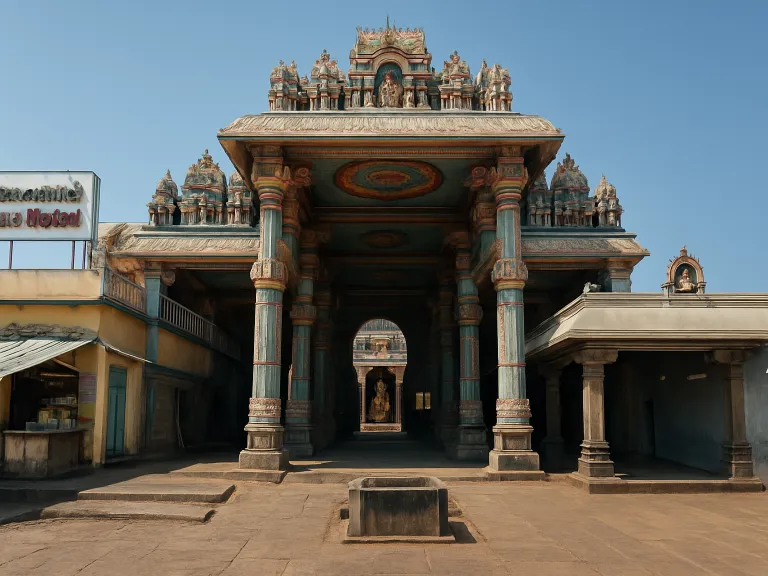
Sree Anjaneyar Temple is architecturally distinctive because of its open-air sanctum and the imposing standing image of Hanuman. The principal image, about 18 feet high, is the temple’s defining feature. Anjaneyar stands in anjali mudra, facing the direction of the associated Lakshmi Narasimha shrine, symbolizing constant devotion. The absence of a roof above the deity is one of the most recognizable elements of the temple.
The shrine is comparatively simple when viewed beside the rock-cut monuments of Namakkal hill. Its architectural focus is not on a large enclosed garbhagriha or elaborate sculptural corridors, but on the direct visual and ritual presence of the deity. The open sanctum allows devotees to view the full height of Anjaneyar clearly, emphasizing scale, devotion, and accessibility. The temple layout supports quick darshan as well as special offerings and alankarams.
The Anjaneyar temple must also be understood in relation to the surrounding sacred architecture of Namakkal. Nearby, the rock-cut Lakshmi Narasimha shrine and Ranganatha shrine represent an older phase of temple architecture associated with the hill. The Anjaneyar shrine functions as a devotional counterpart to these hill temples, creating a powerful axial and symbolic relationship between Hanuman and Narasimha. Its architectural identity is therefore defined by simplicity, openness, monumental scale, and its integration into the sacred topography of Namagiri.
Temple Highlights
Eighteen-foot Anjaneyar deity
The temple is famous for its tall standing image of Anjaneyar, worshipped with folded hands in anjali mudra.
Open-air sanctum
The deity is enshrined without a roof above the sanctum, a feature strongly associated with the temple’s sacred identity.
Connection with Lakshmi Narasimha
The shrine is closely linked with the nearby Namakkal Lakshmi Narasimha Swamy Temple, and Anjaneyar is worshipped as standing in devotion to Narasimha.
Located in Namakkal town
The temple is situated near Namakkal hill, making it easily accessible to pilgrims visiting the town’s major shrines.
Major Hanuman pilgrimage center
The temple attracts devotees seeking the blessings of Anjaneyar for courage, protection, devotion, and relief from obstacles.
Spiritual Benefits
- Devotees pray for courage and inner strength.
- Devotees seek protection from fear and negative influences.
- Devotees pray for relief from obstacles in personal and professional life.
- Devotees seek mental discipline, confidence, and focus.
- Devotees pray for devotion to Sri Rama and Lord Narasimha.
- Devotees offer worship for family welfare and peace.
- Students and professionals pray for clarity, effort, and success.
- Devotees seek blessings for health, resilience, and perseverance.
Major Festivals
Hanuman Jayanti
Hanuman Jayanti is the principal festival associated with Sree Anjaneyar Temple. Devotees gather in large numbers for special worship, alankaram, and offerings to Anjaneyar.
Sri Rama Navami
Sri Rama Navami is observed by devotees of Hanuman because of Anjaneyar’s inseparable devotion to Sri Rama. Special prayers and recitations are commonly associated with the occasion.
Vaikunta Ekadasi
As the shrine is part of Namakkal’s Vaishnava sacred setting, devotees visit the associated Narasimha temple complex during Vaikunta Ekadasi and related Vaishnava observances.
Tamil New Year
Devotees visit the temple on Tamil New Year to seek blessings for prosperity, strength, and auspicious beginnings.
Special Poojas
Vadai Malai Samarpanam
Offering a garland made of vadai is a well-known form of worship to Hanuman and is performed by devotees seeking Anjaneyar’s blessings.
Vennaikappu or Butter Alankaram
Butter offering and decoration are associated with Hanuman worship and are performed as a devotional service to Anjaneyar.
Abhishekam
Ritual bathing of the deity is performed on special occasions according to temple practice.
Archana
Devotees offer archana in the name of individuals or families, seeking the blessings of Sree Anjaneyar.
Tulasi Mala Offering
Tulasi garlands are offered as part of Vaishnava worship and devotion to Anjaneyar.
How to Reach
By Road
Namakkal is well connected by road to Salem, Karur, Erode, Tiruchirappalli, and other towns in Tamil Nadu. The temple is located within Namakkal town and can be reached by local buses, taxis, and auto-rickshaws.
By Rail
Namakkal Railway Station is the nearest railway station. From the station, local transport is available to reach the temple area near Namakkal hill.
By Air
The commonly used airport for reaching Namakkal is Tiruchirappalli International Airport. Salem Airport is also within regional reach depending on flight availability.
Nearby Temples
Sri Lakshmi Narasimha Swamy Temple, Namakkal
Nearby
A major rock-cut Vaishnava shrine at the base of Namakkal hill, closely associated with Sree Anjaneyar Temple.
Namagiri Thayar Temple, Namakkal
Nearby
The shrine of Namagiri Thayar, revered as the divine mother associated with the Namakkal Narasimha temple complex.
Sri Ranganathaswamy Temple, Namakkal
Nearby
A rock-cut Vaishnava shrine connected with the sacred hill landscape of Namakkal.
Namakkal Narasimha Temple Complex
Nearby
The broader sacred precinct around Namakkal hill that includes Narasimha, Namagiri Thayar, and associated Vaishnava worship.
Related Temples
Sri Lakshmi Narasimha Swamy Temple, Namakkal
Closely associated shrine; Anjaneyar is worshipped as facing Lord Lakshmi Narasimha.
Namagiri Thayar Temple, Namakkal
Associated goddess shrine within the Namakkal Narasimha sacred complex.
Sri Ranganathaswamy Temple, Namakkal
Nearby Vaishnava rock-cut shrine connected with the sacred landscape of Namakkal hill.
Visitor Tips
-
Check the current darshan timings with the temple administration before planning the visit.
-
Expect larger crowds on Saturdays, Hanuman Jayanti, and major festival days.
-
Visit the nearby Lakshmi Narasimha Swamy Temple and Namagiri Thayar shrine as part of the same pilgrimage circuit.
-
Wear modest clothing suitable for temple worship.
-
Keep footwear only in designated areas outside the shrine.
-
Follow queue arrangements and instructions from temple staff during crowded hours.
-
If offering vadai malai, butter, or other pooja items, use authorized counters or temple-approved arrangements.
-
Plan extra time if visiting Namakkal hill and other nearby temples on the same day.

 WhatsApp Us