About Temple
Sri Naganatha Swamy Temple at Thirunageswaram is a celebrated Shiva temple near Kumbakonam in Tamil Nadu’s Thanjavur region. The presiding deity is Lord Naganatha Swamy, worshipped as a Swayambhu Shiva Lingam, and the temple is one of the revered Paadal Petra Sthalams praised in the Tevaram hymns of the Tamil Shaiva saints. The sacred town name Thirunageswaram is associated with worship by serpents, and the temple remains one of the important Shaiva shrines of the Cauvery delta.
The temple is especially known as the Rahu Sthalam among the Navagraha temples of Tamil Nadu. A separate shrine for Rahu Bhagavan, depicted with his consorts Nagavalli and Nagakanni, attracts devotees who perform milk abhishekam during Rahu Kalam. The temple is widely visited by people seeking relief from astrological afflictions connected with Rahu and serpent-related doshas, while the main worship remains centered on Lord Shiva and the goddess.
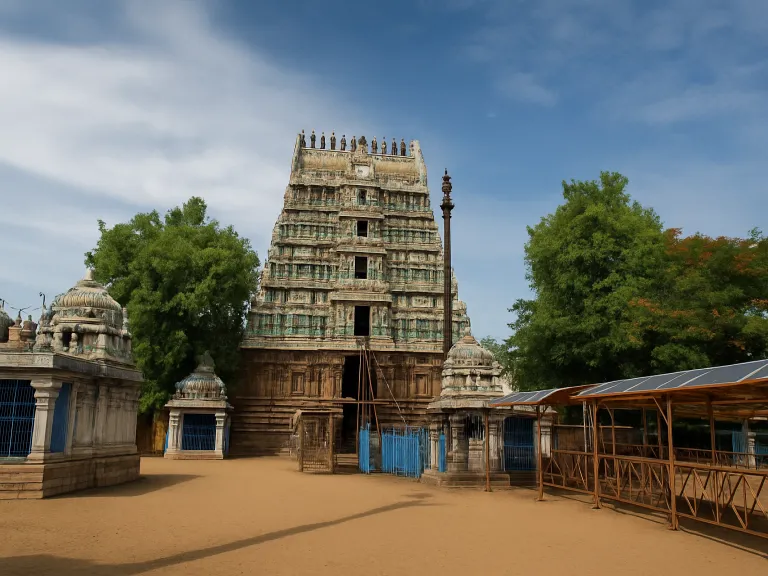
The temple complex reflects the religious, artistic, and ritual culture of the Chola country. It contains shrines for Naganatha Swamy, Piraisoodi Amman, Giri Gujambikai, Rahu, and several other deities. Its spacious prakarams, gopurams, mandapas, sacred tank, and sculptural details make it both a major pilgrimage site and a significant example of temple life in the Kumbakonam region.
Temple Information
| Presiding Deity |
Sri Naganatha Swamy |
| Goddess |
Piraisoodi Amman |
| Temple Type |
Shiva temple, Paadal Petra Sthalam, Navagraha temple, Rahu Sthalam |
| District |
Thanjavur
|
| Built Period |
Core temple associated with the 10th century CE, with later additions in subsequent Chola and Nayak periods. |
| Dynasty |
Chola dynasty; later additions during the Nayak period. |
| Sampradaya |
Shaivism |
Temple Significance
Sri Naganatha Swamy Temple is significant as a Paadal Petra Sthalam praised in the Tevaram hymns and as the Rahu Sthalam among the Navagraha temples of Tamil Nadu. It combines ancient Shaiva worship with one of the most important Rahu-related parihara traditions in South India.
History
Sri Naganatha Swamy Temple is historically connected with the Chola period, when the Cauvery delta became a major center of stone temple construction, Shaiva worship, and royal endowments. The core stone structure of the temple is generally attributed to the Chola age, with Aditya Chola I often associated with its early construction. The shrine’s antiquity is also confirmed by its place in the Tevaram canon, which places it among the ancient Shiva temples already venerated by the 7th-century Tamil Shaiva saints.
The temple received patronage across successive periods. Chola inscriptions and later additions indicate grants, ritual provisions, and structural development under rulers and local donors of the region. The temple’s connection with the Bhakti movement is especially important, as the hymns of Appar, Sambandar, and Sundarar elevated Thirunageswaram as a Paadal Petra Sthalam. This liturgical status ensured the temple’s continued prominence in Shaiva worship.
Later contributions, including those from the Nayak period and local patrons, added to the temple’s mandapas, gateways, and festival infrastructure. The separate prominence of Rahu worship also grew over time, making the temple one of the most visited Navagraha pilgrimage sites in Tamil Nadu. Today, it functions both as an ancient Shiva temple of the Chola country and as the foremost Rahu Parihara Sthalam in the Kumbakonam circuit.
Mythology
The mythology of Thirunageswaram centers on serpent worship of Lord Shiva. The name of the place is associated with the Nagas, and temple tradition connects the shrine with serpents such as Adisesha, Takshaka, and Karkotaka worshipping Lord Shiva here. Because the Nagas are believed to have received divine grace at this spot, the presiding deity came to be known as Naganatha Swamy, the Lord of the serpents.
The temple is also closely linked with Rahu Bhagavan. In Hindu astrological tradition, Rahu is one of the Navagrahas and is associated with eclipses, karmic obstacles, illusion, transformation, and sudden changes in life. At Thirunageswaram, Rahu is worshipped in a separate shrine with his consorts Nagavalli and Nagakanni. Devotees perform abhishekam and prayers during Rahu Kalam, seeking relief from Rahu dosha, naga dosha, delays in marriage, and other difficulties attributed to adverse planetary influences.
A famous temple tradition connected with the Rahu shrine is the milk abhishekam, during which the milk poured over the image of Rahu is associated by devotees with a change in color. This practice has become one of the best-known devotional features of the temple. These beliefs belong to the temple’s sacred mythology and living worship tradition, while the main theological focus remains the grace of Lord Shiva as Naganatha Swamy.
Architecture
Sri Naganatha Swamy Temple is a large Dravidian temple complex typical of the Chola country, with later expansions that reflect continuous worship over many centuries. The temple is organized around the sanctum of Lord Naganatha Swamy, where the Shiva Lingam is enshrined. The layout includes prakarams, mandapas, subsidiary shrines, and gateway towers that guide devotees through a sequence of sacred spaces before reaching the main sanctum.
The temple contains important shrines for Piraisoodi Amman and Giri Gujambikai, along with shrines for Rahu Bhagavan and other deities of the Shaiva temple pantheon. The Rahu shrine is one of the most visited parts of the complex and is architecturally integrated into the larger Shiva temple rather than standing as an independent planetary temple. Sculpted pillars, stone icons, stucco work on towers, and spacious circumambulatory passages reflect the craftsmanship associated with Tamil temple architecture.
The presence of a sacred tank, temple tree, festival mandapas, and multiple shrines shows the temple’s role as a complete ritual center. Its architecture is not merely decorative but functional, supporting daily worship, abhishekam, circumambulation, festival processions, and Navagraha-related rites. The temple’s built form preserves the layered history of Chola foundations, later additions, and continuing devotional use in the Kumbakonam region.
Sacred Features
Temple Tree
Shenbaga tree
The Shenbaga tree is associated with the temple as its sacred sthala vriksha.
Temple Tank
Surya Pushkarani
Surya Pushkarani is the sacred temple tank associated with ritual purity and worship at Thirunageswaram.
Temple Highlights
Rahu Sthalam of the Navagraha circuit
Thirunageswaram is the temple associated with Rahu among the nine Navagraha temples of Tamil Nadu and is a major destination for Rahu parihara worship.
Paadal Petra Sthalam
The temple is praised in the Tevaram hymns of the Tamil Shaiva saints and is counted among the revered Paadal Petra Sthalams.
Rahu milk abhishekam
The Rahu shrine is famous for milk abhishekam performed during Rahu Kalam, a devotional practice strongly associated with this temple.
Giri Gujambikai shrine
The temple has a notable shrine for Giri Gujambikai, worshipped with forms associated with divine wisdom and prosperity.
Chola-period sacred site
The temple belongs to the historic temple landscape of the Chola country, with later contributions that expanded its ritual and architectural features.
Spiritual Benefits
- Devotees pray for relief from Rahu dosha.
- Devotees pray for relief from naga dosha and serpent-related afflictions.
- Devotees seek removal of obstacles in marriage and family life.
- Devotees pray for mental clarity and protection from confusion or fear.
- Devotees seek relief from delays, uncertainty, and sudden difficulties attributed to Rahu.
- Devotees worship Lord Naganatha Swamy for Shiva’s grace and spiritual purification.
- Devotees pray to the goddess for protection, prosperity, and well-being.
Major Festivals
Maha Shivaratri
A major festival dedicated to Lord Shiva, observed with special worship and night-long devotion.
Rahu Peyarchi
The transit of Rahu is an important occasion at Thirunageswaram, drawing large numbers of devotees for Rahu-related worship.
Pradosham
Pradosham worship is observed for Lord Shiva, as in major Shaiva temples.
Margazhi Thiruvathirai
A Shaiva festival associated with Lord Shiva, especially Nataraja worship, observed in the Tamil month of Margazhi.
Aipasi Annabhishekam
A special abhishekam to Lord Shiva performed in the Tamil month of Aipasi.
Karthigai Deepam
A festival of lamps observed in Shiva temples during the Tamil month of Karthigai.
Special Poojas
Rahu Abhishekam
A special abhishekam performed to Rahu Bhagavan, especially during Rahu Kalam, for devotees seeking Rahu parihara.
Rahu Kala Pooja
Worship offered during the Rahu Kalam period, which is especially significant at this Rahu Sthalam.
Abhishekam to Sri Naganatha Swamy
Ritual bathing and worship of the presiding Shiva Lingam are part of the temple’s regular Shaiva worship.
Pradosha Pooja
Special worship of Lord Shiva performed on Pradosham days.
Archana to Piraisoodi Amman and Giri Gujambikai
Devotees offer prayers to the goddess for grace, protection, and family welfare.
How to Reach
By Road
Thirunageswaram is near Kumbakonam and is accessible by road from Kumbakonam, Mayiladuthurai, Thanjavur, and other towns of the Cauvery delta.
By Rail
Thirunageswaram has a railway station, and Kumbakonam railway station is a major nearby railhead with better connectivity.
By Air
The nearest major airport is Tiruchirappalli International Airport, from where the temple can be reached by road via Thanjavur and Kumbakonam.
Nearby Temples
Uppiliappan Temple
approximately 1 km
A major Vishnu temple near Thirunageswaram dedicated to Lord Oppiliappan.
Adi Kumbeswarar Temple, Kumbakonam
approximately 7 km
An important Shiva temple in Kumbakonam associated with the sacred origin legends of the town.
Sarangapani Temple, Kumbakonam
approximately 7 km
A prominent Divya Desam dedicated to Lord Vishnu in Kumbakonam.
Nageswaran Temple, Kumbakonam
approximately 6 km
An ancient Shiva temple in Kumbakonam known for Chola architecture.
Airavatesvara Temple, Darasuram
approximately 10 km
A Chola temple dedicated to Lord Shiva and recognized for its exceptional stone architecture.
Suryanar Kovil
approximately 15 km
The Navagraha temple associated with Surya, located near Kumbakonam.
Related Temples
Suryanar Kovil
Navagraha temple associated with Surya.
Thingalur Chandran Temple
Navagraha temple associated with Chandra.
Vaitheeswaran Koil
Navagraha temple associated with Angaraka.
Thiruvenkadu Swetharanyeswarar Temple
Navagraha temple associated with Budha.
Alangudi Apatsahayeswarar Temple
Navagraha temple associated with Guru.
Kanjanur Agneeswarar Temple
Navagraha temple associated with Sukra.
Thirunallar Dharbaranyeswarar Temple
Navagraha temple associated with Sani.
Keezhperumpallam Naganathaswamy Temple
Navagraha temple associated with Ketu.
Visitor Tips
-
Confirm the current temple timings before travel, especially during festivals and Rahu Peyarchi.
-
Rahu Kalam periods attract larger crowds because of special Rahu worship.
-
Use Kumbakonam as a convenient base for visiting this temple and nearby sacred sites.
-
Wear modest clothing appropriate for a traditional temple environment.
-
Allow additional time if planning to perform Rahu abhishekam or other parihara worship.
-
Check at the temple counter for current pooja procedures and any required tickets.
-
Festival days and weekends can be crowded, so plan travel and parking accordingly.
-
Respect restrictions around the sanctum and follow instructions from temple staff.

 WhatsApp Us