About Temple
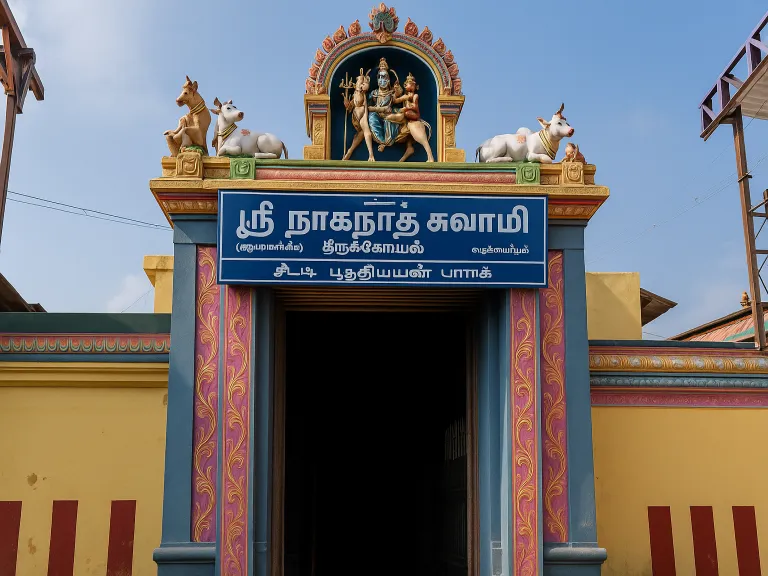
Sri Naganathaswamy Temple at Keelaperumpallam, also written as Keezhaperumpallam, is a Shiva temple in Mayiladuthurai district of Tamil Nadu, close to the historic coastal region of Poompuhar. The presiding deity is Sri Naganathaswamy, a form of Lord Shiva worshipped as a lingam, and the goddess is Sri Soundaranayaki. The temple is especially known as the Ketu sthalam among the Navagraha temples of the Cauvery delta.
The temple forms part of the well-known Navagraha pilgrimage circuit in and around Kumbakonam, Mayiladuthurai, Sirkazhi and Karaikal. Devotees visit Keelaperumpallam for worship connected with Ketu, the descending lunar node in Hindu astrology. Unlike many Navagraha shrines where the planetary deity is part of a larger temple complex, this temple is widely identified with Ketu worship while retaining its primary identity as a Shaiva temple.
Keelaperumpallam is situated in a region dense with ancient Shaiva temples, sacred riverine settlements and Chola-period religious sites. The temple is smaller and quieter than several major Chola temples, but it remains important because of its strong ritual association with Ketu dosha parihara, sarpa dosha remedies and Navagraha pilgrimage. Worshippers usually offer prayers first to Naganathaswamy and Soundaranayaki and then worship Ketu Bhagavan in the temple. Its location near Poompuhar, Thiruvenkadu and Sirkazhi makes it a significant stop for devotees exploring the sacred landscape of the eastern Cauvery delta.
Temple Significance
Sri Naganathaswamy Temple is significant as the Ketu sthalam of the Tamil Nadu Navagraha temple circuit. It is a Shaiva temple where Lord Shiva is worshipped as Naganathaswamy and Ketu Bhagavan is worshipped for parihara connected with Ketu dosha, sarpa dosha and planetary afflictions. The temple is also important because it lies near Poompuhar and within the sacred Shaiva landscape of the eastern Cauvery delta.
History
Sri Naganathaswamy Temple belongs to the sacred temple geography of the Chola country, a region where Shaiva worship, temple building and ritual institutions developed strongly from the early medieval period onward. Keelaperumpallam lies near the ancient port region of Poompuhar, an area associated with long-standing settlement and religious activity. The temple is generally described in temple accounts and regional religious literature as a Chola-period shrine, though the exact founder and construction date are not firmly recorded in widely available historical sources.
The temple’s historical identity is closely connected with the development of Navagraha pilgrimage in the Cauvery delta. The nine planetary shrines are not all single-period monuments, but together they became a major devotional circuit in Tamil Nadu. Keelaperumpallam gained prominence as the shrine associated with Ketu, while maintaining the central Shaiva structure of a temple dedicated to Shiva as Naganathaswamy. Its continued importance comes from the combination of Agamic worship, local ritual practice and astrological devotion.
In historical terms, the temple is part of the wider network of smaller Chola-region temples that served nearby villages rather than functioning only as imperial monuments. The presence of Shiva, the goddess, Ganesha, Murugan, Ketu and other subsidiary deities reflects the pattern common to Shaiva temples of the region. Renovations and maintenance have continued through later periods, as is common in actively worshipped temples. No single ruler, inscriptional foundation record, or precisely dated construction event is widely established for this temple in public historical sources.
Mythology
The mythology of Sri Naganathaswamy Temple is centered on Ketu and his connection with Lord Shiva. In Hindu Puranic tradition, the asura Svarbhanu entered the line of the devas during the distribution of amrita after the churning of the ocean. When the deception was revealed, Vishnu used the Sudarshana Chakra to cut him into two parts. The head became Rahu and the body became Ketu, both receiving an enduring place among the celestial forces that influence eclipses and planetary conditions.
Local temple tradition connects Keelaperumpallam with Ketu’s worship of Lord Shiva. Ketu is associated with serpentine energy, karmic transformation, detachment and liberation-oriented spiritual experience. At this temple, Ketu is venerated in a separate shrine while the primary deity remains Naganathaswamy, Shiva as the lord connected with serpent symbolism. The name Naganathaswamy itself reflects the association with nagas, or divine serpents, and reinforces the temple’s role in remedies connected with serpent-related afflictions in astrological belief.
Devotees visit the temple for parihara connected with Ketu dosha, sarpa dosha, obstacles in marriage, difficulties in progeny, mental unrest and sudden reversals attributed to planetary afflictions. These practices belong to the living devotional and astrological traditions of Tamil Nadu. The mythological framework does not replace the temple’s Shaiva identity; rather, Ketu’s worship is understood through submission to Shiva. Worshippers generally pray to Naganathaswamy and Soundaranayaki before offering worship to Ketu Bhagavan, symbolizing the belief that planetary influences are ultimately governed by divine grace.
Architecture
Sri Naganathaswamy Temple follows the compact Dravidian temple pattern common to many village and regional shrines of the Cauvery delta. The sacred focus of the temple is the garbhagriha housing Sri Naganathaswamy in the form of a Shiva lingam. The sanctum is approached through mandapa spaces used for worship, offerings and movement of devotees. The temple also contains a shrine for Sri Soundaranayaki, the consort of Naganathaswamy, reflecting the standard Shaiva arrangement of Shiva and Shakti worship within one complex.
The architectural character is modest when compared with the monumental Chola temples of Thanjavur or Gangaikonda Cholapuram, yet it preserves the essential elements of Tamil Shaiva temple design. The complex includes subsidiary shrines and images connected with the Shaiva pantheon and Navagraha worship. The shrine of Ketu Bhagavan is the most distinctive element for pilgrims, as it marks the temple’s special status as the Ketu sthalam. Devotees circumambulate the prakara and offer worship according to the sequence followed in the temple.
The temple’s visual identity is shaped by stone sanctum architecture, mandapas, stucco and iconographic elements that have been maintained through later renovations. As with many continuously active temples, the present structure represents layers of construction, repair and ritual adaptation rather than a single untouched building phase. Its architecture is best understood as functional sacred architecture: it supports daily puja, festival worship, parihara rituals and Navagraha pilgrimage. The temple’s compact scale makes the experience intimate, with the Shiva shrine, goddess shrine and Ketu shrine forming the central devotional axis.
Sacred Features
Temple Tank
Naga Theertham
The temple tank is associated with the temple’s serpent and Ketu-related sacred tradition.
Temple Highlights
Ketu Sthalam of the Navagraha Circuit
The temple is widely revered as the shrine associated with Ketu among the nine Navagraha temples of Tamil Nadu.
Shaiva Temple with Planetary Significance
Although famous for Ketu worship, the main deity is Lord Shiva as Sri Naganathaswamy, with Sri Soundaranayaki as the goddess.
Located near Poompuhar
The temple stands near the historic coastal region of Poompuhar in the eastern Cauvery delta.
Parihara Worship
Devotees visit for prayers connected with Ketu dosha, sarpa dosha and obstacles attributed to Ketu in astrological practice.
Compact Dravidian Shrine
The temple has the essential layout of a Tamil Shaiva temple with sanctum, mandapa, goddess shrine, prakara and subsidiary shrines.
Spiritual Benefits
- Worship for relief from Ketu dosha in astrological belief
- Worship for sarpa dosha parihara
- Prayers for removal of obstacles and sudden reversals
- Prayers for mental clarity and inner stability
- Worship for protection from fear and confusion attributed to Ketu influences
- Prayers for marriage-related obstacles connected with horoscope conditions
- Prayers for progeny-related concerns connected with sarpa dosha belief
- Spiritual focus on detachment, humility and surrender to Lord Shiva
Major Festivals
Maha Shivaratri
Maha Shivaratri is observed as an important festival for Lord Shiva with special worship.
Pradosham
Pradosham worship is significant in Shiva temples and is observed for Sri Naganathaswamy.
Ketu Peyarchi
Ketu Peyarchi, the transit of Ketu, draws devotees for special prayers connected with Ketu parihara.
Tamil New Year
Tamil New Year is observed with temple worship and visits by devotees.
Special Poojas
Ketu Parihara Puja
A special form of worship offered by devotees seeking relief from Ketu dosha and related astrological concerns.
Ketu Abhishekam and Archana
Devotees offer abhishekam and archana to Ketu Bhagavan as part of parihara worship.
Naganathaswamy Abhishekam
Abhishekam to Sri Naganathaswamy is performed as part of regular Shiva worship and special devotional offerings.
Pradosha Puja
Pradosha worship is performed for Lord Shiva and is considered important for Shaiva devotees.
How to Reach
By Road
Keelaperumpallam is accessible by road from Mayiladuthurai, Sirkazhi and Poompuhar. Local buses, taxis and private vehicles connect the temple with nearby towns.
By Rail
The nearest major railway access is Mayiladuthurai Junction, with Sirkazhi also serving the region. From the railway station, visitors can continue by road.
By Air
The nearest major airport commonly used by pilgrims is Tiruchirappalli International Airport. Visitors can travel onward by road or rail to Mayiladuthurai and then to Keelaperumpallam.
Nearby Temples
Thiruvenkadu Swetharanyeswarar Temple
about 8 km
A major Shaiva temple and the Budha sthalam of the Navagraha circuit.
Poompuhar Pallavaneswarar Temple
about 3 km
A Shiva temple near the historic coastal settlement of Poompuhar.
Sirkazhi Sattainathar Temple
about 20 km
An important Shaiva temple associated with the hymns and history of Tamil Shaiva saints.
Vaitheeswaran Koil
about 24 km
A renowned Shiva temple and the Angaraka sthalam of the Navagraha circuit.
Thirukadaiyur Amritaghateswarar Temple
about 25 km
A famous Shiva temple associated with longevity worship and the legend of Markandeya.
Related Temples
Suryanar Koil Suryanar Temple
Navagraha circuit temple associated with Surya
Thingalur Chandran Temple
Navagraha circuit temple associated with Chandra
Vaitheeswaran Koil
Navagraha circuit temple associated with Angaraka
Thiruvenkadu Swetharanyeswarar Temple
Navagraha circuit temple associated with Budha
Alangudi Guru Sthalam
Navagraha circuit temple associated with Guru
Kanjanur Agneeswarar Temple
Navagraha circuit temple associated with Shukra
Thirunallar Dharbaranyeswarar Temple
Navagraha circuit temple associated with Shani
Thirunageswaram Naganathaswamy Temple
Navagraha circuit temple associated with Rahu
Visitor Tips
-
Confirm current temple timings before travelling, especially on festival days.
-
Visit Naganathaswamy and Soundaranayaki before offering worship at the Ketu shrine.
-
Keelaperumpallam can be combined with Thiruvenkadu, Vaitheeswaran Koil and other Navagraha temples in the region.
-
Carry sufficient drinking water when visiting during summer months.
-
Wear modest clothing suitable for a South Indian temple.
-
Keep cash for offerings or archana tickets, as small temples may not always support digital payments.
-
Avoid rushing the visit during Navagraha tour schedules if you plan to perform parihara worship.
-
Respect temple rules regarding mobile phones and photography, as policies may vary.

 WhatsApp Us