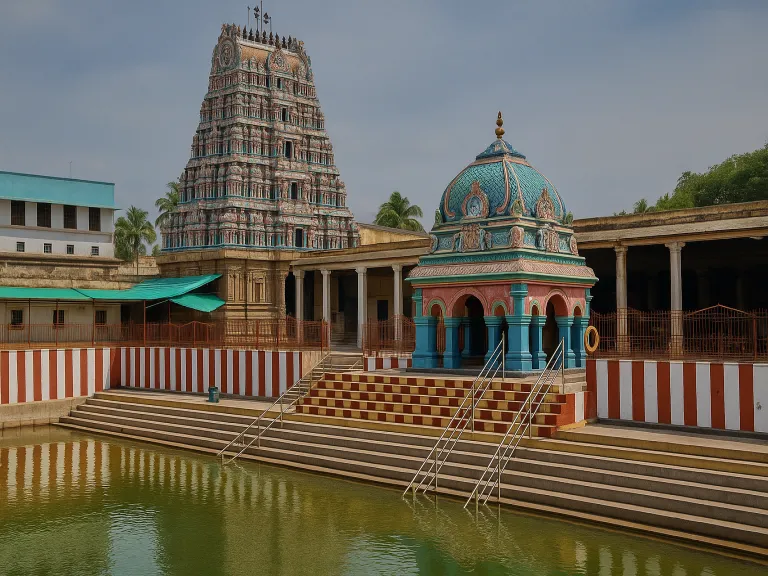
About Temple
Sri Oppiliappan Temple, also known as Thiru Vinnagar Divya Desam, is a major Vishnu temple at Thirunageswaram near Kumbakonam in Tamil Nadu. The presiding deity is worshipped as Oppiliappan or Uppiliappan, a form of Lord Vishnu standing with Bhumi Devi. The temple is one of the 108 Divya Desams celebrated in the hymns of the Azhwars and is an important pilgrimage centre for Sri Vaishnavas.
The name Oppiliappan means “the Lord without equal,” while Uppiliappan is associated with the temple’s distinctive practice of offering food without salt. This unique offering tradition is central to the temple’s identity and is connected with the mythology of Vishnu’s marriage to Bhumi Devi at this sacred site. Devotees also identify the Lord here with Venkatachalapathy, and the temple is regarded with deep reverence by those unable to undertake pilgrimage to Tirumala.
Located close to Kumbakonam and near the famous Thirunageswaram Rahu temple, Sri Oppiliappan Temple forms part of the dense sacred landscape of the Cauvery delta. The temple continues to be an active centre of worship, festivals, recitation of Divya Prabandham, and Vaishnava ritual tradition. Its religious importance rests on its Divya Desam status, its association with Bhumi Devi, its Chola-period historical record, and its enduring salt-free naivedyam practice.
Temple Significance
Sri Oppiliappan Temple is one of the 108 Divya Desams and is revered as Thiru Vinnagar. It is especially significant for the worship of Lord Vishnu as Oppiliappan with Bhumi Devi, the unique salt-free naivedyam tradition, and its association with the hymns of the Azhwars. Devotees also regard the deity as comparable to Venkatachalapathy of Tirumala.
History
Sri Oppiliappan Temple is historically associated with the Chola-period temple culture of the Kumbakonam region. The temple at Thiru Vinnagar is praised in the Nalayira Divya Prabandham, placing it among the sacred Vishnu shrines revered by the Azhwars. Its early religious importance is therefore older than many of the surviving architectural features, and the site was already prominent in the Sri Vaishnava sacred geography by the medieval period.
The present temple contains epigraphic evidence from the Chola period, indicating royal and local patronage for worship, endowments, lamps, offerings, and temple maintenance. Inscriptions connected with Chola rulers such as Rajaraja Chola I and later Cholas are associated with the temple, confirming its significance during the height of Chola power in the Cauvery delta. The temple’s development fits the wider pattern of Chola support for both Saiva and Vaishnava temples around Kumbakonam.
Later periods saw continued worship and additions under subsequent regional powers, including the Nayak period, which contributed to the maintenance and expansion of many temple complexes in the region. The temple remains under formal religious administration and continues its established Vaishnava rituals. Its historical importance is inseparable from its role as Thiru Vinnagar Divya Desam, its inscriptions, its connection with Azhwar hymns, and its uninterrupted living tradition of worship.
Mythology
The principal mythology of Sri Oppiliappan Temple centres on Sage Markandeya and Bhumi Devi. According to the temple tradition, Markandeya performed severe penance seeking the blessing of Lord Vishnu. Bhumi Devi appeared as a child under a sacred Tulasi plant and was brought up by the sage as his daughter. When she reached marriageable age, Lord Vishnu came to Markandeya’s hermitage in the form of an aged Brahmin and asked for her hand in marriage.
Markandeya hesitated because the girl was very young and, according to the story, did not even know how to cook with salt. The aged Brahmin replied that he would gladly accept food without salt. Vishnu then revealed his divine form, and Markandeya understood that the bridegroom was the Supreme Lord himself. The marriage of Vishnu and Bhumi Devi is the central sacred event commemorated at this temple.
This legend explains the temple’s famous salt-free offerings. All naivedyam prepared for Oppiliappan is made without salt, and devotees regard this as a sacred vow connected to the Lord’s promise to accept such food. The same story also explains the name Uppiliappan, meaning the Lord associated with food without salt, while Oppiliappan conveys the theological meaning of the incomparable Lord. The mythology highlights divine compassion, acceptance, and the inseparable presence of Vishnu with Bhumi Devi.
Architecture
Sri Oppiliappan Temple follows the broad Dravidian temple architectural idiom of the Tamil region, with a walled sacred complex, gopuram, mandapas, circumambulatory passages, subsidiary shrines, and a temple tank. The temple is entered through a prominent rajagopuram, and the sanctum enshrines Lord Oppiliappan in a standing posture with Bhumi Devi. The layout supports regular worship, festival processions, and the ritual movement typical of large Vaishnava temples in the Cauvery delta.
The sanctum is the devotional focus of the temple. The presiding deity is worshipped as a form of Vishnu comparable to Venkatachalapathy, while Bhumi Devi occupies a central theological role in the temple’s myth and worship. The mandapas and prakaras accommodate devotees, recitation, festival arrangements, and circumambulation. As with many Chola-region temples, the architecture reflects a combination of early stone work, later renovations, and functional additions made for continuing ritual use.
The temple complex also includes the Ahoratra Pushkarini, the sacred tank associated with the site. The presence of the tank, the Tulasi-related mythology, and the festival routes around the shrine reinforce the temple’s identity as a living Divya Desam rather than a monument alone. Its architecture is valued not only for form but also for how it supports Vaishnava worship, salt-free offerings, processions, and the annual celebration of the divine marriage of Oppiliappan and Bhumi Devi.
Sacred Features
Temple Tree
Tulasi
Temple mythology connects Bhumi Devi’s appearance as a child with the sacred Tulasi plant in Sage Markandeya’s hermitage.
Temple Tank
Ahoratra Pushkarini
The sacred tank of Thiru Vinnagar is associated with the temple’s ritual landscape and sanctity.
Temple Highlights
Divya Desam of Thiru Vinnagar
The temple is one of the 108 Divya Desams praised in the Nalayira Divya Prabandham by the Azhwars.
Salt-free naivedyam
All offerings to Lord Oppiliappan are prepared without salt, reflecting the temple mythology connected with Bhumi Devi and Sage Markandeya.
Lord Oppiliappan with Bhumi Devi
The presiding deity is worshipped as Vishnu in standing posture with Bhumi Devi, making the goddess central to the temple’s worship and mythology.
Connection with Venkatachalapathy
Devotees revere Oppiliappan as a form of Venkatachalapathy, and the shrine is especially meaningful for Vishnu devotees in the Kumbakonam region.
Ahoratra Pushkarini
The sacred temple tank is an important part of the temple complex and is connected with the sanctity of Thiru Vinnagar.
Spiritual Benefits
- Worship of Lord Vishnu for divine grace and protection
- Blessings of Bhumi Devi for stability and prosperity
- Prayers for marriage and family harmony
- Devotional fulfilment through worship at a Divya Desam
- Relief from difficulties through surrender to Vishnu
- Spiritual merit through participation in salt-free naivedyam offerings
- Strengthening of Sri Vaishnava devotion
- Blessings associated with the Lord worshipped as Venkatachalapathy
Major Festivals
Panguni Brahmotsavam
A major annual festival celebrated with processions and special worship for Lord Oppiliappan.
Kalyana Utsavam
The divine marriage of Lord Oppiliappan and Bhumi Devi is celebrated as a central festival of the temple.
Vaikunta Ekadasi
An important Sri Vaishnava festival observed with special worship and large devotee participation.
Purattasi Saturdays
Saturdays in the Tamil month of Purattasi are important for Vishnu worship and draw many devotees to the temple.
Pavithrotsavam
A purification festival conducted in accordance with Vaishnava temple ritual tradition.
Special Poojas
Salt-free Naivedyam
Offerings prepared without salt are made to Lord Oppiliappan in keeping with the temple’s core tradition.
Kalyana Utsavam
A special worship connected with the divine marriage of Lord Oppiliappan and Bhumi Devi.
Thirumanjanam
Ceremonial bathing ritual performed for the deity on prescribed occasions.
Archana
Name-based worship offered to Lord Oppiliappan and Bhumi Devi by devotees.
Sahasranama Archana
Worship through the recitation of the thousand names of Lord Vishnu, performed on appropriate occasions.
How to Reach
By Road
The temple is at Thirunageswaram, about 6–7 km from Kumbakonam, and is accessible by local buses, taxis, and auto-rickshaws from Kumbakonam.
By Rail
The nearest convenient railway access is Kumbakonam Railway Station, with local road transport available to Thirunageswaram. Thirunageswaram also has a railway station close to the temple area.
By Air
The nearest major airport is Tiruchirappalli International Airport, from where travellers can reach Kumbakonam and Thirunageswaram by road or rail.
Nearby Temples
Thirunageswaram Naganathaswamy Temple
approximately 1 km
A famous Shiva temple near Oppiliappan Temple, widely known for Rahu worship.
Sri Sarangapani Temple, Kumbakonam
approximately 7 km
A major Divya Desam dedicated to Lord Vishnu in Kumbakonam.
Sri Chakrapani Temple, Kumbakonam
approximately 7 km
A prominent Vishnu temple in Kumbakonam dedicated to Lord Chakrapani.
Adi Kumbeswarar Temple, Kumbakonam
approximately 8 km
An important Shiva temple and one of the principal sacred sites of Kumbakonam.
Mahamaham Tank, Kumbakonam
approximately 8 km
A sacred tank in Kumbakonam associated with the Mahamaham festival.
Related Temples
Sri Sarangapani Temple, Kumbakonam
Nearby Divya Desam in Kumbakonam
Sri Chakrapani Temple, Kumbakonam
Prominent Vishnu temple near Kumbakonam
Sri Ramaswamy Temple, Kumbakonam
Major Vishnu temple in the Kumbakonam region
Sri Venkateswara Temple, Tirumala
Oppiliappan is revered by devotees as a form comparable to Venkatachalapathy
Visitor Tips
-
Plan extra time during major festival days because the temple attracts large crowds.
-
Do not bring or offer food containing salt as naivedyam at this temple.
-
Combine the visit with nearby Kumbakonam and Thirunageswaram temples if time permits.
-
Wear modest clothing suitable for a traditional South Indian temple.
-
Check current darshan and festival schedules with the temple before travelling.
-
Maintain silence and queue discipline inside the temple complex.
-
Temple prasadam is known for being prepared without salt.
-
The temple is easily reached from Kumbakonam by road.