About Temple
Sri Renugambal Temple at Padavedu is a major Amman shrine in Tiruvannamalai district, Tamil Nadu, dedicated to Sri Renugambal, a form of Goddess Renuka. Padavedu, also written as Padaiveedu, lies in a historically important region that formed a fortified medieval settlement and religious centre. The temple is known among devotees of Shakti and among pilgrims who visit the group of ancient temples in and around Padavedu.
The shrine is closely associated with the Renuka-Parashurama narrative of the Hindu tradition. Sri Renugambal is worshipped as a compassionate mother goddess, and the temple attracts devotees seeking protection, family welfare, courage, and relief from distress. The temple’s identity is distinct from many other Amman temples because its sacred tradition is linked to the sage Jamadagni, Renuka Devi, and Parashurama, one of the celebrated incarnations of Vishnu.
Padavedu is not only a pilgrimage destination but also a site of historical memory. The settlement was connected with the Sambuvaraya chiefs, who ruled parts of northern Tamil Nadu in the medieval period. Several temples in Padavedu preserve the religious and architectural atmosphere of that period. Sri Renugambal Temple remains the best-known shrine of the place and continues to be an active centre of worship, especially for devotees from Tiruvannamalai, Vellore, Ranipet, Chennai, and neighbouring districts.
Temple Information
| Presiding Deity |
Sri Renugambal Amman |
| Goddess |
Sri Renugambal Amman |
| Temple Type |
Shakti temple, Amman temple, Hindu temple, Historic temple |
| District |
Thiruvannamalai
|
| Built Period |
Medieval period, especially associated with the 13th–14th century CE Padavedu settlement. |
| Dynasty |
Sambuvaraya; later Vijayanagara-period influence in the region. |
| Sampradaya |
|
Temple Significance
Sri Renugambal Temple is significant as the principal Shakti shrine of Padavedu and as a living centre of Renuka Devi worship. It is also important because Padavedu was a medieval fortified centre associated with the Sambuvaraya chiefs and contains a notable group of historic temples.
History
Padavedu has a documented place in the medieval history of northern Tamil Nadu. The area was an important fortified settlement connected with the Sambuvaraya chiefs, who rose to prominence after the later Chola period and controlled parts of the region during the 13th and 14th centuries CE. The very name Padaiveedu is understood in Tamil usage as a military or army settlement, reflecting its association with a fortified centre.
Sri Renugambal Temple belongs to the sacred landscape of Padavedu, where many temples dedicated to Shiva, Vishnu, and the Goddess are found. The settlement’s religious importance is supported by the presence of multiple medieval shrines and inscriptions in the region. The Sambuvarayas and later Vijayanagara authority are historically connected with Padavedu and its temples through patronage, administration, and temple endowments in the wider area.
The exact original founder of Sri Renugambal Temple is not clearly established in widely available historical records. Its present form reflects a living temple that has undergone worship, maintenance, and renovation over time. The historical importance of the shrine rests less on a single foundation inscription and more on its position within Padavedu’s medieval temple complex and its continuous association with Renuka worship. The temple therefore represents both a Shakti pilgrimage centre and a surviving part of the religious heritage of the Sambuvaraya-period capital region.
Mythology
The mythology of Sri Renugambal Temple is centred on Renuka Devi, the wife of sage Jamadagni and the mother of Parashurama. In the Puranic and local temple tradition, Renuka was revered for her chastity, spiritual strength, and devotion to her husband. The story links the temple to one of the most powerful family narratives in Hindu sacred lore, involving duty, obedience, anger, repentance, and divine restoration.
According to the mythology associated with the shrine, sage Jamadagni ordered his sons to punish Renuka, and Parashurama obeyed his father’s command. Later, through the power of the sage’s grace, Renuka was restored. In the Padavedu tradition, Sri Renugambal is worshipped as the deified mother whose presence grants protection and compassion to devotees. This mythological memory explains the strong emotional devotion shown to the Goddess at the temple.
The Renuka tradition is also connected with the wider worship of mother goddesses in South India, where the Goddess is approached as both fierce and benevolent. At Padavedu, Sri Renugambal is venerated not merely as a mythic figure but as a living divine mother who responds to the prayers of families, women, children, and devotees facing hardship. The mythology should be understood as sacred tradition rather than political history; it gives the temple its devotional identity while the historical record places Padavedu within the medieval Sambuvaraya landscape.
Architecture
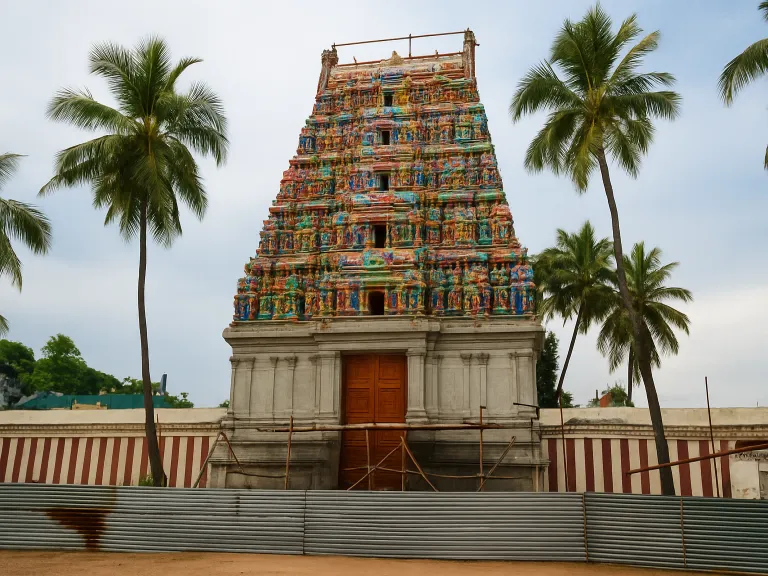
Sri Renugambal Temple follows the broad pattern of Tamil temple architecture, with a sanctum for the presiding Goddess, mandapas for worship and gathering, and enclosed spaces used for ritual movement. The temple belongs to the Dravidian architectural environment of Padavedu, a village known for several medieval shrines. Its architecture is best understood as part of this larger sacred settlement rather than as an isolated monument.
The shrine combines active ritual use with historical character. Like many temples of northern Tamil Nadu, the structure has experienced additions, repairs, and renovations across different periods. The presence of a formal temple layout, worship halls, and processional space reflects the established Agamic style of Tamil temple worship, although the specific Agama followed by the temple is not reliably documented in widely available sources. The temple’s built fabric supports regular puja, festival gathering, and the devotional movement of pilgrims.
Padavedu’s wider temple group includes shrines associated with both Shaiva and Vaishnava traditions, showing the religious diversity of the medieval settlement. Sri Renugambal Temple stands out within this landscape as the principal Shakti shrine. Its architecture is valued by devotees for its sacred atmosphere more than for a single monumental feature. The temple’s historical setting, its relationship to the Padavedu group of temples, and its continuity of worship together form the core of its architectural and cultural importance.
Temple Highlights
Principal Shakti shrine of Padavedu
Sri Renugambal Temple is the best-known Amman shrine in Padavedu and is dedicated to Goddess Renuka, worshipped locally as Sri Renugambal.
Association with Renuka and Parashurama
The temple’s sacred tradition is linked to Renuka Devi, sage Jamadagni, and Parashurama, giving the shrine a distinctive mythological identity.
Medieval Padavedu heritage
Padavedu was an important fortified settlement connected with the Sambuvaraya chiefs, and the temple forms part of this historic religious landscape.
Part of a wider temple group
Several ancient Shiva and Vishnu temples are located in and around Padavedu, making the village an important pilgrimage circuit.
Active living temple
The shrine continues to function as an active place of worship, drawing devotees from Tiruvannamalai, Vellore, Ranipet, Chennai, and nearby regions.
Spiritual Benefits
- Devotees seek the blessings of the Goddess for family welfare.
- Devotees pray for protection from distress and fear.
- The shrine is visited for courage and emotional strength.
- Women and families offer prayers for harmony and well-being.
- Devotees worship Sri Renugambal as a compassionate mother goddess.
- Pilgrims visit the temple as part of a sacred circuit of Padavedu temples.
Major Festivals
Aadi month worship
Aadi is an important month for Amman worship in Tamil Nadu, and devotees visit Sri Renugambal Temple during this period for special prayers to the Goddess.
Navaratri
Navaratri is observed for the worship of the Divine Mother, and Sri Renugambal Amman is worshipped with special devotion during the festival period.
Fridays dedicated to the Goddess
Fridays are considered especially sacred for Amman worship, and devotees offer prayers to Sri Renugambal on these days.
Special Poojas
Amman worship and archana
Devotees offer archana and prayers to Sri Renugambal Amman for family welfare, protection, and fulfilment of vows.
Abhishekam
Abhishekam to the deity is part of temple worship in Amman shrines; visitors should confirm availability and timings directly with the temple.
Festival-day offerings
Special offerings are made by devotees during Aadi, Navaratri, Fridays, and other important days for Goddess worship.
How to Reach
By Road
Padavedu is reachable by road from Tiruvannamalai, Polur, Arani, Vellore, and nearby towns through local bus and taxi services.
By Rail
The nearest practical railheads are Arni Road, Polur, and Katpadi, depending on the route chosen. From the railway station, visitors can continue by road to Padavedu.
By Air
The nearest major airport is Chennai International Airport. From Chennai, Padavedu can be reached by road through northern Tamil Nadu routes.
Nearby Temples
Sri Yoga Ramachandra Swamy Temple, Padavedu
within Padavedu
A historic temple dedicated to Sri Rama in a yogic posture, forming part of the Padavedu temple group.
Sri Lakshmi Narasimha Swamy Temple, Padavedu
within Padavedu
A Vaishnava shrine dedicated to Lord Narasimha with Goddess Lakshmi, located in the Padavedu sacred area.
Sri Venugopala Swamy Temple, Padavedu
within Padavedu
A temple dedicated to Krishna as Venugopala, associated with the historic temple landscape of Padavedu.
Sri Kailasanathar Temple, Padavedu
within Padavedu
A Shiva temple in Padavedu, reflecting the Shaiva presence in the medieval settlement.
Sri Ammaiappeswarar Temple, Padavedu
within Padavedu
A nearby Shiva temple connected with the wider group of historic temples at Padavedu.
Related Temples
Sri Yoga Ramachandra Swamy Temple, Padavedu
Part of the historic Padavedu temple group.
Sri Lakshmi Narasimha Swamy Temple, Padavedu
Nearby Vaishnava shrine within the Padavedu sacred landscape.
Sri Venugopala Swamy Temple, Padavedu
One of the historic Vishnu temples associated with Padavedu.
Sri Kailasanathar Temple, Padavedu
Nearby Shiva temple forming part of the medieval Padavedu temple group.
Visitor Tips
-
Check the current temple opening hours locally before planning the visit.
-
Wear modest clothing suitable for a Hindu temple.
-
Plan extra time if visiting during Aadi month, Fridays, or Navaratri because crowds may be higher.
-
Combine the visit with nearby historic temples in Padavedu if time permits.
-
Follow the instructions of temple staff regarding queues, offerings, and photography.
-
Carry drinking water during summer, as the region can be hot.
-
Use local road directions carefully, as Padavedu is reached through rural roads from nearby towns.

 WhatsApp Us