About Temple
Subramanya Swami Temple at Marudhamalai, commonly called Marudamalai Murugan Temple, is a prominent hill shrine dedicated to Lord Murugan on the Marudhamalai hill near Coimbatore in Tamil Nadu. The temple stands on the eastern slopes of the Western Ghats, about 12 km west of Coimbatore city, and is one of the best-known Murugan shrines of the Kongu region. Its hill setting, natural surroundings, and long devotional association make it an important pilgrimage destination for devotees from Coimbatore, western Tamil Nadu, and Kerala.
The presiding deity is Lord Subramanya, worshipped as Murugan, the son of Shiva and Parvati and the divine commander associated with wisdom, courage, and victory over inner obstacles. The name Marudhamalai is connected with the marudham trees and the hill landscape. The temple is also closely associated with Siddhar tradition, especially Pambatti Siddhar, whose cave-shrine is an important devotional point for visitors.
The temple is administered as a public Hindu temple and attracts large crowds during Murugan festivals such as Thaipusam, Skanda Sashti, Vaikasi Visakam, and Panguni Uthiram. Pilgrims reach the hill temple either by road transport up the hill or by climbing the steps from the foothill. The shrine combines the experience of hill pilgrimage, Murugan devotion, Tamil sacred poetry, and Siddhar heritage in a setting that remains strongly connected with Coimbatore’s religious life.
Temple Significance
Marudhamalai Subramanya Swami Temple is significant as a major Murugan hill shrine of the Kongu region, a celebrated pilgrimage centre near Coimbatore, and a temple associated with Arunagirinathar’s Tiruppugazh tradition and Pambatti Siddhar. Its importance lies in the union of Murugan worship, hill pilgrimage, Tamil sacred poetry, Siddhar heritage, and the natural setting of the Western Ghats.
History
The exact date of foundation and the name of the original builder of Subramanya Swami Temple at Marudhamalai are not securely established in widely accepted historical records. The temple’s antiquity is supported by its presence in Tamil devotional memory and by its association with the medieval saint-poet Arunagirinathar, who praised Marudhamalai Murugan in the Tiruppugazh tradition. This places the shrine’s established sacred status at least by the 15th century CE, while the earlier origin of worship on the hill remains historically undetermined.
Marudhamalai belongs to the religious landscape of Kongu Nadu, where Murugan worship has long been integrated with hill shrines, local sacred geography, and Tamil devotional practice. The hill’s natural environment and the presence of caves and springs contributed to its association with ascetics and Siddhars. Pambatti Siddhar, one of the well-known Tamil Siddhars, is especially linked with Marudhamalai, and his cave near the temple continues to be visited by devotees.
In the modern period, the temple developed as one of the major pilgrimage centres of Coimbatore district. Road access, steps, mandapams, and other facilities have been added or improved over time to serve large numbers of pilgrims. The temple is maintained under the Tamil Nadu Hindu Religious and Charitable Endowments framework. While the present complex contains later structural additions and renovations, its devotional identity remains centred on Murugan of Marudhamalai and the sacred hill.
Mythology
The mythology of Marudhamalai is centred on Lord Murugan as the youthful god of wisdom, valour, divine grace, and protection. In Tamil devotional understanding, Murugan’s hill shrines are places where the deity is approached through austerity, devotion, and surrender. Marudhamalai is revered as one such sacred hill, where the natural landscape itself becomes part of worship. Devotees climb the hill, offer prayers, and seek Murugan’s blessings for clarity, courage, health, and relief from distress.
Local sacred tradition gives a special place to Pambatti Siddhar at Marudhamalai. Pambatti Siddhar is remembered as a Siddhar connected with yogic knowledge, medicine, and spiritual realization. The cave associated with him near the temple is treated as a place of meditation and grace. In the temple’s devotional setting, Murugan is honoured as the divine guide who grants knowledge beyond ordinary learning and leads seekers from worldly attachments toward inner awakening.
The name Marudhamalai is connected with marudham trees and the medicinal hill environment. Devotional tradition views the hill as a spiritually charged place where nature, Siddhar practice, and Murugan worship meet. Mythological narration at the temple is therefore not limited to a single episode; it includes the broader Tamil Murugan tradition, the sanctity of hills, the presence of Siddhars, and the belief that sincere worship at Marudhamalai brings protection, healing, discipline, and spiritual progress.
Architecture
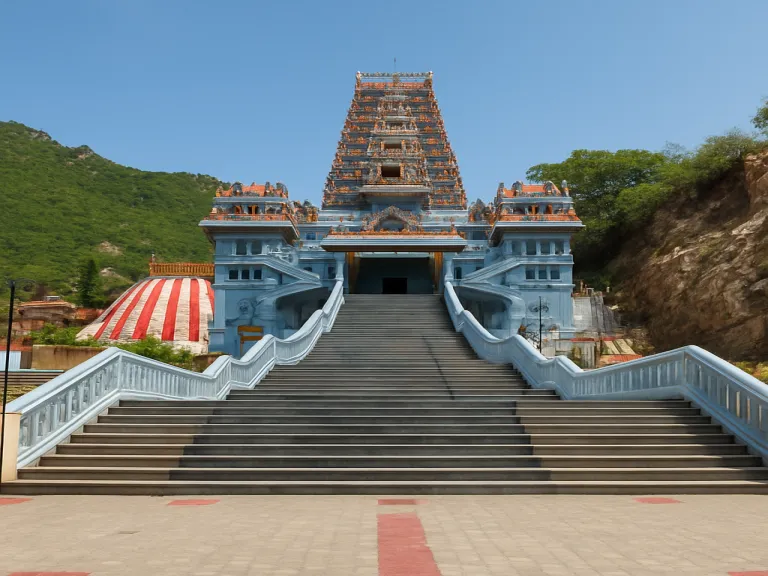
Subramanya Swami Temple at Marudhamalai is a hill temple whose architecture is shaped by the natural terrain. The shrine is reached from the foothill by a road and by a flight of steps used by many pilgrims as part of their devotional ascent. The temple complex stands on the hill with retaining structures, paved approaches, mandapams, and prakaras arranged to suit the slope. The experience of arrival is architectural as well as devotional, moving from the base of the hill to the sacred precinct around the sanctum.
The principal shrine follows the general arrangement of a South Indian Hindu temple, with a sanctum for Lord Subramanya, associated mandapams for worshippers, and subsidiary shrines within the complex. The temple includes spaces connected with Murugan worship, including shrines and points associated with Ganesha, Idumban, and Siddhar tradition. The cave linked with Pambatti Siddhar is one of the most distinctive sacred features of Marudhamalai, adding an ascetic and yogic dimension to the temple’s architectural landscape.
The present temple fabric reflects different periods of maintenance, expansion, and renovation rather than a single documented building phase. Stone, masonry, painted stucco, pillared halls, steps, and modern pilgrim facilities coexist with the older sacred hill setting. The architecture is best understood as a living hill shrine: the sanctum is the ritual centre, the hill is the sacred enclosure, the steps form the pilgrim path, and the surrounding landscape reinforces Marudhamalai’s identity as a Murugan temple of the Western Ghats.
Temple Highlights
Prominent Murugan hill shrine
The temple is one of the best-known shrines dedicated to Lord Murugan in the Coimbatore and Kongu region, located on the Marudhamalai hill.
Association with Arunagirinathar
Marudhamalai Murugan is praised in the Tamil devotional tradition of Tiruppugazh, linking the shrine with the 15th-century saint-poet Arunagirinathar.
Pambatti Siddhar connection
A cave-shrine associated with Pambatti Siddhar is an important sacred feature near the temple and attracts devotees interested in Siddhar tradition.
Western Ghats setting
The temple’s hill location provides a natural sacred environment and a distinctive pilgrimage experience close to Coimbatore city.
Major festival centre
The temple draws large numbers of devotees during Thaipusam, Skanda Sashti, Vaikasi Visakam, Panguni Uthiram, and Krittika observances.
Spiritual Benefits
- Devotees seek Lord Murugan’s grace for courage and confidence.
- Worshippers pray for wisdom, clarity, and success in learning.
- Many devotees seek relief from fear, obstacles, and mental distress.
- Murugan worship is offered for family welfare and protection.
- Devotees pray for health, healing, and spiritual strength.
- Pilgrims undertake hill climbing as an act of devotion and discipline.
- The Siddhar association inspires seekers interested in meditation and inner transformation.
Major Festivals
Thaipusam
A major Murugan festival observed in the Tamil month of Thai. Devotees offer prayers, vows, and acts of devotion to Lord Subramanya.
Skanda Sashti
An important festival dedicated to Murugan’s victory over Surapadman, observed with fasting, special worship, and devotional participation.
Vaikasi Visakam
Celebrated as the sacred birth star festival of Lord Murugan in the Tamil month of Vaikasi.
Panguni Uthiram
A major Murugan festival connected with divine marriage traditions and special worship of Murugan with Valli and Deivanai.
Karthigai Deepam
A festival of lights associated with Shiva and Murugan worship, observed with lamps and special devotion.
Krittika observances
Krittika star days are important for Murugan worship and attract devotees for special prayers.
Special Poojas
Abhishekam
Ritual bathing of Lord Subramanya with sacred substances, performed as an important form of Murugan worship.
Archana
Offering of names and prayers to Lord Murugan for the welfare and intentions of devotees.
Kavadi offering
A devotional vow associated with Murugan worship, especially during major festival days and personal vow fulfilment.
Paal Kudam
Devotees carry milk as an offering to Lord Murugan, commonly associated with Murugan temples and festival worship.
Shashti worship
Special prayers on Shashti days, which are sacred to Lord Murugan.
How to Reach
By Road
Marudhamalai is about 12 km west of Coimbatore city. City buses, taxis, and private vehicles connect Coimbatore with the foothill and temple approach.
By Rail
Coimbatore Junction is the nearest major railway station. From the station, visitors can travel by bus, taxi, or private vehicle to Marudhamalai.
By Air
Coimbatore International Airport is the nearest airport. Road transport is available from the airport to Marudhamalai via Coimbatore city routes.
Nearby Temples
Perur Pateeswarar Temple
about 13 km
Ancient Shiva temple at Perur near Coimbatore, known for its Nataraja shrine and sculptural tradition.
Eachanari Vinayagar Temple
about 24 km
Well-known Ganesha temple on the Coimbatore to Pollachi road, visited by devotees before auspicious undertakings.
Koniamman Temple
about 14 km
Historic Amman temple in Coimbatore city, regarded as an important guardian-deity shrine of the city.
Dhyanalinga Temple
about 25 km
Meditative shrine near the foothills of the Velliangiri Mountains, visited by spiritual seekers.
Related Temples
Palani Dhandayuthapani Swamy Temple
Major Murugan hill temple in Tamil Nadu and one of the Arupadai Veedu shrines.
Thiruchendur Subramanya Swamy Temple
Major Murugan temple in Tamil Nadu and one of the Arupadai Veedu shrines.
Swamimalai Swaminatha Swamy Temple
Major Murugan temple in Tamil Nadu and one of the Arupadai Veedu shrines.
Visitor Tips
-
Confirm current opening hours and festival arrangements before visiting, as timings can change on special days.
-
Use the steps if you wish to undertake the visit as a hill pilgrimage, or use available road access if climbing is difficult.
-
Wear comfortable footwear for the approach and leave footwear only at the designated area before entering the shrine.
-
Carry water when climbing, especially during warm months.
-
Expect heavy crowds during Thaipusam, Skanda Sashti, Vaikasi Visakam, Panguni Uthiram, and Krittika days.
-
Elderly visitors and those with health concerns should plan the hill ascent carefully.
-
Respect queue systems, sanctum rules, and instructions from temple staff.
-
Check local transport availability for the return journey, especially in the evening or on festival days.

 WhatsApp Us