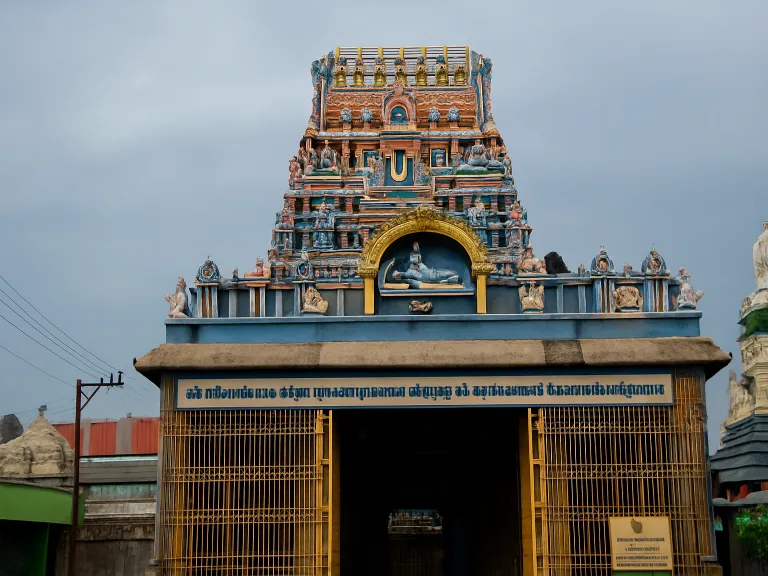
Arulmigu Vaithya Veeraraghava Perumal Temple

Thiruvallur, Tamil Nadu

Arulmigu Vaithya Veeraraghava Perumal Temple

About Temple

Vaithya Veeraraghava Perumal Temple at Thiruvallur, also known in the Divya Desam tradition as Thiruevvul, is a major Sri Vaishnava temple dedicated to Vishnu. It is one of the 108 Divya Desams praised in the Nalayira Divya Prabandham, with hymns by Tirumangai Alvar. The temple stands in the heart of Thiruvallur town in Tamil Nadu, west of Chennai, and is one of the most important Vishnu shrines in the Chennai region.

The presiding deity, Veeraraghava Perumal, is enshrined in a reclining posture on Adisesha. The Lord is also revered as Vaithya Veeraraghava Perumal, the divine healer, because devotees worship here seeking relief from illness and suffering. The goddess is Kanakavalli Thayar, also known as Vasumathi, who has a separate shrine within the temple complex.

A defining sacred feature of the temple is the Hrit-tapa-nasini Pushkarini, the temple tank whose name means the remover of the anguish of the heart. The temple is closely associated with the legend of Salihotra Maharishi and the origin of the place-name Thiruevvul. Its importance comes from a combination of Divya Desam status, Alvar hymnology, Sri Vaishnava worship, healing association, and continuing ritual life.

Temple Information

Presiding Deity Veeraraghava Perumal
Goddess Kanakavalli Thayar
Temple Type Divya Desam, Vishnu temple, Sri Vaishnava temple
District Thiruvallur
Built Period The shrine was in existence by around the 8th century CE, as it was praised by Tirumangai Alvar in the Divya Prabandham.
Dynasty
Sampradaya Sri Vaishnavism
Agama Pancharatra Agama

Temple Significance

Vaithya Veeraraghava Perumal Temple is significant as one of the 108 Divya Desams, a major Sri Vaishnava pilgrimage shrine, and a temple where Vishnu is worshipped as the divine healer. It is associated with Tirumangai Alvar, Salihotra Maharishi, the sacred name Thiruevvul, and the Hrit-tapa-nasini Pushkarini.

History

The historical antiquity of Vaithya Veeraraghava Perumal Temple is firmly established by its inclusion among the Divya Desams sung by Tirumangai Alvar. Since Tirumangai Alvar is placed by the Sri Vaishnava tradition and historical scholarship in the early medieval period, the shrine was already an important Vishnu temple by around the 8th century CE. This makes the temple one of the ancient sacred centers of the Tondai region.

The temple’s exact founder is not recorded in a widely accepted historical source. Its present form reflects the growth pattern common to major Tamil temples: an early sacred core expanded through later architectural additions, ritual endowments, and patronage. The temple belongs to the Sri Vaishnava religious landscape that flourished in northern Tamil Nadu, a region ruled at different times by Pallavas, Cholas, Pandyas, Vijayanagara rulers, and later local chiefs.

The temple’s enduring status is tied not to a single royal founder but to the Divya Prabandham canon, continuous worship, and the Salihotra Maharishi legend preserved in temple tradition. The shrine remains a prominent pilgrimage center for devotees visiting the Divya Desams around Chennai and Kanchipuram. Its healing identity as Vaithya Veeraraghava Perumal has also made it a destination for devotees who come to pray for relief from disease and distress.

Mythology

The principal mythology of the temple centers on Salihotra Maharishi, a sage who performed penance at this sacred place. According to the temple tradition, the sage observed austerities and prepared food as an offering. Vishnu came to him in the form of an aged Brahmin guest and asked for food. The sage offered the entire food to the guest with devotion, and the visitor accepted it.

After eating, the divine guest asked the sage where he could rest, using the expression Evvul, meaning in which place or in which house. The sage offered his own hermitage for the guest to lie down. Vishnu then revealed himself as the Supreme Lord and reclined there, granting darshan to Salihotra Maharishi. This sacred episode is connected with the old name Thiruevvul, from which the modern name Thiruvallur is associated in temple tradition.

Another aspect of the temple’s mythology presents the Lord as Vaithya, the divine physician. Devotees worship Veeraraghava Perumal for healing and relief from ailments, sorrow, and inner anguish. The Hrit-tapa-nasini Pushkarini is also connected with this spiritual theme, as its name signifies the removal of suffering from the heart. These mythological associations remain central to the temple’s living devotional identity.

Architecture

Vaithya Veeraraghava Perumal Temple follows the architectural pattern of a large Tamil Vaishnava temple, with an entrance gopuram, enclosed prakaras, a sanctum for the presiding deity, subsidiary shrines, mandapas, and a sacred temple tank. The temple is set within the urban fabric of Thiruvallur, and the Hrit-tapa-nasini Pushkarini forms an important part of its sacred layout.

The sanctum enshrines Veeraraghava Perumal in Bhujanga Sayanam, the reclining posture on Adisesha. The Lord is worshipped facing east. The iconographic arrangement emphasizes Vishnu as the compassionate protector and healer. Kanakavalli Thayar has a separate shrine, in accordance with the ritual structure of important Sri Vaishnava temples. The temple also contains shrines and ritual spaces associated with the daily and festival worship of the Divya Desam.

The vimana over the sanctum is known as Vijayakoti Vimanam in the temple tradition. The architecture seen today represents accumulated phases of construction and renovation rather than a single dated building campaign. Its sacred identity is defined as much by liturgical use, Prabandham recitation, and processional worship as by stone architecture. The temple’s spatial focus remains the reclining Perumal, the Thayar shrine, and the sacred tank linked with the removal of suffering.

Sacred Features

Temple Tree

Temple Tank
Hrit-tapa-nasini Pushkarini

The temple tank’s name means remover of the anguish of the heart. It is a sacred water body associated with the temple’s healing and purification traditions.

Temple Highlights

One of the 108 Divya Desams

The temple is revered in the Sri Vaishnava canon and was praised by Tirumangai Alvar in the Nalayira Divya Prabandham.

Vaithya Veeraraghava Perumal

The presiding deity is worshipped as the divine healer, and devotees pray here for relief from illness, suffering, and distress.

Reclining Vishnu

Veeraraghava Perumal is enshrined in Bhujanga Sayanam, reclining on Adisesha in the sanctum.

Kanakavalli Thayar Shrine

The goddess Kanakavalli Thayar, also known as Vasumathi, has an important separate shrine in the temple complex.

Hrit-tapa-nasini Pushkarini

The sacred temple tank is associated with the removal of anguish and is an important part of the temple’s ritual and mythological identity.

Salihotra Maharishi Legend

The temple’s name Thiruevvul is connected with the legend of Vishnu appearing to Salihotra Maharishi and asking where he could rest.

Spiritual Benefits

  • Devotees pray for relief from illness and physical suffering.
  • Devotees seek removal of mental distress and inner anguish.
  • Worship at the temple is associated with the grace of Vishnu as the divine healer.
  • Devotees pray for protection, well-being, and family welfare.
  • Bathing or worship associated with the Hrit-tapa-nasini Pushkarini is revered for spiritual purification.
  • Recitation and worship connected with the Divya Prabandham are considered spiritually meritorious.

Major Festivals

Vaikunta Ekadasi

A major Sri Vaishnava festival observed with special worship and large devotee participation.

Brahmotsavam

The annual temple festival is celebrated with special rituals and processional worship of the utsava deity.

Thai Amavasya

Amavasya worship, especially in the Tamil month of Thai, is connected with the Salihotra Maharishi legend and draws many devotees.

Panguni Uthiram

A significant Vaishnava festival associated with divine wedding themes and special worship for Perumal and Thayar.

Special Poojas

Amavasya Worship

Devotees visit the temple on new moon days for worship connected with relief from distress and the temple’s sacred tank tradition.

Thirumanjanam

Ceremonial ablution is performed for the deities on prescribed occasions according to temple practice.

Archana

Devotees offer archana to Vaithya Veeraraghava Perumal and Kanakavalli Thayar for prayers and thanksgiving.

Divya Prabandham Recitation

Recitation of the Tamil hymns of the Alvars forms an important part of the Sri Vaishnava worship tradition at the Divya Desam.

How to Reach

By Road

Thiruvallur is well connected by road from Chennai, Tiruttani, Avadi, Poonamallee, and nearby towns. Buses and taxis are available to Thiruvallur town.

By Rail

Thiruvallur railway station is on the Chennai suburban and Chennai-Arakkonam railway route. The temple is a short local ride from the station.

By Air

The nearest major airport is Chennai International Airport. From the airport, travellers can reach Thiruvallur by road or by connecting rail services through Chennai.

Nearby Temples

Bhaktavatsala Perumal Temple, Thiruninravur
About 15 km

A nearby Divya Desam dedicated to Vishnu, located at Thiruninravur.

Hridayaleeswarar Temple, Thiruninravur
About 15 km

An ancient Shiva temple at Thiruninravur, known for its association with the saint Pusalar.

Vadaranyeswarar Temple, Thiruvalangadu
About 22 km

A famous Shiva temple and one of the Pancha Sabhai temples associated with Nataraja.

Subramanya Swamy Temple, Tiruttani
About 42 km

One of the six celebrated abodes of Murugan, located at Tiruttani.

Related Temples

Bhaktavatsala Perumal Temple, Thiruninravur

Nearby Divya Desam in the Chennai region

Parthasarathy Temple, Triplicane

Divya Desam dedicated to Vishnu in Chennai

Yathothkari Perumal Temple, Kanchipuram

Divya Desam in the Tondai region

Varadaraja Perumal Temple, Kanchipuram

Major Sri Vaishnava Divya Desam in the Tondai region

Visitor Tips

  • Check the current temple timings before travelling, especially on festival days.
  • Plan extra time on Amavasya, Vaikunta Ekadasi, and annual festival days because crowds can be heavy.
  • Wear modest clothing suitable for worship in a traditional temple.
  • The temple is close to Thiruvallur railway station, making train travel from Chennai convenient.
  • Maintain silence and follow temple staff instructions inside the sanctum and prakara areas.
  • Carry drinking water during summer months, as Thiruvallur can be hot.
  • Confirm photography rules at the temple before taking any pictures.
Arulmigu Vaithya Veeraraghava Perumal Temple

Visit Information

Morning 6:00 AM to 12:00 PM
Evening 4:00 PM to 9:00 PM
Best Time The cooler months from November to February are comfortable for travel. Devotees also visit on Amavasya days, Vaikunta Ekadasi, and the temple’s annual festival periods.
Railway Thiruvallur Railway Station
About 2 km
Airport Chennai International Airport
About 45 km
Location 📍 View on Google Maps

Need Help Planning?

Our travel experts can help you with transportation, darshan timings, nearby sightseeing and complete temple tour planning.

PLAN YOUR TEMPLE VISIT

Planning a visit to Arulmigu Vaithya Veeraraghava Perumal Temple?

Our travel experts can help you plan your temple visit with transportation, nearby sightseeing, accommodation, darshan timings and customized tour packages.

Disclaimer

We strive to provide accurate and authentic information based on well-established historical, cultural, religious, and publicly available sources. However, temple timings, entry fees, rituals, festivals, special poojas, facilities, and other visitor information may change without prior notice.

While every effort is made to keep this information current and accurate, visitors are advised to verify the latest details directly with the official temple authorities before planning their visit.

Image Disclaimer: The images displayed on this website are digitally generated or AI-enhanced representations created for illustrative purposes. They are intended to reflect the appearance and atmosphere of the destination but may not exactly represent the current real-world condition, colours, surroundings, or architectural details of the temple or location.