🛕About Temple
Adi Kumbeswarar Temple is one of the principal Shiva temples of Kumbakonam in Thanjavur district, Tamil Nadu. The presiding deity is Adi Kumbeswarar, worshipped in the form of a Shiva lingam, and the goddess is Mangalambikai. The temple stands at the heart of Kumbakonam, a town closely associated with the sacred pot, or kumbha, in Hindu mythology. Its name, deity, and ritual identity are deeply connected with the origin legend of Kumbakonam itself.
The temple is counted among the ancient Shaiva shrines praised in the Tevaram hymns of the Nayanmars, making it a Paadal Petra Sthalam. It is an active place of worship and a major pilgrimage centre for devotees of Shiva. The temple is especially important during the Mahamaham festival, when pilgrims gather in Kumbakonam for ritual bathing and worship at the town’s great temples.
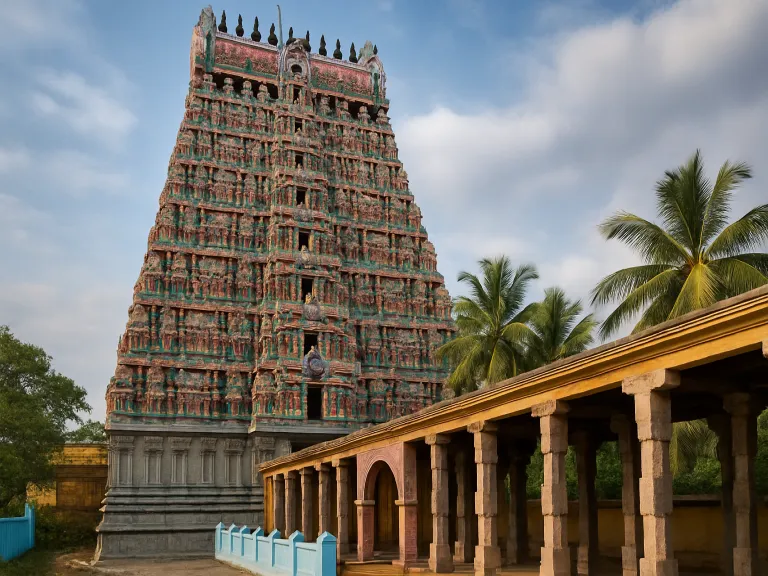
Adi Kumbeswarar Temple is also known for its large Dravidian temple complex, towering gopurams, multiple prakarams, and shrines dedicated to various deities. The temple preserves layers of Chola, Vijayanagara, and Nayak-period religious patronage. For visitors, it represents both a living sacred site and an important monument in the temple culture of the Kaveri delta.
ℹ️Temple Information
🛕
Presiding Deity
Adi Kumbeswarar
⭐
Temple Type
Shaiva temple, Paadal Petra Sthalam, Dravidian temple, Mahamaham-associated temple
📅
Built Period
Documented by the 7th century CE in Tevaram hymns; major structural development from the Chola period, with later additions.
🏛
Dynasty
Chola dynasty, with later Vijayanagara and Nayak patronage.
Need Help Planning your visit to
Adi Kumbeswarar Temple?
Our travel experts can help you with transportation,
darshan timings, nearby sightseeing and complete temple tour planning.
⭐Temple Significance
Adi Kumbeswarar Temple is one of the most important Shiva temples in Kumbakonam and a Paadal Petra Sthalam praised in the Tevaram. It is central to the sacred origin mythology of Kumbakonam and is closely connected with the Mahamaham festival. The temple is significant for its antiquity, Shaiva worship, Dravidian architecture, and continuing role in the religious life of the Kaveri delta.
📜History
Adi Kumbeswarar Temple is historically associated with the ancient town of Kumbakonam, known in early Tamil sacred literature as Kudamooku. The temple is celebrated in the Tevaram hymns of the 7th-century Shaiva saints, including Appar and Sambandar, confirming its importance as an established Shiva shrine by the early medieval period. This literary evidence places the temple among the important Paadal Petra Sthalams of the Chola country.
The existing temple complex contains architectural and inscriptional evidence from the Chola period, when the Kaveri delta became a major centre of temple building, land endowments, and Shaiva worship. The Cholas supported many temples in and around Kumbakonam, and Adi Kumbeswarar Temple grew as part of this sacred urban network. Later rulers and local patrons continued to add halls, gopurams, mandapams, and subsidiary shrines.
The temple also received additions during the Vijayanagara and Nayak periods, which shaped much of the present monumental appearance of the complex. Its large rajagopuram, spacious corridors, festival mandapams, and sculptural features reflect this later phase of temple expansion. While the original foundation cannot be assigned to a single historically verified builder, the temple’s development is firmly documented through Shaiva literature, Chola-period patronage, and later South Indian temple-building traditions.
🕉️Mythology
The mythology of Adi Kumbeswarar Temple is central to the sacred identity of Kumbakonam. In the local puranic tradition, at the end of a cosmic cycle, Brahma preserved the seeds of creation, the Vedas, and sacred essences in a divine pot, or kumbha. During the great deluge, this pot floated across the cosmic waters and came to rest at the place now known as Kumbakonam.
Shiva appeared and broke the pot, releasing the life-giving contents that would begin a new cycle of creation. The nectar and sacred materials from the pot formed the lingam worshipped as Adi Kumbeswarar. This myth explains both the name of the deity and the name of the town. Kumbakonam is understood in this sacred narrative as the place where the kumbha was opened and creation was renewed.
The goddess Mangalambikai is worshipped as the divine consort of Adi Kumbeswarar and as a source of auspiciousness and grace. The temple’s association with the Mahamaham festival is also linked to the sanctity of Kumbakonam’s waters and the belief that sacred rivers gather in the town during the festival cycle. These mythological traditions continue to shape worship, pilgrimage, and festival practice at the temple.
🏛Architecture
Adi Kumbeswarar Temple is a large Dravidian-style temple complex built around the shrine of Lord Shiva as Adi Kumbeswarar. The temple is known for its prominent eastern rajagopuram, multiple prakarams, pillared halls, subsidiary shrines, and sculptural features typical of major Tamil Shaiva temples. The layout follows the South Indian temple pattern, with the sanctum at the ritual centre and successive enclosures guiding devotees through circumambulation and worship.
The main deity is worshipped in the sanctum as a Shiva lingam connected with the kumbha myth of Kumbakonam. The goddess Mangalambikai has a separate shrine within the complex. Other shrines and images in the temple include forms of Ganesha, Murugan, Nataraja, Chandikeswarar, and other deities associated with Shaiva worship. The temple also has mandapams used for rituals, festivals, and processional arrangements.
The architectural history of the temple shows successive phases of construction and renovation. Chola-period religious importance is reflected in its sacred status and inscriptions, while later Vijayanagara and Nayak contributions are visible in the expanded halls, gopurams, and ornamental stonework. The temple’s sculptural programme, high gateway towers, and festival spaces demonstrate the continuity of temple architecture in the Kaveri delta from the medieval period into the early modern period.
🌳
Sacred Features
💧 Temple Tank
Potramarai Kulam
The temple is associated with the sacred Potramarai Kulam, or Golden Lotus tank, in Kumbakonam’s sacred geography. The town’s wider ritual importance is also connected with the Mahamaham tank.
✨
Temple Highlights
✨
Paadal Petra Sthalam
The temple is praised in the Tevaram hymns of the Nayanmars and is counted among the sacred Shaiva Paadal Petra Sthalams.
✨
Sacred origin of Kumbakonam
The temple is linked to the mythology of the cosmic kumbha from which Kumbakonam derives its sacred identity.
✨
Adi Kumbeswarar Lingam
The presiding deity is worshipped as Adi Kumbeswarar, the Shiva lingam associated with the nectar-filled pot of creation.
✨
Mangalambikai Shrine
The goddess Mangalambikai is worshipped as the consort of Adi Kumbeswarar and as a form of auspicious divine grace.
✨
Mahamaham connection
The temple is one of the major shrines visited by pilgrims during the Mahamaham festival in Kumbakonam.
✨
Dravidian temple complex
The temple features gopurams, prakarams, mandapams, subsidiary shrines, and sculptural elements representing the temple architecture of the Kaveri delta.
🙏
Spiritual Benefits
Worship of Lord Shiva for inner purification and devotion
Seeking the grace of Mangalambikai for auspiciousness and family welfare
Participation in Mahamaham-related worship for sacred merit
Prayers for renewal and spiritual beginnings, reflecting the kumbha mythology
Observance of Pradosham for Shiva worship
Offering worship during Maha Shivaratri for devotion and discipline
Circumambulation and darshan for peace of mind
🎉
Major Festivals
🎉
Mahamaham
The great Kumbakonam festival held once in twelve years is closely connected with the sacred waters of the town. Adi Kumbeswarar Temple is among the major shrines visited by pilgrims during this period.
🎉
Masi Magam
Masi Magam is an important annual sacred bathing and worship occasion in Kumbakonam, associated with the town’s temple and tank traditions.
🎉
Maha Shivaratri
Maha Shivaratri is observed with special worship of Lord Shiva, devotional observances, and extended temple activity.
🎉
Panguni Festival
The annual Brahmotsavam of the temple is associated with processions and festival worship during the Tamil month of Panguni.
🎉
Pradosham
Pradosham, observed twice a lunar month, is an important time for Shiva worship at the temple.
🎉
Arudra Darshan
Arudra Darshan is associated with the worship of Lord Shiva as Nataraja and is observed in Shaiva temples.
🎉
Navaratri
Navaratri is observed with special worship of the goddess Mangalambikai.
🪔
Special Poojas
🪔
Pradosham Pooja
Special worship of Lord Shiva is performed during Pradosham, an important observance in Shaiva temples.
🪔
Maha Shivaratri Worship
Maha Shivaratri is marked by special pujas and devotional worship dedicated to Lord Shiva.
🪔
Somavara Pooja
Mondays are considered especially sacred for Shiva worship, and devotees visit the temple for darshan and offerings.
🪔
Abhishekam and Archana
Temple worship includes regular abhishekam and archana as part of Shaiva ritual practice.
🪔
Festival Procession Worship
During major festivals, the processional deities are worshipped and taken in procession according to temple custom.
🚗
How to Reach
🛣️
By Road
Kumbakonam is well connected by road with Thanjavur, Mayiladuthurai, Tiruchirappalli, and Chennai. The temple is located within Kumbakonam town and can be reached by local transport.
🚆
By Rail
Kumbakonam Railway Station is the nearest major railhead, with train connections to cities in Tamil Nadu and other regions.
✈️
By Air
The nearest major airport is Tiruchirappalli International Airport. From there, Kumbakonam can be reached by road or rail.
💡
Visitor Tips
Confirm the current temple timings before visiting, especially on festival days.
Expect heavy crowds during Mahamaham, Masi Magam, Maha Shivaratri, and major local festivals.
Remove footwear before entering the temple premises.
Wear modest clothing suitable for a place of worship.
Allow time to visit the main shrine, goddess shrine, and inner prakarams.
Kumbakonam has several important temples nearby, so plan the visit route in advance.
Use local transport or walk within central Kumbakonam, where many temples are located close to one another.
Maintain silence and follow the instructions of temple staff during rituals and processions.

 WhatsApp Us