🛕About Temple
Kal Garuda Perumal Koil, more widely known as Nachiyar Koil or Thirunaraiyur Nambi Temple, is a revered Vishnu temple at Nachiyar Koil near Kumbakonam in Tamil Nadu. The temple is one of the 108 Divya Desams, the sacred shrines of Vishnu celebrated in the Nalayira Divya Prabandham. Its presiding deity is Thirunaraiyur Nambi, also identified with Srinivasa Perumal, and the goddess is Vanjulavalli Nachiyar.
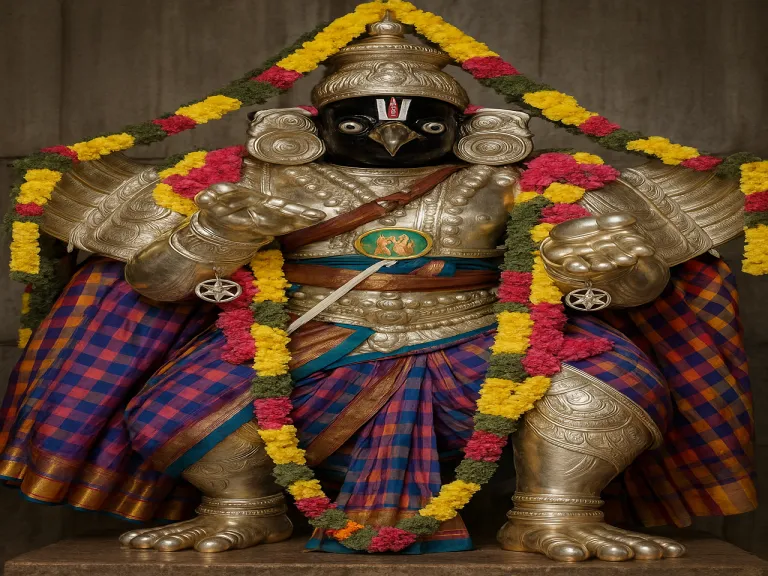
The temple is especially famous for the stone image of Garuda, popularly called Kal Garuda. Unlike many Vishnu temples where the presiding Lord is the focus of public identity, this shrine is called Nachiyar Koil because the goddess is given exceptional prominence in worship and festival tradition. The divine couple is central to the temple’s identity, and the shrine is associated with marriage, surrender, and the grace of Mahalakshmi.
Located in the Kumbakonam temple region, Nachiyar Koil is an important pilgrimage destination for Sri Vaishnava devotees and visitors interested in Tamil temple heritage. Its literary importance comes from the hymns of Tirumangai Alvar, while its living ritual fame comes from Kal Garuda Sevai, during which the stone Garuda is taken in procession. The temple combines Divya Desam sanctity, Chola-period associations, and continuing Vaishnava worship in a compact but spiritually significant complex.
ℹ️Temple Information
🛕
Presiding Deity
Thirunaraiyur Nambi
👸
Goddess
Vanjulavalli Nachiyar
⭐
Temple Type
Divya Desam, Vishnu temple, Sri Vaishnava temple, Dravidian temple, Garuda shrine
📅
Built Period
Early Chola period; the site is documented in early medieval Tamil Vaishnava devotional literature
🙏
Sampradaya
Sri Vaishnava tradition
Need Help Planning your visit to
Kal Garuda Perumal Koil?
Our travel experts can help you with transportation,
darshan timings, nearby sightseeing and complete temple tour planning.
⭐Temple Significance
Nachiyar Koil is significant as one of the 108 Divya Desams, as the shrine where Vanjulavalli Nachiyar receives exceptional prominence, and as the home of the famed stone Kal Garuda. It is praised by Tirumangai Alvar and remains a major Vaishnava pilgrimage temple in the Kumbakonam region.
📜History
Nachiyar Koil is historically important as Thirunaraiyur, one of the celebrated Divya Desams of the Tamil Vaishnava tradition. The shrine is praised by Tirumangai Alvar in the Nalayira Divya Prabandham, placing it within the early medieval devotional landscape of Tamil Nadu. The temple’s sacred status is therefore supported not only by later temple practice but also by the canonical Tamil hymns of the Alvars.
Temple tradition attributes the construction of the shrine to Kochengat Chola, the early Chola king remembered in Tamil religious memory for building elevated temples. Nachiyar Koil is counted among the temples associated with him. The present temple also reflects phases of renovation, patronage, and expansion that occurred under later Tamil dynasties and local rulers, as is common with major temples in the Kumbakonam region.
The name Nachiyar Koil, meaning the temple of the goddess, reflects an enduring ritual feature: Vanjulavalli Nachiyar receives special prominence along with Thirunaraiyur Nambi. The temple’s fame grew through its Divya Desam status, its association with Tirumangai Alvar, and the unique Kal Garuda shrine. Over time, the temple became an important stop in the Kumbakonam pilgrimage circuit, linking Vaishnava devotion, Tamil sacred literature, and Chola-period temple culture.
🕉️Mythology
The mythology of Nachiyar Koil centers on Vanjulavalli Nachiyar and the manifestation of Vishnu as Thirunaraiyur Nambi. In temple tradition, the goddess appeared under the vanjula or magizha tree and was raised with devotion by Sage Medhavi. Vishnu came to the sacred place and married her, establishing the shrine as a kalyana kshetra, a temple associated with divine marriage and the blessings of the goddess.
The temple tradition also explains why the shrine is called Nachiyar Koil. Vanjulavalli Nachiyar is honored with special prominence, and the Lord is worshipped with her in a way that emphasizes the compassionate role of Mahalakshmi. Devotees understand this as a sacred reminder that divine grace is approached through the motherly intercession of the goddess. The temple’s ritual culture therefore gives the goddess a highly visible and respected position.
Kal Garuda is central to the temple’s local sacred narrative. The stone Garuda is regarded as a powerful manifestation of Garuda, the vehicle and devotee of Vishnu. During processions, the number of bearers increases as the deity is carried outward and decreases on the return, a feature that devotees connect with Garuda’s divine power. This belief forms one of the most distinctive living traditions of the temple.
🏛Architecture
Nachiyar Koil is built in the Dravidian temple style of Tamil Nadu, with a rajagopuram, enclosed prakarams, mandapas, and separate shrines arranged around the sanctum. The temple follows the spatial rhythm typical of major Vishnu temples in the Kumbakonam region, combining axial movement, circumambulation, and festival space. The sanctum enshrines Thirunaraiyur Nambi with Vanjulavalli Nachiyar, reinforcing the shrine’s identity as a temple where the divine couple is worshipped together.
A notable architectural and ritual feature is the separate shrine for Kal Garuda. The Garuda image is carved in stone and is the most famous icon of the temple after the presiding deities. The shrine is closely connected with festival processions, especially Kal Garuda Sevai. The temple also contains shrines and spaces associated with the Vaishnava pantheon, supporting daily worship, festival preparation, and circumambulation by devotees.
The temple is associated with the concept of a mada koil, an elevated temple form connected in Tamil tradition with Kochengat Chola. Its built form has undergone repairs and additions through the centuries, but it preserves the essential elements of a South Indian Vaishnava temple: gateway tower, sacred enclosure, main sanctum, goddess prominence, Garuda shrine, temple tank tradition, and festival mandapas. The architecture serves both liturgical worship and the large public spectacle of Garuda processions.
🌳
Sacred Features
🌳 Temple Tree
Vanjula tree
The vanjula tree is associated in temple tradition with the appearance of Vanjulavalli Nachiyar and the sacred mythology of the shrine.
💧 Temple Tank
Manimuktha Pushkarini
Manimuktha Pushkarini is the sacred temple tank associated with Nachiyar Koil and is part of the temple’s Divya Desam tradition.
✨
Temple Highlights
✨
Kal Garuda shrine
The temple is renowned for its stone Garuda, known as Kal Garuda, who has a separate shrine and is central to the temple’s festival identity.
✨
Divya Desam status
Nachiyar Koil is one of the 108 Divya Desams praised in the Nalayira Divya Prabandham by Tirumangai Alvar.
✨
Prominence of Nachiyar
Vanjulavalli Nachiyar receives exceptional importance, giving the temple its name Nachiyar Koil, meaning the temple of the goddess.
✨
Thirunaraiyur Nambi
The presiding deity is Vishnu as Thirunaraiyur Nambi, also identified with Srinivasa Perumal, worshipped with Vanjulavalli Nachiyar.
✨
Kumbakonam pilgrimage circuit
The temple lies near Kumbakonam, a region dense with historic Saiva and Vaishnava temples.
🙏
Spiritual Benefits
Devotees seek the grace of Thirunaraiyur Nambi for protection and prosperity.
Devotees worship Vanjulavalli Nachiyar for compassion, family harmony, and auspiciousness.
The temple is visited by couples and families seeking blessings connected with marriage and domestic well-being.
Worship of Kal Garuda is associated by devotees with courage, relief from obstacles, and protection.
Pilgrimage to this Divya Desam is valued as part of Sri Vaishnava devotional practice.
Recitation and remembrance of the Alvar hymns at the shrine are considered spiritually meritorious.
🎉
Major Festivals
🎉
Kal Garuda Sevai
The most famous festival event of the temple, when the stone Garuda is taken in procession with Thirunaraiyur Nambi. The procession is the temple’s distinctive public tradition.
🎉
Brahmotsavam
The annual Brahmotsavam includes major processions and worship for the presiding deities, with Garuda Sevai forming an important highlight.
🎉
Panguni Uthiram
Panguni Uthiram is associated with divine wedding traditions in Vishnu temples and is observed with worship connected to Thirunaraiyur Nambi and Vanjulavalli Nachiyar.
🎉
Vaikunta Ekadasi
Vaikunta Ekadasi is an important Vaishnava festival observed with special worship and increased devotee participation.
🪔
Special Poojas
🪔
Kal Garuda worship
Special worship is offered to Kal Garuda, the temple’s famed stone Garuda, especially in connection with festival processions.
🪔
Thirukalyana Utsavam
The divine wedding theme of Thirunaraiyur Nambi and Vanjulavalli Nachiyar is central to the temple’s sacred tradition and festival worship.
🪔
Archana to Thirunaraiyur Nambi and Vanjulavalli Nachiyar
Devotees offer archana to the presiding deity and Nachiyar seeking blessings for family welfare, auspiciousness, and devotion.
🚗
How to Reach
🛣️
By Road
Nachiyar Koil is accessible by road from Kumbakonam through local buses, taxis, and auto-rickshaws. It lies on the Kumbakonam-Thiruvarur side of the regional temple circuit.
🚆
By Rail
Kumbakonam Railway Station is the nearest major railhead. From the station, visitors can reach Nachiyar Koil by road.
✈️
By Air
The nearest major airport is Tiruchirappalli International Airport. From the airport, travellers can continue by road or rail via Kumbakonam.
💡
Visitor Tips
Confirm current opening hours with the temple before travelling, especially on festival days.
Expect larger crowds during Kal Garuda Sevai and major Vaishnava festivals.
Dress modestly and be prepared to leave footwear outside the temple entrance.
Carry cash for offerings, archana tickets, and local transport where digital payments may not be available.
Respect temple photography restrictions and ask temple authorities before taking photos.
Plan nearby temple visits in the Kumbakonam region to make efficient use of travel time.
During festival processions, follow the directions of temple staff and volunteers.

 WhatsApp Us