🛕About Temple
Naganatha Swamy Temple at Thirunageshwaram, near Kumbakonam in Tamil Nadu, is a major Shiva temple and one of the best-known Navagraha temples of the Cauvery delta. The presiding deity is Lord Shiva as Naganathaswamy, worshipped in the form of a Shiva Linga. The temple is also called Thirunageswaram Rahu Sthalam because of its strong association with Rahu, one of the nine planetary deities in Hindu worship.
The temple is counted among the Paadal Petra Sthalams, the sacred Shiva temples praised in the Tevaram hymns of the Tamil Saiva Nayanmars. This places the shrine within the early devotional history of Tamil Saivism and connects it to the sacred geography of the Chola country. The temple continues to function as an active place of worship with daily pujas for Naganathaswamy, the goddess, and Rahu Bhagavan.
Thirunageshwaram is especially visited by devotees who perform Rahu-related worship, including milk abhishekam to Rahu Bhagavan. The temple is also significant for the shrine of Goddess Giri Gujambikai, who is worshipped along with forms associated with Lakshmi and Saraswati. Located close to Kumbakonam and other ancient temples, Naganatha Swamy Temple is both a pilgrimage centre and an important monument in the living temple tradition of Tamil Nadu.
ℹ️Temple Information
🛕
Presiding Deity
Naganathaswamy
👸
Goddess
Giri Gujambikai
⭐
Temple Type
Shiva temple, Paadal Petra Sthalam, Navagraha temple, Rahu Sthalam, Dravidian temple
📅
Built Period
10th century CE, with later medieval additions
🏛
Dynasty
Chola dynasty; later Vijayanagara and Nayak patronage
Need Help Planning your visit to
Sri Naganatha Swamy Temple?
Our travel experts can help you with transportation,
darshan timings, nearby sightseeing and complete temple tour planning.
⭐Temple Significance
Naganatha Swamy Temple is significant as a Paadal Petra Sthalam praised in the Tevaram hymns, a major Shiva temple of the Chola country, and the Rahu Sthalam among the Navagraha temples of Tamil Nadu. It is especially known for Rahu worship and the milk abhishekam performed for Rahu Bhagavan.
📜History
The sacred site of Thirunageshwaram is older than the surviving stone temple, as it is praised in the Tevaram hymns of the Tamil Saiva saints. The hymnal record shows that the shrine was an established Shiva temple during the early medieval period of Tamil devotional religion. Its inclusion among the Paadal Petra Sthalams gives it a firm place in the religious history of the Cauvery region.
The present structural temple is widely associated with the Chola period. The earliest major stone phase is generally attributed to the medieval Cholas, with Aditya Chola I often connected with the temple’s early construction history. Chola-period inscriptions and later records indicate grants and endowments for worship, lamps, festivals, and temple maintenance. The temple’s location in the fertile Kumbakonam region made it part of a dense network of Chola-supported Saiva shrines.
Later additions and repairs were made under subsequent South Indian rulers and local patrons, including later Chola, Vijayanagara, and Nayak-period contributors. These phases helped expand the temple complex with mandapas, enclosure walls, gopurams, and separate shrines. Over time, the Rahu shrine became one of the most visited parts of the temple, strengthening Thirunageshwaram’s identity as the Rahu Sthalam among the Navagraha temples of Tamil Nadu.
🕉️Mythology
The mythology of Thirunageshwaram is centred on serpents, Shiva, and Rahu. According to the temple’s sacred tradition, serpent beings worshipped Lord Shiva at this place and received divine grace. The name Thirunageshwaram is connected with Naga worship, and the presiding deity Naganathaswamy is understood as Shiva who granted blessings to the Nagas.
A well-known tradition links the temple with Rahu, the shadow planet of Hindu astrology. Rahu is said to have worshipped Shiva here to obtain relief from affliction and to receive divine favour. Because of this association, Thirunageshwaram became the Rahu Sthalam among the nine Navagraha temples. Devotees visit the temple for Rahu-related prayers, especially during Rahu Kalam, and offer milk abhishekam to Rahu Bhagavan.
The temple is also associated with Goddess Giri Gujambikai, who is venerated in a distinct shrine. The goddess is worshipped as a powerful form of Shakti and is connected in temple tradition with wisdom, prosperity, and protection. The presence of Rahu Bhagavan with his consorts Nagavalli and Nagakanni further reflects the temple’s serpent-related mythology. These narratives are part of the living religious tradition of the shrine and are distinct from the historically documented phases of temple construction.
🏛Architecture
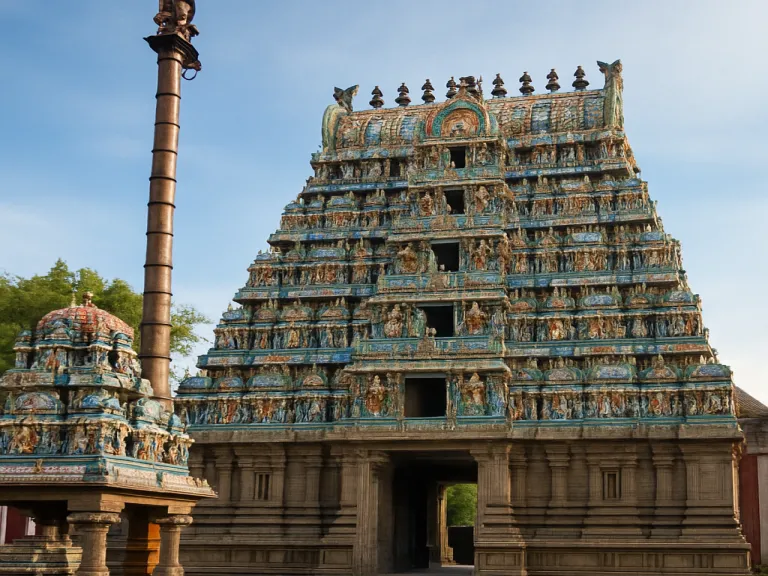
Naganatha Swamy Temple is built in the Dravidian temple style typical of the Chola country, with later additions from subsequent periods. The complex has enclosed prakaram spaces, gateway towers, pillared halls, subsidiary shrines, and a central sanctum for Lord Naganathaswamy. The main deity is enshrined as a Shiva Linga, and the axial layout includes the usual elements of a Saiva temple such as Nandi, balipeeta, mandapas, and circumambulatory passages.
The temple contains separate shrines for the goddess and for several deities connected with Saiva worship. The shrine of Goddess Giri Gujambikai is an important architectural and devotional feature, and the Rahu shrine is one of the most visited spaces in the complex. Rahu Bhagavan is represented with his consorts Nagavalli and Nagakanni, and the shrine is arranged to accommodate special abhishekam worship, especially during Rahu Kalam.
The architecture reflects multiple periods of patronage. Chola-period features are visible in the stone core and sacred layout, while later mandapas, enclosure works, and decorative elements show the contribution of later South Indian temple-building traditions. Sculptural panels, carved pillars, deity niches, and ritual pathways support the temple’s function as both a historical monument and an active pilgrimage centre. The temple’s scale and organization reflect the ritual importance of Thirunageshwaram within the Kumbakonam temple region.
🌳
Sacred Features
🌳 Temple Tree
Shenbaga tree
The Shenbaga tree is associated with the temple as the sthala vriksha.
💧 Temple Tank
Surya Pushkarini
Surya Pushkarini is the sacred temple tank associated with Thirunageshwaram.
✨
Temple Highlights
✨
Rahu Sthalam
Thirunageshwaram is the Rahu temple among the Navagraha temples of Tamil Nadu and is visited for Rahu-related worship.
✨
Paadal Petra Sthalam
The temple is one of the sacred Shiva shrines praised in the Tevaram hymns of the Tamil Saiva Nayanmars.
✨
Rahu Milk Abhishekam
The milk abhishekam to Rahu Bhagavan is one of the best-known rituals performed at the temple.
✨
Giri Gujambikai Shrine
The temple has an important shrine for Goddess Giri Gujambikai, worshipped as a powerful form of Shakti.
✨
Chola Temple Heritage
The temple belongs to the historic Chola temple region around Kumbakonam and preserves elements of medieval Dravidian architecture.
🙏
Spiritual Benefits
Devotees pray for relief from Rahu dosha.
Devotees pray for relief from Naga dosha.
Devotees seek removal of obstacles caused by adverse planetary influences.
Devotees pray for peace of mind and spiritual clarity.
Devotees seek blessings for marriage-related concerns.
Devotees pray for family welfare and prosperity.
Devotees worship Lord Shiva for grace, protection, and liberation.
Devotees worship Goddess Giri Gujambikai for strength and wellbeing.
🎉
Major Festivals
🎉
Maha Shivaratri
Maha Shivaratri is observed with special worship to Lord Naganathaswamy.
🎉
Pradosham
Pradosha worship is observed regularly for Lord Shiva and is attended by devotees seeking Shiva’s grace.
🎉
Arudra Darshan
Arudra Darshan in the Tamil month of Margazhi is an important Shaiva observance connected with Lord Shiva.
🎉
Navaratri
Navaratri is observed with special worship for Goddess Giri Gujambikai.
🎉
Rahu Peyarchi
The transit of Rahu is an important occasion for devotees who visit the temple for Rahu-related worship.
🪔
Special Poojas
🪔
Rahu Milk Abhishekam
Milk abhishekam is performed for Rahu Bhagavan, especially during Rahu Kalam.
🪔
Rahu Kalam Pooja
Devotees offer prayers to Rahu Bhagavan during Rahu Kalam for relief from Rahu-related afflictions.
🪔
Pradosha Pooja
Special worship is performed for Lord Shiva during Pradosham.
🪔
Abhishekam to Naganathaswamy
Ritual abhishekam is performed to Lord Naganathaswamy as part of regular Shiva worship.
🪔
Giri Gujambikai Amman Pooja
Special worship is offered to Goddess Giri Gujambikai by devotees seeking protection and wellbeing.
🚗
How to Reach
🛣️
By Road
Thirunageshwaram is near Kumbakonam and is accessible by road from Kumbakonam, Thanjavur, Mayiladuthurai, and other towns in the Cauvery delta.
🚆
By Rail
The nearest major railway station is Kumbakonam Railway Station, which has rail connections to major towns and cities in Tamil Nadu.
✈️
By Air
The nearest airport is Tiruchirappalli International Airport. From there, the temple can be reached by road via Thanjavur and Kumbakonam.
💡
Visitor Tips
Check the current temple timings before travelling, as timings can change on festival days.
If visiting for Rahu worship, plan around the Rahu Kalam period.
Expect larger crowds on Sundays, festival days, and during special Rahu abhishekam times.
Wear modest clothing appropriate for a traditional Hindu temple.
The temple is close to Kumbakonam, so it can be combined with visits to nearby ancient temples.
Allow additional time for darshan if special abhishekam or festival rituals are in progress.
Follow temple staff instructions regarding queues, offerings, and restricted areas.
Confirm photography rules at the temple before taking photographs.

 WhatsApp Us