🛕About Temple
Gomathi Amman Temple at Sankarankovil is one of the best-known sacred centres of southern Tamil Nadu and forms an integral part of the Sankaranarayanar Temple complex. The temple is located in Sankarankovil in Tenkasi district and is especially revered for the shrine of Goddess Gomathi Amman, who is worshipped along with Sankaranarayanar, the united form of Shiva and Vishnu, and Sankaralinga Swamy.
The temple is closely associated with the theological idea that Shiva and Vishnu are not opposing deities but manifestations of the same supreme reality. This idea is expressed in the unique icon of Sankaranarayanar, in which one half represents Shiva and the other half represents Vishnu. Gomathi Amman occupies a central devotional place because the mythology of the temple connects her penance with the manifestation of this combined form.
Sankarankovil is also famous for the Aadi Thabasu festival, when the penance of Gomathi Amman is ritually remembered. Devotees visit the temple for darshan of the Goddess, worship of Sankaranarayanar, and the sacred puttru mann, the ant-hill soil given as prasadam. The shrine continues to be an important pilgrimage destination for devotees from Tirunelveli, Tenkasi, Virudhunagar, Madurai and other parts of Tamil Nadu.
ℹ️Temple Information
🛕
Presiding Deity
Sankaranarayanar
⭐
Temple Type
Shiva temple, Amman temple, Sankaranarayanar temple, Dravidian temple, Pandya-period temple
📅
Built Period
11th century CE; commonly recorded as 1022 CE
Need Help Planning your visit to
Arulmigu Gomathi Amman Temple?
Our travel experts can help you with transportation,
darshan timings, nearby sightseeing and complete temple tour planning.
⭐Temple Significance
The temple is significant for its unique worship of Sankaranarayanar, the combined form of Shiva and Vishnu, and for the prominent shrine of Goddess Gomathi Amman. It is one of the most important pilgrimage centres of southern Tamil Nadu and is especially known for the Aadi Thabasu festival and the sacred puttru mann prasadam.
📜History
The history of the Gomathi Amman shrine is inseparable from the Sankaranarayanar Temple of Sankarankovil. The foundation of the temple is widely attributed in temple tradition and regional historical accounts to the Pandya ruler Ukkira Pandyan. The commonly recorded date for the establishment of the temple is 1022 CE, placing its origin in the early medieval Pandya period, when temple building and endowments formed an important part of royal religious life in the Tamil country.
The temple developed as a major Pandya-period sacred centre dedicated to Shiva, Vishnu in the composite Sankaranarayanar form, and Gomathi Amman. The name Sankarankovil itself is derived from Sankaran, a name of Shiva, and kovil, meaning temple. Over time the settlement around the shrine grew into a prominent temple town. The presence of separate shrines for Sankaralinga Swamy, Sankaranarayanar and Gomathi Amman reflects the layered devotional identity of the temple.
Later centuries saw continued worship, festival observances and structural maintenance, as happened with many large temples in southern Tamil Nadu. The temple remains under the living ritual tradition of Tamil Hindu worship rather than being only an archaeological monument. Its historical importance rests not only on its Pandya association but also on its role in expressing Shaiva and Vaishnava harmony through the icon of Sankaranarayanar and the devotional prominence of Gomathi Amman.
🕉️Mythology
The principal mythology of Sankarankovil centres on Goddess Gomathi Amman and the manifestation of Sankaranarayanar. In the temple’s sacred narrative, Gomathi Amman undertakes intense tapas, or penance, to receive the vision of Shiva and Vishnu as one divine reality. In response to her penance, the Lord appears as Sankaranarayanar, a single form combining Sankara, Shiva, and Narayana, Vishnu.
This myth gives the temple its distinctive theological meaning. The right and left aspects of the deity are understood as representing the two great devotional streams of Hindu worship, Shaivism and Vaishnavism, united in one form. The story is not presented as political history but as sacred mythology explaining the temple’s central icon and the special position of Gomathi Amman within the complex. Her penance is remembered most prominently during the Aadi Thabasu festival.
Another well-known devotional association of the temple is the sacred puttru mann, or ant-hill soil, distributed as prasadam. Devotees hold this prasadam in special reverence and connect it with healing and protection, especially in relation to physical ailments. The temple is also associated with serpent imagery through the sacred tank Nagasunai and local mythic memory connected with naga worship. These elements together make the temple a place where Goddess worship, Shaiva devotion, Vaishnava symbolism and folk sacred traditions meet.
🏛Architecture
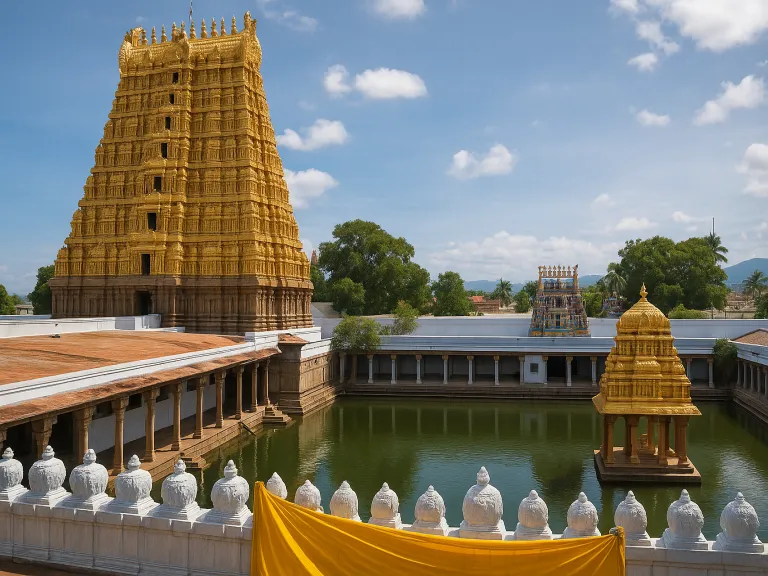
The temple follows the broad Dravidian architectural idiom seen in major temples of southern Tamil Nadu. Its layout is organized around enclosed precincts, gopuram entrances, pillared halls, circumambulatory passages and separate sanctums for the principal deities. The complex is notable for bringing together three important devotional focuses: Sankaralinga Swamy, Sankaranarayanar and Gomathi Amman, each with its own ritual identity within the same sacred enclosure.
The shrine of Sankaranarayanar is the architectural and theological highlight of the temple. The image presents Shiva and Vishnu in a composite form, visually expressing the unity of Sankara and Narayana. Gomathi Amman’s shrine is one of the most visited areas of the complex, and its ritual importance is strongly visible during festivals and special worship. The sacred tank Nagasunai is another important architectural and ritual feature of the temple environment.
The temple’s mandapas, prakara spaces and festival routes support the movement of devotees during daily worship and major celebrations such as Aadi Thabasu. Like many large Tamil temples, the architecture is not only decorative but functional, designed for darshan, procession, circumambulation, offerings and seasonal rituals. The surviving structure represents a living temple that has been maintained and used continuously over centuries, rather than a monument frozen in one historical phase.
🌳
Sacred Features
💧 Temple Tank
Nagasunai
Nagasunai is the sacred tank associated with the Sankarankovil temple complex and is part of the temple’s ritual and mythological landscape.
✨
Temple Highlights
✨
Gomathi Amman Shrine
The shrine of Goddess Gomathi Amman is one of the principal devotional centres of the temple and is closely connected with the mythology of her penance.
✨
Sankaranarayanar Form
The temple is famous for the composite deity Sankaranarayanar, representing Shiva and Vishnu in a single divine form.
✨
Aadi Thabasu Festival
The major festival commemorates the tapas of Gomathi Amman and the manifestation of Sankaranarayanar.
✨
Puttru Mann Prasadam
The sacred ant-hill soil distributed at the temple is deeply revered by devotees and is one of the best-known practices associated with Sankarankovil.
✨
Nagasunai Sacred Tank
Nagasunai is the temple’s sacred tank and forms an important part of the temple’s ritual landscape.
✨
Pandya Association
The temple’s foundation is widely connected with the Pandya ruler Ukkira Pandyan and the early medieval period of Tamil temple history.
🙏
Spiritual Benefits
Blessings of Goddess Gomathi Amman for protection and wellbeing
Worship for harmony and unity through the Sankaranarayanar form
Devotional prayer for relief from suffering and illness
Seeking mental peace through darshan and circumambulation
Prayer for family welfare and prosperity
Participation in Aadi Thabasu for the blessings of the Goddess
Receiving puttru mann prasadam with faith and reverence
🎉
Major Festivals
🎉
Aadi Thabasu
The most important festival of Sankarankovil, observed in the Tamil month of Aadi, commemorates the penance of Gomathi Amman and the manifestation of Sankaranarayanar.
🎉
Maha Shivaratri
Maha Shivaratri is observed as an important occasion for worship of Shiva in the Sankarankovil temple complex.
🎉
Navaratri
Navaratri is a major period of Goddess worship, during which devotees offer special prayers to Gomathi Amman.
🪔
Special Poojas
🪔
Abhishekam
Ritual bathing of the deity is performed as part of temple worship; specific schedules should be confirmed with the temple.
🪔
Archana
Devotees offer archana in the names of individuals or families to seek the blessings of Gomathi Amman and the presiding deities.
🪔
Puttru Mann Prasadam
The sacred ant-hill soil associated with the temple is received by devotees with reverence as prasadam.
🚗
How to Reach
🛣️
By Road
Sankarankovil is connected by road with Tenkasi, Tirunelveli, Rajapalayam, Virudhunagar and Madurai through regular bus and taxi services.
🚆
By Rail
Sankarankovil has a railway station on the regional rail route connecting the town with nearby centres such as Tenkasi and Virudhunagar.
✈️
By Air
The nearest major air connections are through Tuticorin and Madurai airports, from where Sankarankovil can be reached by road or rail.
💡
Visitor Tips
Check current opening hours with the temple or local authorities before visiting, as timings can change on festival days.
Visit early in the day during major festivals to manage crowds more comfortably.
Aadi Thabasu attracts large numbers of devotees, so plan transport and accommodation in advance.
Wear modest clothing suitable for a traditional Hindu temple.
Keep footwear only in designated areas outside the temple premises.
Respect queue systems and local worship practices inside the temple.
Do not photograph inside the temple unless permission is clearly available.
Carry drinking water during summer months, as Sankarankovil can be hot.

 WhatsApp Us