🛕About Temple
Kailaya Sivalayam in the Salem context is most securely associated with the well-known Kailasanathar Shiva temple at Tharamangalam in Salem district, Tamil Nadu. The temple is dedicated to Lord Shiva as Kailasanathar, a name that connects the deity with Kailasa, the sacred abode of Shiva. It is an active Shaiva place of worship and is also valued by visitors for its sculptural workmanship and regional historical associations.
The shrine is especially noted in Salem district heritage descriptions for its stone architecture and intricate carvings connected with the Gatti Mudaliar period. Tharamangalam was an important local centre in the late medieval and early modern history of the region, and the temple reflects the patronage culture of local chiefs who supported temple construction, ritual activity and public religious life.
The temple should be understood as both a living religious site and a heritage monument of local importance. Its sanctum, mandapas and sculptured elements place it within the broad Dravidian temple tradition of Tamil Nadu. While several local beliefs are associated with Shiva worship here, securely documented historical information is clearest in relation to its dedication to Kailasanathar, its association with Tharamangalam and the Gatti Mudaliar chiefs, and its reputation for ornate stone sculpture.
ℹ️Temple Information
🛕
Presiding Deity
Kailasanathar
👸
Goddess
Sivakamasundari
⭐
Temple Type
Shiva temple, Dravidian temple, Living Hindu temple, Heritage temple
📅
Built Period
17th century CE for the major extant works associated with Gatti Mudaliar patronage.
🏛
Dynasty
Gatti Mudaliar chieftains under the wider Vijayanagara-Nayak political milieu of the region.
Need Help Planning your visit to
Kailaya Sivalayam?
Our travel experts can help you with transportation,
darshan timings, nearby sightseeing and complete temple tour planning.
⭐Temple Significance
The temple is significant as a Salem district Shiva shrine associated with Kailasanathar worship, Gatti Mudaliar patronage and notable Dravidian stone sculpture at Tharamangalam. Its importance is regional, historical, artistic and devotional rather than based on a widely documented Tevaram classification.
📜History
The documented history of Kailaya Sivalayam at Salem is closely tied to the Kailasanathar Temple of Tharamangalam. The extant temple is widely associated with the Gatti Mudaliar chiefs, who held influence in the Salem region during the late medieval and early modern period. Mummudi Gatti Mudaliar is commonly connected with major construction and patronage of the temple, although details of earlier sacred activity at the site are not securely established through widely available historical records.
Tharamangalam functioned as an important local centre under the political conditions of the Vijayanagara and Nayak periods, when regional chiefs invested in temples as religious, social and artistic institutions. The Kailasanathar temple belongs to this environment of local patronage, where stone construction, sculptural elaboration and mandapa building became visible expressions of authority and devotion. The temple’s artistic features are therefore important for understanding Salem district’s historical links with post-Chola and Nayak-period temple culture.
Unlike some ancient Tamil Shiva temples, this shrine is not widely documented as one of the Tevaram Paadal Petra Sthalams. Its historical importance rests instead on its regional patronage, sculptural excellence and continuity as a Shiva temple. Any claims about a much earlier origin, precise foundation year or direct rule by a major imperial dynasty should be treated cautiously unless supported by inscriptions or official temple records.
🕉️Mythology
No widely established, textually documented sthala-purana specific to Kailaya Sivalayam at Salem is available in standard public historical summaries. The sacred identity of the temple is primarily expressed through the name Kailasanathar, meaning the Lord of Kailasa. In Shaiva tradition, Kailasa is the divine abode of Lord Shiva, and temples bearing this name present Shiva as the supreme ascetic, cosmic lord and source of liberation.
The mythology connected with the temple is therefore best understood through the broader sacred language of Shaivism rather than through a securely documented local legend. Devotees worship Shiva here in the form of the linga, the aniconic emblem that represents the formless and limitless nature of the deity. The presence of the goddess as Shiva’s consort reflects the inseparable relationship between Shiva and Shakti, a central idea in Tamil temple worship and Saiva devotional practice.
Local oral traditions may exist among priests, residents and regular devotees, but such accounts vary and are not consistently documented in widely accepted historical sources. For an authentic temple profile, mythology should be separated from history: the historical record identifies the shrine with Tharamangalam, Kailasanathar worship and Gatti Mudaliar patronage, while its mythic meaning comes from the larger Shaiva association with Kailasa, Shiva’s grace, sacred ash, abhishekam, pradosha worship and the path of devotion.
🏛Architecture
Kailaya Sivalayam, identified with the Kailasanathar Temple at Tharamangalam, belongs to the Dravidian temple architectural tradition of Tamil Nadu. The temple is built around the sanctum of Lord Shiva, with associated halls and sculptural components that support ritual movement, worship and festival activity. The basic temple arrangement follows the South Indian pattern in which the garbhagriha houses the main deity and the devotee approaches through successive architectural spaces.
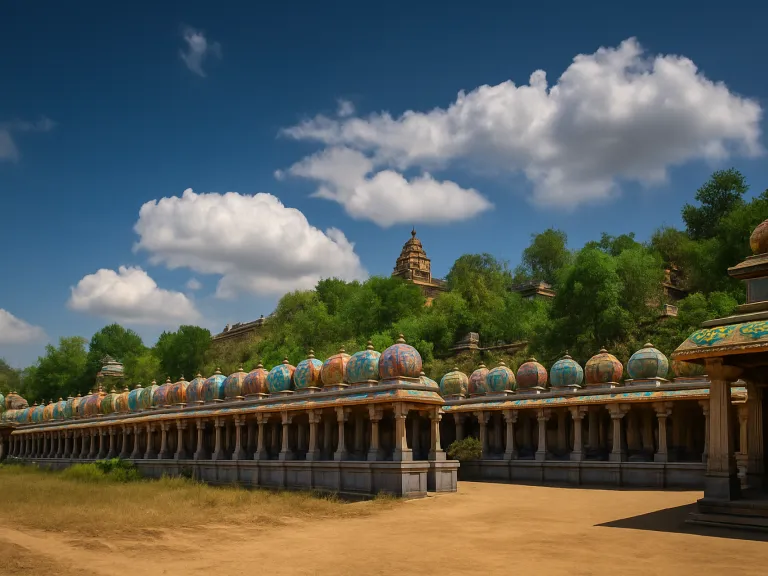
The shrine is especially noted for stone carving and sculptured details. Heritage descriptions of the Tharamangalam Kailasanathar temple often draw attention to its elaborate pillars, yali and equestrian motifs, ornamental stone work and mandapa sculpture. These features are associated with the late medieval and Nayak-period artistic vocabulary of western Tamil Nadu, where craftsmen combined religious iconography with technical skill in hard stone.
The temple’s architecture is important not because of massive scale alone, but because of the refinement of its sculptural programme. The carvings demonstrate the role of temple workshops supported by regional patrons such as the Gatti Mudaliar chiefs. As with many living temples, later maintenance, repainting and ritual additions may coexist with older stone elements. A careful visit should therefore distinguish the historic stone fabric from later devotional and practical additions.
✨
Temple Highlights
✨
Kailasanathar worship
The main deity is Lord Shiva as Kailasanathar, linking the shrine with the sacred Shaiva idea of Kailasa, the abode of Shiva.
✨
Association with Tharamangalam
The temple is connected with Tharamangalam in Salem district, a historically important local centre in western Tamil Nadu.
✨
Gatti Mudaliar patronage
The temple’s major extant construction and embellishment are associated with the Gatti Mudaliar chiefs, especially Mummudi Gatti Mudaliar.
✨
Dravidian stone architecture
The temple follows the South Indian Shiva temple plan with a sanctum, ritual halls and sculptural stone elements.
✨
Noted sculptural work
The shrine is valued for intricate stone carvings, pillars and ornamental motifs associated with regional Nayak-period craftsmanship.
🙏
Spiritual Benefits
Devotees seek the grace of Lord Shiva for inner peace and clarity.
Worshippers offer prayers for removal of obstacles and mental burdens.
Pradosha worship is valued by Shiva devotees for spiritual purification.
Abhishekam to Shiva is regarded as a devotional act of surrender.
Devotees pray for family welfare and harmony.
The temple atmosphere supports meditation and quiet reflection.
Shaiva worship here is associated with devotion to Shiva as Kailasanathar.
🎉
Major Festivals
🎉
Maha Shivaratri
Maha Shivaratri is the principal annual observance dedicated to Lord Shiva across Shaiva temples. Visitors should confirm the temple’s current programme locally.
🎉
Pradosham
Pradosham is a regular Shaiva observance connected with worship of Lord Shiva. Temple-specific timings and arrangements should be confirmed before visiting.
🪔
Special Poojas
🪔
Abhishekam
Ritual bathing of the Shiva linga is a central form of Shiva worship. Availability and timings should be confirmed with the temple.
🪔
Pradosha Pooja
A special worship associated with Pradosham, observed by Shiva devotees. Current arrangements should be checked locally.
🚗
How to Reach
🛣️
By Road
Tharamangalam is connected by road with Salem and nearby towns in Salem district. Visitors can travel from Salem by bus, taxi or private vehicle.
🚆
By Rail
Salem Junction is the major railway station for visitors arriving from other cities. From Salem, onward road transport is required to reach Tharamangalam.
✈️
By Air
Salem Airport is the nearest airport serving the district. Wider flight connectivity is also available through major airports such as Coimbatore and Bengaluru, followed by road or rail travel to Salem.
💡
Visitor Tips
Confirm current opening hours with the temple locally before travelling.
Wear modest clothing appropriate for a Hindu place of worship.
Avoid entering restricted ritual areas unless permitted by temple staff.
Check photography rules at the temple before taking pictures.
Visit during cooler hours of the day for a more comfortable experience.
Festival and Pradosham days may attract more devotees than ordinary weekdays.
Use Salem as the main transport base if travelling from outside the district.
Maintain silence and decorum near the sanctum and during puja.

 WhatsApp Us