🛕About Temple
Madapuram Kaliamman Temple, widely known as Madapuram Bathirakali Amman Temple, is a noted goddess shrine at Madapuram near Thiruppuvanam in Sivaganga district, Tamil Nadu. The temple is closely associated with the worship of Sri Bathirakaliamman and Adaikkalam Katha Ayyanar, a guardian form whose name means the protector of those who seek refuge. Its location near the Vaigai river and its proximity to Madurai make it an important pilgrimage point for devotees from southern Tamil Nadu.
The shrine is especially known for the fierce and protective aspect of Kali worship. Devotees approach Madapuram Kaliamman for courage, justice, protection from harm, and relief from distress. The temple has a strong reputation in local religious life as a place where vows are taken with seriousness, and where devotees seek divine support in matters involving truth and moral accountability. This association gives the temple a distinct identity among Amman shrines of the Madurai region.
Madapuram is not primarily known through royal inscriptions or monumental imperial patronage, but through continuous public devotion and regional memory. The temple represents the living tradition of Tamil guardian-deity and Shakti worship, where Ayyanar and Kali are worshipped as protectors of the settlement and its people. The large horse imagery connected with Ayyanar, the open worship setting, and the intense devotional atmosphere make the temple visually and spiritually distinctive.
ℹ️Temple Information
🛕
Presiding Deity
Adaikkalam Katha Ayyanar
👸
Goddess
Sri Bathirakaliamman
⭐
Temple Type
Shakti temple, Amman temple, Kali temple, Village guardian deity temple
Need Help Planning your visit to
Arulmigu Madapuram Kaliamman Temple?
Our travel experts can help you with transportation,
darshan timings, nearby sightseeing and complete temple tour planning.
⭐Temple Significance
Madapuram Kaliamman Temple is significant as a major regional shrine of Bathirakaliamman and Adaikkalam Katha Ayyanar near Madurai. It is especially revered for protection, justice, truthfulness, and fulfilment of vows. The temple’s identity is shaped by Tamil Shakti worship and guardian-deity traditions rather than by documented royal foundation history.
📜History
The early historical origin of Madapuram Kaliamman Temple is not established through widely available dated inscriptions, copper plates, or securely documented royal records. For that reason, the name of the original builder, the exact foundation period, and a dynastic attribution cannot be stated with historical certainty. The temple is best understood as a long-standing regional shrine rooted in the Tamil religious landscape around Madurai, where Amman and Ayyanar worship have been central to village protection and community ritual life.
Madapuram lies near Thiruppuvanam, an area that has been historically connected with the Pandya cultural region and with the sacred geography of Madurai. While nearby temples such as the Meenakshi Sundareswarar Temple at Madurai and the Pushpavaneswarar Temple at Thiruppuvanam have clearer links to classical temple traditions, Madapuram is chiefly documented through continuing worship, local tradition, and its public importance as a goddess shrine. Its fame grew through devotional practice rather than through known imperial temple-building records.
In recent centuries and modern times, Madapuram Bathirakaliamman has become widely recognized among devotees seeking justice, protection, and fulfilment of vows. The temple is frequently referred to along with Adaikkalam Katha Ayyanar, emphasizing its guardian-deity character. The present temple complex reflects accumulated ritual use, later structural additions, and community-supported worship, but the available public information does not allow a precise chronological reconstruction of its construction history.
🕉️Mythology
The mythology of Madapuram Kaliamman belongs to the living oral and regional tradition of the Madurai area. In local accounts, the place is connected with Lord Shiva and Goddess Meenakshi of Madurai. The divine couple are described as having moved through the region, and the need to protect the settlement led to the manifestation or appointment of guardian powers. In this mythic setting, Adaikkalam Katha Ayyanar and Bathirakaliamman become protectors of Madapuram and of those who come seeking refuge.
The name Adaikkalam Katha Ayyanar is central to the temple’s sacred identity. It conveys the idea of a deity who safeguards people who surrender to him for protection. Bathirakaliamman, worshipped in a fierce form, is regarded in devotional tradition as the power that destroys injustice, falsehood, fear, and hostile forces. The presence of Ayyanar and Kali together reflects a familiar Tamil sacred pattern in which guardian deities stand at the edge of settlement life, protecting moral and physical boundaries.
Another important part of the temple’s religious reputation is the practice of invoking the goddess in matters of truth and justice. Devotees regard vows and statements made before Madapuram Kaliamman as spiritually binding. This belief belongs to the temple’s mythic and devotional world rather than to documented political history. It explains why the shrine is approached with deep seriousness, especially by people praying for the defeat of falsehood and the restoration of fairness.
🏛Architecture
Madapuram Kaliamman Temple combines elements of Tamil Amman worship with the visual language of village guardian-deity shrines. The most striking feature is the large horse form associated with Ayyanar, a sacred motif deeply connected with protection, vigilance, and boundary guardianship in Tamil religious culture. The goddess shrine is experienced in relation to this guardian imagery, giving the temple a character different from large granite temples built around a royal Dravidian plan.
The temple’s architecture emphasizes immediacy of worship rather than elaborate inscriptional or sculptural programs. Bathirakaliamman is worshipped in a powerful and direct visual setting, and the layout allows devotees to approach the goddess with vows and prayers. The Ayyanar association, the horse imagery, and the open devotional spaces express the temple’s role as a protector shrine. The architectural focus is therefore not only on built form, but on the relationship between deity, devotee, vow, and sacred boundary.
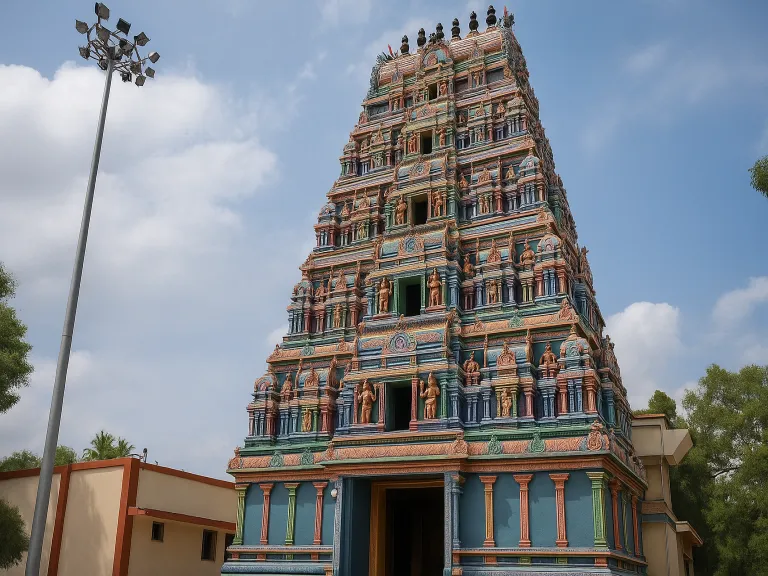
Unlike major medieval temples whose chronology can often be reconstructed from inscriptions, Madapuram’s structural history is not clearly documented in public historical sources. The present complex includes features typical of active Tamil temples, such as shrines, worship areas, processional space, and painted stucco elements. Its authenticity lies in its continuing ritual use, its powerful iconographic identity, and its rootedness in the local sacred geography of Madapuram and the Madurai region.
✨
Temple Highlights
✨
Famous Bathirakaliamman shrine
The temple is widely known for the worship of Sri Bathirakaliamman in a fierce protective form.
✨
Adaikkalam Katha Ayyanar association
The shrine is closely connected with Adaikkalam Katha Ayyanar, the guardian deity whose name signifies protection for those who seek refuge.
✨
Guardian-deity tradition
Madapuram represents the Tamil sacred pattern of village protection through Ayyanar and Amman worship.
✨
Justice and vow reputation
Devotees approach the goddess with prayers connected to truth, justice, protection, and moral accountability.
✨
Distinctive horse imagery
The large horse associated with Ayyanar is one of the temple’s most recognizable visual features.
🙏
Spiritual Benefits
Protection from fear and harmful influences
Courage to face difficult situations
Support in prayers for justice and truth
Relief from distress through surrender to the goddess
Fulfilment of sincere vows
Removal of obstacles through divine grace
Strengthening of faith and moral resolve
🎉
Major Festivals
🎉
Aadi worship
The Tamil month of Aadi is an important period for Amman worship, and devotees visit goddess temples such as Madapuram Kaliamman Temple for special prayers and vows.
🎉
Navaratri
Navaratri is a major Hindu festival dedicated to the Divine Mother, during which devotees worship forms of Shakti including Kali and Amman.
🚗
How to Reach
🛣️
By Road
Madapuram is reached by road from Madurai and Thiruppuvanam. Thiruppuvanam is on the Madurai-Rameswaram route, and local road transport connects the town with Madapuram.
🚆
By Rail
Thiruppuvanam railway station is the nearest rail access point. Madurai Junction is the nearest major railway station with wider connectivity.
✈️
By Air
Madurai Airport is the nearest airport for travellers coming by air, with onward travel by road to Madapuram.
💡
Visitor Tips
Verify the current opening hours with the temple or local sources before travelling.
Plan extra time during Aadi, Navaratri, Fridays, and public holidays because devotee crowds may be higher.
Use Thiruppuvanam or Madurai as practical access points for onward road travel to Madapuram.
Carry drinking water, especially during the hot months in the Madurai-Sivaganga region.
Follow local temple customs and avoid disturbing devotees who are performing vows or prayers.
Keep footwear only in designated areas outside the worship space.
If travelling by public transport, confirm return buses or autos in advance.

 WhatsApp Us