🛕About Temple
Masilamaniswarar Temple at Thirumullaivoyal, in the north-western part of Chennai near Avadi and Ambattur, is an ancient Saiva temple dedicated to Lord Shiva. The presiding deity is worshipped as Masilamaniswarar, a name understood as the Lord who is like a spotless gem. The goddess is Kodiyidai Nayagi, whose shrine forms an important part of the temple’s devotional identity.
The temple is one of the celebrated Paadal Petra Sthalams of Tondai Nadu, the group of Shiva temples praised in the Tevaram hymns. Its importance is especially linked with Saint Sundarar, whose hymn on Thirumullaivoyal places the shrine within the early medieval sacred geography of Tamil Saivism. The temple’s name is associated with the mullai creeper, and the sthala tradition connects the discovery of the Siva linga with a grove of mullai.
A distinctive feature of the temple is the form of the main deity, revered as a self-manifested linga bearing the sacred mark connected with the temple legend. The moolavar is treated as Theenda Thirumeni, a sacred form not ordinarily touched for regular abhishekam. Devotees visit the temple for worship of Masilamaniswarar, darshan of Kodiyidai Nayagi, and the spiritually significant atmosphere of a Tevaram shrine that continues to serve as an active place of worship in Chennai.
ℹ️Temple Information
🛕
Presiding Deity
Masilamaniswarar
👸
Goddess
Kodiyidai Nayagi
⭐
Temple Type
Shiva temple, Paadal Petra Sthalam, Tevaram shrine, Tondai Nadu Shiva shrine
📅
Built Period
At least 7th-8th century CE, as the shrine is praised in the Tevaram hymns of Saint Sundarar.
Need Help Planning your visit to
Arulmigu Masilamaniswarar Temple?
Our travel experts can help you with transportation,
darshan timings, nearby sightseeing and complete temple tour planning.
⭐Temple Significance
Masilamaniswarar Temple is significant as a Paadal Petra Sthalam of Tondai Nadu praised by Saint Sundarar in the Tevaram. It is also noted for the Theenda Thirumeni form of the presiding linga, the mullai creeper legend, the worship of Kodiyidai Nayagi, and the distinctive Nandi tradition associated with the temple mythology.
📜History
Masilamaniswarar Temple is historically important because it is attested in the Tevaram canon, placing the shrine firmly within the early medieval Saiva sacred landscape of Tamil Nadu. Saint Sundarar, one of the three principal Tevaram saints, sang about Thirumullaivoyal. This establishes that the temple was known as a revered Shiva sthalam by the 7th to 8th century CE, before many later structural additions seen in Tamil temples.
The shrine belongs to Tondai Nadu, the northern Tamil region that included many ancient Saiva centres around present-day Chennai, Kanchipuram and adjoining areas. While local tradition connects the temple with a ruler called Tondaiman, the historically verifiable founder of the present structural temple is not clearly established from widely available evidence. The temple’s continuing importance comes from its inclusion among the Paadal Petra Sthalams rather than from a securely documented royal foundation record.
Over the centuries, the temple remained a living Saiva shrine and absorbed the architectural and ritual features typical of Tamil Shiva temples: a sanctum for the main linga, a shrine for the goddess, a Nandi mandapa, circumambulatory spaces and festival observances. The temple is now within the Chennai metropolitan region, but it preserves the identity of an ancient sacred site whose religious status predates the modern city. Its history is best understood through its Tevaram association, sthala purana traditions, and uninterrupted worship of Masilamaniswarar and Kodiyidai Nayagi.
🕉️Mythology
The central mythology of Masilamaniswarar Temple is connected with the mullai creeper and the discovery of the Siva linga. In the sthala tradition, a ruler named Tondaiman was moving through the area when his mount or chariot became entangled in dense mullai growth. When the creepers were cut to clear the way, blood appeared from the spot, revealing the presence of a Siva linga hidden beneath the vegetation.
The king was filled with remorse on realizing that the weapon had struck the sacred linga. Lord Shiva revealed his grace, and the deity came to be worshipped as Masilamaniswarar, the blemishless Lord. The mark associated with this event is central to the temple’s ritual identity. Because of the sacred injury described in the legend, the main deity is revered as Theenda Thirumeni, a form that is not ordinarily touched for routine abhishekam.
Another well-known element of the local tradition relates to Nandi. The temple tradition explains the unusual orientation of Nandi through the story of Shiva sending Nandi to assist Tondaiman in his conflict with hostile forces. This gives the temple a distinctive iconographic and devotional character. These narratives belong to the temple’s sacred mythology and are separate from documented political history; they express the themes of divine presence, royal devotion, repentance, protection and grace associated with Thirumullaivoyal.
🏛Architecture
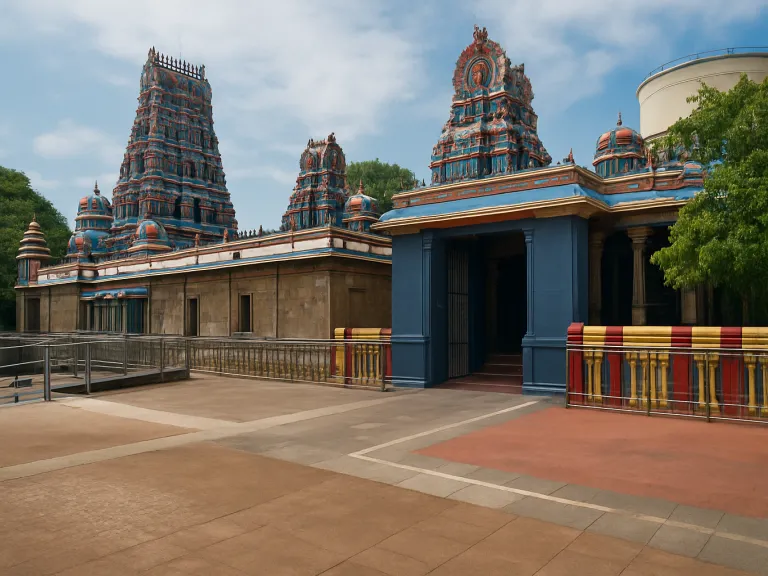
Masilamaniswarar Temple follows the broad layout of a Tamil Saiva temple, with the sanctum of Lord Shiva as the ritual centre and subsidiary spaces arranged for worship, circumambulation and festival activity. The principal deity is housed as a Siva linga, and the goddess Kodiyidai Nayagi has her own shrine within the temple complex. The arrangement reflects the standard devotional pairing of Shiva and Ambal in Tamil temple worship.
The temple’s architectural experience is shaped by its sacred legend as much as by its physical plan. The moolavar is worshipped as Theenda Thirumeni, and the linga is associated with the mark caused in the temple mythology. Regular worship therefore emphasizes the special sanctity of the deity’s form. The presence and orientation of Nandi are also significant, because the temple tradition connects Nandi with the protection of Tondaiman. These features make the temple distinct among the Shiva shrines of the Chennai region.
The complex includes the familiar elements of a Dravidian temple: entrance structures, mandapas, prakara space, the sanctum, shrines for attendant deities and ritual areas used during daily worship and festivals. The temple does not function as a monument alone; it remains an active shrine where architecture supports living worship. Its stone forms, sacred images and processional spaces preserve the continuity of Tamil Saiva temple culture, while the Tevaram connection gives the site an importance beyond its local setting.
🌳
Sacred Features
🌳 Temple Tree
Mullai
The mullai creeper is central to the temple’s name and mythology. The sthala tradition connects the discovery of the Siva linga with mullai growth at Thirumullaivoyal.
✨
Temple Highlights
✨
Paadal Petra Sthalam
The temple is one of the Saiva shrines praised in the Tevaram and is associated with Saint Sundarar, making it an important sacred site in Tondai Nadu.
✨
Masilamaniswarar as Theenda Thirumeni
The presiding Siva linga is revered as a sacred form not ordinarily touched for regular abhishekam, connected with the temple’s mullai creeper legend.
✨
Kodiyidai Nayagi Shrine
The goddess of the temple is Kodiyidai Nayagi, worshipped with devotion as the consort of Masilamaniswarar.
✨
Mullai Creeper Association
The name Thirumullaivoyal and the temple mythology are closely associated with the mullai creeper, which is central to the discovery legend of the linga.
✨
Distinctive Nandi Tradition
The temple tradition explains the unusual significance of Nandi through the legend of Shiva sending Nandi to aid Tondaiman.
🙏
Spiritual Benefits
Worship of Lord Shiva for inner purification and removal of spiritual blemishes.
Seeking the grace of Masilamaniswarar for peace, protection and strength.
Prayers to Kodiyidai Nayagi for compassion, family welfare and auspiciousness.
Devotional merit associated with worship at a Tevaram Paadal Petra Sthalam.
Spiritual reflection on repentance and divine grace through the temple mythology.
Participation in Pradosham worship dedicated to Lord Shiva.
Offering prayers at a historic Saiva shrine connected with Saint Sundarar.
🎉
Major Festivals
🎉
Maha Shivaratri
Maha Shivaratri is a major festival for Lord Shiva and is observed with special devotion at Shiva temples, including Masilamaniswarar Temple.
🎉
Pradosham
Pradosham is an important recurring worship period dedicated to Lord Shiva and Nandi, observed by devotees seeking Shiva’s grace.
🎉
Chithirai Sadayam Chandana Kappu Observance
The temple is associated with the special annual renewal of sandal paste for the Theenda Thirumeni form of Masilamaniswarar, connected with the sacred legend of the linga.
🪔
Special Poojas
🪔
Pradosha Pooja
Special worship of Lord Shiva and Nandi is performed during Pradosham, a significant time for Saiva devotees.
🪔
Maha Shivaratri Worship
Extended worship and devotional observances are associated with Maha Shivaratri, the most important night of worship for Lord Shiva.
🪔
Chandana Kappu for Masilamaniswarar
The presiding deity is associated with sandal paste worship because the moolavar is revered as Theenda Thirumeni. The annual renewal of sandal paste is a notable temple observance.
🚗
How to Reach
🛣️
By Road
Thirumullaivoyal is accessible by road from Ambattur, Avadi, Anna Nagar and other parts of Chennai through the city road and bus network.
🚆
By Rail
Thirumullaivoyal railway station on the Chennai suburban railway network is the nearest rail access point for the temple.
✈️
By Air
The nearest major airport is Chennai International Airport, from where the temple can be reached by road through the Chennai metropolitan road network.
💡
Visitor Tips
Verify current temple timings before visiting, as timings may change on festival days and special occasions.
Visit early in the morning or in the evening for a calmer darshan experience.
Maintain silence and follow the directions of temple staff inside the sanctum areas.
Respect the special ritual status of the main deity as Theenda Thirumeni.
Check locally before taking photographs, especially inside the temple premises.
Plan extra time on Pradosham, Maha Shivaratri and important annual observance days.
The temple is accessible from the Chennai suburban railway network through Thirumullaivoyal station.

 WhatsApp Us