🛕About Temple
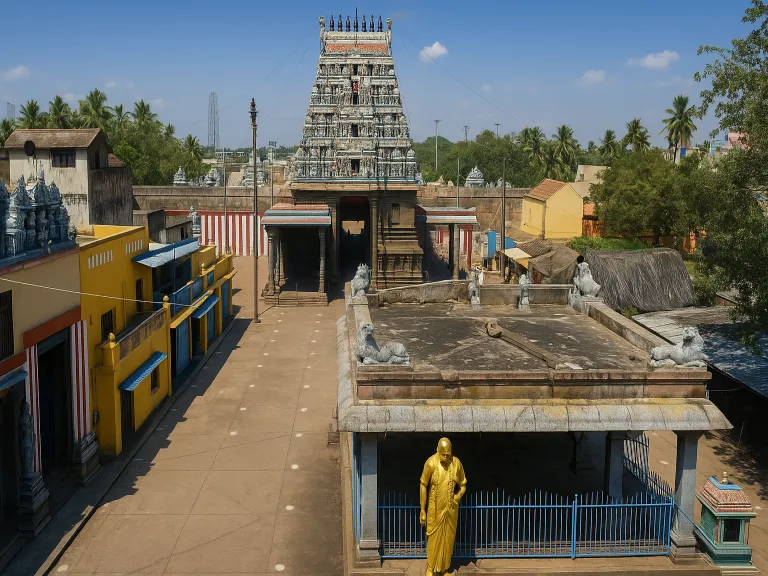
Thyagarajaswamy Temple at Tiruvottiyur is one of the most important ancient Shiva temples of Chennai and stands in the historic coastal settlement of Tiruvottiyur in North Chennai. The temple is dedicated to Shiva, worshipped in the principal shrine as Adipureeswarar and closely associated with the celebrated Thyagarajaswamy form. The goddess is Vadivudai Amman, also known as Tripurasundari, whose shrine is one of the best-known Shakti centres in the Chennai region.
The temple is a Paadal Petra Sthalam, meaning it was praised in the Tevaram hymns of the Tamil Shaiva saints. Appar, Sambandar and Sundarar are associated with the sacred geography of this temple through the devotional tradition of Tamil Shaivism. The shrine is also linked with later saints and poets, including Pattinathar, whose samadhi is in Tiruvottiyur, and the devotional memory of Sundarar and Sangiliyar.
The temple is valued both as a living place of worship and as a historical monument. Its importance comes from the antiquity of the site, the continuity of worship, the presence of inscriptions from major South Indian dynasties, the sanctity of the Adipureeswarar shrine, and the popularity of Vadivudai Amman worship. Though surrounded today by a dense urban neighbourhood, the temple continues to preserve the sacred atmosphere of an old Tamil Shiva kshetra.
ℹ️Temple Information
🛕
Presiding Deity
Adipureeswarar (Thyagarajaswamy)
👸
Goddess
Vadivudai Amman
⭐
Temple Type
Shiva temple, Paadal Petra Sthalam, Dravidian temple, Shakti worship centre, Urban heritage temple
📅
Built Period
Attested by 7th-century CE Tevaram hymns; major stone construction and inscriptions belong especially to the medieval Chola period, approximately 10th to 12th centuries CE.
🏛
Dynasty
Pallava, Chola and Vijayanagara periods are documented in the temple’s historical development, with significant inscriptional evidence from the Chola period.
Need Help Planning your visit to
Arulmigu Thyagarajaswamy Temple?
Our travel experts can help you with transportation,
darshan timings, nearby sightseeing and complete temple tour planning.
⭐Temple Significance
The temple is a Paadal Petra Sthalam, an ancient Shiva shrine praised in the Tevaram hymns, a major Chennai centre for Shiva and Vadivudai Amman worship, and a historically important temple with medieval inscriptions and long continuity of ritual practice.
📜History
Thyagarajaswamy Temple is historically established as one of the old Shiva shrines of the Tondai region. Its antiquity is confirmed by the Tevaram hymns, placing the sacred site at least in the 7th century CE. The temple was already a recognized Shaiva centre when the early Tamil Saiva bhakti saints sang of Tiruvottiyur. This makes the shrine one of the historically important Paadal Petra Sthalams within the modern Chennai area.
The structural development of the temple is connected with several phases of South Indian history. Inscriptions found at the temple record gifts, endowments and administrative arrangements from the Chola period, including the age of Rajaraja I, Rajendra I and later Chola rulers. These records show that the temple received land, lamps, offerings and support for ritual services. The presence of inscriptions demonstrates the temple’s institutional importance during the medieval period.
Later additions and endowments are associated with the Vijayanagara and post-Vijayanagara periods, when many large temples of Tamil Nadu received renewed patronage. The present temple complex therefore reflects a long process of expansion rather than the work of a single founder. Its historical identity rests on three layers: early devotional recognition in the Tevaram corpus, medieval inscriptional evidence under the Cholas, and later architectural and ritual continuity under subsequent ruling powers and local patrons.
🕉️Mythology
The temple’s mythology centres on Shiva as Adipureeswarar, the primordial Lord. The presiding linga is associated with an anthill form, and the name Putridankondar is connected with this sacred form of the deity. In temple tradition, the moolavar is treated with great ritual care, and the worship of Adipureeswarar emphasizes the ancient and self-manifest character of the shrine. Such mythology distinguishes the sanctum from ordinary installed lingas.
Tiruvottiyur is also deeply connected with the life of Sundarar, one of the three great Tevaram saints. Devotional tradition links the temple with Sangiliyar, whom Sundarar married at Tiruvottiyur. The story of Sundarar’s vow and his relationship with Sangiliyar forms an important part of the sacred memory of the temple. The sthala tradition connects this episode with the temple precinct and the magizha tree, making the site especially important to devotees of the Nayanmar tradition.
Vadivudai Amman is venerated as a powerful form of the Divine Mother. She is popularly associated with beauty, wisdom and grace, and is one of the three famed Shakti shrines of the Chennai region along with Thiruvudai Amman at Melur and Kodiyidai Amman at Tirumullaivoyal. These associations belong to living devotional tradition and are observed by many devotees who visit the three goddess shrines as a sacred circuit.
🏛Architecture
Thyagarajaswamy Temple is built in the Dravidian temple style, with an enclosed sacred complex, entrance gopuram, prakarams, mandapas and separate shrines for Shiva and the goddess. The temple plan reflects the layered growth typical of ancient Tamil temples that were expanded across different periods. The main sanctum of Adipureeswarar is the ritual core of the complex, while the Thyagarajaswamy and Vadivudai Amman shrines are central to the devotional life of the temple.
The architecture combines functional ritual spaces with sculptural and iconographic features associated with Shaiva worship. The temple contains subsidiary shrines for deities normally found in major Shiva temples, including Ganesha, Murugan, Chandikeswarar and other forms connected with the Shaiva pantheon. The temple is also known for shrines connected with the twenty-seven nakshatras, where devotees worship lingas associated with birth stars.
The goddess shrine of Vadivudai Amman is architecturally and ritually prominent, drawing large numbers of devotees, especially on Fridays and during goddess festivals. The temple’s built form has been shaped by medieval endowments and later renovations, so it should be understood as an evolving sacred complex rather than a monument from a single date. Its architectural significance lies in preserving the atmosphere, ritual layout and iconographic richness of an old Tamil Shaiva temple within present-day Chennai.
🌳
Sacred Features
🌳 Temple Tree
Magizha tree
The magizha tree is connected with the temple tradition of Sundarar and Sangiliyar and is revered within the sacred memory of Tiruvottiyur.
✨
Temple Highlights
✨
Paadal Petra Sthalam
The temple is one of the Shiva shrines praised in the Tevaram hymns, giving it a special place in Tamil Shaiva devotional history.
✨
Adipureeswarar shrine
The main Shiva shrine is associated with the ancient anthill form of the linga and the name Putridankondar.
✨
Vadivudai Amman shrine
The goddess Vadivudai Amman, also known as Tripurasundari, is one of the most revered forms of the Divine Mother in the Chennai region.
✨
Association with Sundarar
The temple is linked in Shaiva tradition with Sundarar and Sangiliyar, making it important in the sacred memory of the Nayanmars.
✨
Chola inscriptions
Medieval inscriptions at the temple record endowments and ritual arrangements, especially from the Chola period.
✨
Nakshatra linga worship
The temple is known for shrines connected with the twenty-seven birth stars, attracting devotees seeking nakshatra-related worship.
🙏
Spiritual Benefits
Devotees worship Shiva here for inner strength and spiritual clarity.
Vadivudai Amman is worshipped for grace, wisdom and protection.
Pradosham worship is observed for devotion to Shiva and removal of karmic burdens.
Nakshatra linga worship is sought by devotees for birth-star-related prayers.
The temple is visited by devotees seeking blessings for family harmony.
The association with Sundarar inspires devotion, surrender and faith in Shiva.
Worship at the temple is valued for continuity with the Tamil Shaiva bhakti tradition.
🎉
Major Festivals
🎉
Masi Brahmotsavam
The annual Brahmotsavam of the temple is an important festival period with special worship and processional observances for the deities.
🎉
Karthigai Pournami
Karthigai Pournami is especially significant for worship connected with Adipureeswarar and the sacred anthill form of the deity.
🎉
Pradosham
Pradosham is observed regularly for Shiva with special worship, drawing devotees who perform prayers to Shiva and Nandi.
🎉
Navaratri
Navaratri is an important festival for Vadivudai Amman, with special worship dedicated to the goddess.
🎉
Aadi Fridays
Fridays in the Tamil month of Aadi are important for goddess worship and attract devotees to the Vadivudai Amman shrine.
🎉
Maha Shivaratri
Maha Shivaratri is observed with special worship to Shiva and is one of the major Shaiva festival days at the temple.
🪔
Special Poojas
🪔
Pradosham Pooja
Special worship to Shiva and Nandi is performed on Pradosham days, an important observance in Shaiva temples.
🪔
Karthigai Pournami Worship
Special worship associated with Adipureeswarar is observed during Karthigai Pournami.
🪔
Friday Vadivudai Amman Pooja
Fridays are important for worship of Vadivudai Amman, especially during the Tamil month of Aadi and during Navaratri.
🪔
Nakshatra Linga Worship
Devotees offer prayers at the lingas associated with the twenty-seven birth stars.
🪔
Maha Shivaratri Pooja
Special worship to Shiva is performed on Maha Shivaratri, the principal annual night festival dedicated to Shiva.
🚗
How to Reach
🛣️
By Road
The temple is in Tiruvottiyur, North Chennai, and is accessible by city buses, taxis and private vehicles through Tiruvottiyur High Road and nearby urban roads.
🚆
By Rail
Tiruvottiyur railway station on the Chennai suburban railway network is the nearest major rail access point. Tiruvottiyur also has Chennai Metro connectivity in the area.
✈️
By Air
The nearest airport is Chennai International Airport. From the airport, visitors can travel by metro, suburban rail connections, taxi or road transport to Tiruvottiyur.
💡
Visitor Tips
Confirm current temple timings locally before planning the visit, as timings can change on festival days.
Visit early in the morning or on a weekday for a calmer darshan experience.
Expect larger crowds on Fridays, Pradosham days, Navaratri and major annual festivals.
Wear modest clothing suitable for a traditional Hindu temple.
Use public transport where possible, as Tiruvottiyur is a busy urban area.
Keep footwear only at designated places outside the shrine areas.
Maintain silence and follow the directions of temple staff during rituals and processions.
Check locally before taking photographs, especially inside the temple complex.

 WhatsApp Us