🛕About Temple
Apathsahayeswarar Temple at Anniyur, also referred to in Shaiva temple listings as Thiru Anniyur, is a Shiva temple in the Cauvery delta region of Tamil Nadu. The temple is associated with Anniyur near Mayiladuthurai and is known for the presiding deity Apathsahayeswarar, a form of Lord Shiva worshipped as the divine helper in times of danger. The Goddess is worshipped as Periyanayaki, the compassionate consort of the Lord.
The temple is important in the Tamil Shaiva tradition because Thiru Anniyur is counted among the Devara Paadal Petra Sthalams, the Shiva temples praised in the canonical Tevaram hymns of the Nayanmars. This places the shrine within the sacred geography of early medieval Tamil Shaivism and connects it to the devotional movement that shaped temple worship across the Chola country and the wider Tamil region.
Unlike larger urban temples, Apathsahayeswarar Temple is valued for its antiquity, its Tevaram association, and its intimate village-temple setting. The name Apathsahayeswarar carries a devotional meaning: Shiva as the one who comes to the aid of devotees during distress. Verified public information about the temple’s exact founder, detailed inscriptions, temple tree, temple tank, daily timings, and administrative practices is limited; therefore, those details are not asserted here without confirmation.
ℹ️Temple Information
🛕
Presiding Deity
Apathsahayeswarar
⭐
Temple Type
Shiva temple, Devara Paadal Petra Sthalam, Dravidian temple, Cauvery delta temple
📅
Built Period
7th century CE or earlier, based on its attestation in the Tevaram tradition
Need Help Planning your visit to
Arulmigu Apathsahayeswarar Temple?
Our travel experts can help you with transportation,
darshan timings, nearby sightseeing and complete temple tour planning.
⭐Temple Significance
Apathsahayeswarar Temple is significant as a Devara Paadal Petra Sthalam associated with the Tamil Shaiva canon. The temple is revered for Lord Shiva as Apathsahayeswarar, the divine helper in times of danger, and for its place in the sacred geography of the Cauvery delta Shiva temples.
📜History
The historical importance of Apathsahayeswarar Temple rests chiefly on its association with the Tevaram, the revered Tamil Shaiva hymn corpus attributed to the Nayanmar saints. Temples praised in these hymns were active places of worship by the early medieval period, and the hymns themselves form one of the most important historical sources for the sacred landscape of Tamil Shaivism. Thiru Anniyur’s inclusion among the Paadal Petra Sthalams establishes the shrine as a recognized Shiva temple by at least the 7th century CE.
The temple belongs to the broader Cauvery delta sacred network, an area that contains a dense concentration of ancient Shiva shrines celebrated in Tamil devotional literature. This region later came under the strong patronage of the medieval Cholas, who expanded temple construction, endowments, ritual systems, and stone architecture across the delta. However, for Apathsahayeswarar Temple at Anniyur, a specific royal builder or a securely documented construction phase should not be asserted without inscriptional evidence.
The present temple preserves the continuity of worship associated with Apathsahayeswarar and Periyanayaki. Its historical identity is therefore best understood through the Tevaram tradition, its place in the list of Devara Paadal Petra Sthalams, and its continued role as a local Shiva shrine. Details such as the original builder, exact date of structural conversion, major renovations, and named dynastic patrons are not widely established in reliable public temple summaries, so they are left unspecified.
🕉️Mythology
The central mythological and devotional idea of Apathsahayeswarar Temple is contained in the name of the presiding deity. “Apath” means danger or distress, and “Sahayeswarar” means the Lord who offers help. In the devotional understanding of the shrine, Shiva is approached as the protector who supports devotees during difficulties, uncertainty, fear, and crisis. This meaning gives the temple its distinctive spiritual identity among the Shiva temples of the Cauvery region.
The Goddess Periyanayaki is worshipped as the divine mother and consort of Apathsahayeswarar. In Shaiva worship, the presence of the Goddess completes the temple’s sacred character, representing compassion, grace, and nurturing protection. Devotees who visit the shrine generally connect the worship of Shiva and Shakti with relief, steadiness of mind, and divine assistance in life’s difficult moments.
No single detailed sthala purana episode for Anniyur is widely standardized in well-established historical summaries. Therefore, specific mythological claims involving named sages, celestial beings, or miraculous events are not presented here as factual temple lore. The authentic devotional emphasis that can be safely retained is the meaning of the deity’s name, the Tevaram sanctity of the site, and the continuing worship of Shiva as Apathsahayeswarar, the Lord who helps in times of danger.
🏛Architecture
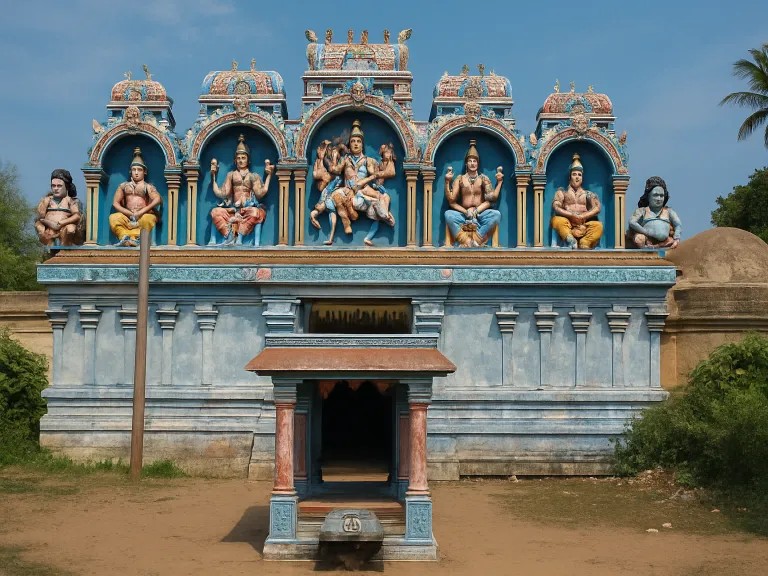
Apathsahayeswarar Temple is a Tamil Shiva temple belonging to the Dravidian temple tradition of the Cauvery delta. Its sacred focus is the sanctum of Lord Shiva, where Apathsahayeswarar is worshipped in linga form. The shrine of Goddess Periyanayaki forms an essential part of the temple’s ritual and devotional layout, reflecting the standard Shaiva arrangement in which Shiva and Shakti are worshipped together within the temple complex.
The temple’s architectural identity is connected more with its sacred status than with a widely published architectural survey. Like many ancient village temples in the delta, it is organized around the sanctum, approach mandapas, circumambulatory space, and subsidiary devotional areas used for worship. The built form supports daily ritual, festival worship, and pradakshina rather than functioning as a monument separated from living religious practice.
A detailed, verified account of the temple’s sculptural program, inscriptions, measurements, gopuram history, mandapa chronology, and phases of reconstruction is not broadly available in standard public sources. For that reason, no specific claims are made here about the original masonry date, named sculptors, number of prakaras, or dynastic architectural additions. The temple may be described with confidence as an ancient Shaiva shrine of the Tamil Dravidian tradition and a Devara Paadal Petra Sthalam, while finer architectural details require direct epigraphic or archaeological verification.
✨
Temple Highlights
✨
Devara Paadal Petra Sthalam
Thiru Anniyur is counted among the Shiva temples praised in the Tevaram hymns, giving the shrine canonical importance in Tamil Shaivism.
✨
Apathsahayeswarar Form of Shiva
The presiding deity’s name means the Lord who helps during danger or distress, making the temple especially meaningful for devotees seeking protection and support.
✨
Goddess Periyanayaki Shrine
The Goddess is worshipped as Periyanayaki, the divine consort of Apathsahayeswarar and a form of motherly grace in the temple’s devotional tradition.
✨
Cauvery Delta Sacred Setting
The temple belongs to the dense network of ancient Shiva shrines in the Mayiladuthurai and Cauvery delta region.
🙏
Spiritual Benefits
Worship of Lord Shiva as Apathsahayeswarar for protection during difficulties
Prayer for courage and steadiness during distress
Devotional worship for relief from fear and uncertainty
Seeking divine guidance during challenging life situations
Worship of Periyanayaki for motherly grace and emotional strength
🚗
How to Reach
🛣️
By Road
Anniyur can be approached by road from Mayiladuthurai and nearby towns in the Cauvery delta region. Local buses, taxis, and private vehicles are commonly used for village temple access.
🚆
By Rail
Mayiladuthurai Junction is the main railway hub for this region. From there, visitors can continue by local road transport to Anniyur.
✈️
By Air
The nearest major airport commonly used for the Mayiladuthurai region is Tiruchirappalli International Airport, followed by onward travel by road or rail.
💡
Visitor Tips
Confirm current temple timings locally before travelling, as verified public timing details are not available.
Wear modest clothing suitable for a traditional temple visit.
Avoid photography inside the temple unless permission is clearly given by temple authorities.
Carry small cash for offerings, as digital payment availability may vary in village temples.
Maintain silence and follow the instructions of the priest or temple staff.
Plan travel through Mayiladuthurai, the main nearby transport hub for the region.
Visit during daylight hours if relying on local transport connections.

 WhatsApp Us