🛕About Temple
Kanchi Kamakoti Peetham at Kanchipuram is a revered Hindu monastic institution and spiritual seat associated with the Shankaracharya lineage of Advaita Vedanta. It is not primarily an ancient structural temple in the usual sense, but a matha with shrines, worship spaces, administrative functions, and memorial shrines of pontiffs. Devotees visit it for darshan of the Acharya when available, participation in religious observances, and worship connected with Sri Chandramouleeswara and Sri Maha Tripurasundari.
The Peetham is closely identified with Kanchipuram, one of South India’s foremost sacred cities, known for Kamakshi Amman, Ekambareswarar, Varadaraja Perumal, and many other temples. The name Kamakoti links the institution to the sacred geography of Kanchi and to the worship of the Divine Mother at Kamakshi. The institution is widely known for preserving Vedic learning, Advaita Vedanta teaching, traditional rituals, Sanskrit scholarship, and dharmic service activities.
The public identity of the Peetham in modern times has been shaped especially by its 68th pontiff, Sri Chandrasekharendra Saraswati, popularly called Maha Periyava, and by his successors Sri Jayendra Saraswati and Sri Vijayendra Saraswati. The matha continues to function as a religious centre for followers of the Smarta and Advaita traditions. Visitors should understand it as a living seat of worship, teaching, and monastic discipline rather than a monument with a single, datable royal construction phase.
ℹ️Temple Information
🛕
Presiding Deity
Sri Chandramouleeswara
👸
Goddess
Sri Maha Tripurasundari
⭐
Temple Type
Hindu monastic institution, Advaita Vedanta Peetham, Smarta tradition centre, Shiva-Shakti worship centre, Guru-parampara shrine
🙏
Sampradaya
Advaita Vedanta; Smarta tradition
Need Help Planning your visit to
Sri Kanchi Kamakoti Peetham?
Our travel experts can help you with transportation,
darshan timings, nearby sightseeing and complete temple tour planning.
⭐Temple Significance
Kanchi Kamakoti Peetham is significant as the seat of the Kanchi Shankaracharya lineage, a major centre of Advaita Vedanta, Vedic learning, guru worship, and Smarta religious practice. Its importance is institutional, philosophical, and devotional rather than dynastic or archaeological.
📜History
The Kanchi Kamakoti Peetham preserves its own guru-parampara, which traces the lineage to Adi Shankaracharya and presents Kanchipuram as a sacred seat of Advaita Vedanta. This lineage tradition is central to the identity of the institution and is followed by its devotees. From the standpoint of verifiable institutional history, the early chronology of the Peetham and the construction history of the present matha complex are not documented in the same manner as major royal temples of Kanchipuram.
Kanchipuram itself has an extensively documented religious history from the Pallava, Chola, Vijayanagara, and later periods, but the history of those temple dynasties should not be automatically transferred to the Peetham as a building. The Peetham’s historical significance is better understood through its continuity as a Shankaracharya matha, its pontifical succession, its role in Vedic and Sanskrit education, and its influence among Smarta households and Advaita Vedanta followers across South India and beyond.
In the twentieth century, the Peetham became especially prominent through Sri Chandrasekharendra Saraswati, the 68th Shankaracharya, whose long tenure from childhood initiation to his mahasamadhi in 1994 made him one of modern Hinduism’s most respected ascetics. Sri Jayendra Saraswati, the 69th pontiff, expanded the institution’s educational and service activities, and Sri Vijayendra Saraswati continues the pontifical line. The modern Peetham is therefore historically important as a living religious institution rather than as a temple built under a clearly documented dynasty.
🕉️Mythology
In the sacred narratives of the Kanchi Kamakoti Peetham, Adi Shankaracharya is connected with Kanchipuram as a supreme seat of spiritual realization and Advaita teaching. Hagiographical accounts describe him as a teacher who travelled across Bharata, established the authority of the Upanishadic non-dual vision, and guided seekers through both knowledge and worship. These narratives form part of the devotional memory of the Peetham and are distinct from strictly datable political or architectural history.
Kanchipuram’s sacred mythology centres strongly on Goddess Kamakshi, the compassionate form of the Divine Mother. In local and sectarian traditions, Adi Shankaracharya is associated with the worship of Kamakshi and the spiritual harmonising of the Goddess’s power through Sri Vidya symbolism. The word Kamakoti is understood within the devotional context of Kanchi as connected with the fulfilment of divine grace, the presence of the Mother, and the culminating point of spiritual aspiration.
The worship of Sri Chandramouleeswara and Sri Maha Tripurasundari at the Peetham expresses the integrated Shiva-Shakti devotional framework followed within the Smarta-Advaita tradition. Mythic understanding does not treat worship and knowledge as separate paths, but as mutually supportive disciplines leading the devotee inward. For devotees, the Peetham represents the living presence of the Guru, the grace of Kamakshi, and the teaching that the individual self and Brahman are ultimately non-different.
🏛Architecture
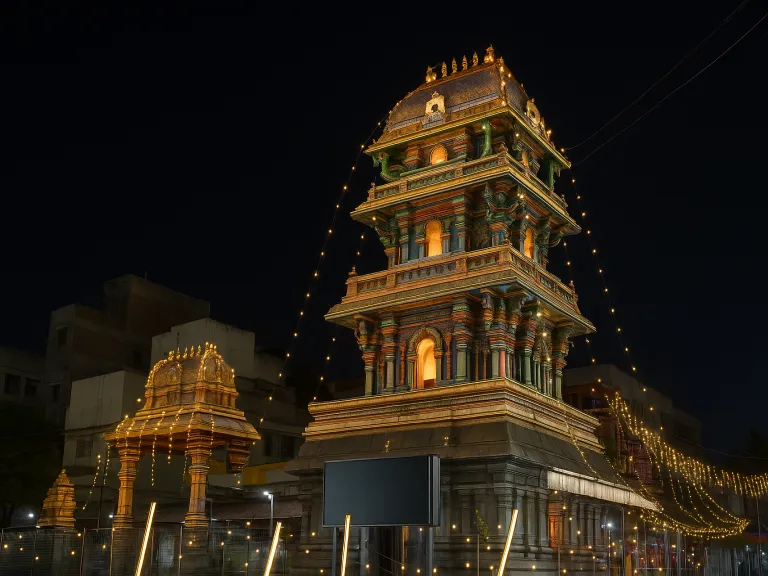
The Kanchi Kamakoti Peetham complex is best described as a functioning monastic and ritual establishment rather than a single ancient temple built in one royal phase. Its architectural character is practical, devotional, and institutional. The complex includes spaces for worship, pontifical residence and administration, assembly, Vedic recitation, devotee movement, and memorial worship. Unlike the large Pallava and Chola temples of Kanchipuram, it is not primarily known for towering gopurams, extensive sculptural programmes, or a monumental stone enclosure.
The worship areas of the Peetham centre on the ritual life of the Acharya and the daily reverence offered to Sri Chandramouleeswara and related deities. Devotees encounter a matha environment that combines shrine spaces, halls, images of gurus, and areas associated with religious instruction. The layout reflects the needs of a living Shankaracharya seat, where darshan, chanting, puja, discourse, and institutional service take precedence over royal temple procession architecture.
An important feature of the modern complex is the presence of adhisthanams connected with revered pontiffs, including Sri Chandrasekharendra Saraswati and Sri Jayendra Saraswati. These memorial shrines are focal points for devotees who come to pay respects to the guru-parampara. The architecture therefore communicates continuity of lineage and worship rather than dynastic patronage. Its significance lies in the lived sacred atmosphere of a matha, where the visible built space supports monastic discipline, Vedic learning, and devotion to the Guru, Shiva, and the Divine Mother.
✨
Temple Highlights
✨
Seat of the Kanchi Shankaracharya
The Peetham is the living monastic seat associated with the Shankaracharya lineage of Kanchi and the teaching of Advaita Vedanta.
✨
Sri Chandramouleeswara Worship
Daily worship of Sri Chandramouleeswara is central to the ritual identity of the Peetham.
✨
Guru Parampara
The institution preserves a pontifical lineage and is visited by devotees for reverence to the Acharyas.
✨
Adhisthanams of Revered Pontiffs
The complex includes memorial shrines associated with Sri Chandrasekharendra Saraswati and Sri Jayendra Saraswati.
✨
Centre of Vedic Learning
The Peetham is widely known for supporting Vedic recitation, Sanskrit learning, and traditional religious education.
✨
Located in Sacred Kanchipuram
The Peetham stands in one of India’s most important temple cities, close to major Shaiva, Shakta, and Vaishnava shrines.
🙏
Spiritual Benefits
Darshan and reverence of the Guru-parampara
Opportunity to connect with Advaita Vedanta teachings
Participation in a sacred atmosphere of Vedic chanting and worship
Devotional worship of Sri Chandramouleeswara
Devotional worship of Sri Maha Tripurasundari
Inspiration for disciplined spiritual practice
Prayer for clarity, humility, and inner peace
Connection with the sacred religious heritage of Kanchipuram
🎉
Major Festivals
🎉
Shankara Jayanti
Observed in honour of Adi Shankaracharya with worship, recitation, and religious programmes connected with the Advaita tradition.
🎉
Guru Purnima
A major observance dedicated to the Guru, marked by reverence to the guru-parampara and Vyasa Puja traditions.
🎉
Navaratri
Observed with devotion to the Divine Mother, especially in connection with Sri Maha Tripurasundari and the Kamakshi tradition of Kanchipuram.
🎉
Aradhana of Sri Chandrasekharendra Saraswati
Observed by devotees in remembrance of the 68th Shankaracharya, Sri Chandrasekharendra Saraswati, popularly known as Maha Periyava.
🎉
Aradhana of Sri Jayendra Saraswati
Observed in remembrance of the 69th Shankaracharya, Sri Jayendra Saraswati.
🎉
Chaturmasya
A significant monastic observance in the Shankaracharya tradition, centred on scriptural study, worship, discipline, and religious instruction.
🪔
Special Poojas
🪔
Sri Chandramouleeswara Puja
Central worship of Sri Chandramouleeswara conducted in the Peetham’s ritual tradition.
🪔
Sri Maha Tripurasundari Worship
Worship connected with the Divine Mother as Sri Maha Tripurasundari within the Peetham’s Shiva-Shakti devotional framework.
🪔
Vyasa Puja
Guru-parampara worship associated especially with Guru Purnima and the monastic tradition.
🪔
Acharya Aradhana
Memorial worship performed for revered pontiffs of the Peetham on their aradhana observances.
🪔
Veda Parayana
Vedic recitation forms an important part of the religious atmosphere and observances of the Peetham.
🚗
How to Reach
🛣️
By Road
Kanchipuram is well connected by road with Chennai, Chengalpattu, Vellore, and other towns in Tamil Nadu. Buses, taxis, and private vehicles are commonly used to reach the Peetham within the city.
🚆
By Rail
Kanchipuram has a railway station with connections to the Chennai suburban and regional rail network. From the station, local transport can be used to reach the Peetham.
✈️
By Air
The nearest major airport is Chennai International Airport. From the airport, Kanchipuram can be reached by road via Chengalpattu or other connecting routes.
💡
Visitor Tips
Confirm current visiting hours before travelling, as schedules can change because of rituals, festivals, or Acharya movements.
Maintain silence and decorum inside worship and memorial areas.
Wear modest clothing appropriate for a Hindu monastic institution.
Do not take photographs unless permission is clearly given by the authorities.
Distinguish the Peetham from the nearby Kamakshi Amman Temple; both are separate sacred institutions.
Plan extra time if visiting during major observances such as Shankara Jayanti, Guru Purnima, or Navaratri.
Use local transport within Kanchipuram for nearby temples, as several major shrines are located within a short distance.
Follow instructions given by the Peetham staff and volunteers during darshan or special events.

 WhatsApp Us