🛕About Temple
Somanathaswamy Temple at Thiruneedur, also written as Needur or Tiruneedur, is a Shiva temple in the Mayiladuthurai region of Tamil Nadu. The presiding deity is Somanathaswamy, worshipped in the form of a Shiva lingam, and the goddess is Veyuru Tholi Ammai. The temple belongs to the sacred Saiva landscape of the Cauvery delta, an area dense with ancient shrines celebrated in Tamil devotional literature.
The temple is known as a Paadal Petra Sthalam, a shrine praised in the Tevaram hymns of the Tamil Saiva saints. This places Thiruneedur among the canonical Shiva temples of Tamil Nadu and gives it importance beyond its local setting. Devotees visit the shrine for darshan of Shiva as Somanatha, a name meaning Lord of Soma or Chandra, and for worship of the divine mother in her shrine.
Thiruneedur is also associated with the broader devotional memory of the Nayanmar tradition. Its importance rests on its Tevaram status, its Chandra-linked sacred identity, and its location close to Mayiladuthurai, one of the major temple towns of the Cauvery region. The temple is primarily a living place of worship rather than a monument known through a single dated foundation record. For this reason, details such as its original builder, precise construction date, specific agama, and formal administrative traditions should be confirmed with the temple authorities before being treated as fixed historical facts.
ℹ️Temple Information
🛕
Presiding Deity
Somanathaswamy
👸
Goddess
Veyuru Tholi Ammai
⭐
Temple Type
Shiva temple, Paadal Petra Sthalam, Tevaram shrine, Dravidian temple
📅
Built Period
At least 7th century CE as a Tevaram-hymned shrine; the exact original construction period is not firmly documented.
Need Help Planning your visit to
Arulmigu Somanathaswamy Temple?
Our travel experts can help you with transportation,
darshan timings, nearby sightseeing and complete temple tour planning.
⭐Temple Significance
Somanathaswamy Temple, Thiruneedur is significant as a Paadal Petra Sthalam praised in the Tevaram tradition and as a sacred Shiva shrine associated with Soma or Chandra. It is one of the important Saiva temples of the Mayiladuthurai region and forms part of the devotional geography of the Cauvery delta.
📜History
The earliest secure historical importance of Somanathaswamy Temple is its presence in the Tevaram canon, the collection of Tamil Saiva hymns composed during the early medieval period. Temples included in this canon are known as Paadal Petra Sthalams. Thiruneedur is therefore not merely a village shrine but part of the sacred geography shaped by the devotional movement of the Nayanmars in Tamil Nadu.
The Tevaram connection establishes that the shrine was known as a sacred Shiva site by the 7th century CE, the period of the great Tamil Saiva poet-saints. The temple stands in the Cauvery delta, where many early shrines later received structural additions, endowments, and ritual support under successive South Indian rulers. However, the available widely circulated temple information does not identify a single historically documented founder for Thiruneedur Somanathaswamy Temple.
Because the shrine has lived through many centuries of worship, its present form represents continuity rather than a single construction moment. The temple’s historical identity is best understood through its Tevaram status, its association with the Saiva devotional tradition, and its continuing worship of Shiva as Somanathaswamy. Claims about a specific king, exact founding year, or exclusive dynastic patronage should not be treated as established unless supported by inscriptions or temple records. The documented religious history is clear: Thiruneedur is an ancient Saiva shrine of the Mayiladuthurai region and a recognized Paadal Petra Sthalam.
🕉️Mythology
In the temple’s sacred mythology, the name Somanathaswamy connects the deity with Soma, another name for Chandra, the Moon. The title Somanatha means Lord of Soma. In Saiva mythology, Chandra is often described as a celestial being who turns to Shiva for grace, purification, and restoration. At Thiruneedur, this association gives the shrine its distinctive devotional character.
The mythology should be understood separately from political history. The Chandra association belongs to the temple’s sacred narrative and liturgical imagination, not to a datable event. Devotees approach Somanathaswamy as the compassionate form of Shiva who grants inner cooling, peace, steadiness of mind, and release from distress. These meanings are consistent with the symbolic place of Chandra in Hindu thought, where the Moon is linked with mind, nourishment, time, and rhythmic renewal.
The goddess Veyuru Tholi Ammai forms an integral part of the temple’s sacred presence. Her name is a Tamil devotional expression and she is worshipped as the consort of Somanathaswamy. The temple also stands within the devotional world of the Nayanmars, where places, hymns, saints, and local sacred stories are woven together. The mythology of Thiruneedur therefore emphasizes Shiva’s grace, the Moon’s reverence for the Lord, and the spiritual value of worship at a Tevaram-hymned shrine in the Cauvery region.
🏛Architecture
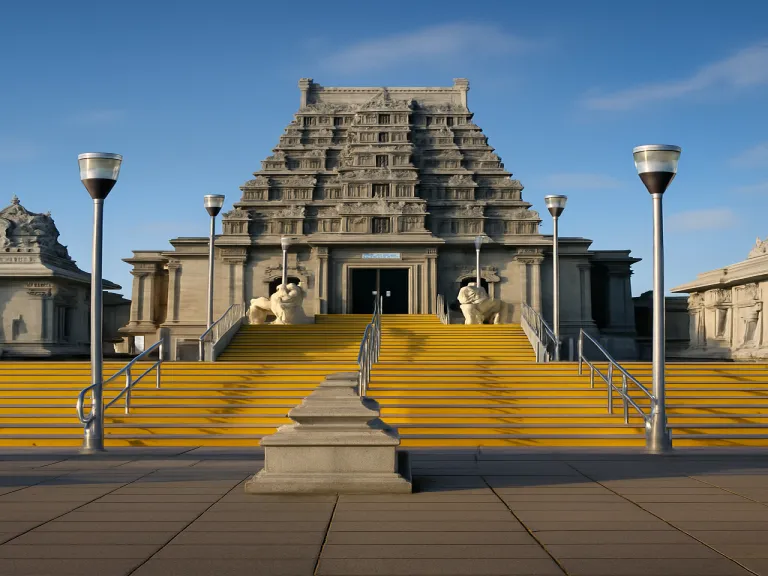
Somanathaswamy Temple follows the broad Dravidian temple idiom of Tamil Nadu’s Saiva shrines. The core sacred space is the garbhagriha, where Shiva is worshipped as a lingam under the name Somanathaswamy. The goddess shrine for Veyuru Tholi Ammai forms the complementary sacred focus of the temple, reflecting the standard Saiva arrangement in which Shiva and Shakti are worshipped together.
The temple is part of the Cauvery delta’s long-standing architectural and ritual landscape. Such temples normally developed through additions over time, with enclosed precincts, mandapas, subsidiary shrines, and festival spaces serving daily worship and periodic observances. For Thiruneedur, the most reliable architectural statement is that it is a functioning Dravidian Shiva temple rather than a monument securely attributable to one dated campaign by a named ruler.
No precise, widely verified details are available here for the number of gopuram tiers, exact measurements, inscriptional sequence, sculptural program, or mandapa chronology. Those details should be checked on-site or through epigraphical publications before being presented as fixed facts. The temple’s architectural significance rests in the living continuity of worship at a Tevaram shrine, the sanctum of Somanathaswamy, the shrine of Veyuru Tholi Ammai, and its place within the historic network of Mayiladuthurai-area Shiva temples. Its built form supports the ritual movement of devotees through darshan, circumambulation, offerings, and festival worship.
✨
Temple Highlights
✨
Paadal Petra Sthalam
The temple is one of the Shiva shrines celebrated in the Tevaram canon, giving it a recognized place among Tamil Saiva sacred sites.
✨
Somanathaswamy Deity
Shiva is worshipped here as Somanathaswamy, a name connected with Soma or Chandra, the Moon.
✨
Veyuru Tholi Ammai Shrine
The goddess is worshipped as Veyuru Tholi Ammai, the divine consort of Somanathaswamy.
✨
Cauvery Delta Sacred Geography
The temple is located in the Mayiladuthurai region, an area known for a dense concentration of ancient Shiva temples.
✨
Nayanmar Devotional Heritage
Thiruneedur belongs to the sacred landscape shaped by the Tamil Saiva saint-poets and the devotional memory of the Nayanmar tradition.
🙏
Spiritual Benefits
Darshan of Shiva at a Tevaram-hymned Paadal Petra Sthalam
Worship of Somanathaswamy, the Lord associated with Soma or Chandra
Prayer for mental calm and inner steadiness through the Chandra-linked form of Shiva
Worship of Shiva and Shakti together through Somanathaswamy and Veyuru Tholi Ammai
Participation in the Saiva devotional heritage of the Cauvery delta
Offering prayers during Pradosham and other Shiva worship occasions
Seeking spiritual purification through circumambulation, mantra, and darshan
🎉
Major Festivals
🎉
Maha Shivaratri
Maha Shivaratri is the principal night of Shiva worship and is observed in Shiva temples with special prayers, abhishekam, and devotional vigil.
🎉
Pradosham
Pradosham is a regular Saiva observance connected with worship of Shiva and Nandi. Visitors should confirm the local schedule with the temple.
🪔
Special Poojas
🪔
Abhishekam to Somanathaswamy
Ritual bathing of the Shiva lingam is a central form of worship in Saiva temples. Availability and timings should be confirmed at the temple.
🪔
Archana
Devotees may offer archana in the name of Somanathaswamy or Veyuru Tholi Ammai, subject to the temple’s current worship arrangements.
🪔
Pradosha Puja
Special worship on Pradosham is associated with Shiva temples. Devotees should check the exact observance time locally.
🚗
How to Reach
🛣️
By Road
Thiruneedur is accessible by road from Mayiladuthurai and nearby towns in the Cauvery delta.
🚆
By Rail
Needur has rail connectivity in the Mayiladuthurai region. Mayiladuthurai Junction is the major nearby railway station.
✈️
By Air
The nearest major airport generally used for this region is Tiruchirappalli International Airport.
💡
Visitor Tips
Confirm the current opening hours with local sources before travelling, as timings can change.
Wear modest clothing suitable for temple worship.
Carry cash for offerings, lamps, archana, or local transport, as digital payment availability may vary.
Ask temple staff before taking photographs inside the temple premises.
Plan the visit with nearby Mayiladuthurai temples if travelling from outside the region.
Visit during cooler hours of the day in summer months.
Maintain silence and follow local worship procedures inside the sanctum area.

 WhatsApp Us