🛕About Temple
Kannayiranathar Temple at Thirukkannarkoil, identified in temple lists with Kurumanakkudi in the Sirkazhi region of present-day Mayiladuthurai district, Tamil Nadu, is an ancient Saiva shrine dedicated to Lord Shiva. The presiding deity is worshipped as Kannayiranathar, a name connected with the sacred idea of a thousand eyes. The Goddess is worshipped as Murugu Valarkothai Amman. The temple is counted among the Paadal Petra Sthalams, the Shiva shrines praised in the Tevaram hymns of the Tamil Saiva saints.
The temple belongs to the sacred geography of the Cauvery delta, where many early Saiva temples are associated with the devotional movement of the 7th century CE. Its importance rests chiefly on its Tevaram connection and on the sthala-purana linking the shrine with Indra. The name Thirukkannarkoil itself is understood in relation to the deity’s name and the mythic theme of eyes, sight, purification and divine grace.
Kannayiranathar Temple is a living place of worship rather than a large monument meant only for architectural display. Devotees visit it for darshan of the Shiva linga, worship of the Goddess and remembrance of the hymns that made the shrine part of Tamil Saiva tradition. Because many details of patronage, reconstruction and ritual manuals are not securely documented in widely available historical sources, the temple is best understood through its Tevaram status, its local sacred tradition and its continued role in Saiva worship.
ℹ️Temple Information
🛕
Presiding Deity
Kannayiranathar
👸
Goddess
Murugu Valarkothai Amman
⭐
Temple Type
Shiva temple, Paadal Petra Sthalam, Tevaram shrine
📅
Built Period
Known to have existed by the 7th century CE through its association with the Tevaram hymns; the original construction date is not securely documented.
Need Help Planning your visit to
Arulmigu Kannayiranathar Temple?
Our travel experts can help you with transportation,
darshan timings, nearby sightseeing and complete temple tour planning.
⭐Temple Significance
Kannayiranathar Temple is significant as a Paadal Petra Sthalam praised in the Tevaram tradition and as a shrine where Lord Shiva is worshipped in connection with the Indra legend of the thousand eyes. Its importance lies in Tamil Saiva devotional history, local sacred mythology and continued worship of Kannayiranathar with Murugu Valarkothai Amman.
📜History
The most secure historical marker for Kannayiranathar Temple is its inclusion among the Paadal Petra Sthalams. These are temples praised in the Tevaram hymns of the Nayanmars, the Tamil Saiva poet-saints. Thirukkannarkoil is associated with the hymns of Thirugnanasambandar, placing the shrine within the religious landscape known to the Tamil Saiva movement by the 7th century CE. This does not identify the original builder, but it confirms that the temple was already an established sacred site in early medieval Tamil country.
The temple forms part of the dense network of Shiva shrines in the Cauvery delta, especially around Sirkazhi and Mayiladuthurai, an area deeply connected with the growth of Tamil bhakti literature. The Tevaram canon gave such shrines enduring status, and later Saiva communities continued to preserve their names, legends and worship. The shrine’s deity, Kannayiranathar, and the Goddess Murugu Valarkothai Amman are consistently remembered in temple lists connected with the Paadal Petra Sthalams.
No widely established historical source identifies a specific king or individual as the builder of the original temple. The present structure reflects the long history of maintenance and renewal common to Tamil Nadu’s ancient temples, where stone shrines, mandapas and precincts often evolved over centuries. Without verified inscriptional details for this specific temple in widely accessible sources, claims about a precise construction year, patron dynasty or architect should be avoided. Its authenticated historical significance lies in its presence in the Tevaram tradition and in its uninterrupted identity as a Shiva temple of the Sirkazhi region.
🕉️Mythology
The mythology of Kannayiranathar Temple centers on Indra, the king of the devas, and the transformation of shame into grace through the worship of Shiva. In the local sthala-purana, Indra is connected with the theme of a thousand eyes. This sacred idea is reflected in the name Kannayiranathar, meaning the Lord associated with a thousand eyes. The legend explains the temple’s name and gives the shrine its distinctive devotional identity.
In the wider Puranic background, Indra incurs a severe curse connected with his moral failing in the story of Gautama and Ahalya. The marks of disgrace on his body are later transformed into eyes through divine compassion. At Thirukkannarkoil, the local tradition presents Shiva as the Lord who grants purification and restores divine dignity. Indra worships Shiva here, and the Lord’s grace turns suffering into spiritual insight. Because of this association, the shrine is remembered as a place connected with repentance, cleansing and the recovery of auspiciousness.
This mythology should be understood separately from the historical record. It does not establish the date of the temple or identify its builder, but it explains the sacred meaning of the deity’s name and the devotional focus of the place. For worshippers, the legend is not merely a story about Indra; it is a teaching that sincere prayer before Shiva removes inner blemish and opens the eye of wisdom. The temple’s sacred tank is associated with Indra in temple tradition, strengthening the link between the deity, the place-name and the myth of divine forgiveness.
🏛Architecture
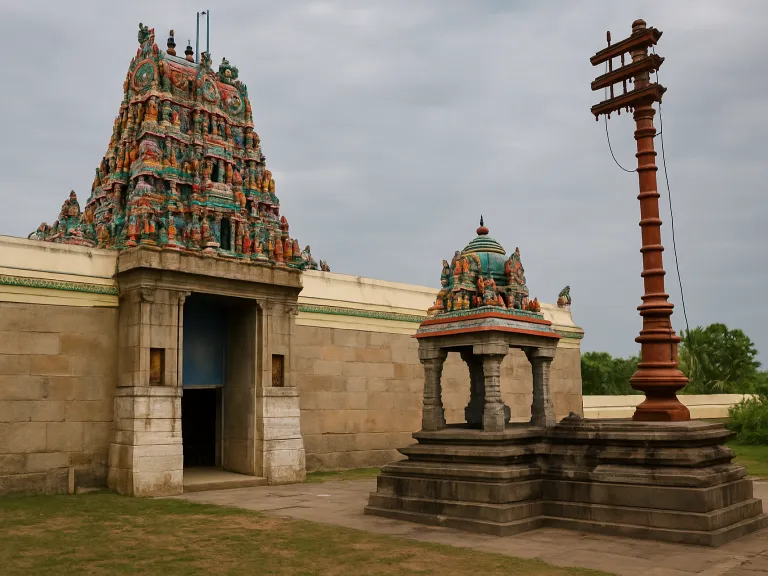
Kannayiranathar Temple is a Tamil Saiva temple of the Cauvery delta, centered on the sanctum of Lord Shiva in linga form and a separate shrine for the Goddess Murugu Valarkothai Amman. The temple follows the essential ritual arrangement of a living Shiva temple: devotees proceed through the entrance and inner spaces toward the garbhagriha, where the presiding linga is worshipped. The emphasis is devotional and liturgical, with the shrine functioning as a place for daily worship, abhishekam, archana and festival observances.
The architecture is modest when compared with the larger temple complexes of nearby Sirkazhi, Mayiladuthurai and Thiruvenkadu, but its sacred importance is not measured by scale. Paadal Petra Sthalams often preserve layers of construction and repair from different periods, and Thirukkannarkoil belongs to that inherited temple culture. The arrangement of the main deity, Goddess shrine, circumambulatory space and subsidiary worship areas reflects the familiar Dravidian temple idiom of Tamil Nadu’s Saiva shrines.
No widely documented architectural study identifies a securely dated original phase, named architect or complete inscriptional sequence for this specific temple in standard public accounts. For that reason, details such as an exact construction century for the present masonry, a particular royal patron or an Agamic school should not be stated without verification. The temple’s authentic architectural identity lies in its role as a compact, functioning Saiva shrine associated with the Tevaram tradition, preserving the relationship between sanctum, deity, sacred tree, sacred water and devotional movement within the historic temple landscape of the Cauvery delta.
🌳
Sacred Features
🌳 Temple Tree
Sarakkondrai
Sarakkondrai is recorded in temple tradition as the sthala vriksha of Kannayiranathar Temple.
💧 Temple Tank
Indra Theertham
Indra Theertham is associated with the temple’s Indra-related sthala-purana and the theme of purification through Shiva’s grace.
✨
Temple Highlights
✨
Paadal Petra Sthalam
The temple is one of the Shiva shrines praised in the Tevaram hymns, giving it an important place in Tamil Saiva devotional tradition.
✨
Kannayiranathar Deity
Lord Shiva is worshipped here as Kannayiranathar, a name connected with the sacred theme of a thousand eyes and the Indra legend.
✨
Murugu Valarkothai Amman Shrine
The Goddess of the temple is worshipped as Murugu Valarkothai Amman, forming the divine consort shrine of the temple.
✨
Indra Sthala-purana
The temple’s mythology links Indra’s worship of Shiva with purification, restoration and divine grace.
✨
Cauvery Delta Saiva Heritage
The shrine belongs to the historically rich Sirkazhi-Mayiladuthurai temple region, known for many ancient Shiva temples.
🙏
Spiritual Benefits
Worship of Lord Shiva for purification from past mistakes
Prayer for clarity of vision and spiritual insight connected with the temple’s thousand-eyes symbolism
Seeking divine grace for removal of inner blemish and guilt
Devotion to Shiva and the Goddess for family welfare and peace
Participation in Saiva worship through abhishekam, archana and circumambulation
Meditation on the Tevaram tradition and Tamil Saiva bhakti
Prayer for humility, repentance and moral renewal
🎉
Major Festivals
🎉
Maha Shivaratri
Maha Shivaratri is a major Saiva observance dedicated to Lord Shiva and is an important day for worship at Shiva temples.
🎉
Pradosham
Pradosham is a regular Saiva observance connected with worship of Lord Shiva, especially in the evening period of the thirteenth lunar day.
🎉
Arudra Darshan
Arudra Darshan is an important Saiva festival associated with Shiva worship, especially the cosmic dance aspect of the Lord.
🪔
Special Poojas
🪔
Abhishekam to Kannayiranathar
Ritual bathing of the Shiva linga is a central form of worship in Saiva temples and is offered to Kannayiranathar.
🪔
Archana
Devotees offer archana to Lord Kannayiranathar and Murugu Valarkothai Amman with names, flowers and prayers.
🪔
Pradosha Pooja
Pradosha worship is dedicated to Lord Shiva and is observed on the appropriate lunar days in Saiva temples.
🚗
How to Reach
🛣️
By Road
The temple can be reached by road through the Sirkazhi region of Mayiladuthurai district. Local transport from Sirkazhi or nearby towns should be confirmed before travel.
🚆
By Rail
Sirkazhi Railway Station is a practical rail access point for the region. Local road transport is required from the station to the temple.
💡
Visitor Tips
Confirm current temple opening hours locally before travelling, as small temples may have limited schedules.
Dress modestly and follow normal Tamil Nadu temple etiquette.
Ask temple authorities before taking photographs, especially inside the temple precinct.
Carry cash for offerings, as digital payment facilities may not always be available in smaller village temples.
Plan travel through Sirkazhi or Mayiladuthurai, which are practical access points for the region.
Combine the visit with other nearby Tevaram shrines only after checking routes and timings.
Maintain silence near the sanctum and allow local worshippers to complete their prayers.
Check festival-day crowd conditions and local transport availability in advance.

 WhatsApp Us