🛕About Temple
Amritaghateswarar Temple at Thirukadaiyur, also known as Thirukkadaiyur, is a major Shiva temple in Mayiladuthurai district of Tamil Nadu. The presiding deity is Amritaghateswarar, worshipped in the form of a Shiva lingam, and the goddess is Abhirami Amman. The temple is one of the celebrated Paadal Petra Sthalams praised in the Tamil Shaiva hymns of the Tevaram, giving it a central place in Tamil Shaiva devotional tradition.
The shrine is especially associated with Shiva as Kala Samhara Murti, the destroyer of death, connected with the Markandeya legend. Because of this sacred association, Thirukadaiyur is one of the most important temples in Tamil Nadu for prayers connected with longevity, health, and auspicious milestones in life. Devotees widely visit the temple for Shastiabdapoorthi, Bhimaratha Shanthi, Sathabhishekam, Ayush Homam, and other age-related ceremonies.
The temple also has a strong devotional identity through Abhirami Amman and the saint-poet Abhirami Bhattar, composer of the Abhirami Andhadhi. The complex brings together Tevaram heritage, Ashta Veerattanam significance, goddess worship, and living ritual practice. Located near the Mayiladuthurai-Karaikal route, it remains an active pilgrimage centre visited throughout the year by families, Shaiva devotees, and those seeking blessings for a long and spiritually meaningful life.
ℹ️Temple Information
🛕
Presiding Deity
Amritaghateswarar
⭐
Temple Type
Shiva temple, Paadal Petra Sthalam, Ashta Veerattanam temple, Tamil Shaiva pilgrimage temple
📅
Built Period
The shrine was celebrated in the Tevaram hymns by the 7th to 8th centuries CE; the existing stone temple fabric and inscriptions are associated mainly with the Chola period, around the 10th to 12th centuries CE.
Need Help Planning your visit to
Arulmigu Amritaghateswarar Temple?
Our travel experts can help you with transportation,
darshan timings, nearby sightseeing and complete temple tour planning.
⭐Temple Significance
Amritaghateswarar Temple is significant as a Paadal Petra Sthalam, an Ashta Veerattanam shrine, and one of Tamil Nadu’s foremost temples for longevity-related worship. It is sacred to Shiva as the conqueror of death in the Markandeya legend and to Abhirami Amman through the Abhirami Bhattar tradition. The temple combines early Tamil Shaiva hymnology, Chola-period historical presence, goddess devotion, and living ritual practice centred on health, long life, and auspicious family milestones.
📜History
Amritaghateswarar Temple is historically important because Thirukadaiyur is one of the 275 Paadal Petra Sthalams, the Shiva temples glorified in the Tevaram hymns. The site was praised by the early Tamil Shaiva saints Appar, Tirugnanasambandar, and Sundarar, placing its sacred status firmly by the 7th to 8th centuries CE. This literary record shows that the shrine was an established place of worship during the early medieval period of Tamil Shaivism.
The standing temple complex preserves the character of a large Chola-period Shiva temple. Inscriptions found in the temple belong to the Chola period and record endowments connected with lamps, worship, gifts, and temple administration. These records indicate royal and public patronage for regular ritual service. The exact original builder of the temple is not known, but the masonry shrine and institutional development are associated with the Chola age, when many Tevaram shrines were expanded and endowed.
The temple continued to receive attention in later centuries through renovation, maintenance, and ritual additions by regional patrons and devotees. Its fame grew not only from Tevaram sanctity but also from the Markandeya legend and the Abhirami Bhattar tradition. In the modern period, Thirukadaiyur has become one of the best-known pilgrimage centres in Tamil Nadu for longevity-related ceremonies, while retaining its older identity as a sacred Shaiva site, an Ashta Veerattanam shrine, and a temple of Abhirami Amman.
🕉️Mythology
In temple mythology, Thirukadaiyur is connected with the story of Markandeya, a young devotee of Shiva. Markandeya was destined to live only sixteen years, but he spent his life in intense devotion to Shiva. When Yama, the god of death, came to take him, Markandeya embraced the Shiva lingam. Yama cast his noose, and it fell around both Markandeya and the lingam. Shiva emerged in fierce form, subdued Yama, and granted Markandeya enduring life. This form of Shiva is worshipped here as Kala Samhara Murti.
Another sacred tradition explains the name Amritaghateswarar. The devas, after obtaining amrita, the nectar of immortality, are connected with this place through the image of the amrita-filled pot. The Sanskrit words amrita and ghata refer to nectar and pot, and the deity’s name is understood in relation to this immortalising symbolism. This association deepens the temple’s connection with long life, protection from untimely death, and divine grace beyond ordinary human limits.
The temple is also famous for the Abhirami Bhattar legend. Abhirami Bhattar, a devotee immersed in worship of Abhirami Amman, declared a new-moon day to be a full-moon day while absorbed in divine vision. According to the devotional tradition, the goddess manifested her grace and saved him from disgrace by creating the appearance of the full moon. His hymn, the Abhirami Andhadhi, remains one of the most cherished Tamil devotional works dedicated to the goddess.
🏛Architecture
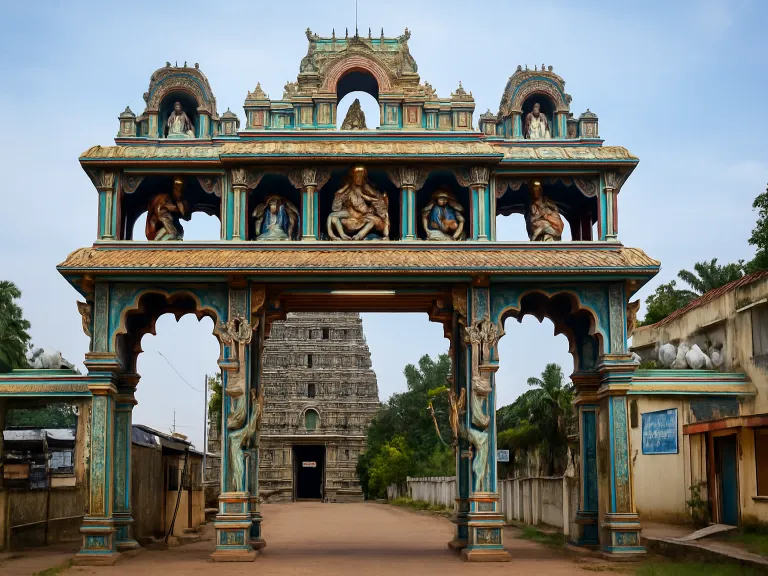
Amritaghateswarar Temple is built in the Dravidian temple style typical of major Tamil Shaiva temples. The complex is enclosed by high walls and entered through gopurams, with a sequence of prakaras, mandapas, shrines, and ritual spaces arranged around the principal sanctum. The scale of the temple reflects the growth of an early sacred site into a large institutional shrine under medieval patronage, especially during the Chola period.
The main sanctum houses Amritaghateswarar in lingam form. The separate shrine of Abhirami Amman is one of the most important parts of the complex and receives intense devotional attention. The temple also enshrines Shiva as Kala Samhara Murti, depicting the mythic moment in which Shiva subdues Yama to protect Markandeya. This iconographic theme gives the temple its Ashta Veerattanam identity and makes the sculptural and ritual imagery of death-conquest central to the site.
The mandapas are used for worship, festivals, and the many life-cycle ceremonies for which Thirukadaiyur is famous. The complex contains subsidiary shrines common to large Shiva temples, including shrines connected with Ganesha, Murugan, Chandikeswara, and other deities of the Shaiva temple tradition. The architectural experience combines processional space, devotional halls, sacred iconography, and inscriptions that preserve the temple’s historical memory. Its structure supports both daily Agamic worship and large gatherings of families performing longevity ceremonies.
🌳
Sacred Features
💧 Temple Tank
Amrita Pushkarini
The temple tank is associated with the temple’s amrita symbolism and the sacred identity of Amritaghateswarar. Devotees regard it as part of the temple’s purification and longevity-related sacred landscape.
✨
Temple Highlights
✨
Paadal Petra Sthalam
Thirukadaiyur is one of the Shiva temples praised in the Tevaram hymns by the Tamil Shaiva saints, giving it a revered place in the sacred geography of Tamil Shaivism.
✨
Ashta Veerattanam Shrine
The temple is one of the eight Veerattanam temples associated with heroic acts of Shiva. Here the sacred theme is Shiva subduing Yama to protect Markandeya.
✨
Kala Samhara Murti
The temple’s distinctive iconography and worship focus on Shiva as the conqueror of death, a form deeply connected with prayers for long life and protection.
✨
Abhirami Amman Shrine
The goddess Abhirami is one of the most celebrated forms of the Divine Mother in Tamil devotion, closely associated with Abhirami Bhattar and the Abhirami Andhadhi.
✨
Longevity Ceremonies
Thirukadaiyur is widely visited for Shastiabdapoorthi, Bhimaratha Shanthi, Sathabhishekam, Ayush Homam, and other ceremonies connected with long life and family welfare.
✨
Chola-period Heritage
The temple contains inscriptions and structural features linked with Chola-period temple patronage, endowments, and regular worship traditions.
🙏
Spiritual Benefits
Blessings for long life and health
Protection from fear of untimely death
Grace for auspicious age milestones such as 60th, 70th, and 80th year ceremonies
Family welfare and harmony
Relief from anxiety connected with lifespan and illness
Devotion to Shiva as Kala Samhara Murti
Devotion to Abhirami Amman for compassion and inner strength
Spiritual remembrance of the Markandeya ideal of unwavering devotion
🎉
Major Festivals
🎉
Maha Shivaratri
Maha Shivaratri is one of the major annual festivals for Shiva worship, observed with special pujas, night worship, and large numbers of devotees.
🎉
Pradosham
Pradosham, observed twice every lunar month, is an important time for worship of Shiva at the temple.
🎉
Navaratri
Navaratri is significant for the worship of Abhirami Amman, with special devotion to the goddess during the nine nights.
🎉
Aipasi Annabhishekam
Annabhishekam in the Tamil month of Aipasi is an important Shaiva observance in which the Shiva lingam is ceremonially covered with cooked rice.
🎉
Arudra Darshan
Arudra Darshan in the Tamil month of Margazhi is an important festival connected with Shiva worship, especially the cosmic dance and forms of Shiva.
🪔
Special Poojas
🪔
Shastiabdapoorthi
A sacred ceremony performed on completion of the 60th year, seeking blessings for long life, health, and marital harmony.
🪔
Bhimaratha Shanthi
A longevity ceremony commonly performed around the 70th year, seeking divine grace for health, peace, and family welfare.
🪔
Sathabhishekam
A major auspicious ceremony performed on completion of the 80th year or after witnessing a thousand full moons, seeking blessings for longevity.
🪔
Ayush Homam
A fire ritual performed for health, protection, and long life, especially for children, elders, and those seeking well-being.
🪔
Mrityunjaya Homam
A Shiva-centred homam performed by devotees seeking relief from fear, illness, and obstacles connected with lifespan and health.
🪔
Abhirami Amman Pooja
Special worship offered to Abhirami Amman for compassion, family welfare, protection, and spiritual strength.
🚗
How to Reach
🛣️
By Road
Thirukadaiyur is accessible by road from Mayiladuthurai, Karaikal, Sirkazhi, and Chidambaram. Buses, taxis, and private vehicles connect the town with nearby pilgrimage centres in the Cauvery delta region.
🚆
By Rail
The nearest major railway station is Mayiladuthurai Junction, about 22 km away. From the station, visitors can reach Thirukadaiyur by bus, taxi, or hired vehicle.
✈️
By Air
The nearest major airport with regular connectivity is Tiruchirappalli International Airport. From there, Thirukadaiyur can be reached by road through the central Tamil Nadu and Cauvery delta routes.
💡
Visitor Tips
Confirm current temple timings and ceremony arrangements with the temple before travelling.
Book longevity ceremonies such as Shastiabdapoorthi or Sathabhishekam in advance, especially during auspicious dates.
Wear modest clothing suitable for a traditional South Indian temple.
Expect larger crowds on Pradosham, Maha Shivaratri, Navaratri, weekends, and auspicious marriage or birthday dates.
Follow temple instructions regarding queues, offerings, photography, and access to inner areas.
Plan extra time if travelling from Mayiladuthurai, Karaikal, or nearby temple circuits.
Keep footwear only in designated areas outside the temple.
Carry drinking water and essentials during summer months, as the coastal delta region can be hot and humid.

 WhatsApp Us